Story code: ST-000399
Part 1: The Relocation Initiative
The blaring anchor on Arthur’s television vanished into a dead black screen, leaving a sudden, ringing silence in his living room. He set his coffee mug on the side table and pushed himself out of his worn recliner to check the hallway breaker box. When the heavy metal switches did nothing to bring the power back, he grabbed his coat and headed for the front door, assuming a careless utility crew had clipped a line out on his rusted Ohio street. He stepped out onto his porch and immediately grabbed the wooden railing.
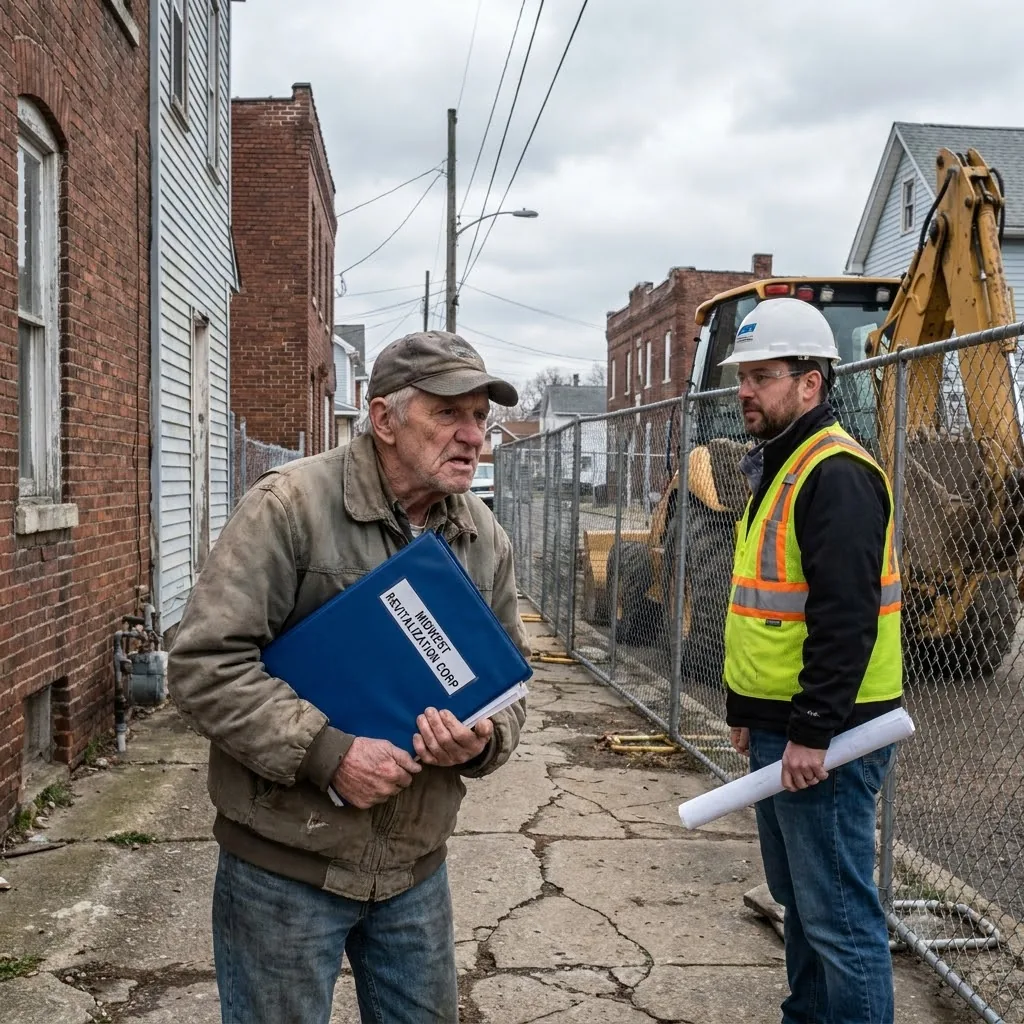
A deafening roar vibrated through the floorboards under his boots. A massive yellow backhoe sat directly at the end of his driveway, churning out thick plumes of black diesel exhaust. The machine raised its hydraulic arm, its steel teeth caked in broken asphalt, and slammed the bucket down into the center of the road. Concrete snapped like brittle bone under the immense weight. The backhoe lurched in reverse, tearing up a massive trench and dragging a tangled cluster of thick utility wires right out of the frozen dirt. Blue sparks hissed against the broken pavement as the machine severed another connection.
Arthur marched down his front steps, his boots crushing the frost on his overgrown lawn. He waved his arms, shouting at the operator inside the glass cab to cut the engine. The driver ignored him, swinging the metal bucket to dump a ton of jagged debris directly onto the sidewalk.
A man in a pristine white hard hat and a tailored high-visibility vest stood next to an idling black pickup truck, watching the destruction. He noticed Arthur storming across the yard and turned, letting a slow, practiced smirk spread across his face. This man did not look like a municipal foreman or a local contractor. He wore sharply creased dress pants and carried a thick, glossy folder tucked casually under one arm.
Arthur stopped at the edge of his property line and demanded the man shut down the heavy machinery right that second. He pointed at the severed cables, yelling that they were destroying a residential neighborhood without a single permit or warning sign posted. The site manager just stood there, completely unfazed by the grinding gears and Arthur’s furious tone. The man stepped up to the edge of the ruined curb and held out the folder.
Arthur stared at the offering. The cover was printed on heavy, expensive cardstock, a sleek presentation that looked entirely alien against the backdrop of sagging porches and rusted sedans lining the street. Embossed silver letters caught the morning light, spelling out a title that made Arthur’s stomach drop. *Corporate Revitalization and Immediate Relocation Dossier*.
The site manager nudged the folder forward. Arthur snatched it from his grip, the glossy paper feeling heavy and cold in his hands. He flipped the cover open, ignoring the roaring backhoe that was now tearing into his neighbor’s front curb and crushing a row of hedges.
The first page displayed a high-resolution architectural rendering. It showed a sprawling, ultra-modern corporate campus constructed of sheer glass and brushed steel. Arthur looked closely at the edges of the rendering, recognizing the distant tree line and the old municipal water tower. The massive glass complex was sitting exactly where his house, and every other house on his block, currently stood. The scale of the project was staggering.
He turned the page. The next sheet detailed an aggressive timeline, outlining the immediate seizure of the entire zip code through an obscure eminent domain loophole. Paragraphs of sterile legal jargon dictated that all residents had forty-eight hours to vacate the premises before full-scale demolition commenced. There was no offer of purchase, no negotiation, and no right to appeal. The document was a meticulously planned eviction notice masked as a civic upgrade.
Arthur flipped faster, his hands beginning to shake as the reality of the text set in. He bypassed pages of zoning permits, soil samples, and demolition schedules, desperate to find the entity responsible for wiping out his entire life. The corporate logos on the headers were vague shell companies, holding groups with meaningless acronyms and generic geometric designs. He needed to find the architect behind the operation. He needed to see a name attached to this nightmare.
He reached the final page of the dossier. At the bottom of a binding legal declaration, a single signature sat neatly on the dotted line, penned in thick black ink. Arthur stared at the looping letters. His breathing stopped. He lowered the folder an inch, his eyes darting from the signature on the page to the smirking manager standing across the ruined asphalt, his jaw tightening as the highly familiar name registered in his mind.
The blaring anchor on Arthur’s television vanished into a dead black screen, leaving a sudden, ringing silence in his living room. He set his coffee mug on the side table and pushed himself out of his worn recliner to check the hallway breaker box. When the heavy metal switches did nothing to bring the power back, he grabbed his coat and headed for the front door, assuming a careless utility crew had clipped a line out on his rusted Ohio street. He stepped out onto his porch and immediately grabbed the wooden railing.
A deafening roar vibrated through the floorboards under his boots. A massive yellow backhoe sat directly at the end of his driveway, churning out thick plumes of black diesel exhaust. The machine raised its hydraulic arm, its steel teeth caked in broken asphalt, and slammed the bucket down into the center of the road. Concrete snapped like brittle bone under the immense weight. The backhoe lurched in reverse, tearing up a massive trench and dragging a tangled cluster of thick utility wires right out of the frozen dirt. Blue sparks hissed against the broken pavement as the machine severed another connection.
Arthur marched down his front steps, his boots crushing the frost on his overgrown lawn. He waved his arms, shouting at the operator inside the glass cab to cut the engine. The driver ignored him, swinging the metal bucket to dump a ton of jagged debris directly onto the sidewalk.
A man in a pristine white hard hat and a tailored high-visibility vest stood next to an idling black pickup truck, watching the destruction. He noticed Arthur storming across the yard and turned, letting a slow, practiced smirk spread across his face. This man did not look like a municipal foreman or a local contractor. He wore sharply creased dress pants and carried a thick, glossy folder tucked casually under one arm.
Arthur stopped at the edge of his property line and demanded the man shut down the heavy machinery right that second. He pointed at the severed cables, yelling that they were destroying a residential neighborhood without a single permit or warning sign posted. The site manager just stood there, completely unfazed by the grinding gears and Arthur’s furious tone. The man stepped up to the edge of the ruined curb and held out the folder.
Arthur stared at the offering. The cover was printed on heavy, expensive cardstock, a sleek presentation that looked entirely alien against the backdrop of sagging porches and rusted sedans lining the street. Embossed silver letters caught the morning light, spelling out a title that made Arthur’s stomach drop. *Corporate Revitalization and Immediate Relocation Dossier*.
The site manager nudged the folder forward. Arthur snatched it from his grip, the glossy paper feeling heavy and cold in his hands. He flipped the cover open, ignoring the roaring backhoe that was now tearing into his neighbor’s front curb and crushing a row of hedges.
The first page displayed a high-resolution architectural rendering. It showed a sprawling, ultra-modern corporate campus constructed of sheer glass and brushed steel. Arthur looked closely at the edges of the rendering, recognizing the distant tree line and the old municipal water tower. The massive glass complex was sitting exactly where his house, and every other house on his block, currently stood. The scale of the project was staggering.
He turned the page. The next sheet detailed an aggressive timeline, outlining the immediate seizure of the entire zip code through an obscure eminent domain loophole. Paragraphs of sterile legal jargon dictated that all residents had forty-eight hours to vacate the premises before full-scale demolition commenced. There was no offer of purchase, no negotiation, and no right to appeal. The document was a meticulously planned eviction notice masked as a civic upgrade.
Arthur flipped faster, his hands beginning to shake as the reality of the text set in. He bypassed pages of zoning permits, soil samples, and demolition schedules, desperate to find the entity responsible for wiping out his entire life. The corporate logos on the headers were vague shell companies, holding groups with meaningless acronyms and generic geometric designs. He needed to find the architect behind the operation. He needed to see a name attached to this nightmare.
He reached the final page of the dossier. At the bottom of a binding legal declaration, a single signature sat neatly on the dotted line, penned in thick black ink. Arthur stared at the looping letters. His breathing stopped. He lowered the folder an inch, his eyes darting from the signature on the page to the smirking manager standing across the ruined asphalt, his jaw tightening as the highly familiar name registered in his mind.