Story code: ST-000687
Part 1: The Floor
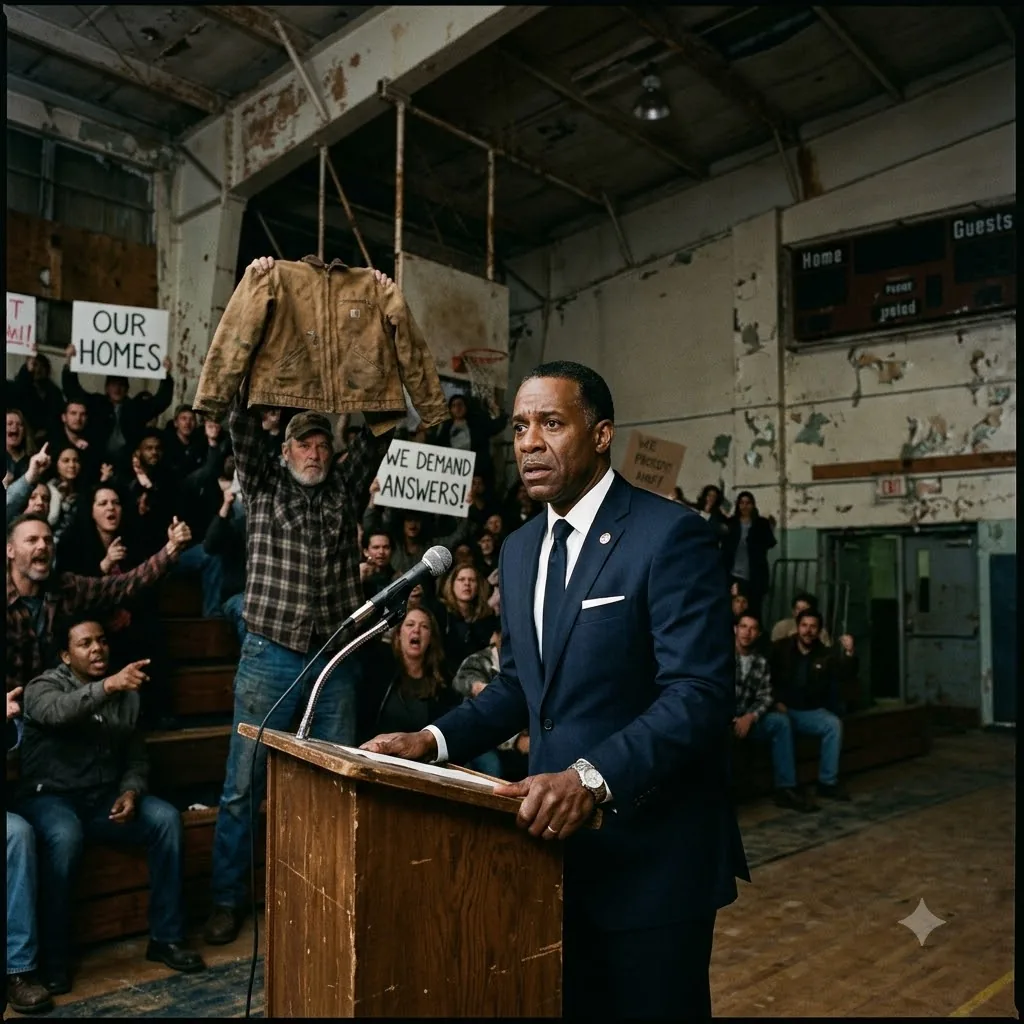
Marcus anchored his hands to the particle-board podium, projecting his carefully sanded boardroom baritone across the warped floorboards of the Oakridge High gymnasium. He let the phrase “green revitalization initiative” echo into the humid rafters, waiting for the murmurs of the two hundred hostile locals to subside. They sat with crossed arms on rusted bleachers, radiating a collective, stony resentment.
He tapped the clicker. The projector behind him snapped to a rendering of a pristine solar farm, all glass and manicured grass, overlaid exactly where the old blast furnaces still rusted into the earth.
“This isn’t just an acquisition,” Marcus said, smoothing the lapel of his tailored charcoal suit. “It is a commitment to the future of this community.”
He was lying, and they knew it, but his job was to make the lie sound inevitable. He deployed the techniques drilled into him by Vanguard Holdings. Keep the chin level. Use open hand gestures. Never break eye contact with the center of the room, but never look directly into an individual face. Above all, never let the local vowels slip back into his vocabulary. He had spent ten years scrubbing the flat, heavy Oakridge drawl from his throat. He was not one of them anymore. He was a Senior Vice President of Acquisitions, an emissary from a world of glass towers, stock options, and catered boardrooms.
A man in the third row shouted a crude assessment of Vanguard’s promises, specifically targeting the severance packages from the last buyout. Marcus offered a practiced, sympathetic nod. He let the man finish, absorbing the anger without breaking his posture.
“I hear your frustration,” Marcus said, his voice a flawless instrument of corporate empathy. “Transition is difficult. The decline of legacy manufacturing left a vacuum, and Vanguard is offering the capital to fill it.”
He hit the clicker again. A graph appeared, showing projected job growth over the next five years. The numbers were technically accurate, relying on temporary construction contracts and seasonal maintenance to inflate the permanent reality of an automated facility. Marcus kept his eyes moving, skating over the sea of faded denim, steel-toed boots, and skeptical scowls.
The air in the gym smelled exactly as it had fifteen years ago, a suffocating blend of industrial floor wax, stale sweat, and damp brick. It triggered a deep, instinctual urge to flee, to pack up his sleek leather briefcase and drive his rented luxury sedan straight back to the airport. He tightened his grip on the podium to stop his fingers from tapping a nervous, erratic rhythm against the wood.
He just needed to get through the next four slides. After that, the board would trigger the eminent domain clauses, the legal team would flood the county courts with paperwork, and his commission would secure his promotion to the executive suite. He drew a breath to launch into the tax revenue projections.
In the dead center of the highest bleacher, a figure stood up.
Marcus tried to ignore the movement, relying on his training. “The proposed tax incentives,” he continued, raising his volume by a fraction of a decibel, “will allow the county to rebuild infrastructure.”
The figure did not shout. They did not throw anything. They simply stepped down from the bleacher seat to the wooden walkway, moving into the direct beam of the emergency exit light. The crowd around the figure began to notice, their heads turning one by one. The low rumble of hostility in the room shifted, turning into a tense, expectant silence. People were moving out of the way, leaning back to give the standing figure a wide berth.
Marcus forced his eyes to remain on the middle rows. “These incentives will guarantee a robust tax base for-”
He made the mistake of looking up.
The protester was staring directly at him. In their raised right hand, they held an article of clothing. It was a heavy canvas work jacket, faded to a chalky navy blue. The silver reflective tape across the chest was cracked and peeling, and the left sleeve was scorched black from elbow to cuff.
Marcus stopped speaking entirely.
The silence in the gymnasium became absolute, heavy and suffocating. The projector hummed a dull, mechanical drone. Marcus stared at the jacket, his meticulously constructed facade fracturing right down the middle. He knew the precise weight of that canvas. He knew the smell of ozone and machine oil baked into the frayed collar. He knew the crude, hand-stitched patch covering a tear on the right shoulder, sewn with thick nylon fishing line because standard cotton thread would burn up on the factory floor.
It was a jacket from the Number Four blast furnace. The furnace that had shut down a decade ago, the one that had broken the spine of the town.
His boardroom baritone evaporated. His throat tightened, dry and suddenly aching. The slick corporate narrative in his head shattered, replaced entirely by the visceral, ringing memory of sirens blaring through the valley on a freezing November morning.
The protester stepped down another row, bringing the scorched jacket closer to the overhead lights. The shadows receded, and the face beneath the worn baseball cap became completely visible.
Marcus felt his hands slip from the edges of the podium. The presentation clicker clattered against the base of the microphone stand, the sharp sound echoing like a gunshot through the silent gym. He stood frozen, staring at the face in the crowd, at the person holding the scorched canvas, unable to breathe as the projection of the pristine solar farm burned brightly against the wall behind him.
Marcus anchored his hands to the particle-board podium, projecting his carefully sanded boardroom baritone across the warped floorboards of the Oakridge High gymnasium. He let the phrase “green revitalization initiative” echo into the humid rafters, waiting for the murmurs of the two hundred hostile locals to subside. They sat with crossed arms on rusted bleachers, radiating a collective, stony resentment.
He tapped the clicker. The projector behind him snapped to a rendering of a pristine solar farm, all glass and manicured grass, overlaid exactly where the old blast furnaces still rusted into the earth.
“This isn’t just an acquisition,” Marcus said, smoothing the lapel of his tailored charcoal suit. “It is a commitment to the future of this community.”
He was lying, and they knew it, but his job was to make the lie sound inevitable. He deployed the techniques drilled into him by Vanguard Holdings. Keep the chin level. Use open hand gestures. Never break eye contact with the center of the room, but never look directly into an individual face. Above all, never let the local vowels slip back into his vocabulary. He had spent ten years scrubbing the flat, heavy Oakridge drawl from his throat. He was not one of them anymore. He was a Senior Vice President of Acquisitions, an emissary from a world of glass towers, stock options, and catered boardrooms.
A man in the third row shouted a crude assessment of Vanguard’s promises, specifically targeting the severance packages from the last buyout. Marcus offered a practiced, sympathetic nod. He let the man finish, absorbing the anger without breaking his posture.
“I hear your frustration,” Marcus said, his voice a flawless instrument of corporate empathy. “Transition is difficult. The decline of legacy manufacturing left a vacuum, and Vanguard is offering the capital to fill it.”
He hit the clicker again. A graph appeared, showing projected job growth over the next five years. The numbers were technically accurate, relying on temporary construction contracts and seasonal maintenance to inflate the permanent reality of an automated facility. Marcus kept his eyes moving, skating over the sea of faded denim, steel-toed boots, and skeptical scowls.
The air in the gym smelled exactly as it had fifteen years ago, a suffocating blend of industrial floor wax, stale sweat, and damp brick. It triggered a deep, instinctual urge to flee, to pack up his sleek leather briefcase and drive his rented luxury sedan straight back to the airport. He tightened his grip on the podium to stop his fingers from tapping a nervous, erratic rhythm against the wood.
He just needed to get through the next four slides. After that, the board would trigger the eminent domain clauses, the legal team would flood the county courts with paperwork, and his commission would secure his promotion to the executive suite. He drew a breath to launch into the tax revenue projections.
In the dead center of the highest bleacher, a figure stood up.
Marcus tried to ignore the movement, relying on his training. “The proposed tax incentives,” he continued, raising his volume by a fraction of a decibel, “will allow the county to rebuild infrastructure.”
The figure did not shout. They did not throw anything. They simply stepped down from the bleacher seat to the wooden walkway, moving into the direct beam of the emergency exit light. The crowd around the figure began to notice, their heads turning one by one. The low rumble of hostility in the room shifted, turning into a tense, expectant silence. People were moving out of the way, leaning back to give the standing figure a wide berth.
Marcus forced his eyes to remain on the middle rows. “These incentives will guarantee a robust tax base for-”
He made the mistake of looking up.
The protester was staring directly at him. In their raised right hand, they held an article of clothing. It was a heavy canvas work jacket, faded to a chalky navy blue. The silver reflective tape across the chest was cracked and peeling, and the left sleeve was scorched black from elbow to cuff.
Marcus stopped speaking entirely.
The silence in the gymnasium became absolute, heavy and suffocating. The projector hummed a dull, mechanical drone. Marcus stared at the jacket, his meticulously constructed facade fracturing right down the middle. He knew the precise weight of that canvas. He knew the smell of ozone and machine oil baked into the frayed collar. He knew the crude, hand-stitched patch covering a tear on the right shoulder, sewn with thick nylon fishing line because standard cotton thread would burn up on the factory floor.
It was a jacket from the Number Four blast furnace. The furnace that had shut down a decade ago, the one that had broken the spine of the town.
His boardroom baritone evaporated. His throat tightened, dry and suddenly aching. The slick corporate narrative in his head shattered, replaced entirely by the visceral, ringing memory of sirens blaring through the valley on a freezing November morning.
The protester stepped down another row, bringing the scorched jacket closer to the overhead lights. The shadows receded, and the face beneath the worn baseball cap became completely visible.
Marcus felt his hands slip from the edges of the podium. The presentation clicker clattered against the base of the microphone stand, the sharp sound echoing like a gunshot through the silent gym. He stood frozen, staring at the face in the crowd, at the person holding the scorched canvas, unable to breathe as the projection of the pristine solar farm burned brightly against the wall behind him.