Story code: ST-001766
Part 1: The Five-Hundred-Page Canopy
The applause in the municipal gymnasium was deafening as Eleanor dabbed a single, perfect tear from her cheek with a monogrammed tissue. David stood near the exit doors, his city-issued clipboard pressed hard against his ribs, watching three years of affordable housing initiatives dissolve into the acoustic ceiling tiles. Eleanor had just spent forty-five minutes projecting slides of sun-dappled foliage, tight close-ups of textured bark, and wide shots of deep, verdant shadows. She spoke in a hushed, trembling voice about honoring the sacred canopy and creating a safe container for local heritage. The zoning board members had leaned forward in their seats, mesmerized by her presentation, their eyes glistening in the dim light.
The community had eaten it up. They nodded along as Eleanor used phrases like generational trauma of the soil and ecological mindfulness, turning a routine zoning dispute into a moral crusade. David shifted his weight, the fluorescent lights humming a dull, mocking tune above him. He had the federal grant approval letters in his briefcase, documents that guaranteed seventy units of safe, clean housing for families currently crammed into motels on the edge of the county. That federal funding window closed permanently in exactly twenty-one days. If bulldozers did not break ground by the first of the month, the millions of dollars would revert to the treasury, and the project would die.
Eleanor knew the timeline. She stepped down from the podium, accepting sympathetic touches on the shoulder from the crowd, her face a mask of exhausted martyrdom. She moved deliberately down the center aisle, her legal team trailing behind her like a protective wake. The crowd parted. She stopped directly in front of the folding table where David had set up his city planning displays. The tearful fragility vanished the moment she was out of the board members’ line of sight. Her eyes were flat, hard, and triumphant.
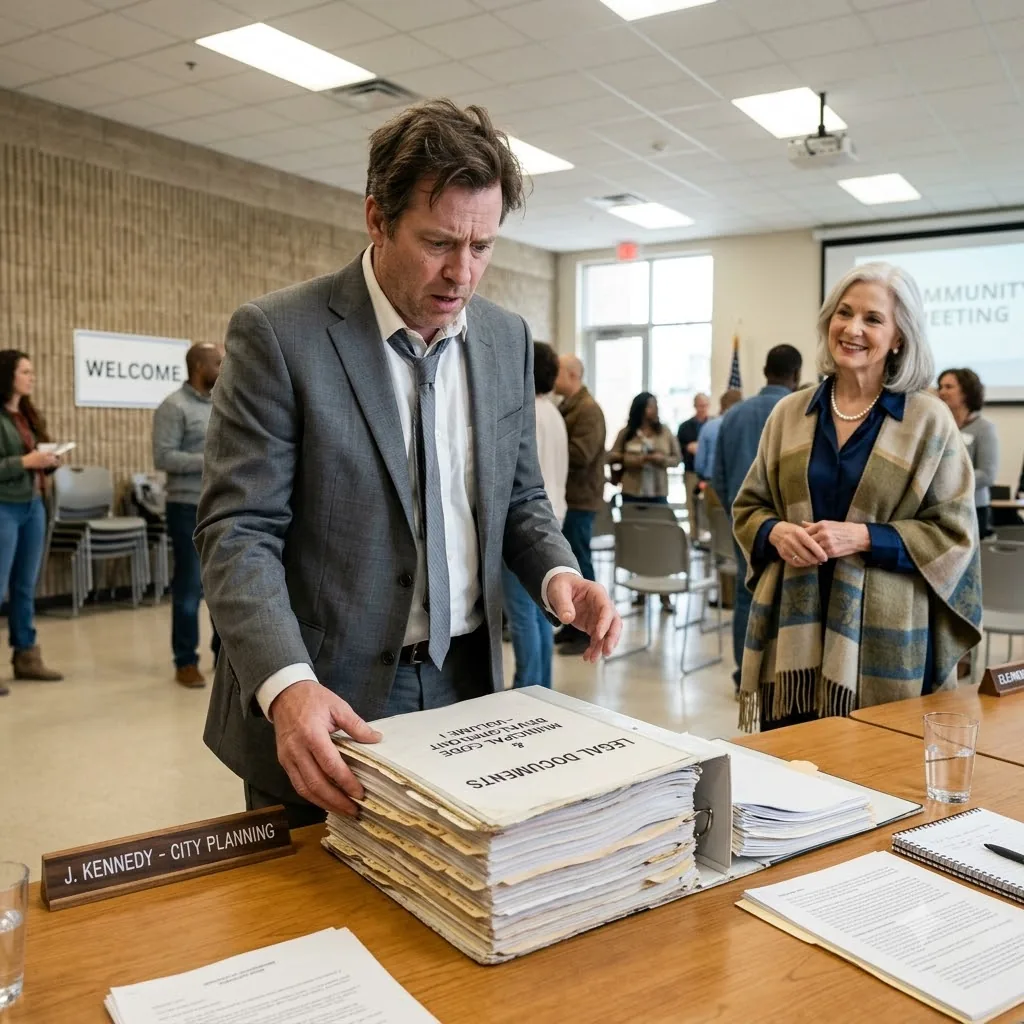
A man in a charcoal suit stepped around her and dropped a massive, shrink-wrapped brick of paper onto David’s table. The impact rattled the metal legs and tipped over a styrofoam cup of lukewarm water. It was an environmental injunction. Five hundred pages of dense, combative legal maneuvering, bound with thick plastic combs and stamped with the seal of a federal judge. The title page warned of catastrophic ecological collapse if the city dared to disturb the site. It was a complete stop-work order, wrapped in the impenetrable armor of environmental protection.
David stared at the stack of paper, the water from the spilled cup slowly seeping toward the edges. Eleanor gave him a thin, practiced smile, turned on her heel, and walked out of the double doors into the crisp autumn night, her supporters trailing behind her.
David packed the heavy injunction into his battered leather satchel, the strap digging painfully into his shoulder as he walked out to his sedan. The air outside the community center smelled of wet pine needles and expensive exhaust. He threw the bag onto the passenger seat. He had spent months looking at satellite maps and topographical surveys, but he needed to stand on the ground. He needed to look at this irreplaceable heritage site, this vital green-shade canopy that Eleanor had just successfully defended with her tearful slideshow.
He keyed the ignition and pulled out of the manicured parking lot. The drive took him across town, away from the rolling hills and quiet cul-de-sacs, navigating down into the industrial corridor where the city slowly rusted away. He passed the artisanal coffee shops and yoga studios, watching the storefronts transition into check-cashing places and boarded-up strip malls. The smooth blacktop gave way to scarred concrete. The streetlights flickered here, casting long, erratic shadows across the cracked pavement. He turned onto Miller Avenue, the tires of his sedan thudding over deep potholes, the GPS on his dashboard counting down the distance to the contested parcel.
He pulled up to the exact address listed on the injunction. This was the plot slated for the housing development, the sanctuary of local heritage Eleanor had wept over. He put the car in park and left the engine running, the headlights cutting through the darkness.
He reached over, grabbed the massive legal document from his bag, and flipped to the appendix where Eleanor had attached the property description. He checked the parcel numbers against the faded metal sign bolted to the rusted chain-link fence outside his window. The numbers matched perfectly.
David stepped out of the car. The night air here did not smell of pine needles. It smelled of ozone, hot asphalt, and old diesel. His shoes crunched on broken glass and gravel as he walked up to the fence. He gripped the cold wire mesh, staring into the darkness of the lot, looking for the towering, ancient branches that had filled Eleanor’s slides. He searched the perimeter for the lush, sacred canopy that demanded half a thousand pages of federal protection.
The glow of a distant streetlamp illuminated the center of the property, revealing a jagged, uneven landscape that defied every single word Eleanor had spoken in that gymnasium. David pulled a flashlight from his coat pocket, clicked it on, and swept the beam across the vast, silent expanse, finally understanding exactly what her photographer had focused on to create those beautiful, deceptive images.
The applause in the municipal gymnasium was deafening as Eleanor dabbed a single, perfect tear from her cheek with a monogrammed tissue. David stood near the exit doors, his city-issued clipboard pressed hard against his ribs, watching three years of affordable housing initiatives dissolve into the acoustic ceiling tiles. Eleanor had just spent forty-five minutes projecting slides of sun-dappled foliage, tight close-ups of textured bark, and wide shots of deep, verdant shadows. She spoke in a hushed, trembling voice about honoring the sacred canopy and creating a safe container for local heritage. The zoning board members had leaned forward in their seats, mesmerized by her presentation, their eyes glistening in the dim light.
The community had eaten it up. They nodded along as Eleanor used phrases like generational trauma of the soil and ecological mindfulness, turning a routine zoning dispute into a moral crusade. David shifted his weight, the fluorescent lights humming a dull, mocking tune above him. He had the federal grant approval letters in his briefcase, documents that guaranteed seventy units of safe, clean housing for families currently crammed into motels on the edge of the county. That federal funding window closed permanently in exactly twenty-one days. If bulldozers did not break ground by the first of the month, the millions of dollars would revert to the treasury, and the project would die.
Eleanor knew the timeline. She stepped down from the podium, accepting sympathetic touches on the shoulder from the crowd, her face a mask of exhausted martyrdom. She moved deliberately down the center aisle, her legal team trailing behind her like a protective wake. The crowd parted. She stopped directly in front of the folding table where David had set up his city planning displays. The tearful fragility vanished the moment she was out of the board members’ line of sight. Her eyes were flat, hard, and triumphant.
A man in a charcoal suit stepped around her and dropped a massive, shrink-wrapped brick of paper onto David’s table. The impact rattled the metal legs and tipped over a styrofoam cup of lukewarm water. It was an environmental injunction. Five hundred pages of dense, combative legal maneuvering, bound with thick plastic combs and stamped with the seal of a federal judge. The title page warned of catastrophic ecological collapse if the city dared to disturb the site. It was a complete stop-work order, wrapped in the impenetrable armor of environmental protection.
David stared at the stack of paper, the water from the spilled cup slowly seeping toward the edges. Eleanor gave him a thin, practiced smile, turned on her heel, and walked out of the double doors into the crisp autumn night, her supporters trailing behind her.
David packed the heavy injunction into his battered leather satchel, the strap digging painfully into his shoulder as he walked out to his sedan. The air outside the community center smelled of wet pine needles and expensive exhaust. He threw the bag onto the passenger seat. He had spent months looking at satellite maps and topographical surveys, but he needed to stand on the ground. He needed to look at this irreplaceable heritage site, this vital green-shade canopy that Eleanor had just successfully defended with her tearful slideshow.
He keyed the ignition and pulled out of the manicured parking lot. The drive took him across town, away from the rolling hills and quiet cul-de-sacs, navigating down into the industrial corridor where the city slowly rusted away. He passed the artisanal coffee shops and yoga studios, watching the storefronts transition into check-cashing places and boarded-up strip malls. The smooth blacktop gave way to scarred concrete. The streetlights flickered here, casting long, erratic shadows across the cracked pavement. He turned onto Miller Avenue, the tires of his sedan thudding over deep potholes, the GPS on his dashboard counting down the distance to the contested parcel.
He pulled up to the exact address listed on the injunction. This was the plot slated for the housing development, the sanctuary of local heritage Eleanor had wept over. He put the car in park and left the engine running, the headlights cutting through the darkness.
He reached over, grabbed the massive legal document from his bag, and flipped to the appendix where Eleanor had attached the property description. He checked the parcel numbers against the faded metal sign bolted to the rusted chain-link fence outside his window. The numbers matched perfectly.
David stepped out of the car. The night air here did not smell of pine needles. It smelled of ozone, hot asphalt, and old diesel. His shoes crunched on broken glass and gravel as he walked up to the fence. He gripped the cold wire mesh, staring into the darkness of the lot, looking for the towering, ancient branches that had filled Eleanor’s slides. He searched the perimeter for the lush, sacred canopy that demanded half a thousand pages of federal protection.
The glow of a distant streetlamp illuminated the center of the property, revealing a jagged, uneven landscape that defied every single word Eleanor had spoken in that gymnasium. David pulled a flashlight from his coat pocket, clicked it on, and swept the beam across the vast, silent expanse, finally understanding exactly what her photographer had focused on to create those beautiful, deceptive images.