Story code: ST-001766
Part 4: The Sacred Asphalt
The flashing red and blue lights of two patrol cars washed over the cracked pavement of Miller Avenue less than five minutes later. David didn’t run. He stood rooted by his sedan, his hands resting on the cold roof, watching through the chain-link fence as Eleanor delivered a flawless, trembling performance for the responding officers. She clutched her mud-stained cashmere scarf, pointing a shaking finger at him while weeping about an unprovoked ambush.
The photographer, confused by the sudden chaos but swayed by Eleanor’s hysterics, eagerly corroborated her story of an aggressive confrontation.
The police didn’t arrest David-the heavy fence between them and his complete lack of a weapon kept him out of handcuffs-but they filed a menacing preliminary report for harassment and trespassing. By the time the officers finally cleared David to leave the industrial corridor, it was eight-fifteen.
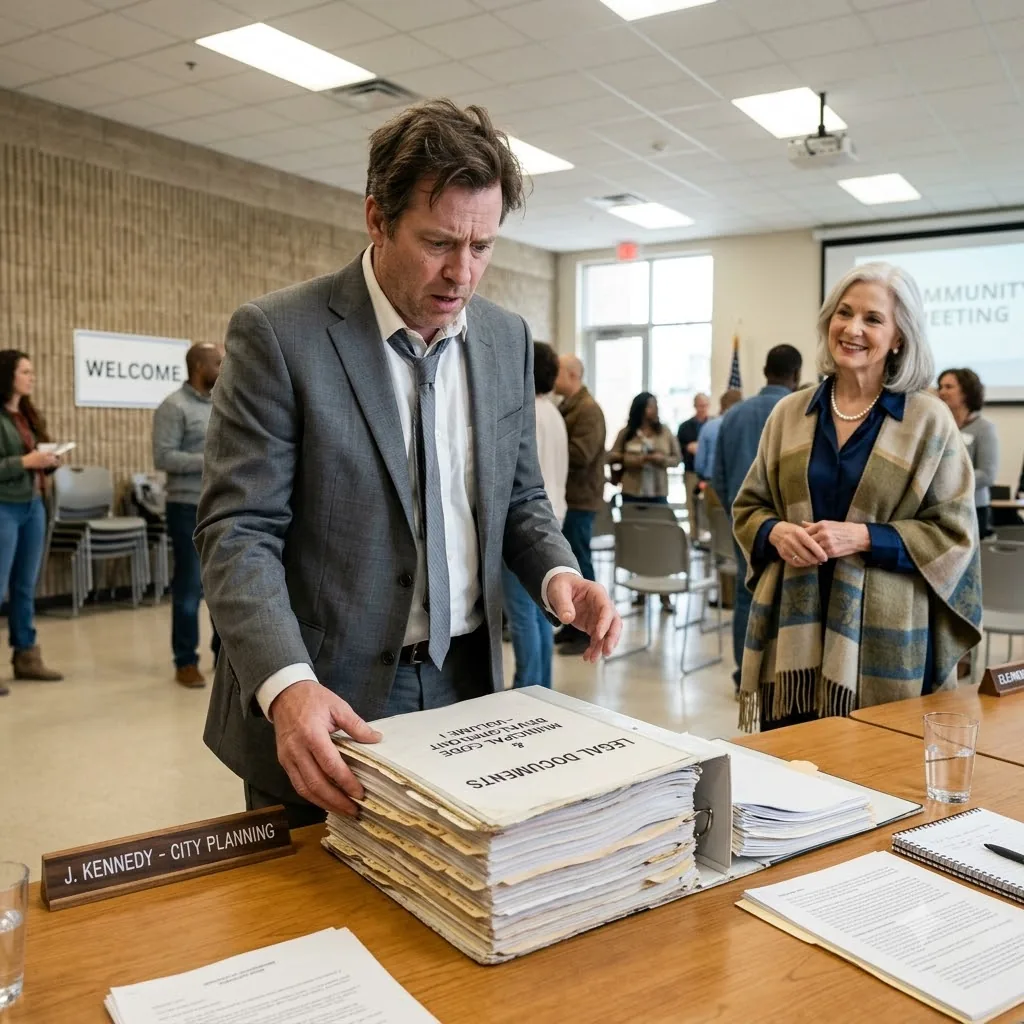
When he rushed into the municipal planning department at eight-forty, breathing hard and clutching his satchel, Tom was already waiting beside David’s desk.
“She’s running an unregulated hotel empire across the street, Tom!” David said, his voice cracking as he slammed the thick manila folders onto his desk. “Look at the tax filings. Look at the 1983 DEQ mandate! The ground is toxic. The environmental injunction is a complete fraud.”
Tom didn’t even glance at the paperwork. He held out a single sheet of official human resources letterhead.
“You cornered a prominent community leader at an isolated site and screamed at her until she called 911, David,” Tom said, his voice hushed but razor-sharp. “The mayor’s office got the police blotter alert twenty minutes ago. Eleanor’s PR firm is already drafting a press statement about city officials using intimidation tactics and stalking to force ecological destruction.”
David stared at the letterhead. It was a notice of mandatory administrative leave, effective immediately.
“I’m locked out?” David asked, the blood draining from his face. “Tom, the reallocation vote is in twenty minutes. If you don’t take this DEQ report into that room, the affordable housing initiative dies.”
“The vote is already decided,” Tom said, extending his hand. “The grant money is going to the highway expansion. Hand over your city ID and your building keys, David. Go home. Do not contact Eleanor Vance, and do not go anywhere near Miller Avenue.”
David surrendered his badge. He packed his satchel and walked out of the building under the harsh hum of the fluorescent lights, completely stripped of his authority.
He sat on his faded living room sofa for the next forty-eight hours, watching the federal housing timeline burn down to zero in total silence. Stripped of his city intranet access, he was forced to rely on public press releases. On Friday morning, the city council unanimously passed the emergency reallocation. The twenty-one-day federal window slammed shut. The multi-million-dollar grant for the housing initiative dissolved into the bureaucratic ether, redirected to a concrete contractor on the east side of the county.
The building permits for Miller Avenue officially expired. Seventy families would remain packed into the crumbling highway motels for another brutal winter.
On Saturday evening, David turned on the local six o’clock news.
The anchor smiled warmly into the camera, introducing a segment about a grassroots victory for environmental preservation. The broadcast cut to a live remote feed from the contested parcel.
David leaned forward, his elbows resting heavily on his knees, staring at the television screen.
Eleanor Vance stood in front of the rusted chain-link fence, surrounded by a crowd of at least two hundred local residents. The autumn sky was pitch black, but the dead parking lot was beautifully illuminated by a sea of flickering candlelight. The community had turned out in force to celebrate their victory over corporate bulldozers.
The news camera panned across the crowd. People were holding hand-painted signs depicting weeping willows and flying doves. They were singing a soft, acoustic folk song. Through the narrow, selective lens of the news camera, perfectly confined to the perimeter of the fence, the feral weeds sprouting from the toxic asphalt sinkhole almost looked like a young, thriving forest.
Eleanor stepped up to a portable microphone. She wore a heavy, unassuming wool sweater, her face a mask of humble, deep emotion.
“We stood together,” she said, her voice echoing gently over the hushed crowd. “We held a safe, loving container for this land, and we rejected the violence of development. We protected our sacred canopy.”
The crowd cheered, raising their candles higher into the night air. The camera zoomed in, catching the reflection of the flames dancing in Eleanor’s eyes. Behind her, just out of focus across the street, the smart-lock keypads on the doors of her three short-term rentals glowed a warm, highly profitable yellow.
David pressed the power button on his remote. The television snapped to black, plunging his living room into heavy, suffocating silence. He sat alone in the dark, the thick leather satchel resting uselessly by his feet, packed with state environmental reports and tax records that no one would ever read. He had found the absolute truth, and the paper had still beaten him.
He closed his eyes, picturing the jagged, toxic asphalt of Miller Avenue, safe and undisturbed beneath the weeds.