Story code: ST-000651
Part 1: The Sterile Zone
The shriek of the siren fractured the morning commute, a sudden, oscillating wail that sent Elias diving instinctively toward the nearest concrete planter. A shower of blue-white sparks cascaded over his worn boots as he hit the pavement. His pulse hammered a familiar, frantic rhythm in his ears while his eyes scanned the open plaza for the active shooter. He assessed the sightlines, looking for the glint of a rifle barrel or the chaotic surge of a fleeing crowd. The metallic screech of an industrial grinder joined the siren, loud enough to rattle his teeth. But there were no screams, no frantic stampedes, no staccato pops of gunfire. There was just the methodical, blinding crackle of a magnesium welding torch.
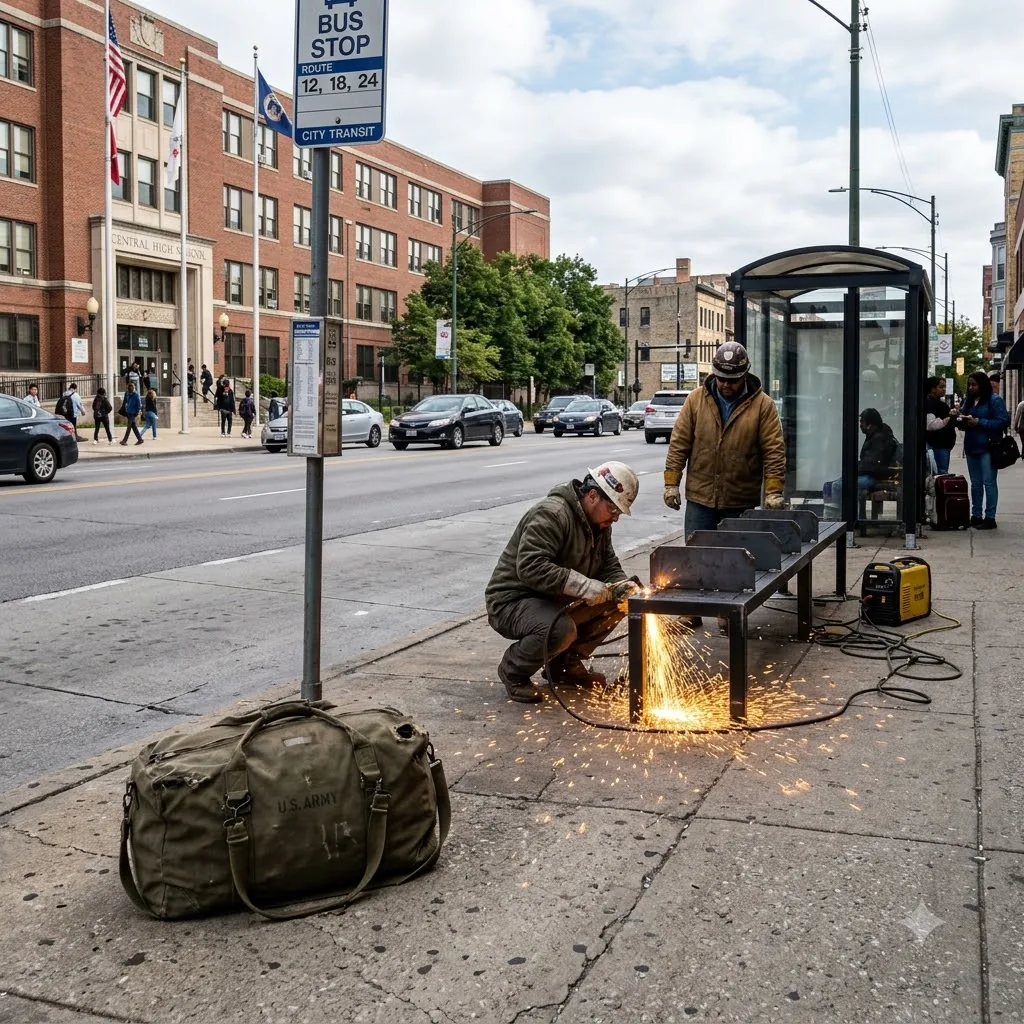
Elias slowly pushed himself up from the cold concrete, brushing grit from his faded canvas jacket. Across the street, the high school’s lockdown alert continued its mechanical howl. It was just a Tuesday morning drill. The sparks were coming from a crew of three city workers in neon safety vests, huddled over a row of bus stop benches directly outside the school’s main entrance.
Elias rolled his shoulders, forcing his breathing back into a steady, measured pace. He leaned against the rough edge of the planter to watch the workers. They were securing thick, jagged steel dividers right down the middle of the seating areas. The local government called it architectural perimeter defense. Elias recognized it for exactly what it was. It was a pointed message to people like him to keep walking, a deliberate effort to make the city unlivable for anyone without a fixed address.
A man in a pristine charcoal suit stood a few yards away, flanked by two private security contractors in tight black polo shirts. The man held a sleek silver tablet, nodding approvingly at the shower of sparks and the freshly installed spikes. It was Councilman Vance. His polished, smiling face was currently plastered on a towering re-election billboard overlooking the plaza, complete with a bold slogan about making the district an impenetrable fortress. Vance pointed at the newly welded metal dividers, then gestured broadly toward the high school’s heavy reinforced steel gates. He was loudly lecturing a trembling young aide about the necessity of sterile environments, threat mitigation, and keeping undesirable elements away from the students.
Through the heavy glass doors of the high school lobby, Elias could see the pale, terrified faces of teenagers huddled in the dimly lit hallways. The lockdown drill was supposedly designed to make them feel secure. Instead, the deafening siren and the sudden militarization of their front steps just made them look like terrified hostages trapped in their own neighborhood. Elias studied the entire setup with the trained, critical eyes of a man who had spent years surviving hostile environments. The new steel dividers on the transit benches provided absolutely zero ballistic cover. The massive reinforced gates were mounted on cheap automated tracks that a decent crowbar could derail in four seconds flat. The two security contractors flanking the councilman had their sidearms holstered in flimsy nylon drop-leg rigs, and their eyes were glued to their smartphones instead of scanning the perimeter.
It was nothing but elaborate theater. It was a sterile illusion built entirely to comfort anxious voters, utterly useless for repelling an actual, coordinated assault.
Elias shifted his weight, his heavy, scuffed combat boots scraping loudly against the pavement. The harsh sound drew the attention of one of the security contractors. The guard looked up from his phone, his eyes narrowing as he nudged the councilman. Vance turned around, his polished, camera-ready smile vanishing instantly as he looked Elias up and down. He took in the faded jacket, the faint stubble, and the heavy olive-drab duffel bag resting by Elias’s feet. Vance saw nothing but an eyesore. He saw a variable that absolutely did not fit into his perfectly sanitized, militarized plaza.
Vance snapped his fingers with a sharp, dismissive crack. The two contractors immediately stepped forward, their hands resting casually near their tactical belts. They moved with the lazy, unearned arrogance of men who had never been in a brutal, life-or-death struggle, slowly closing the distance between the modified transit bench and the concrete planter. Elias did not move a muscle. He kept his hands completely visible, resting them loosely at his sides while his mind automatically calculated the distance. Three feet. Two heavy-set men with poor balance. The councilman lingering just out of immediate striking range.
Vance raised his chin, his voice dripping with practiced, bureaucratic authority as he commanded Elias to vacate the sterile zone immediately. He loudly cited obscure city ordinances, gesturing emphatically to the freshly welded metal spikes as definitive proof that the bench was no longer designated for public loitering. Elias listened to the arrogant speech in total silence, but his eyes had already drifted past the councilman. He was tracking a battered white delivery van that had just idled up to the curb. It was parked entirely in the restricted red zone, directly in front of the school’s main glass doors. The engine was still running, rumbling with a heavy, uneven idle.
The lockdown siren across the street finally died out, leaving a heavy, ringing silence in its wake. The sudden absence of the noise made the idling engine of the delivery van sound as loud as a beating drum. The driver’s side door was cracked open a few inches. No one was stepping out to make a delivery.
Vance did not notice the van. He took a bold step closer to Elias, pointing a manicured finger directly at his chest, demanding he pick up his trash and leave the premises before the police arrived to arrest him. One of the overconfident contractors reached out, aggressively grabbing the thick canvas strap of Elias’s duffel bag.
Elias let the man pull the bag, his focus locked entirely on the white van. The heavy suspension of the vehicle groaned loudly as a massive shift in weight rocked the rear chassis. The heavy metal latch on the rear doors clicked from the inside. Vance puffed out his chest, stepping directly into Elias’s line of sight to bark another threatening order. Elias reached out and grabbed the councilman by the lapels of his charcoal suit, hauling him violently backward to the concrete just as the van’s rear doors kicked open.
The shriek of the siren fractured the morning commute, a sudden, oscillating wail that sent Elias diving instinctively toward the nearest concrete planter. A shower of blue-white sparks cascaded over his worn boots as he hit the pavement. His pulse hammered a familiar, frantic rhythm in his ears while his eyes scanned the open plaza for the active shooter. He assessed the sightlines, looking for the glint of a rifle barrel or the chaotic surge of a fleeing crowd. The metallic screech of an industrial grinder joined the siren, loud enough to rattle his teeth. But there were no screams, no frantic stampedes, no staccato pops of gunfire. There was just the methodical, blinding crackle of a magnesium welding torch.
Elias slowly pushed himself up from the cold concrete, brushing grit from his faded canvas jacket. Across the street, the high school’s lockdown alert continued its mechanical howl. It was just a Tuesday morning drill. The sparks were coming from a crew of three city workers in neon safety vests, huddled over a row of bus stop benches directly outside the school’s main entrance.
Elias rolled his shoulders, forcing his breathing back into a steady, measured pace. He leaned against the rough edge of the planter to watch the workers. They were securing thick, jagged steel dividers right down the middle of the seating areas. The local government called it architectural perimeter defense. Elias recognized it for exactly what it was. It was a pointed message to people like him to keep walking, a deliberate effort to make the city unlivable for anyone without a fixed address.
A man in a pristine charcoal suit stood a few yards away, flanked by two private security contractors in tight black polo shirts. The man held a sleek silver tablet, nodding approvingly at the shower of sparks and the freshly installed spikes. It was Councilman Vance. His polished, smiling face was currently plastered on a towering re-election billboard overlooking the plaza, complete with a bold slogan about making the district an impenetrable fortress. Vance pointed at the newly welded metal dividers, then gestured broadly toward the high school’s heavy reinforced steel gates. He was loudly lecturing a trembling young aide about the necessity of sterile environments, threat mitigation, and keeping undesirable elements away from the students.
Through the heavy glass doors of the high school lobby, Elias could see the pale, terrified faces of teenagers huddled in the dimly lit hallways. The lockdown drill was supposedly designed to make them feel secure. Instead, the deafening siren and the sudden militarization of their front steps just made them look like terrified hostages trapped in their own neighborhood. Elias studied the entire setup with the trained, critical eyes of a man who had spent years surviving hostile environments. The new steel dividers on the transit benches provided absolutely zero ballistic cover. The massive reinforced gates were mounted on cheap automated tracks that a decent crowbar could derail in four seconds flat. The two security contractors flanking the councilman had their sidearms holstered in flimsy nylon drop-leg rigs, and their eyes were glued to their smartphones instead of scanning the perimeter.
It was nothing but elaborate theater. It was a sterile illusion built entirely to comfort anxious voters, utterly useless for repelling an actual, coordinated assault.
Elias shifted his weight, his heavy, scuffed combat boots scraping loudly against the pavement. The harsh sound drew the attention of one of the security contractors. The guard looked up from his phone, his eyes narrowing as he nudged the councilman. Vance turned around, his polished, camera-ready smile vanishing instantly as he looked Elias up and down. He took in the faded jacket, the faint stubble, and the heavy olive-drab duffel bag resting by Elias’s feet. Vance saw nothing but an eyesore. He saw a variable that absolutely did not fit into his perfectly sanitized, militarized plaza.
Vance snapped his fingers with a sharp, dismissive crack. The two contractors immediately stepped forward, their hands resting casually near their tactical belts. They moved with the lazy, unearned arrogance of men who had never been in a brutal, life-or-death struggle, slowly closing the distance between the modified transit bench and the concrete planter. Elias did not move a muscle. He kept his hands completely visible, resting them loosely at his sides while his mind automatically calculated the distance. Three feet. Two heavy-set men with poor balance. The councilman lingering just out of immediate striking range.
Vance raised his chin, his voice dripping with practiced, bureaucratic authority as he commanded Elias to vacate the sterile zone immediately. He loudly cited obscure city ordinances, gesturing emphatically to the freshly welded metal spikes as definitive proof that the bench was no longer designated for public loitering. Elias listened to the arrogant speech in total silence, but his eyes had already drifted past the councilman. He was tracking a battered white delivery van that had just idled up to the curb. It was parked entirely in the restricted red zone, directly in front of the school’s main glass doors. The engine was still running, rumbling with a heavy, uneven idle.
The lockdown siren across the street finally died out, leaving a heavy, ringing silence in its wake. The sudden absence of the noise made the idling engine of the delivery van sound as loud as a beating drum. The driver’s side door was cracked open a few inches. No one was stepping out to make a delivery.
Vance did not notice the van. He took a bold step closer to Elias, pointing a manicured finger directly at his chest, demanding he pick up his trash and leave the premises before the police arrived to arrest him. One of the overconfident contractors reached out, aggressively grabbing the thick canvas strap of Elias’s duffel bag.
Elias let the man pull the bag, his focus locked entirely on the white van. The heavy suspension of the vehicle groaned loudly as a massive shift in weight rocked the rear chassis. The heavy metal latch on the rear doors clicked from the inside. Vance puffed out his chest, stepping directly into Elias’s line of sight to bark another threatening order. Elias reached out and grabbed the councilman by the lapels of his charcoal suit, hauling him violently backward to the concrete just as the van’s rear doors kicked open.