Story code: ST-000423
Part 1: Fourteen Seconds
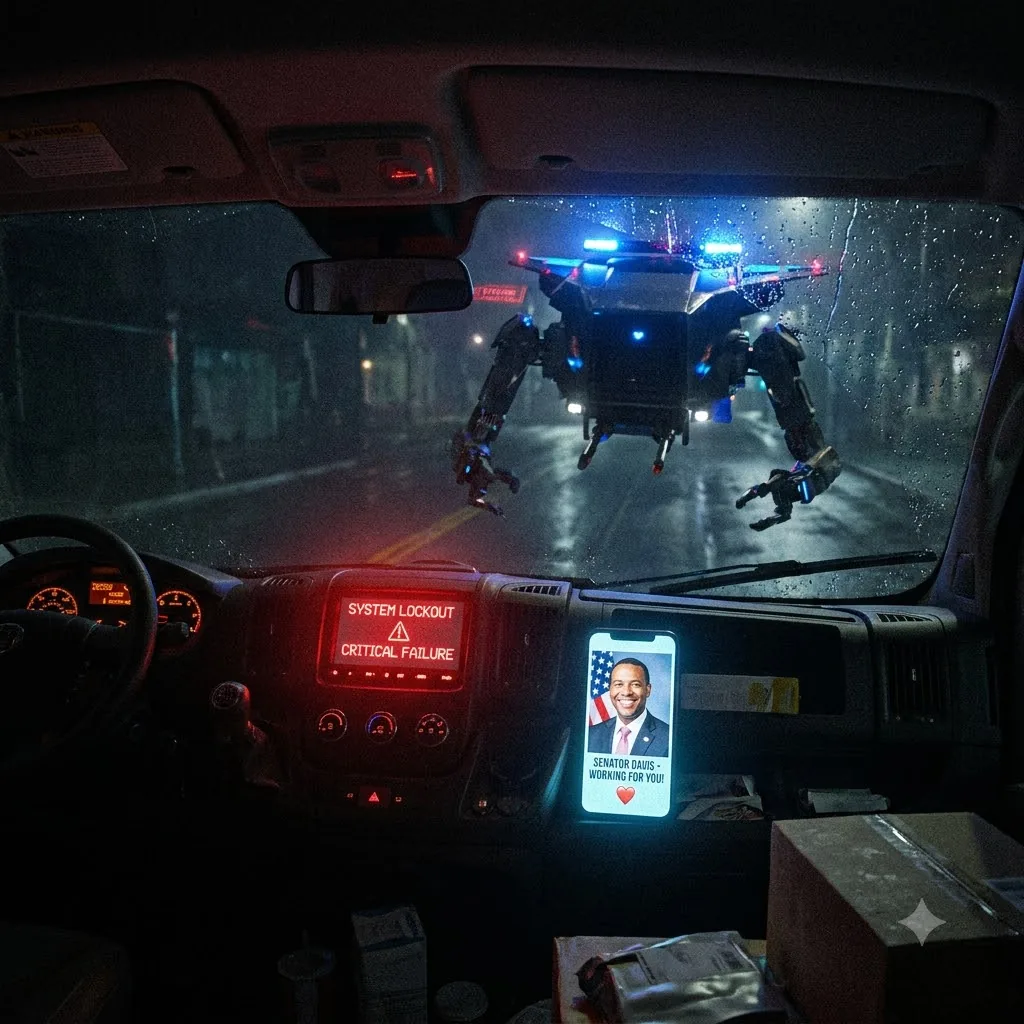
Three sharp, descending metallic chimes shatter the quiet of the cabin, followed instantly by the heavy clack of the deadbolts engaging on all four doors. Sarah stares at the viral tweet glowing on her phone screen-Councilman Sterling smiling under a banner reading *Our Streets, Your Sanctuary: Everyone Is Welcome*-just as her central dashboard display erupts into a blinding, strobing red.
She drops the phone, her hands darting to the manual door latch. She pulls the lever, but the handle refuses to budge, locked solid by the vehicle’s central electronic override. A violent shudder rips through the floorboards, accompanied by the high-pitched mechanical whine of the digital boot deploying. The parking calipers grind against the rotors with a sickening crunch, locking the wheels in place with a force that physically jolts her forward in the driver’s seat.
Sarah scrambles to retrieve her phone from the rubber floor mat. The city’s official Sanctuary App, the software she had downloaded specifically to find this legal, protected space, dominates the screen. A moment ago, the interface displayed a reassuring green checkmark over her location, complete with a small digital smiley face. Now, the screen pulses with a harsh crimson warning banner, completely obscuring the neighborhood map. A stark white timer in the corner of the screen begins counting down from fourteen seconds.
She taps the glass screen frantically, aiming for the ‘Dispute Violation’ button, but the interface remains completely unresponsive. She shifts her gaze from the frozen screen to the windshield. Just beyond the glass, the bright green painted lines of the Municipal Sanctuary Safe Zone stretch across the asphalt, perfectly framing her tires. A city-issued aluminum sign stands firmly bolted to the sidewalk, its bold white lettering officially designating this exact spot as a protected zone for mobile residents. The app itself had guided her here, praising her for utilizing the city’s new compassionate infrastructure.
The automated chimes from the dashboard accelerate, growing louder and more discordant with each passing second. The red light washes over the interior of the van, casting sharp, unnatural shadows against the steering wheel and her bedding in the back. Sarah slams the base of her palm against the emergency unlock button on the driver-side door panel. The plastic button depresses, but the deadbolts remain firmly engaged. The digital lockdown has completely severed her manual controls, turning the very vehicle that served as her only shelter into a sealed steel box.
She looks back down at the device in her trembling hand. Councilman Sterling’s tweet remains partially visible in the background, layered behind the glowing red app notification. The text speaks of community, safety, and an end to the criminalization of displacement. The carefully crafted public relations words blur as a massive, low-frequency hum begins to vibrate through the chassis of the van. The sound is far too deep to be coming from her own engine block.
A large shadow falls over the hood, blocking out the warm afternoon sun. Sarah presses her face against the cold driver’s side window. Turning the corner of the narrow street is a city enforcement drone, a sprawling, unmanned tow vehicle painted in the exact same cheerful pastel green and white color scheme as the Sanctuary App icon. It moves with terrifying, silent speed, its massive electric motors humming as it maneuvers directly toward her.
She beats her fists against the reinforced glass. The street outside is completely empty, devoid of any human parking enforcement officers, social workers, or city employees to whom she might appeal. There is only the algorithm, executing its programmed directive with cold, unfeeling precision. The drone pivots on its oversized tires, backing up toward the front bumper of her van with flawless geometric accuracy.
The timer on her phone screen hits zero. The crimson banner flashes one final time before the screen goes entirely black, severing her connection to the city’s server network. The dashboard chimes stop simultaneously, replaced by a suffocating, heavy silence inside the cabin, broken only by the external whine of the approaching machine’s hydraulics.
Sarah twists in her seat, desperately searching the floorboards for the heavy metal flashlight she keeps under the passenger seat, planning to smash the side window and force her way out. Her fingers brush the cold aluminum casing of the flashlight just as a massive mechanical arm extends from the rear of the drone. The thick hydraulic servos scream as the articulated metal appendage aligns itself perfectly with the undercarriage of her home.
She grips the heavy flashlight and turns back toward the windshield to strike the glass. The shadow of the drone’s lifting mechanism completely swallows the remaining light in the cabin. The automated tow hook slams into her chassis with a deafening crash of buckling steel.
Three sharp, descending metallic chimes shatter the quiet of the cabin, followed instantly by the heavy clack of the deadbolts engaging on all four doors. Sarah stares at the viral tweet glowing on her phone screen-Councilman Sterling smiling under a banner reading *Our Streets, Your Sanctuary: Everyone Is Welcome*-just as her central dashboard display erupts into a blinding, strobing red.
She drops the phone, her hands darting to the manual door latch. She pulls the lever, but the handle refuses to budge, locked solid by the vehicle’s central electronic override. A violent shudder rips through the floorboards, accompanied by the high-pitched mechanical whine of the digital boot deploying. The parking calipers grind against the rotors with a sickening crunch, locking the wheels in place with a force that physically jolts her forward in the driver’s seat.
Sarah scrambles to retrieve her phone from the rubber floor mat. The city’s official Sanctuary App, the software she had downloaded specifically to find this legal, protected space, dominates the screen. A moment ago, the interface displayed a reassuring green checkmark over her location, complete with a small digital smiley face. Now, the screen pulses with a harsh crimson warning banner, completely obscuring the neighborhood map. A stark white timer in the corner of the screen begins counting down from fourteen seconds.
She taps the glass screen frantically, aiming for the ‘Dispute Violation’ button, but the interface remains completely unresponsive. She shifts her gaze from the frozen screen to the windshield. Just beyond the glass, the bright green painted lines of the Municipal Sanctuary Safe Zone stretch across the asphalt, perfectly framing her tires. A city-issued aluminum sign stands firmly bolted to the sidewalk, its bold white lettering officially designating this exact spot as a protected zone for mobile residents. The app itself had guided her here, praising her for utilizing the city’s new compassionate infrastructure.
The automated chimes from the dashboard accelerate, growing louder and more discordant with each passing second. The red light washes over the interior of the van, casting sharp, unnatural shadows against the steering wheel and her bedding in the back. Sarah slams the base of her palm against the emergency unlock button on the driver-side door panel. The plastic button depresses, but the deadbolts remain firmly engaged. The digital lockdown has completely severed her manual controls, turning the very vehicle that served as her only shelter into a sealed steel box.
She looks back down at the device in her trembling hand. Councilman Sterling’s tweet remains partially visible in the background, layered behind the glowing red app notification. The text speaks of community, safety, and an end to the criminalization of displacement. The carefully crafted public relations words blur as a massive, low-frequency hum begins to vibrate through the chassis of the van. The sound is far too deep to be coming from her own engine block.
A large shadow falls over the hood, blocking out the warm afternoon sun. Sarah presses her face against the cold driver’s side window. Turning the corner of the narrow street is a city enforcement drone, a sprawling, unmanned tow vehicle painted in the exact same cheerful pastel green and white color scheme as the Sanctuary App icon. It moves with terrifying, silent speed, its massive electric motors humming as it maneuvers directly toward her.
She beats her fists against the reinforced glass. The street outside is completely empty, devoid of any human parking enforcement officers, social workers, or city employees to whom she might appeal. There is only the algorithm, executing its programmed directive with cold, unfeeling precision. The drone pivots on its oversized tires, backing up toward the front bumper of her van with flawless geometric accuracy.
The timer on her phone screen hits zero. The crimson banner flashes one final time before the screen goes entirely black, severing her connection to the city’s server network. The dashboard chimes stop simultaneously, replaced by a suffocating, heavy silence inside the cabin, broken only by the external whine of the approaching machine’s hydraulics.
Sarah twists in her seat, desperately searching the floorboards for the heavy metal flashlight she keeps under the passenger seat, planning to smash the side window and force her way out. Her fingers brush the cold aluminum casing of the flashlight just as a massive mechanical arm extends from the rear of the drone. The thick hydraulic servos scream as the articulated metal appendage aligns itself perfectly with the undercarriage of her home.
She grips the heavy flashlight and turns back toward the windshield to strike the glass. The shadow of the drone’s lifting mechanism completely swallows the remaining light in the cabin. The automated tow hook slams into her chassis with a deafening crash of buckling steel.