Story code: ST-001387
Part 1: The Collateral Siege
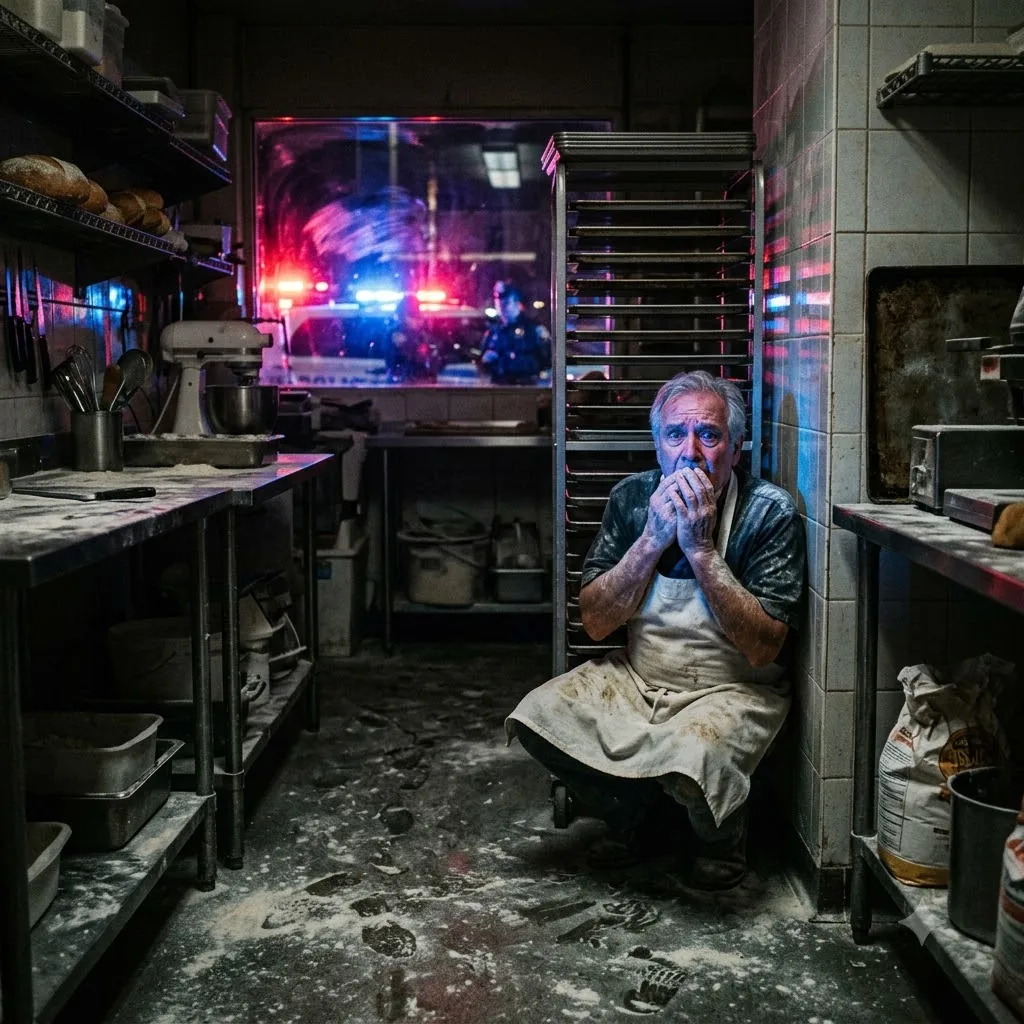
The silence inside the kitchen felt heavy enough to crush bone. Elias crouched behind the massive stainless steel prep island, his knees aching against the cold quarry tile. Red and blue strobe lights sliced through the narrow transom windows, casting jagged, spinning shadows across the stacked fifty-pound sacks of unbleached flour. Outside, the heavy, rhythmic thud of tactical boots hit the asphalt. Men in thick kevlar vests were moving in tight, disciplined formations past the front of his shop. Elias kept his breathing shallow, his hands pressed flat against the metal cabinet doors to steady them. The suffocating darkness of the bakery felt like a tomb, sealed off from the chaos assembling just beyond the brick walls.
Directly across Elm Street sat the elementary school. Elias had memorized its recess schedules over the last ten years, baking to the sound of children playing wall-ball and tag. Now, the two-lane road separating his bakery from the playground was a staging ground for a paramilitary response. An armored vehicle idled out front, its massive diesel engine vibrating through the floorboards of the kitchen and rattling the cooling racks. He visualized the classrooms across the street, picturing the kids huddled under their small desks in the dark, the teachers pressing fingers to their lips, terrified of making a single sound. The sheer scale of the police presence meant the worst had come to their quiet town. He kept his phone screen dimmed to the absolute minimum, checking frantically for emergency alerts, but the cellular network was completely jammed by the sudden density of devices in the area.
Then the noise started, and it did not sound like the aftermath of an attack. It began as a low, collective hum, vibrating through the double-pane glass of the storefront. It grew louder, shifting into a rhythmic, angry cadence. Elias crawled toward the swinging door that separated the dark kitchen from the retail counter. He pushed it open just a fraction of an inch to peer through the gloom.
The strobing emergency lights illuminated a sea of bodies pressing against the police barricades. Hundreds of people were out there, shoulder to shoulder, holding neon poster boards and oversized banners hoisted on wooden poles. The tactical teams were not setting up a perimeter to protect the school from an active threat. They were forming a human wall between the mob and the bakery.
A megaphone crackled to life, the harsh feedback whining over the roar of the crowd. A voice boomed over the intersection, chanting slogans about bigotry, equal rights, and the absolute intolerance of the establishment. The crowd roared the words back, a deafening wave of righteous fury that rattled the display cases. Elias slid down the wall, pulling his knees to his chest. Just forty-eight hours ago, he had politely declined a wedding cake order. He had offered the couple the contact information of three brilliant bakers in the next town over, explaining his personal convictions quietly, privately, without raising his voice. He had believed it was a boundary he was allowed to draw in his own shop. He had believed it would end there.
Instead, his quiet stand had summoned a siege. The news vans had arrived first, followed by the local activists, and then the viral outrage had pulled in hundreds from out of state. Now, the tactical trucks were idling in his parking spaces. The town was paralyzed. The school across the street was undeniably locked down, those children trapped in dark classrooms, collateral damage in a cultural war that had landed right on their doorstep. Elias wiped a layer of fine flour dust from his forehead, his chest tight with guilt and terror. The moral high ground he thought he stood on felt incredibly narrow now, surrounded by the terrifying noise of a mob ready to tear the building down to prove a point about love and tolerance.
The chanting shifted, growing tighter, more aggressive, syncing with the pounding of fists on the hoods of the police cruisers. The officers raised their riot shields, stepping backward as the barricades groaned under the weight of the surge. Elias realized he could not just sit in the dark while the town tore itself apart over his flour and sugar. He needed to call the mayor, or the police chief, or anyone who could de-escalate the standoff before the line broke.
He stood up, stepping out from behind the prep table to get a cellular signal near the front window. The moment he crossed into the retail space, a shadow detached from the crowd, vaulting the metal barricade before the officers could turn. The heavy, sickening crunch of shattering safety glass echoed through the bakery as a solid masonry brick tore through the front window, taking out the gold-leaf lettering on the glass and landing dead center in the main pastry case.
The silence inside the kitchen felt heavy enough to crush bone. Elias crouched behind the massive stainless steel prep island, his knees aching against the cold quarry tile. Red and blue strobe lights sliced through the narrow transom windows, casting jagged, spinning shadows across the stacked fifty-pound sacks of unbleached flour. Outside, the heavy, rhythmic thud of tactical boots hit the asphalt. Men in thick kevlar vests were moving in tight, disciplined formations past the front of his shop. Elias kept his breathing shallow, his hands pressed flat against the metal cabinet doors to steady them. The suffocating darkness of the bakery felt like a tomb, sealed off from the chaos assembling just beyond the brick walls.
Directly across Elm Street sat the elementary school. Elias had memorized its recess schedules over the last ten years, baking to the sound of children playing wall-ball and tag. Now, the two-lane road separating his bakery from the playground was a staging ground for a paramilitary response. An armored vehicle idled out front, its massive diesel engine vibrating through the floorboards of the kitchen and rattling the cooling racks. He visualized the classrooms across the street, picturing the kids huddled under their small desks in the dark, the teachers pressing fingers to their lips, terrified of making a single sound. The sheer scale of the police presence meant the worst had come to their quiet town. He kept his phone screen dimmed to the absolute minimum, checking frantically for emergency alerts, but the cellular network was completely jammed by the sudden density of devices in the area.
Then the noise started, and it did not sound like the aftermath of an attack. It began as a low, collective hum, vibrating through the double-pane glass of the storefront. It grew louder, shifting into a rhythmic, angry cadence. Elias crawled toward the swinging door that separated the dark kitchen from the retail counter. He pushed it open just a fraction of an inch to peer through the gloom.
The strobing emergency lights illuminated a sea of bodies pressing against the police barricades. Hundreds of people were out there, shoulder to shoulder, holding neon poster boards and oversized banners hoisted on wooden poles. The tactical teams were not setting up a perimeter to protect the school from an active threat. They were forming a human wall between the mob and the bakery.
A megaphone crackled to life, the harsh feedback whining over the roar of the crowd. A voice boomed over the intersection, chanting slogans about bigotry, equal rights, and the absolute intolerance of the establishment. The crowd roared the words back, a deafening wave of righteous fury that rattled the display cases. Elias slid down the wall, pulling his knees to his chest. Just forty-eight hours ago, he had politely declined a wedding cake order. He had offered the couple the contact information of three brilliant bakers in the next town over, explaining his personal convictions quietly, privately, without raising his voice. He had believed it was a boundary he was allowed to draw in his own shop. He had believed it would end there.
Instead, his quiet stand had summoned a siege. The news vans had arrived first, followed by the local activists, and then the viral outrage had pulled in hundreds from out of state. Now, the tactical trucks were idling in his parking spaces. The town was paralyzed. The school across the street was undeniably locked down, those children trapped in dark classrooms, collateral damage in a cultural war that had landed right on their doorstep. Elias wiped a layer of fine flour dust from his forehead, his chest tight with guilt and terror. The moral high ground he thought he stood on felt incredibly narrow now, surrounded by the terrifying noise of a mob ready to tear the building down to prove a point about love and tolerance.
The chanting shifted, growing tighter, more aggressive, syncing with the pounding of fists on the hoods of the police cruisers. The officers raised their riot shields, stepping backward as the barricades groaned under the weight of the surge. Elias realized he could not just sit in the dark while the town tore itself apart over his flour and sugar. He needed to call the mayor, or the police chief, or anyone who could de-escalate the standoff before the line broke.
He stood up, stepping out from behind the prep table to get a cellular signal near the front window. The moment he crossed into the retail space, a shadow detached from the crowd, vaulting the metal barricade before the officers could turn. The heavy, sickening crunch of shattering safety glass echoed through the bakery as a solid masonry brick tore through the front window, taking out the gold-leaf lettering on the glass and landing dead center in the main pastry case.