Story code: ST-000758
Part 2: Sweat Equity
The heavy glass did not shatter, but the loud, flat crack of its collision with the oak table echoed through Room B like a gunshot. The polite murmurs died instantly. In the sudden silence, the humming cooling fan of the digital projector sounded deafeningly loud. Mateo kept his hand pressed firmly on the lid of the jar.
He twisted his wrist. The metal seal broke with a soft, wet hiss, and immediately, the stench of dead earth and hydrogen sulfide bloomed into the aggressively chilled, sterile air of the room. It smelled like rotting eggs and prehistoric, subterranean decay.
“That,” Mateo said, his voice quiet but carrying effortlessly to the back rows, “is what your partner’s sweat equity is pulling out of my pumphouse.”
Chairman Vance stared at the jar, his face flushing a mottled, defensive pink. “Mr. Ruiz. You are completely out of order. This is a scheduled presentation, and you are disrupting county business.”
“My well is dry, Vance,” Mateo said, not looking at the chairman. He kept his eyes locked on Arthur. “First time in eighty years. The retention pond cracked a week ago. Now the pump is sucking mud. Because this ‘partner’ of yours sank three high-capacity industrial turbines into the shared basin and has been running them twenty-four hours a day.”
Arthur did not flinch. He did not look angry, only mildly inconvenienced. He took a half-step back from the creeping odor of the jar, sliding a manicured hand into the pocket of his spotless khakis.
“The water table fluctuates, Mr. Ruiz,” Arthur said, his tone infuriatingly clinical. “It is a matter of hydrology, not malice. We secured the proper commercial permits for our depth. If your legacy equipment is failing to reach the new static level, that is an infrastructure issue on your parcel.”
“The new static level,” Mateo repeated, the words tasting like ash in his mouth. “You drained a thousand-year aquifer in six months to grow water-intensive export crops in a semi-arid valley.”
“We brought two hundred jobs and over a million dollars in commercial tax revenue to a dying county,” Arthur corrected smoothly, glancing at Vance for support.
Vance found his courage, leaning aggressively into his microphone. The PA system squealed briefly. “He is exactly right, Mateo. You can’t just storm in here throwing mud. Agritech is operating entirely within the county guidelines. They paid for the geological surveys. They paid the extraction taxes. This county was going bankrupt before they bought the old Miller tract. We have roads to pave. We have a school district to fund. We cannot control the rain.”
Mateo looked down the length of the board’s table. Five men and women he had known his entire life. People who had bought sweet corn from his father, who had stood beside him at the hardware store. They were looking down at their legal pads, fascinated by their own pens, refusing to meet his eyes.
It wasn’t just bureaucratic ignorance. It was a transaction. They knew exactly what was happening. They were selling the ground out from under their own neighbors to balance a municipal ledger.
“So you just let them pull it all,” Mateo said, a cold, heavy realization settling in his gut. “Until every residential well in the valley breathes dust.”
“It doesn’t have to be a total loss for you,” Arthur interjected, his tone shifting seamlessly to one of practiced, corporate sympathy. “Agritech wants to be a good neighbor. We know the transition to modern agriculture is hard on heritage farms. If you can’t afford to drill a thousand-foot commercial well, my company is prepared to offer you fair market value for your acreage. We are looking to expand our pivot irrigation into that sector anyway.”
Mateo stared at him. The sheer, calculated audacity of it made the blood pound fiercely in his ears. They didn’t just want the water. They were deliberately drying him out to bankrupt him, so they could buy his land for pennies on the dollar and expand the very operation that was killing his farm.
“You want to buy my dirt,” Mateo said softly.
“We want to offer a lifeline,” Arthur smiled.
Mateo’s gaze drifted from Arthur’s immaculate smile to the stack of glossy papers resting next to Vance’s gavel. The agenda for the evening’s meeting. The top sheet was turned slightly toward him, bearing a bold, black header.
*Resolution 44: Expedited Approval – Agritech Deep Bedrock Borehole.*
Mateo felt a physical shock register in his chest. A deep bedrock bore. They weren’t just expanding the upper basin extraction. They were applying to punch through the impermeable clay layer into the lower fossil aquifer. If they did that, the depressurization would collapse the upper basin entirely. No amount of rain would ever refill it. The land would permanently subside, turning the entire valley into a barren, hollowed-out sponge.
“You’re voting on a bedrock bore,” Mateo said, his voice losing its quiet restraint, rising to a hard, sharp edge. “Tonight? If you let them punch through the clay shield, the upper aquifer dies forever. The ground will literally collapse.”
Vance banged his gavel, the wooden crack sounding weak and hollow against the rising tension in the room. “That is an unproven engineering theory, Mateo, and we are relying on Agritech’s geologists. Now step away from the table, or I will have Deputy Miller remove you for trespassing.”
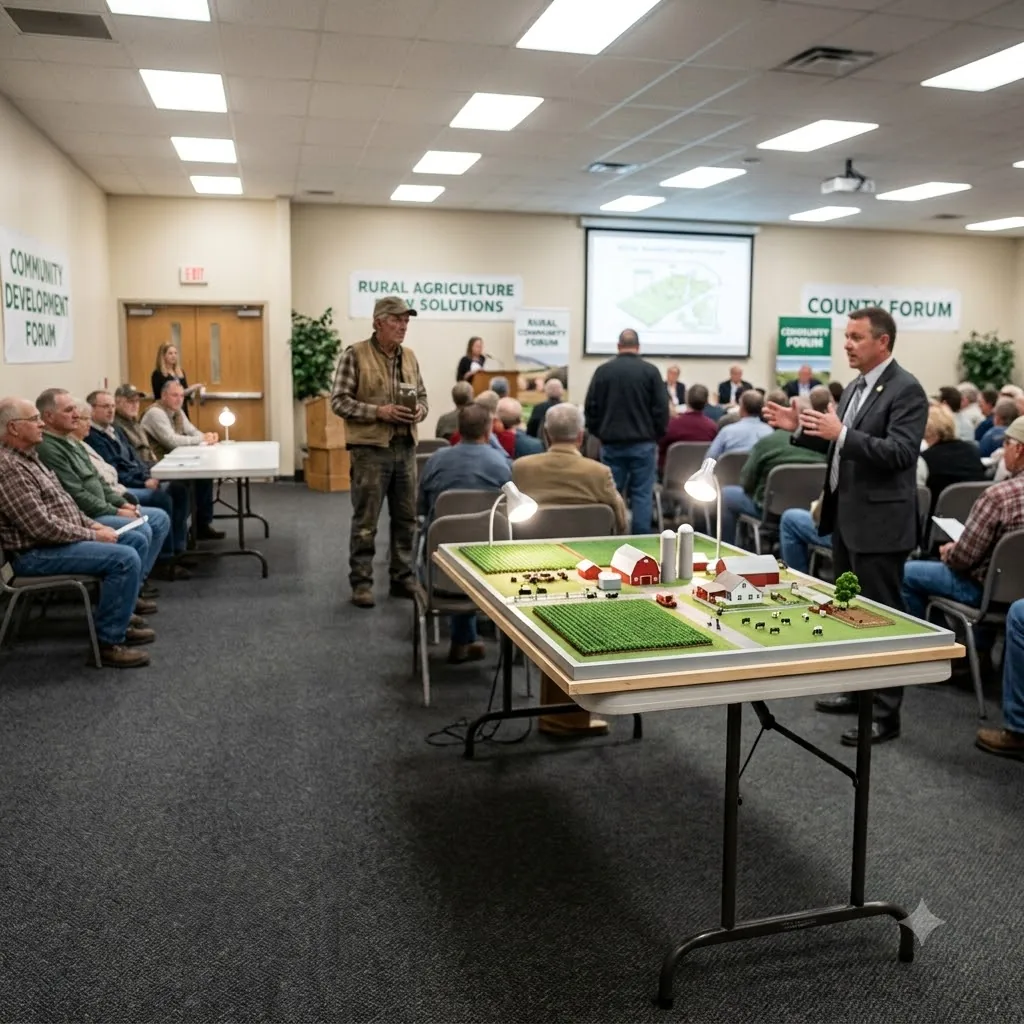
Mateo didn’t move. He looked to the back of the room, where the elderly deputy was already pushing off the wall, his hand resting hesitantly on his utility belt. The crowd of thirty-odd locals in the folding chairs was murmuring now, the sterile silence of the room broken by anxious, overlapping whispers.
“Vance,” Mateo said, his hand tightening around the cold glass rim of the jar. “If you sign that permit, you’re signing the death warrant for every family living outside the city limits.”
“Take him out, Miller!” Vance ordered, his voice trembling with defensive anger. “Call the vote. Let’s get this done right now.”
Deputy Miller’s heavy boots approached rapidly from the center aisle. Arthur took a step forward, reaching out to slide the agenda packet out of Mateo’s reach, a smug, final look of victory settling into the corners of his eyes.