Story code: ST-000378
Part 1: The Metric and the Sidewalk
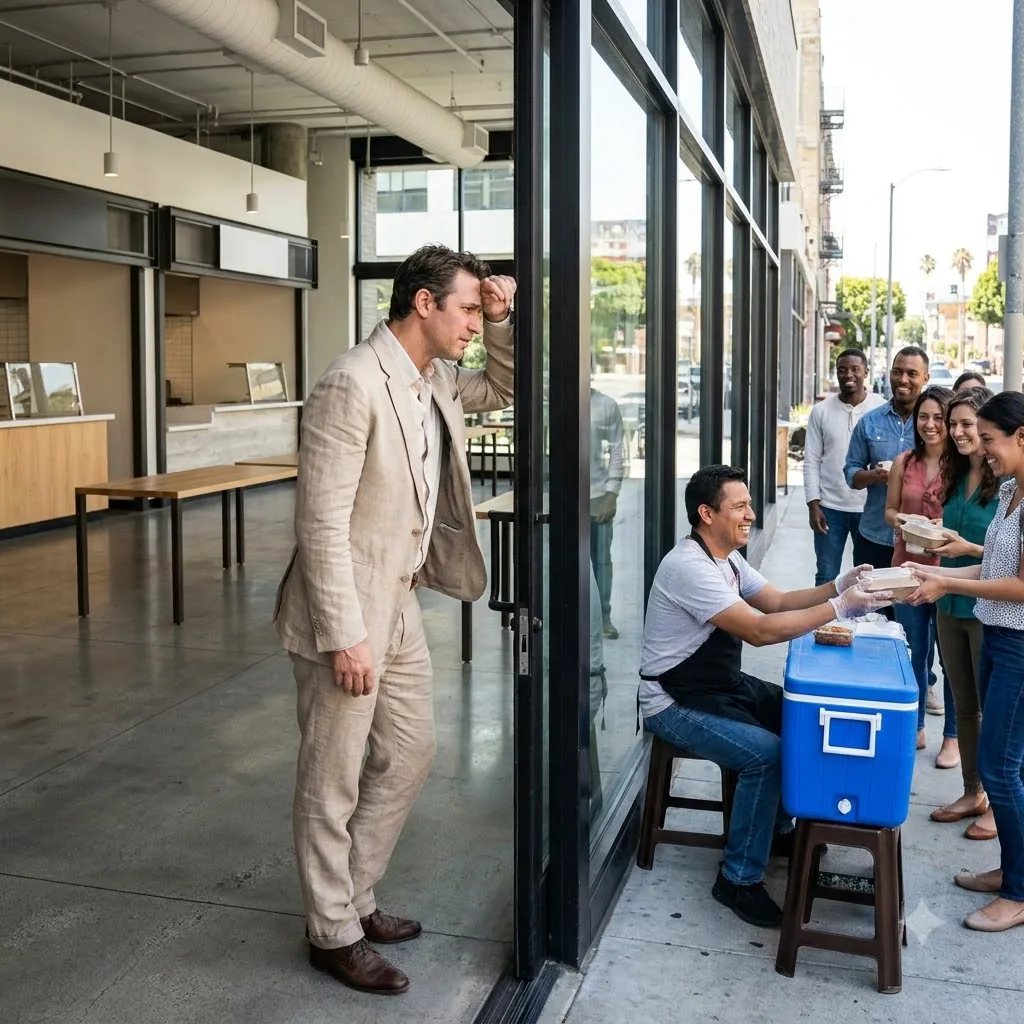
Marcus pressed his forehead against the chilled, triple-paned glass of his empty food hall, his thumb swiping down on his tablet to refresh the miserable foot-traffic metrics. Ten feet away, on the other side of the million-dollar facade, a man named Mateo dragged a battered blue Igloo cooler across the concrete and immediately drew a line of thirty paying customers. Marcus tapped the screen again, watching his daily visitor count remain a stubborn, mocking zero, while cash traded hands in a chaotic, unpermitted blur on the public sidewalk.
The Artisan Mercado was supposed to be Marcus’s severance package transformed into an empire. He had poured every cent of his corporate buyout into this space. He had navigated eight months of zoning meetings, fire inspections, and plumbing upgrades just to open the doors. The interior boasted polished concrete floors, custom brushed brass fixtures, and a row of imported Italian espresso machines that currently sat cold and silent. Outside, Mateo didn’t even have a folding table. He had a stack of thin plastic grocery bags, a roll of industrial paper towels, and a steaming batch of tamales that smelled faintly of roasted chiles and rendered fat even through the heavy doors.
The line for the cooler stretched past Marcus’s recessed entryway, barricading the path for anyone who might actually want to enter the Mercado for a fifteen-dollar avocado toast. Construction workers in high-visibility vests, nurses in scrubs, and teenagers on their way to the high school all bumped shoulders, handing over crumpled bills.
Marcus walked back to the reclaimed-wood host stand and opened his laptop. He had spent the last three nights awake, wired on cold brew, coding a digital solution to his physical sidewalk problem. His former career in tech logistics had taught him exactly how the city’s enforcement algorithm worked. It prioritized volume and geolocation density above all else. A single polite complaint about an unlicensed vendor would sit in a municipal queue for six months. Five hundred unique, staggered reports generated from spoofed IP addresses within a two-block radius would trigger an automatic, high-priority dispatch.
Marcus pulled up the terminal window on his screen. He watched the crowd outside laugh as Mateo handed out three steaming foil bundles to a guy wearing a tailored suit. The injustice of it all burned in Marcus’s chest. He had done everything by the book, paid every fee, and jumped through every bureaucratic hoop. The vendor was skipping the line, stealing the foot traffic Marcus had paid a premium commercial lease to capture.
Marcus hit the return key.
Lines of green text cascaded down the dark screen as the script successfully executed. Complaint generated for health code violation, unpermitted food sales. Complaint generated for sidewalk obstruction, ADA non-compliance. Complaint generated for unsafe grease disposal. The custom bot fed the municipal server a steady, overwhelming diet of outrage, all perfectly formatted and flagged with Mateo’s exact GPS coordinates. The program was designed to emulate the outrage of a highly engaged neighborhood watch, submitting photos scraped from local map data and varying the complaint syntax to avoid the city’s spam filters.
Marcus closed the laptop and grabbed his cold drink. He stood by the glass, waiting for the system to work exactly as programmed. It was nothing personal against the man with the blue cooler. It was just basic survival math. Marcus had massive overhead, liability insurance, and a bloated payroll to meet by Friday. Mateo had a plastic box and zero accountability.
The city enforcement vehicle arrived twenty-eight minutes later. Its yellow light bar flashed aggressively against the morning gloom as the driver hopped the curb, parking half on the sidewalk. A city inspector stepped out of the white hybrid SUV, holding a ruggedized tablet encased in thick black rubber.
Marcus straightened his posture, taking a slow sip of his black coffee. He prepared himself to watch the natural order of commerce be forcefully restored. The inspector wore a heavy neon vest over a navy windbreaker, a silver badge clipped to his chest. He looked at his screen, looked up at the busy block, and began walking purposefully toward the tamale cooler.
Mateo didn’t run. He just kept bagging food, calmly taking a twenty-dollar bill from a woman in a trench coat and making change from a thick roll in his front pocket. Marcus leaned closer to the glass, his breath fogging the pristine surface. The inspector stopped right beside the battered blue cooler.
He did not ask to see a health department license. He did not pull out a ticket book or confiscate the foil-wrapped food. He didn’t even speak a single word to Mateo.
Instead, the inspector turned ninety degrees and marched directly toward Marcus’s recessed entryway.
Marcus took a step back as the heavy glass door swung open. The entry chime echoed loudly through the vast, empty food hall. The inspector stepped onto the polished concrete, his heavy black boots leaving wet, muddy prints on the floor Marcus had personally buffed at midnight. The official did not look at the expensive brass fixtures or the artisanal pastry display. He looked at a brass serial number plate affixed to the inside of the door frame, then tapped a rapid series of commands into his ruggedized tablet.
A portable thermal printer attached to the inspector’s thick leather belt whined to life. It spat out a long, bright orange sticker covered in bold black text.
The inspector peeled the backing off the heavy adhesive. Without a word of greeting or explanation, he slapped the neon orange Notice of Immediate Closure directly onto the inside of Marcus’s spotless glass door, smoothing it down right at eye level, effectively sealing the building.
Marcus pressed his forehead against the chilled, triple-paned glass of his empty food hall, his thumb swiping down on his tablet to refresh the miserable foot-traffic metrics. Ten feet away, on the other side of the million-dollar facade, a man named Mateo dragged a battered blue Igloo cooler across the concrete and immediately drew a line of thirty paying customers. Marcus tapped the screen again, watching his daily visitor count remain a stubborn, mocking zero, while cash traded hands in a chaotic, unpermitted blur on the public sidewalk.
The Artisan Mercado was supposed to be Marcus’s severance package transformed into an empire. He had poured every cent of his corporate buyout into this space. He had navigated eight months of zoning meetings, fire inspections, and plumbing upgrades just to open the doors. The interior boasted polished concrete floors, custom brushed brass fixtures, and a row of imported Italian espresso machines that currently sat cold and silent. Outside, Mateo didn’t even have a folding table. He had a stack of thin plastic grocery bags, a roll of industrial paper towels, and a steaming batch of tamales that smelled faintly of roasted chiles and rendered fat even through the heavy doors.
The line for the cooler stretched past Marcus’s recessed entryway, barricading the path for anyone who might actually want to enter the Mercado for a fifteen-dollar avocado toast. Construction workers in high-visibility vests, nurses in scrubs, and teenagers on their way to the high school all bumped shoulders, handing over crumpled bills.
Marcus walked back to the reclaimed-wood host stand and opened his laptop. He had spent the last three nights awake, wired on cold brew, coding a digital solution to his physical sidewalk problem. His former career in tech logistics had taught him exactly how the city’s enforcement algorithm worked. It prioritized volume and geolocation density above all else. A single polite complaint about an unlicensed vendor would sit in a municipal queue for six months. Five hundred unique, staggered reports generated from spoofed IP addresses within a two-block radius would trigger an automatic, high-priority dispatch.
Marcus pulled up the terminal window on his screen. He watched the crowd outside laugh as Mateo handed out three steaming foil bundles to a guy wearing a tailored suit. The injustice of it all burned in Marcus’s chest. He had done everything by the book, paid every fee, and jumped through every bureaucratic hoop. The vendor was skipping the line, stealing the foot traffic Marcus had paid a premium commercial lease to capture.
Marcus hit the return key.
Lines of green text cascaded down the dark screen as the script successfully executed. Complaint generated for health code violation, unpermitted food sales. Complaint generated for sidewalk obstruction, ADA non-compliance. Complaint generated for unsafe grease disposal. The custom bot fed the municipal server a steady, overwhelming diet of outrage, all perfectly formatted and flagged with Mateo’s exact GPS coordinates. The program was designed to emulate the outrage of a highly engaged neighborhood watch, submitting photos scraped from local map data and varying the complaint syntax to avoid the city’s spam filters.
Marcus closed the laptop and grabbed his cold drink. He stood by the glass, waiting for the system to work exactly as programmed. It was nothing personal against the man with the blue cooler. It was just basic survival math. Marcus had massive overhead, liability insurance, and a bloated payroll to meet by Friday. Mateo had a plastic box and zero accountability.
The city enforcement vehicle arrived twenty-eight minutes later. Its yellow light bar flashed aggressively against the morning gloom as the driver hopped the curb, parking half on the sidewalk. A city inspector stepped out of the white hybrid SUV, holding a ruggedized tablet encased in thick black rubber.
Marcus straightened his posture, taking a slow sip of his black coffee. He prepared himself to watch the natural order of commerce be forcefully restored. The inspector wore a heavy neon vest over a navy windbreaker, a silver badge clipped to his chest. He looked at his screen, looked up at the busy block, and began walking purposefully toward the tamale cooler.
Mateo didn’t run. He just kept bagging food, calmly taking a twenty-dollar bill from a woman in a trench coat and making change from a thick roll in his front pocket. Marcus leaned closer to the glass, his breath fogging the pristine surface. The inspector stopped right beside the battered blue cooler.
He did not ask to see a health department license. He did not pull out a ticket book or confiscate the foil-wrapped food. He didn’t even speak a single word to Mateo.
Instead, the inspector turned ninety degrees and marched directly toward Marcus’s recessed entryway.
Marcus took a step back as the heavy glass door swung open. The entry chime echoed loudly through the vast, empty food hall. The inspector stepped onto the polished concrete, his heavy black boots leaving wet, muddy prints on the floor Marcus had personally buffed at midnight. The official did not look at the expensive brass fixtures or the artisanal pastry display. He looked at a brass serial number plate affixed to the inside of the door frame, then tapped a rapid series of commands into his ruggedized tablet.
A portable thermal printer attached to the inspector’s thick leather belt whined to life. It spat out a long, bright orange sticker covered in bold black text.
The inspector peeled the backing off the heavy adhesive. Without a word of greeting or explanation, he slapped the neon orange Notice of Immediate Closure directly onto the inside of Marcus’s spotless glass door, smoothing it down right at eye level, effectively sealing the building.