Story code: ST-001569
Part 1: The Bag Under the Clipboard
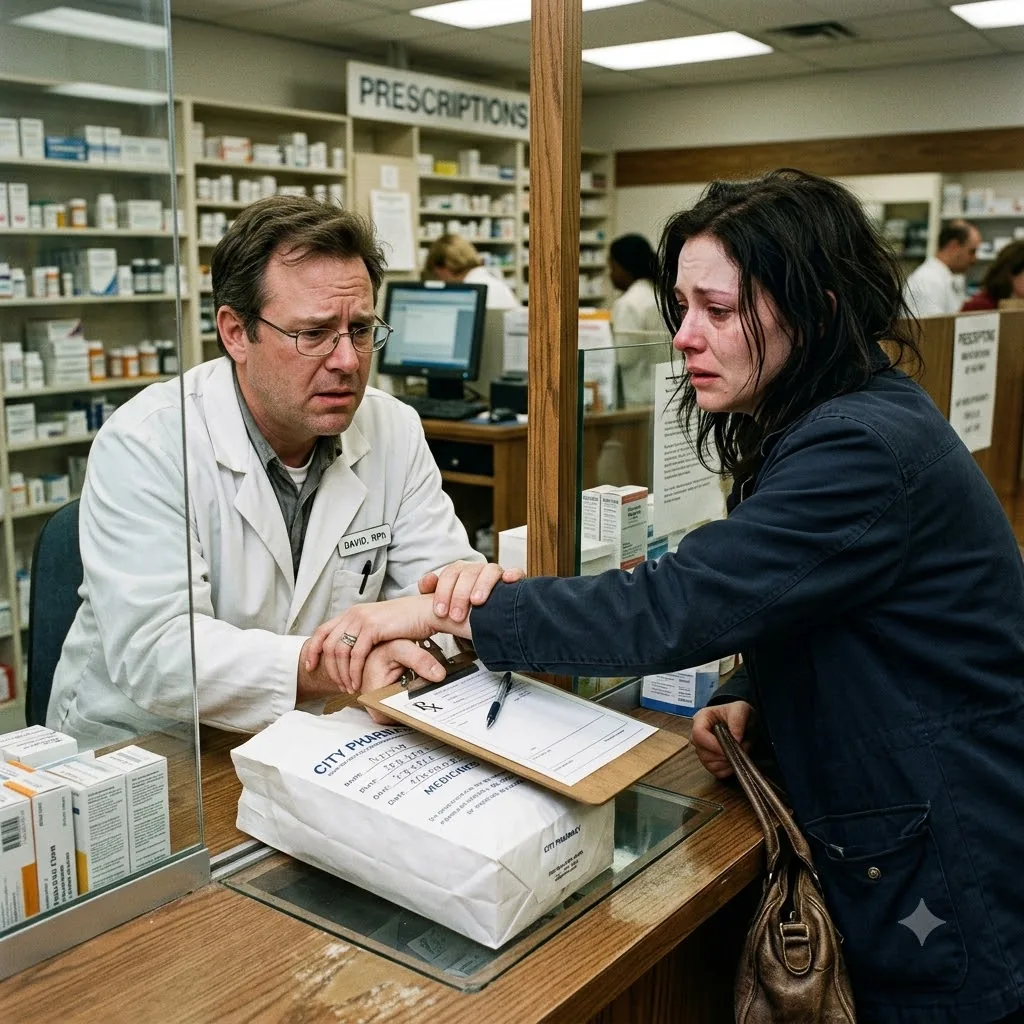
David had the white bag halfway off the counter when the bell over the pharmacy gate chimed and the front line shifted. He dropped the bag back down so fast the bottles inside knocked together with a thick, expensive clack, then flattened a clipboard over the twisted paper handles like that could make the whole thing disappear.
He checked the wall clock again. Fourteen minutes until noon. It should have been enough time. The pickup had been called in, flagged, overridden, re-counted, signed twice, and packed in the plainest bag they had. All he had to do now was keep it behind the register until the driver came through the side lane, no fuss, no names spoken out loud.
Instead, old Mr. Denby was still arguing over a copay at window two, a mother with a stroller had three insurance cards spread like playing cards over the drop-off counter, and the line at pickup had curled past the cough syrup display. David kept one hand on the clipboard as if it held charts instead of a weight that made the laminate bow under his fingers.
He tried to angle himself so nobody could see beneath it. His palm was damp. He wiped it on his coat, then reached for the next customer.
That was when Martha came through.
She did not join the line. She did not look at the signs or the red rope or the irritated man who stepped aside with a sharp breath when she passed him. She came straight to the center window with her handbag clamped under one arm and a rectangle of laminated paper in her hand. Her coat was buttoned wrong, one side higher than the other, and her hair looked like she had pinned it without using a mirror.
David felt the back of his neck tighten before she even spoke. Martha was one of those regulars every pharmacy learns by posture alone. She usually waited her turn. Usually had every refill number written neatly on the back of an envelope. Usually said please before she said the name.
Today she put her hand through the opening under the glass and caught his wrist against the counter before he could reach for the bag again.
Not hard enough to injure him. Hard enough to stop him.
Her fingers were cold and dry. The laminated sheet slid over the glass with a papery hiss and came to rest between them. A seal. A signature. A full name in black type. The word death stood out so starkly it seemed larger than the rest.
David looked down, then back up at her face.
The customers nearest the window had gone quiet in that reflexive way people do when they realize an ordinary errand has turned into something they are not supposed to witness.
“Mrs. Weller,” he said softly.
“Look at it,” Martha said.
He was already looking. The lamination was old and slightly cloudy at the edges, as if it had been handled too often. He could see his own blurred reflection over the county seal. The date on it was recent enough to make his throat tighten. He knew the last name before he reached the line that confirmed it.
The child who had once stood beside Martha with sticker books and apple sauce pouches and little paper prescription bags folded around inhalers was gone.
David felt her grip on his wrist shift, tightening when his eyes flicked toward the clipboard.
“Do not look away from me,” she said.
He swallowed. “I am sorry for your loss. I truly am.”
It was the right sentence and the wrong one. He heard it land between them with the dead, polished sound of something dispensed by habit.
Martha gave a small, breathless laugh that was not amusement. “That is what you told me last month when the refill was delayed. That is what your girl at the counter told me two weeks ago when the doctor had not called back. Sorry. Sorry. Sorry.”
At window two, Mr. Denby stopped arguing mid-sentence. The mother with the stroller gathered her cards into a pile and drew her child closer without taking her eyes off the center counter.
David lowered his voice. “Mrs. Weller, if you want to step over to consultation, we can talk privately.”
“No,” she said at once. “I spent six months being told to wait in corners. I spent six months hearing there was a process, there were limits, there were safeguards, there were shortages, there were notes from the insurer, there were state caps, there were concerns. Every time I came in here, someone found a way to say no while pretending it was not a no.”
Her hand released his wrist only long enough to press the laminated certificate flatter against the glass. The plastic caught the fluorescent light.
David became acutely aware of the heavy bag under the clipboard. It was absurd how visible it felt, as if the white paper had started to glow. He edged his elbow over one corner, trying to cover where the bottom bulged.
Martha saw the movement. Her eyes dropped, not all the way, just enough.
He moved the clipboard again, too fast.
That was a mistake.
The bag shifted, and the handles slipped free. For a second one side gaped open. A dense stack of orange vials, each capped and labeled, flashed inside before the paper folded back in on itself.
Martha went still.
David put his hand over the opening. “This is not related to your account.”
“No,” she said, and now her voice was very calm. “It never is when it belongs to someone else.”
He could feel every person in line listening. He glanced toward the consultation door, then toward the pharmacist station in the back where the staff pharmacist was on the phone with a prescriber, one finger raised in a wait signal she had not even aimed at him.
“Mrs. Weller,” he said, keeping his tone even with effort, “there are privacy laws. I cannot discuss another patient.”
“You discussed my son in front of half this store every time you said the same words loud enough for everyone to hear. Too early. Too much. Too soon. Needs review. Come back tomorrow.” Her eyes stayed on the bag. “But this one was ready before noon. This one is heavy enough to bend the counter.”
David opened his mouth, then shut it. The certificate lay between his hand and hers like a summons neither of them could move aside.
Martha reached into her handbag with her free hand. Not hurried. Not shaking now. She drew out a folded sheet, then another, and set them on top of the death certificate one by one, aligning the corners with careful precision.
Fax confirmations. Prescription printouts. Pickup logs, or copies that looked enough like them to make his stomach drop.
He knew he should call the pharmacist over immediately. He knew he should stop the exchange, take Martha somewhere private, document everything, de-escalate before someone in line lifted a phone. Instead he heard himself say, barely above a whisper, “Where did you get those.”
Martha looked at him, then at the white bag under his hand.
“From the places people leave things when they think a mother is too tired to keep looking,” she said. Then she touched one page with a clipped fingernail and started to slide it toward him just as a shadow fell across the counter and the pharmacist said his name.
David had the white bag halfway off the counter when the bell over the pharmacy gate chimed and the front line shifted. He dropped the bag back down so fast the bottles inside knocked together with a thick, expensive clack, then flattened a clipboard over the twisted paper handles like that could make the whole thing disappear.
He checked the wall clock again. Fourteen minutes until noon. It should have been enough time. The pickup had been called in, flagged, overridden, re-counted, signed twice, and packed in the plainest bag they had. All he had to do now was keep it behind the register until the driver came through the side lane, no fuss, no names spoken out loud.
Instead, old Mr. Denby was still arguing over a copay at window two, a mother with a stroller had three insurance cards spread like playing cards over the drop-off counter, and the line at pickup had curled past the cough syrup display. David kept one hand on the clipboard as if it held charts instead of a weight that made the laminate bow under his fingers.
He tried to angle himself so nobody could see beneath it. His palm was damp. He wiped it on his coat, then reached for the next customer.
That was when Martha came through.
She did not join the line. She did not look at the signs or the red rope or the irritated man who stepped aside with a sharp breath when she passed him. She came straight to the center window with her handbag clamped under one arm and a rectangle of laminated paper in her hand. Her coat was buttoned wrong, one side higher than the other, and her hair looked like she had pinned it without using a mirror.
David felt the back of his neck tighten before she even spoke. Martha was one of those regulars every pharmacy learns by posture alone. She usually waited her turn. Usually had every refill number written neatly on the back of an envelope. Usually said please before she said the name.
Today she put her hand through the opening under the glass and caught his wrist against the counter before he could reach for the bag again.
Not hard enough to injure him. Hard enough to stop him.
Her fingers were cold and dry. The laminated sheet slid over the glass with a papery hiss and came to rest between them. A seal. A signature. A full name in black type. The word death stood out so starkly it seemed larger than the rest.
David looked down, then back up at her face.
The customers nearest the window had gone quiet in that reflexive way people do when they realize an ordinary errand has turned into something they are not supposed to witness.
“Mrs. Weller,” he said softly.
“Look at it,” Martha said.
He was already looking. The lamination was old and slightly cloudy at the edges, as if it had been handled too often. He could see his own blurred reflection over the county seal. The date on it was recent enough to make his throat tighten. He knew the last name before he reached the line that confirmed it.
The child who had once stood beside Martha with sticker books and apple sauce pouches and little paper prescription bags folded around inhalers was gone.
David felt her grip on his wrist shift, tightening when his eyes flicked toward the clipboard.
“Do not look away from me,” she said.
He swallowed. “I am sorry for your loss. I truly am.”
It was the right sentence and the wrong one. He heard it land between them with the dead, polished sound of something dispensed by habit.
Martha gave a small, breathless laugh that was not amusement. “That is what you told me last month when the refill was delayed. That is what your girl at the counter told me two weeks ago when the doctor had not called back. Sorry. Sorry. Sorry.”
At window two, Mr. Denby stopped arguing mid-sentence. The mother with the stroller gathered her cards into a pile and drew her child closer without taking her eyes off the center counter.
David lowered his voice. “Mrs. Weller, if you want to step over to consultation, we can talk privately.”
“No,” she said at once. “I spent six months being told to wait in corners. I spent six months hearing there was a process, there were limits, there were safeguards, there were shortages, there were notes from the insurer, there were state caps, there were concerns. Every time I came in here, someone found a way to say no while pretending it was not a no.”
Her hand released his wrist only long enough to press the laminated certificate flatter against the glass. The plastic caught the fluorescent light.
David became acutely aware of the heavy bag under the clipboard. It was absurd how visible it felt, as if the white paper had started to glow. He edged his elbow over one corner, trying to cover where the bottom bulged.
Martha saw the movement. Her eyes dropped, not all the way, just enough.
He moved the clipboard again, too fast.
That was a mistake.
The bag shifted, and the handles slipped free. For a second one side gaped open. A dense stack of orange vials, each capped and labeled, flashed inside before the paper folded back in on itself.
Martha went still.
David put his hand over the opening. “This is not related to your account.”
“No,” she said, and now her voice was very calm. “It never is when it belongs to someone else.”
He could feel every person in line listening. He glanced toward the consultation door, then toward the pharmacist station in the back where the staff pharmacist was on the phone with a prescriber, one finger raised in a wait signal she had not even aimed at him.
“Mrs. Weller,” he said, keeping his tone even with effort, “there are privacy laws. I cannot discuss another patient.”
“You discussed my son in front of half this store every time you said the same words loud enough for everyone to hear. Too early. Too much. Too soon. Needs review. Come back tomorrow.” Her eyes stayed on the bag. “But this one was ready before noon. This one is heavy enough to bend the counter.”
David opened his mouth, then shut it. The certificate lay between his hand and hers like a summons neither of them could move aside.
Martha reached into her handbag with her free hand. Not hurried. Not shaking now. She drew out a folded sheet, then another, and set them on top of the death certificate one by one, aligning the corners with careful precision.
Fax confirmations. Prescription printouts. Pickup logs, or copies that looked enough like them to make his stomach drop.
He knew he should call the pharmacist over immediately. He knew he should stop the exchange, take Martha somewhere private, document everything, de-escalate before someone in line lifted a phone. Instead he heard himself say, barely above a whisper, “Where did you get those.”
Martha looked at him, then at the white bag under his hand.
“From the places people leave things when they think a mother is too tired to keep looking,” she said. Then she touched one page with a clipped fingernail and started to slide it toward him just as a shadow fell across the counter and the pharmacist said his name.