Story code: ST-001536
Part 1: Invalid Clearance
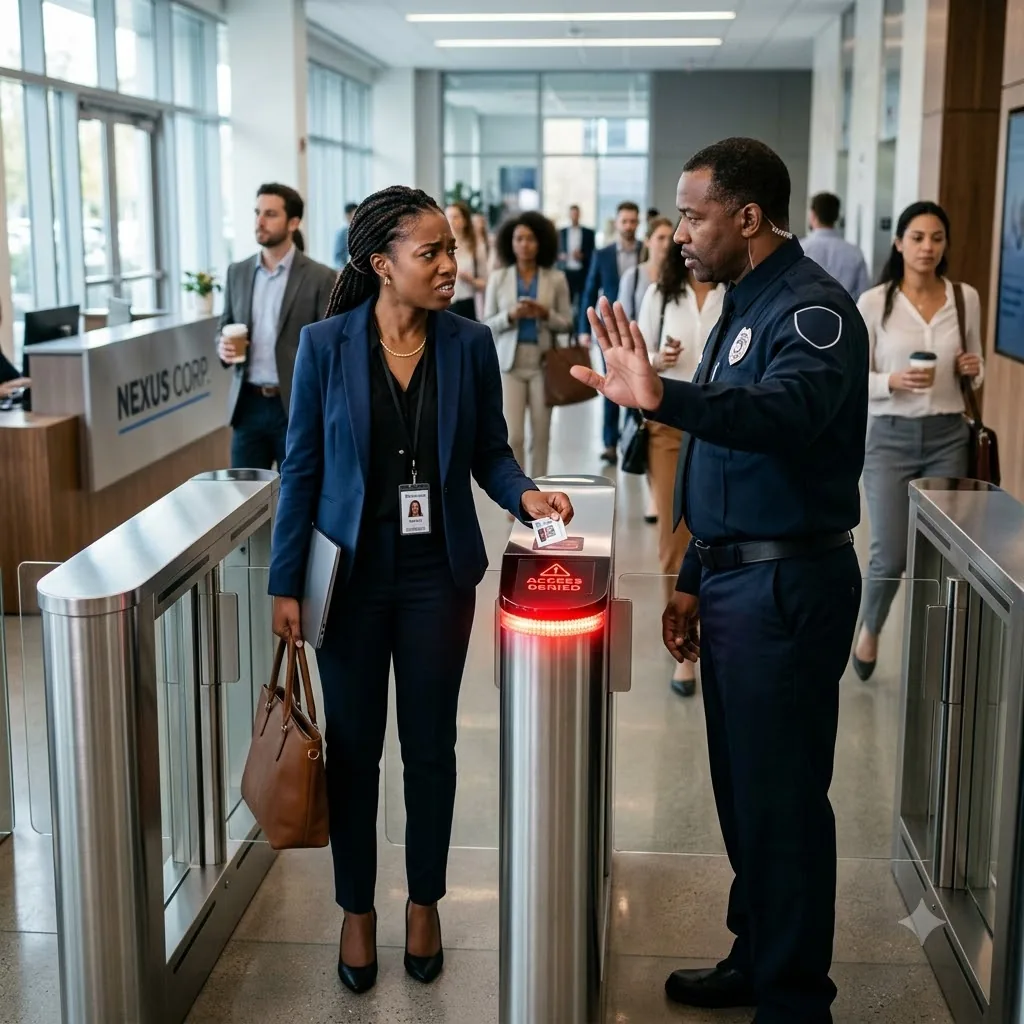
The scanner glowed a flat, unforgiving red, followed by a sharp double-beep that locked the glass turnstile in place. Maya pushed her hip against the barrier, but the thick pane refused to yield. Around her, a steady stream of winter coats and leather briefcases flowed effortlessly through the adjacent lanes, badging in with gentle green chimes. She stepped back and wiped the plastic surface of her ID card against her slacks, convinced there was simply a smudge on the chip. It was Tuesday, one of her two mandated days on the executive tier. A strict new policy required her physical presence to maintain her current benefits package, the exact tier that covered Leo’s asthma treatments without a crippling deductible. A system glitch right now was the absolute last thing she needed. She tapped the card against the reader again, holding it flat against the sensor. Red. Double-beep. The glass remained locked tight.
A man in a dark grey security blazer stepped into her peripheral vision. He did not approach the men in tailored suits bypassing them on the left. He stepped directly into Maya’s path, crossing his arms over his chest. His eyes dropped to the bulky canvas tote bag over her shoulder, then to her face.
“Courier deliveries go through the loading dock on level B,” the guard said, extending a heavy hand to block the scanner entirely.
Maya pulled her badge forward on its retractable lanyard, holding it up so the overhead atrium lights caught her printed name and the silver star denoting tier-three access. She stated clearly that she worked on the forty-second floor in risk analysis. She explained that she had been an employee for four years and that she used this exact entrance every single week.
The guard did not lean in to read the card. He tapped his earpiece, his gaze drifting past her shoulder to scan the vast, marble-floored lobby.
“I need a secondary physical ID,” he said. “Driver’s license or state issue.”
Maya’s stomach tightened into a hard knot. The human resources portal specifically stated that building entry only required the corporate RFID badge. A bureaucratic misunderstanding here meant an unexcused absence on the new departmental compliance dashboard. If her attendance dropped below the newly mandated metric, she would lose the remote days she desperately needed to manage Leo’s specialist appointments and afternoon nebulizer treatments. She unzipped her tote with trembling fingers, digging past her son’s backup inhaler and a thick stack of printed spreadsheets to find her leather wallet.
Two women from the marketing department walked past, their heels clicking in unison on the polished floor. One of them glanced at Maya, pulling her designer handbag slightly closer to her hip before tapping her way through the green-lit turnstile. Maya’s face flushed hot under the bright fluorescent lights. The isolation felt immediate and heavy. She produced her state driver’s license and handed it to the guard.
He held it by the corner, comparing the photo to her face for an uncomfortable duration. He flipped it over, inspecting the barcode on the back.
“Stand by,” he instructed, turning toward the main security podium at the center of the lobby.
Maya followed him, her pulse drumming a frantic rhythm in her ears. The digital clock above the elevator bank read eight-fifty-five. A scan-in after nine o’clock registered as a severe tardy under Gregory’s new divisional guidelines. She told the guard’s broad back that she needed to be at her desk in five minutes, hoping to convey the urgency of a simple IT error.
The man behind the central podium took her license and ran it through a motorized scanner. He typed a long string of characters into his terminal. Maya gripped the edge of the faux-wood counter, her knuckles turning white. She reasoned that the technology team must have scrambled the database during the weekend server migration. Her manager had warned everyone on Friday that the new attendance tracking software was sensitive and prone to errors. She just needed them to print a temporary paper pass so she could get upstairs and sort out the technical mistake.
“Your profile is locked,” the desk guard announced. He did not look away from his monitor. “System says invalid clearance.”
Maya asked him to call the forty-second floor. She gave him Gregory’s full name, his title, and his direct extension. She insisted he let her speak to someone in human resources or facilities management. The lobby was rapidly thinning out, the chaotic morning rush subsiding into the quiet, exclusive hum of a working corporate headquarters. She was the only person left standing on the wrong side of the security glass. The sheer silence of the atrium felt heavy, pressing down on her shoulders as she waited for the men to fix the digital mistake.
The desk guard picked up a heavy black desk phone. He dialed a four-digit internal number and spoke in a low, muffled tone, covering his mouth with a thick hand. Maya watched his eyes dart toward her, then back to the glowing screen. He nodded once, placed the receiver back on the cradle, and reached under the heavy desk to pull out a large yellow plastic bin.
“Leave the company property on the counter,” he said, pushing the bin across the laminate surface. “Security is coming down to escort you off the premises.”
Maya stared at the empty yellow container as the elevator bay doors at the far end of the hall slid open.
The scanner glowed a flat, unforgiving red, followed by a sharp double-beep that locked the glass turnstile in place. Maya pushed her hip against the barrier, but the thick pane refused to yield. Around her, a steady stream of winter coats and leather briefcases flowed effortlessly through the adjacent lanes, badging in with gentle green chimes. She stepped back and wiped the plastic surface of her ID card against her slacks, convinced there was simply a smudge on the chip. It was Tuesday, one of her two mandated days on the executive tier. A strict new policy required her physical presence to maintain her current benefits package, the exact tier that covered Leo’s asthma treatments without a crippling deductible. A system glitch right now was the absolute last thing she needed. She tapped the card against the reader again, holding it flat against the sensor. Red. Double-beep. The glass remained locked tight.
A man in a dark grey security blazer stepped into her peripheral vision. He did not approach the men in tailored suits bypassing them on the left. He stepped directly into Maya’s path, crossing his arms over his chest. His eyes dropped to the bulky canvas tote bag over her shoulder, then to her face.
“Courier deliveries go through the loading dock on level B,” the guard said, extending a heavy hand to block the scanner entirely.
Maya pulled her badge forward on its retractable lanyard, holding it up so the overhead atrium lights caught her printed name and the silver star denoting tier-three access. She stated clearly that she worked on the forty-second floor in risk analysis. She explained that she had been an employee for four years and that she used this exact entrance every single week.
The guard did not lean in to read the card. He tapped his earpiece, his gaze drifting past her shoulder to scan the vast, marble-floored lobby.
“I need a secondary physical ID,” he said. “Driver’s license or state issue.”
Maya’s stomach tightened into a hard knot. The human resources portal specifically stated that building entry only required the corporate RFID badge. A bureaucratic misunderstanding here meant an unexcused absence on the new departmental compliance dashboard. If her attendance dropped below the newly mandated metric, she would lose the remote days she desperately needed to manage Leo’s specialist appointments and afternoon nebulizer treatments. She unzipped her tote with trembling fingers, digging past her son’s backup inhaler and a thick stack of printed spreadsheets to find her leather wallet.
Two women from the marketing department walked past, their heels clicking in unison on the polished floor. One of them glanced at Maya, pulling her designer handbag slightly closer to her hip before tapping her way through the green-lit turnstile. Maya’s face flushed hot under the bright fluorescent lights. The isolation felt immediate and heavy. She produced her state driver’s license and handed it to the guard.
He held it by the corner, comparing the photo to her face for an uncomfortable duration. He flipped it over, inspecting the barcode on the back.
“Stand by,” he instructed, turning toward the main security podium at the center of the lobby.
Maya followed him, her pulse drumming a frantic rhythm in her ears. The digital clock above the elevator bank read eight-fifty-five. A scan-in after nine o’clock registered as a severe tardy under Gregory’s new divisional guidelines. She told the guard’s broad back that she needed to be at her desk in five minutes, hoping to convey the urgency of a simple IT error.
The man behind the central podium took her license and ran it through a motorized scanner. He typed a long string of characters into his terminal. Maya gripped the edge of the faux-wood counter, her knuckles turning white. She reasoned that the technology team must have scrambled the database during the weekend server migration. Her manager had warned everyone on Friday that the new attendance tracking software was sensitive and prone to errors. She just needed them to print a temporary paper pass so she could get upstairs and sort out the technical mistake.
“Your profile is locked,” the desk guard announced. He did not look away from his monitor. “System says invalid clearance.”
Maya asked him to call the forty-second floor. She gave him Gregory’s full name, his title, and his direct extension. She insisted he let her speak to someone in human resources or facilities management. The lobby was rapidly thinning out, the chaotic morning rush subsiding into the quiet, exclusive hum of a working corporate headquarters. She was the only person left standing on the wrong side of the security glass. The sheer silence of the atrium felt heavy, pressing down on her shoulders as she waited for the men to fix the digital mistake.
The desk guard picked up a heavy black desk phone. He dialed a four-digit internal number and spoke in a low, muffled tone, covering his mouth with a thick hand. Maya watched his eyes dart toward her, then back to the glowing screen. He nodded once, placed the receiver back on the cradle, and reached under the heavy desk to pull out a large yellow plastic bin.
“Leave the company property on the counter,” he said, pushing the bin across the laminate surface. “Security is coming down to escort you off the premises.”
Maya stared at the empty yellow container as the elevator bay doors at the far end of the hall slid open.