Story code: ST-001536
Part 4: Decontamination
Gregory stared at Maya’s hand pinning the email to the laminate counter. A bead of sweat broke loose from his hairline, tracing a slow path down his temple. The silence in the atrium stretched, absolute and suffocating. At the coffee kiosk, the VP of Acquisitions pulled out his phone, his eyes locked on Gregory.
Maya leaned in closer, dropping her voice so only Gregory, Chelsea, and the desk guard could hear. She didn’t need to shout anymore; the spotlight was already burning him alive.
“You documented a plan to target a caregiver to manipulate a commercial lease audit,” Maya said, her tone flat and measured. “You targeted me specifically because of my son’s medical overhead. I’m sure the legal department will have a field day explaining that in a discrimination lawsuit. Especially with witnesses from the acquisitions team standing right over there.”
Gregory’s throat worked as he swallowed. He didn’t look at the VPs. He didn’t look at Chelsea, who was still steadily retreating toward the elevator bank.
“What do you want, Maya?” he whispered. The smooth, booming baritone was gone, replaced by a reedy, desperate rasp.
“My laptop,” Maya said, pulling the silver machine from the yellow bin and sliding it back into her canvas tote. “My tier-three benefits package, fully intact. And a permanent remote-work exception, effective immediately. Signed off by you, approved by HR, and filed before noon today.”
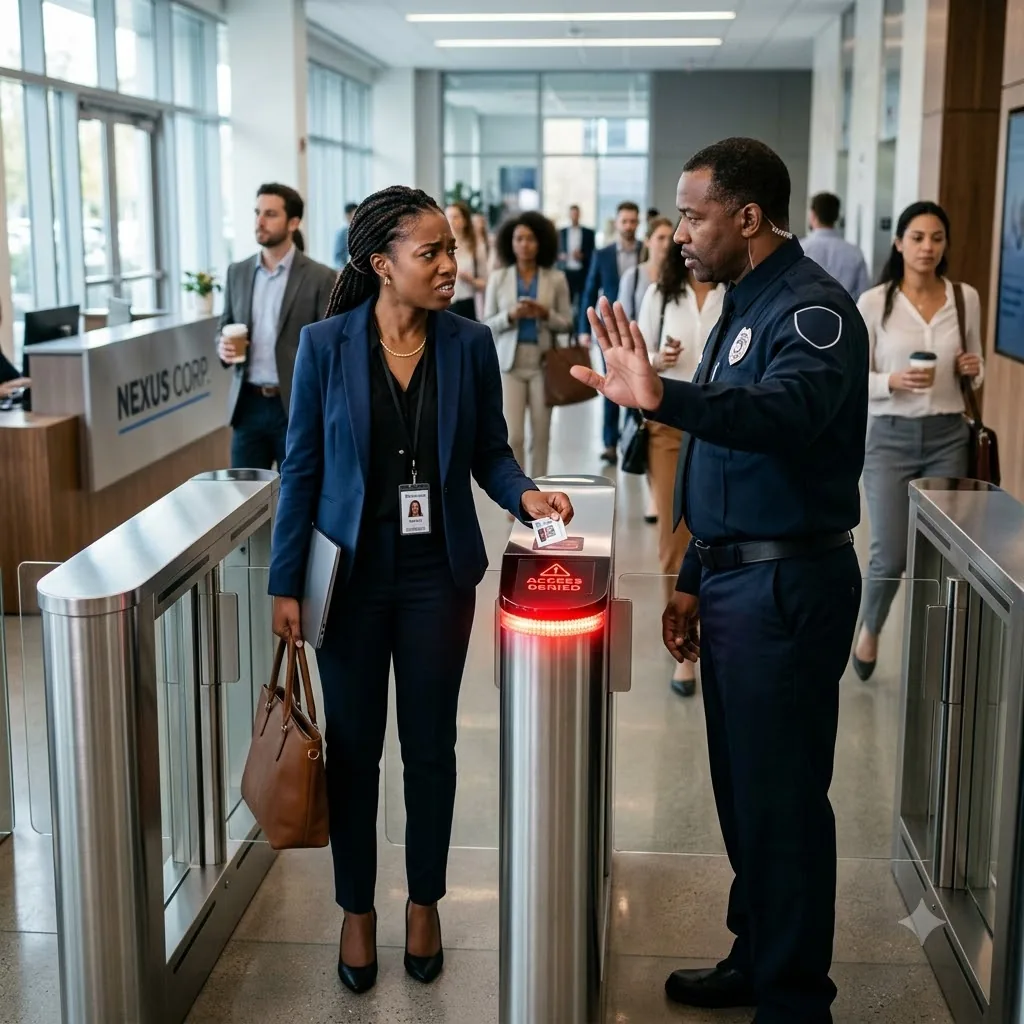
Gregory hesitated, his eyes darting to the tactical guards who had firmly stepped out of the operational perimeter, crossing their arms in passive observation. They weren’t his enforcers anymore; they were just liabilities.
“I can’t authorize a permanent remote exception without a medical waiver,” Gregory deflected weakly.
“You authorized a fraudulent security lockout to manufacture a termination,” Maya countered, pressing her fingernails into the printed email. “You’ll figure out the paperwork for the exception, Gregory. Or I walk over to those VPs right now and hand them this clipboard.”
Gregory exhaled a ragged breath. His tailored suit suddenly looked a size too big, hanging off his slumping shoulders. “Fine,” he hissed. “Take your bag. Go home. I’ll have Chelsea process the status change.”
Maya didn’t thank him. She didn’t offer a polite farewell. She carefully released the clipboard, scooped up Leo’s backup inhaler from the counter, and wiped the plastic mouthpiece with a tissue before dropping it into her tote. She turned her back on Gregory, the security desk, and the gleaming turnstiles. She walked out through the heavy revolving doors into the freezing morning air, the cold hitting her flushed face like a physical barrier.
The commute home was a blur of gray concrete and rattling train cars, the adrenaline slowly leeching from her bloodstream to leave behind a hollow, aching exhaustion. By the time she unlocked the front door of her apartment, her hands were trembling again, this time from the sheer drop in cortisol.
The apartment was quiet, save for the rhythmic, low hum of the air purifier in the living room. Her mother, who had come over to watch Leo, peeked her head out from the kitchen, offering a silent nod before returning to washing dishes.
Maya stepped into the entryway and immediately stopped at the edge of the linoleum. This was her decontamination zone. She dropped her canvas tote on the floor. She kicked off her shoes, aligning them against the baseboard, and stripped off her wool coat. Every surface she had touched in that building felt like a living, crawling layer of grime on her skin. The faux-wood laminate counter. The heavy glass of the turnstile. The air Gregory had breathed as he tried to strip away her son’s safety net.
She walked straight to the bathroom, bypassing the living room where Leo was playing with building blocks on the rug. She turned the sink faucet all the way to the left, letting the water run until steam plumed against the mirror. She pumped a thick dollop of antibacterial soap into her palms and began to scrub.
She washed her hands, her wrists, and her forearms. She scrubbed the webbing between her fingers. She thought of the tactical guard’s steel-toed boot hovering inches from the inhaler. She pressed her thumbs into her palms, rubbing the coarse soap into a thick, stinging lather. The water was too hot, scalding her skin, but she didn’t turn it down. She needed the heat. She needed the absolute certainty that the corporate lobby, the threat, the sheer predatory malice of the morning, was gone.
Maya grabbed the rough nylon bristle brush from the edge of the sink and dragged it up her forearms. Her skin bloomed bright pink, then angry red. She scrubbed until the friction burned, until the physical sting grounded her in the present, overriding the lingering panic in her chest. Only when her arms were raw, tight, and stripped perfectly clean did she turn off the tap.
She dried her hands on a fresh towel and walked into the living room. Leo looked up, his pale face breaking into a wide, gap-toothed smile.
“Mama,” he said, dropping a wooden block.
Maya sank onto the rug beside him. She wrapped her raw, clean arms around his small chest, pulling him into her lap. She rested her chin on the top of his head, listening to the soft, unobstructed rhythm of his breathing. The air purifier hummed. Her arms burned with a steady, localized pain, but she held him tighter, anchoring herself in the quiet safety she had carved out of the wreckage.