Story code: ST-001237
Part 3: The Null Result
The digital archive of the Metropolitan Hospital transplant center shows a distinct shift in the confrontation at exactly 9:18 PM. According to the database transaction logs, Officer Davies finally moved his hand away from the laminated policy binder and initiated a direct search within the hospital’s internal regulatory portal.
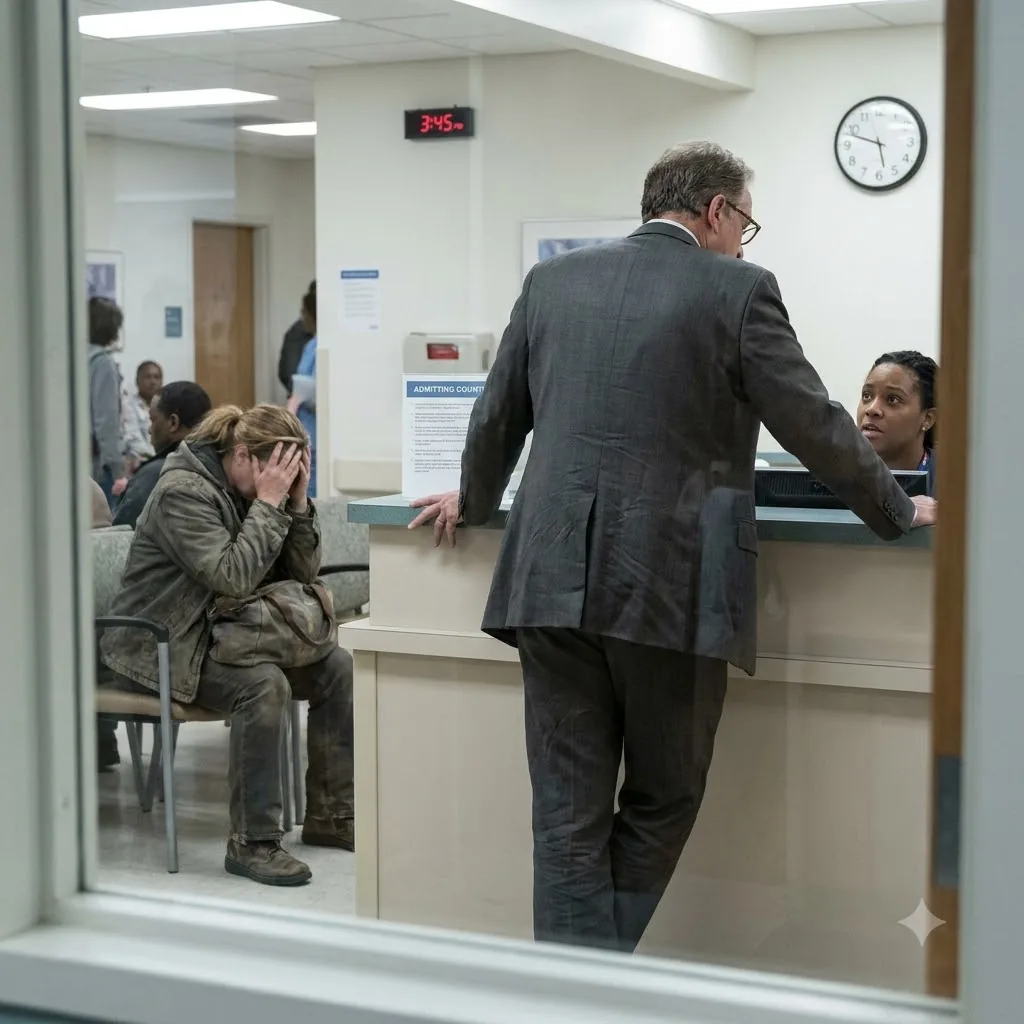
On the security footage, Harold Vance remains leaned over the counter, his index finger still tapping the laminated surface. His posture is rigid, his jaw clenched as he watches Davies type. The silence in the waiting room is punctuated only by the rapid clacking of the keyboard. The two families nearby remain completely still, watching the screen as if waiting for a verdict.
My audit of the server logs reveals the exact search queries Davies entered. First, he typed ‘family co-signature requirement.’ The system returned zero results. He then entered the specific citation Harold had confidently provided: ‘general medical consent bylaws, section four.’ The search query history shows the system processed the request for three seconds before displaying a flashing amber message: ‘No Matching Policy Found. Section Four governs parking and facility maintenance.’
On the tape, Davies looks up from the screen. His posture loses its previous hesitation. He speaks directly into the desk microphone, his voice captured clearly on the audio log. ‘Mr. Vance, I have run a check on the citation you provided. Section four of our general bylaws concerns facility maintenance, not medical consent. There is no co-signature requirement for a registered donor in this system.’
Harold does not retreat. The video shows him taking a step back, only to press his hands flat against the security glass. ‘Your system is outdated,’ Harold says, his voice rising in pitch. ‘The estate bylaws were amended last quarter. If you do not have the updated registry, you need to halt this scan and call the administration office. I will not have my nephew’s body violated because your database is behind on its updates.’
Sarah Vance remains beside him, her head lowered, but her hand remains steady on the desk, holding the blue silicone donor bracelet in place. She does not look at her uncle, nor does she retract the bracelet.
At 9:20 PM, the phone log records Davies making an internal call to the hospital’s on-duty compliance officer. The recorded audio file contains Davies explaining the situation, followed by a long pause as the compliance officer reviews the active patient file. The compliance officer’s response is brief and clear: ‘The patient is a registered donor. The sister holds the physical token. No secondary family consent is recognized under state law. Proceed with the intake.’
When Davies hangs up the phone, he looks directly at Harold. The pressure in the room has shifted. Harold’s bluff has been checked by the system’s database, but he refuses to step away from the counter, demanding that Davies produce a manual override form that does not exist. The security camera captures Harold’s chest rising and falling rapidly. He gestures toward the double doors leading to the ICU. ‘I demand to speak to the chief of medicine immediately,’ Harold asserts. ‘You are proceeding without legal clearance, and I will hold this department personally liable for any unauthorized procedures.’ Davies, however, does not open the binder again. The digital record has already established the boundaries of the situation, leaving Harold’s assertions completely unsupported by the screen flashing before them.