Story code: ST-001850
Part 1: The Midnight Mandate
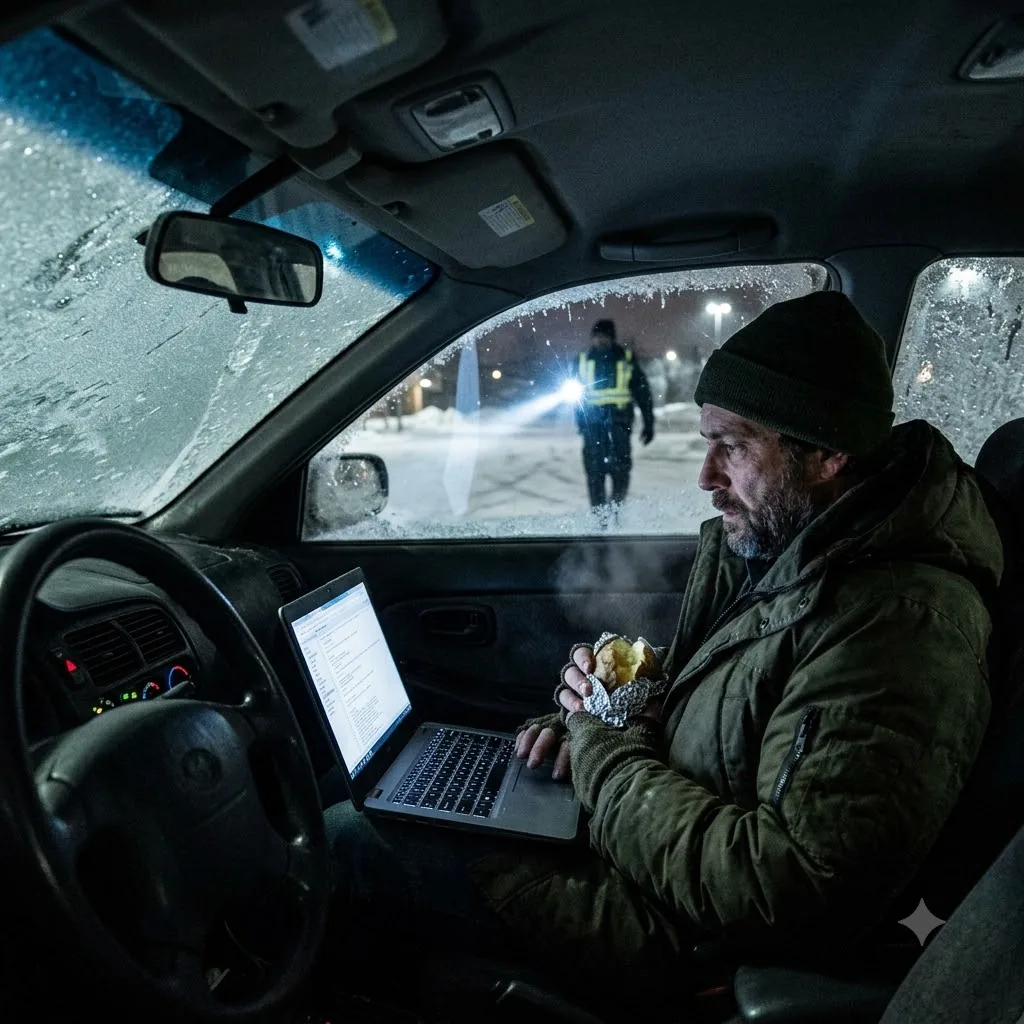
The foil-wrapped baked potato had lost its residual heat an hour ago, but Elias kept shifting it between his bare palms anyway. It was the only solid, grounded thing in the freezing cabin of his 2008 Honda Civic. Outside, the January wind howled off the university lake, rattling the thin door panels and packing intricate layers of frost into the corners of the windshield. Elias huddled deeper into his heavy winter sleeping bag, which he had pulled up to his armpits, balancing a battered Chromebook on the bottom arc of his steering wheel. He squinted at the harsh glare of a freshman essay on post-modernism, his breath pluming in thick white clouds that temporarily obscured the screen.
He tapped the backspace key with a stiff, numb index finger. He was making exactly nine hundred dollars for this introductory literature course. When he did the math, it broke down to roughly three dollars per hour of grading, and that did not factor in the cost of idling the engine for ten minutes every two hours just to keep his toes from succumbing to frostbite.
He took a small bite of the cold, dense potato. It tasted like damp cardboard and aluminum, but it settled the hollow, gnawing ache in his stomach. He had smuggled it out of the faculty dining hall in his oversized coat pocket during the narrow fifteen-minute window when adjuncts were allowed access to the leftover catering trays.
A harsh white notification box slid into the top right corner of his screen, breaking his rhythm. The timestamp glowed at 11:42 PM. The sender was Provost Caldwell.
Elias clicked the envelope icon, his finger hesitating on the trackpad. The subject line read, “Immediate Action Required: Faculty Integration Phase Two.”
The text below was couched in the sterile, aggressively upbeat corporate speak the university administration favored lately. It detailed the rollout of the new automated grading system, proudly touted as an innovative, cost-saving leap for the humanities department. The third paragraph contained the absolute mandate. All non-tenured instructional staff were required to upload their complete, proprietary grading rubrics, personal feedback templates, and a minimum of five years of annotated student essays into the system’s learning matrix by eight o’clock tomorrow morning. The final line thanked them in advance for ensuring a seamless transition before the spring semester restructuring.
Restructuring. The word sat there on the glowing screen, heavy and brutally final. They were firing the adjuncts. Worse, Caldwell was forcing them to feed their hard-earned expertise into the very algorithmic maw that would render them permanently obsolete. If Elias did not upload his carefully crafted rubrics, he would forfeit his final, crucial paycheck. If he did, he was handing over his professional brain on a digital platter to a machine that did not need to sleep in a freezing Honda Civic in Lot C.
A sudden, sweeping flash of yellow light cut across the frost-glazed rear window, illuminating the ceiling fabric of the car.
Elias froze instantly. He swallowed the dry lump of potato and slowly, silently lowered the Chromebook lid. The interior of the car plunged into pitch blackness.
Through the thin metal of the doors, he heard the distinct, heavy crunch of boots on frozen gravel. Campus security. They did sweeps of the outer lots twice a night. Anyone caught parking overnight without a registered residential dorm permit received a massive citation. Anyone caught actively living in their vehicle was immediately reported to the local precinct for trespassing and escorted off university property by police. For Elias, being discovered meant losing the adjunct position a month before the software even took over. It meant losing access to the gym showers, the library Wi-Fi, and the dining hall scraps that kept him alive.
He slid the laptop onto the passenger seat and shimmied down further into the sleeping bag, twisting his body to lie as flat as possible across the reclined driver’s seat. The bottom edge of the steering wheel dug sharply into his ribs. He clamped a gloved hand tightly over his mouth to muffle the sound of his own ragged, terrified breathing.
The sweeping yellow beam of a heavy-duty Maglite sliced through the driver’s side window. It illuminated the dust motes dancing in the freezing air directly above Elias’s head. The beam tracked slowly across the dashboard, highlighting the cracked vinyl, the empty coffee cups gathered in the footwell, and the crumpled foil wrapper sitting on the center console.
Elias squeezed his eyes shut, his heart hammering against his ribs like a trapped bird. The light moved away. The crunch of heavy boots continued, pacing methodically toward the rear bumper. He waited for the sound to fade toward the next row of parked cars. He counted the agonizing seconds in his head, forcing his chest to remain perfectly still despite the desperate, burning need for oxygen.
The footsteps stopped abruptly at the rear tire. The crunch of gravel shifted as the guard pivoted, walking back up the driver’s side.
A heavy, leather-gloved fist pounded three times on the frosted glass inches from Elias’s ear.
The foil-wrapped baked potato had lost its residual heat an hour ago, but Elias kept shifting it between his bare palms anyway. It was the only solid, grounded thing in the freezing cabin of his 2008 Honda Civic. Outside, the January wind howled off the university lake, rattling the thin door panels and packing intricate layers of frost into the corners of the windshield. Elias huddled deeper into his heavy winter sleeping bag, which he had pulled up to his armpits, balancing a battered Chromebook on the bottom arc of his steering wheel. He squinted at the harsh glare of a freshman essay on post-modernism, his breath pluming in thick white clouds that temporarily obscured the screen.
He tapped the backspace key with a stiff, numb index finger. He was making exactly nine hundred dollars for this introductory literature course. When he did the math, it broke down to roughly three dollars per hour of grading, and that did not factor in the cost of idling the engine for ten minutes every two hours just to keep his toes from succumbing to frostbite.
He took a small bite of the cold, dense potato. It tasted like damp cardboard and aluminum, but it settled the hollow, gnawing ache in his stomach. He had smuggled it out of the faculty dining hall in his oversized coat pocket during the narrow fifteen-minute window when adjuncts were allowed access to the leftover catering trays.
A harsh white notification box slid into the top right corner of his screen, breaking his rhythm. The timestamp glowed at 11:42 PM. The sender was Provost Caldwell.
Elias clicked the envelope icon, his finger hesitating on the trackpad. The subject line read, “Immediate Action Required: Faculty Integration Phase Two.”
The text below was couched in the sterile, aggressively upbeat corporate speak the university administration favored lately. It detailed the rollout of the new automated grading system, proudly touted as an innovative, cost-saving leap for the humanities department. The third paragraph contained the absolute mandate. All non-tenured instructional staff were required to upload their complete, proprietary grading rubrics, personal feedback templates, and a minimum of five years of annotated student essays into the system’s learning matrix by eight o’clock tomorrow morning. The final line thanked them in advance for ensuring a seamless transition before the spring semester restructuring.
Restructuring. The word sat there on the glowing screen, heavy and brutally final. They were firing the adjuncts. Worse, Caldwell was forcing them to feed their hard-earned expertise into the very algorithmic maw that would render them permanently obsolete. If Elias did not upload his carefully crafted rubrics, he would forfeit his final, crucial paycheck. If he did, he was handing over his professional brain on a digital platter to a machine that did not need to sleep in a freezing Honda Civic in Lot C.
A sudden, sweeping flash of yellow light cut across the frost-glazed rear window, illuminating the ceiling fabric of the car.
Elias froze instantly. He swallowed the dry lump of potato and slowly, silently lowered the Chromebook lid. The interior of the car plunged into pitch blackness.
Through the thin metal of the doors, he heard the distinct, heavy crunch of boots on frozen gravel. Campus security. They did sweeps of the outer lots twice a night. Anyone caught parking overnight without a registered residential dorm permit received a massive citation. Anyone caught actively living in their vehicle was immediately reported to the local precinct for trespassing and escorted off university property by police. For Elias, being discovered meant losing the adjunct position a month before the software even took over. It meant losing access to the gym showers, the library Wi-Fi, and the dining hall scraps that kept him alive.
He slid the laptop onto the passenger seat and shimmied down further into the sleeping bag, twisting his body to lie as flat as possible across the reclined driver’s seat. The bottom edge of the steering wheel dug sharply into his ribs. He clamped a gloved hand tightly over his mouth to muffle the sound of his own ragged, terrified breathing.
The sweeping yellow beam of a heavy-duty Maglite sliced through the driver’s side window. It illuminated the dust motes dancing in the freezing air directly above Elias’s head. The beam tracked slowly across the dashboard, highlighting the cracked vinyl, the empty coffee cups gathered in the footwell, and the crumpled foil wrapper sitting on the center console.
Elias squeezed his eyes shut, his heart hammering against his ribs like a trapped bird. The light moved away. The crunch of heavy boots continued, pacing methodically toward the rear bumper. He waited for the sound to fade toward the next row of parked cars. He counted the agonizing seconds in his head, forcing his chest to remain perfectly still despite the desperate, burning need for oxygen.
The footsteps stopped abruptly at the rear tire. The crunch of gravel shifted as the guard pivoted, walking back up the driver’s side.
A heavy, leather-gloved fist pounded three times on the frosted glass inches from Elias’s ear.