Story code: ST-001019
Part 1: Wind Versus Surge
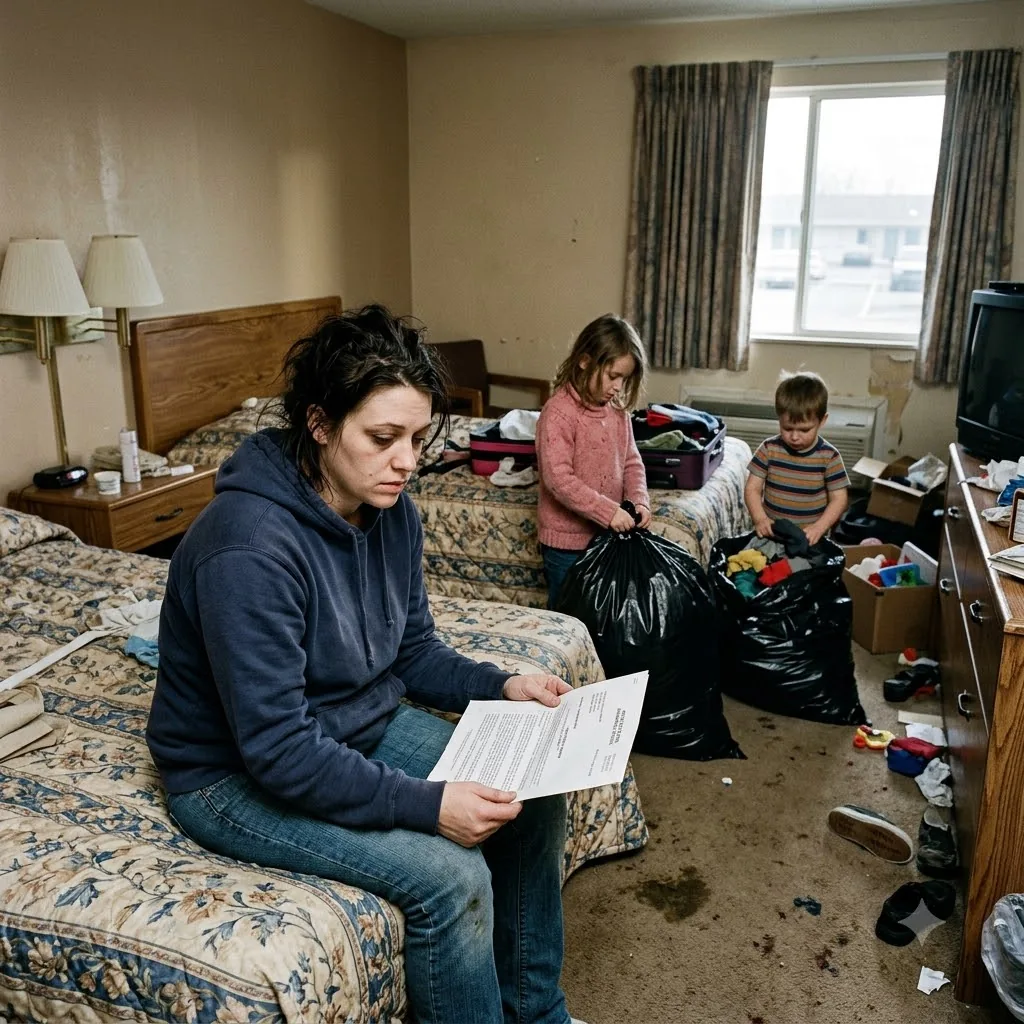
The digital clock on the microwave flipped to 10:45 AM, leaving exactly fifteen minutes until the FEMA voucher expired. Sarah sat on the edge of the saggy queen mattress, her thumb tracing the embossed logo at the top of the Gulf Coast Mutual letterhead. The bold text in the second paragraph seemed to vibrate off the page, citing a ‘wind versus surge’ technicality that effectively vaporized twelve years of equity in a single, clinical sentence.
Her house was gone. The foundation was swept clean, leaving just a concrete slab covered in marsh grass and shattered drywall. The adjuster, a man who had barely made eye contact during his ten-minute visit, had determined the water did the damage before the wind ever arrived. Under her policy, wind was covered. Surge was not.
In the other bed, seven-year-old Leo and five-year-old Maya watched a tablet with the volume turned down to a whisper. They were sharing a single pair of tangled earbuds. Their duffel bags sat zipped and waiting by the door, stuffed with the only clothes they had managed to throw into garbage bags before fleeing the evacuation zone. At eleven o’clock, the magnetic keycard for room 214 would stop working. The cleaning cart was already rattling down the exterior walkway, pausing at doors, a steady, rhythmic countdown to their eviction. A housekeeper knocked on the door next to theirs, her voice muffled through the thin walls, calling out a five-minute warning.
Sarah opened her banking app. The loading circle spun for a few agonizing seconds over the weak motel Wi-Fi. The screen finally populated to show a balance of fifty-two dollars and fourteen cents. That was the entirety of her safety net. A half-tank of gas and maybe a few days of dollar-menu food if they lived in the Corolla. The air conditioner in the wall unit kicked on with a metallic shudder, blowing stale, chemical-scented air over her face. She closed the banking app and opened her phone settings.
Her thumb hovered over the screen. She navigated through the menus, finding the blocked contacts list. There were a few spam numbers there, a relentless telemarketer from two years ago, and one contact simply saved as Arthur. She stared at the name. Her pulse picked up a heavy, rhythmic thump against her ribs. Six years of silence stretched between them, built on a foundation of slammed doors, ruined holidays, and terrified children. She remembered the last time she had seen him, the way he had screamed at the sky in his front yard. She tapped the small minus sign next to his name, removing the block. Then she went to her dialer and pressed call.
She brought the phone to her ear, bracing herself for voicemail. The line didn’t even ring. The connection clicked open instantly, as if he had been sitting with the phone in his hand.
“They scrubbed the Nexrad data for the entire southeastern grid,” a gravelly voice snapped, skipping any greeting entirely.
Sarah froze. She pressed the phone tighter to her ear.
“You can look at the raw atmospheric pressure readings from the buoys,” Arthur continued, his voice tight, rapid, and breathless. “But the radar loops have a forty-minute gap right when the eye made landfall. They pulsed the ionosphere. I have the screenshots to prove the anomalies before the scrub.”
Sarah squeezed her eyes shut. She pressed the heel of her free hand against her forehead. The motel room suddenly felt much smaller, the peeling yellow walls pressing inward. She needed him to stop talking about the government, or the weather control machines, or whatever new obsession had taken over his waking hours.
“Dad,” Sarah said. Her voice cracked, a fragile sound in the cramped room.
He didn’t pause. “The thermal spikes aren’t natural. I warned them on the message boards months ago. You don’t get a sudden intensification like that without artificial barometric manipulation. They directed it right at the coastline. I mapped the flight paths of the reconnaissance planes, and they weren’t just gathering data. They were seeding the outer bands with silver iodide compounds.”
“Dad, please stop,” Sarah said, louder this time.
The rant halted. The silence on the line was thick, heavy with electronic static.
“Sarah,” he said. His tone shifted, the manic energy dropping into a guarded, flat register.
“My claim was denied,” she said, staring blindly at the Gulf Coast Mutual letter on the bedspread. “Wind versus surge. The FEMA hotel voucher expires in ten minutes. I have fifty dollars and two kids. We have nowhere to go.”
She waited. The air conditioner rattled again. She could hear the faint sound of papers shuffling on his end, the frantic clatter of a heavy mechanical keyboard.
“The grid is going down next,” Arthur said, his voice dropping to a harsh whisper. “They are going to finish what the storm started. You need to get here now. Do not take the interstate. They have scanners on the overpasses logging license plates.”
Sarah looked at Leo and Maya. Maya was laughing silently at the cartoon on the screen, completely unaware of the cliff edge they were standing on. The thought of bringing them into Arthur’s house-a house with foil-taped windows, security cameras pointed at the sky, and deadbolts on interior doors-made her stomach turn over. But the alternative was the backseat of the Corolla in a humid, storm-ravaged parking lot.
“I’ll take the back roads,” Sarah said.
“Bring iodine,” Arthur said. “And do not look directly at the drones.”
A loud, authoritative knock hammered on the motel room door, making Sarah jump.
“Checkout time, ma’am,” a voice called from the walkway outside.
The digital clock on the microwave flipped to 10:45 AM, leaving exactly fifteen minutes until the FEMA voucher expired. Sarah sat on the edge of the saggy queen mattress, her thumb tracing the embossed logo at the top of the Gulf Coast Mutual letterhead. The bold text in the second paragraph seemed to vibrate off the page, citing a ‘wind versus surge’ technicality that effectively vaporized twelve years of equity in a single, clinical sentence.
Her house was gone. The foundation was swept clean, leaving just a concrete slab covered in marsh grass and shattered drywall. The adjuster, a man who had barely made eye contact during his ten-minute visit, had determined the water did the damage before the wind ever arrived. Under her policy, wind was covered. Surge was not.
In the other bed, seven-year-old Leo and five-year-old Maya watched a tablet with the volume turned down to a whisper. They were sharing a single pair of tangled earbuds. Their duffel bags sat zipped and waiting by the door, stuffed with the only clothes they had managed to throw into garbage bags before fleeing the evacuation zone. At eleven o’clock, the magnetic keycard for room 214 would stop working. The cleaning cart was already rattling down the exterior walkway, pausing at doors, a steady, rhythmic countdown to their eviction. A housekeeper knocked on the door next to theirs, her voice muffled through the thin walls, calling out a five-minute warning.
Sarah opened her banking app. The loading circle spun for a few agonizing seconds over the weak motel Wi-Fi. The screen finally populated to show a balance of fifty-two dollars and fourteen cents. That was the entirety of her safety net. A half-tank of gas and maybe a few days of dollar-menu food if they lived in the Corolla. The air conditioner in the wall unit kicked on with a metallic shudder, blowing stale, chemical-scented air over her face. She closed the banking app and opened her phone settings.
Her thumb hovered over the screen. She navigated through the menus, finding the blocked contacts list. There were a few spam numbers there, a relentless telemarketer from two years ago, and one contact simply saved as Arthur. She stared at the name. Her pulse picked up a heavy, rhythmic thump against her ribs. Six years of silence stretched between them, built on a foundation of slammed doors, ruined holidays, and terrified children. She remembered the last time she had seen him, the way he had screamed at the sky in his front yard. She tapped the small minus sign next to his name, removing the block. Then she went to her dialer and pressed call.
She brought the phone to her ear, bracing herself for voicemail. The line didn’t even ring. The connection clicked open instantly, as if he had been sitting with the phone in his hand.
“They scrubbed the Nexrad data for the entire southeastern grid,” a gravelly voice snapped, skipping any greeting entirely.
Sarah froze. She pressed the phone tighter to her ear.
“You can look at the raw atmospheric pressure readings from the buoys,” Arthur continued, his voice tight, rapid, and breathless. “But the radar loops have a forty-minute gap right when the eye made landfall. They pulsed the ionosphere. I have the screenshots to prove the anomalies before the scrub.”
Sarah squeezed her eyes shut. She pressed the heel of her free hand against her forehead. The motel room suddenly felt much smaller, the peeling yellow walls pressing inward. She needed him to stop talking about the government, or the weather control machines, or whatever new obsession had taken over his waking hours.
“Dad,” Sarah said. Her voice cracked, a fragile sound in the cramped room.
He didn’t pause. “The thermal spikes aren’t natural. I warned them on the message boards months ago. You don’t get a sudden intensification like that without artificial barometric manipulation. They directed it right at the coastline. I mapped the flight paths of the reconnaissance planes, and they weren’t just gathering data. They were seeding the outer bands with silver iodide compounds.”
“Dad, please stop,” Sarah said, louder this time.
The rant halted. The silence on the line was thick, heavy with electronic static.
“Sarah,” he said. His tone shifted, the manic energy dropping into a guarded, flat register.
“My claim was denied,” she said, staring blindly at the Gulf Coast Mutual letter on the bedspread. “Wind versus surge. The FEMA hotel voucher expires in ten minutes. I have fifty dollars and two kids. We have nowhere to go.”
She waited. The air conditioner rattled again. She could hear the faint sound of papers shuffling on his end, the frantic clatter of a heavy mechanical keyboard.
“The grid is going down next,” Arthur said, his voice dropping to a harsh whisper. “They are going to finish what the storm started. You need to get here now. Do not take the interstate. They have scanners on the overpasses logging license plates.”
Sarah looked at Leo and Maya. Maya was laughing silently at the cartoon on the screen, completely unaware of the cliff edge they were standing on. The thought of bringing them into Arthur’s house-a house with foil-taped windows, security cameras pointed at the sky, and deadbolts on interior doors-made her stomach turn over. But the alternative was the backseat of the Corolla in a humid, storm-ravaged parking lot.
“I’ll take the back roads,” Sarah said.
“Bring iodine,” Arthur said. “And do not look directly at the drones.”
A loud, authoritative knock hammered on the motel room door, making Sarah jump.
“Checkout time, ma’am,” a voice called from the walkway outside.