Story code: ST-001454
Part 1: Sector 4
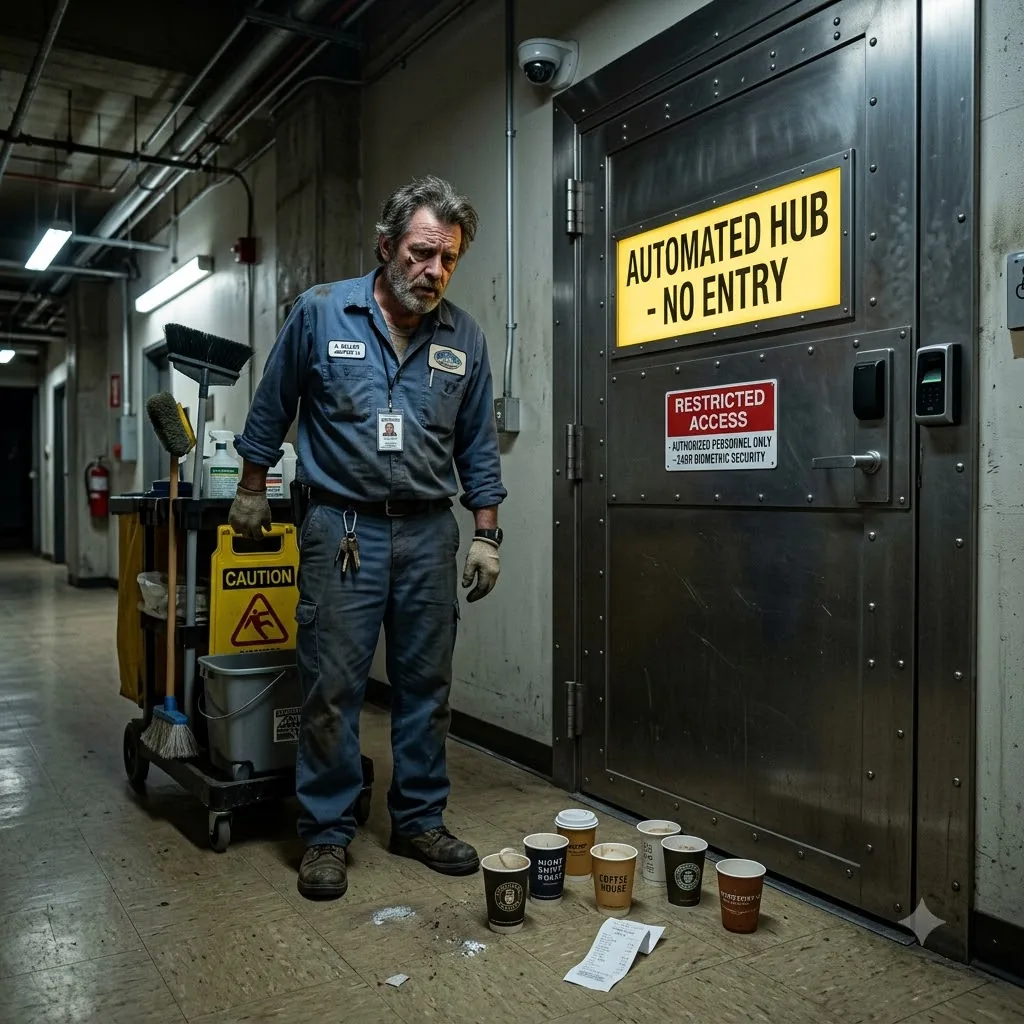
Arthur killed the power to the industrial floor buffer, letting the heavy rotary motor whine down to a halt in the empty basement corridor. In the sudden silence, the twin halogen work lights on the front of his machine cast long, harsh shadows against the reinforced steel of the Sector 4 security door. A crumpled white paper bag and a long sleeve of crushed cardboard coffee cups lay wedged in the half-inch gap between the bottom of the door and the polished concrete floor.
Arthur left the handle of the buffer and knelt by the heavy threshold. He grasped the edge of the nearest cup and pulled it free from the tight space. The cardboard sleeve was stained with dark brown drips of spilled liquid. He pressed his bare thumb against the side of the wax paper. The bottom of the cup was still holding a faint trace of warmth.
He reached down again and pulled the crumpled white bag loose from the door jam. A greasy printed receipt was plastered to the side, bearing the faded blue ink logo of Rosa’s Panaderia, a small bakery located just three blocks away from the corporate campus. He flattened the receipt against his thigh. The timestamp read today at four in the afternoon. The itemized order listed twelve large dark roasts and a dozen guava pastries, paid for in cash.
Arthur looked up at the warning signs bolted to the door. Sector 4 was an entirely automated zone. Six months ago, the corporation had laid off Arthur and his entire department of thirty server technicians. The executive board had issued a massive press release boasting about their new proprietary AI system, framing it as a marvel of modern engineering that handled all load balancing, physical hardware swaps via automated track-arms, and thermal regulation without a single human intervention. It was designated a strict lights-out environment. The biometric door panel featured a retinal scanner and a heavy magnetic lock that glowed a flat, unyielding red. No maintenance crews were permitted inside. No software engineers. Just cold server racks, spinning cooling fans, and the autonomous AI core.
Arthur stared back down at the twelve empty coffee cups scattered on the floor. He lined them up with his foot. They had been deliberately flattened on one side, forcibly shoved through the narrow clearance at the bottom of the door from the inside out. He picked up the pastry bag again, noticing the small crumbs of flaky crust spilling out onto his freshly buffed linoleum.
Someone inside the machine-run sector was drinking coffee and eating local pastries.
He stood up, looking up and down the sterile, fluorescent-lit hallway. He was the only person on this sublevel. The night watchman was three floors up, asleep in the main lobby security booth. Arthur reached into the deep cargo pocket of his blue janitorial trousers. His fingers brushed past his heavy ring of brass master keys and settled on a stiff plastic square.
On his termination day, the human resources representatives had rushed him out of the building with such frantic speed that they forgot to demand his Level 5 management override card. He had kept it in his wallet out of a stubborn sense of refusal. When the third-party facility contractor hired him back as the night floor sweeper-a humiliating demotion he took strictly to keep his wife’s medical insurance active-he had moved the old badge to his uniform pocket. He had spent the last two months wondering if his credentials had been purged from the mainframe.
He stepped up to the biometric security panel. The red LED strip pulsed like a slow heartbeat in the dim hallway. According to the old company protocol manual he had helped write, a Level 5 management card bypassed the retinal requirement during a catastrophic system failure or an emergency fire event. If the autonomous AI actually ran the room on its own, a human presence meant the system was failing, or the AI itself was entirely a fabrication.
Arthur held his breath, gripping the edge of the worn plastic card. He slid it directly into the magnetic reader slot.
The machine beeped twice in rapid succession. The red LED strip flickered, blinking rapidly before turning a solid, bright green. Deep within the reinforced wall, heavy steel deadbolts clacked backward with a series of loud, echoing thuds. The vacuum seal on the door hissed, breaking the pressurized hold that kept the servers isolated from the rest of the building.
Arthur braced his boots on the linoleum and pushed his shoulder against the heavy steel, forcing it open just enough to slip inside the darkened server room. The blast of air that hit his face did not smell of ozone, hot copper, or industrial coolant. The heavy draft carried the overwhelming stench of unwashed bodies, stale sweat, and rotting food.
He reached blindly for the manual override switch on the wall, his fingers striking the heavy plastic toggle. The overhead fluorescent banks snapped on in a cascading wave of blinding white light.
A loud, panicked voice shouted from deep within the server racks, followed immediately by the sound of shattering glass.
Arthur killed the power to the industrial floor buffer, letting the heavy rotary motor whine down to a halt in the empty basement corridor. In the sudden silence, the twin halogen work lights on the front of his machine cast long, harsh shadows against the reinforced steel of the Sector 4 security door. A crumpled white paper bag and a long sleeve of crushed cardboard coffee cups lay wedged in the half-inch gap between the bottom of the door and the polished concrete floor.
Arthur left the handle of the buffer and knelt by the heavy threshold. He grasped the edge of the nearest cup and pulled it free from the tight space. The cardboard sleeve was stained with dark brown drips of spilled liquid. He pressed his bare thumb against the side of the wax paper. The bottom of the cup was still holding a faint trace of warmth.
He reached down again and pulled the crumpled white bag loose from the door jam. A greasy printed receipt was plastered to the side, bearing the faded blue ink logo of Rosa’s Panaderia, a small bakery located just three blocks away from the corporate campus. He flattened the receipt against his thigh. The timestamp read today at four in the afternoon. The itemized order listed twelve large dark roasts and a dozen guava pastries, paid for in cash.
Arthur looked up at the warning signs bolted to the door. Sector 4 was an entirely automated zone. Six months ago, the corporation had laid off Arthur and his entire department of thirty server technicians. The executive board had issued a massive press release boasting about their new proprietary AI system, framing it as a marvel of modern engineering that handled all load balancing, physical hardware swaps via automated track-arms, and thermal regulation without a single human intervention. It was designated a strict lights-out environment. The biometric door panel featured a retinal scanner and a heavy magnetic lock that glowed a flat, unyielding red. No maintenance crews were permitted inside. No software engineers. Just cold server racks, spinning cooling fans, and the autonomous AI core.
Arthur stared back down at the twelve empty coffee cups scattered on the floor. He lined them up with his foot. They had been deliberately flattened on one side, forcibly shoved through the narrow clearance at the bottom of the door from the inside out. He picked up the pastry bag again, noticing the small crumbs of flaky crust spilling out onto his freshly buffed linoleum.
Someone inside the machine-run sector was drinking coffee and eating local pastries.
He stood up, looking up and down the sterile, fluorescent-lit hallway. He was the only person on this sublevel. The night watchman was three floors up, asleep in the main lobby security booth. Arthur reached into the deep cargo pocket of his blue janitorial trousers. His fingers brushed past his heavy ring of brass master keys and settled on a stiff plastic square.
On his termination day, the human resources representatives had rushed him out of the building with such frantic speed that they forgot to demand his Level 5 management override card. He had kept it in his wallet out of a stubborn sense of refusal. When the third-party facility contractor hired him back as the night floor sweeper-a humiliating demotion he took strictly to keep his wife’s medical insurance active-he had moved the old badge to his uniform pocket. He had spent the last two months wondering if his credentials had been purged from the mainframe.
He stepped up to the biometric security panel. The red LED strip pulsed like a slow heartbeat in the dim hallway. According to the old company protocol manual he had helped write, a Level 5 management card bypassed the retinal requirement during a catastrophic system failure or an emergency fire event. If the autonomous AI actually ran the room on its own, a human presence meant the system was failing, or the AI itself was entirely a fabrication.
Arthur held his breath, gripping the edge of the worn plastic card. He slid it directly into the magnetic reader slot.
The machine beeped twice in rapid succession. The red LED strip flickered, blinking rapidly before turning a solid, bright green. Deep within the reinforced wall, heavy steel deadbolts clacked backward with a series of loud, echoing thuds. The vacuum seal on the door hissed, breaking the pressurized hold that kept the servers isolated from the rest of the building.
Arthur braced his boots on the linoleum and pushed his shoulder against the heavy steel, forcing it open just enough to slip inside the darkened server room. The blast of air that hit his face did not smell of ozone, hot copper, or industrial coolant. The heavy draft carried the overwhelming stench of unwashed bodies, stale sweat, and rotting food.
He reached blindly for the manual override switch on the wall, his fingers striking the heavy plastic toggle. The overhead fluorescent banks snapped on in a cascading wave of blinding white light.
A loud, panicked voice shouted from deep within the server racks, followed immediately by the sound of shattering glass.