Story code: ST-001190
Part 3: The Timestamp Discrepancy
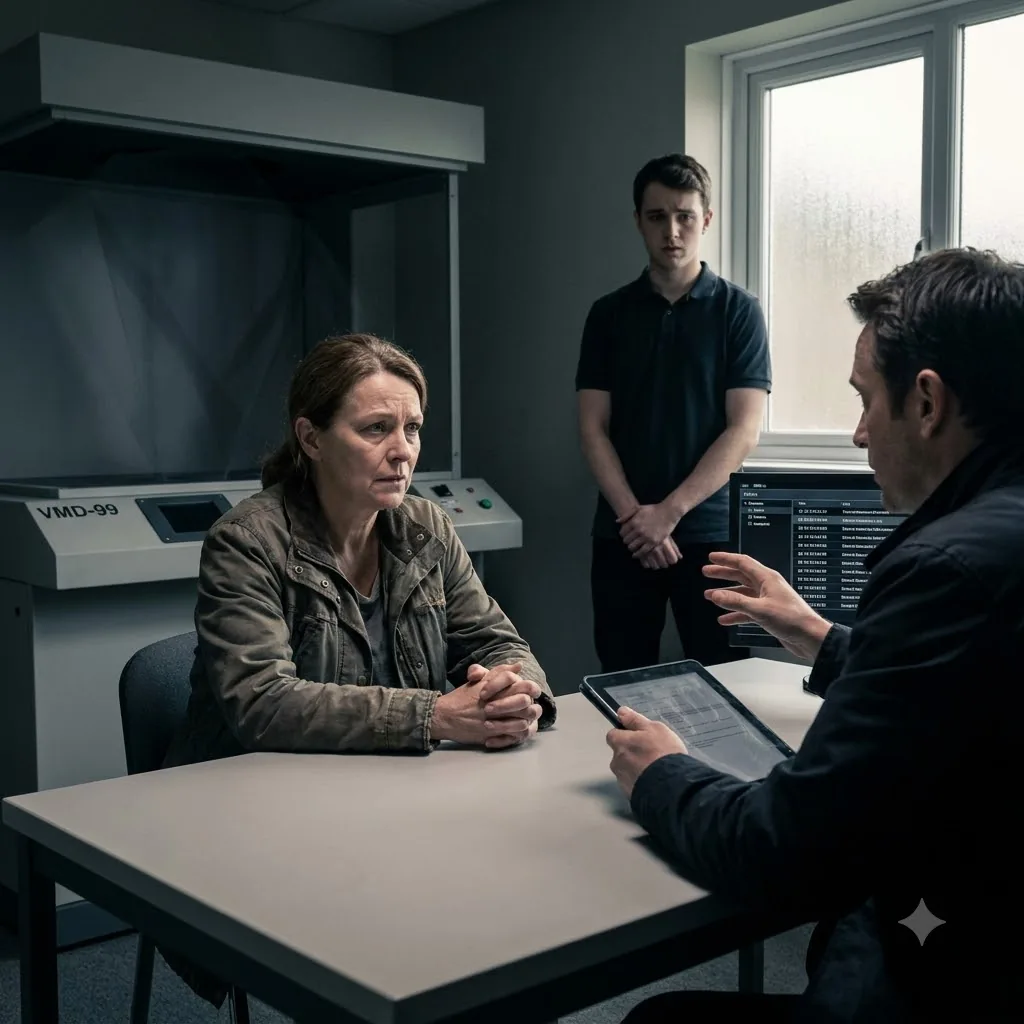
Marcus Vance tapped the digital tablet, bringing up the system initialization logs for the Eternal Memories Showroom. He pointed to a highlighted line of code at the top of the screen. “At 13:48:12, the configuration file for the showroom’s primary terminal was modified. This was twelve minutes before Sarah Mercer arrived for her appointment, and fourteen minutes before the Voice Model Drive was inserted.”
Greg Finch stopped tapping his phone. His fingers remained pressed against the glass screen. “We pre-load client profiles to prevent system lag,” Finch said, his voice dropping its cheerful customer-service tone. “It’s standard setup protocol for high-priority accounts.”
“Standard setup protocol does not alter the output destination parameters,” Vance said, his voice level and dry. He scrolled down, displaying the command lines that had been executed during that pre-load window. “The stream destination parameter was changed from the local secure buffer to a public port forwarding address. The credentials used to authorize this change belong to your personal terminal account, operator code GF-8890.”
The terminal logs showed the exact sequence of commands. There was no automated script execution logged; instead, the logs recorded a sequence of manual keyboard inputs and cursor clicks. Vance matched these inputs to the showroom’s physical console. The system’s internal security camera footage, which Vance overlayed on his screen, showed Finch sitting at the console at 13:48, typing rapidly while glazing at the empty demonstration chair.
Finch shifted his feet, leaning his shoulder against the partition wall. He reached out to adjust a cable behind the terminal. “I was setting up a test mirror. I have to verify the feed path is clear before the hardware encrypts the drive. Otherwise, if the stream drops, the client experiences vocal stuttering.”
“If you were testing the feed path, the target address would be our internal diagnostic loop,” Vance noted, his hands remaining clasped behind his back. “Instead, you entered the stream key for TechGroup-East. The log shows this stream key was copy-pasted from a messaging application running on your personal mobile device.”
On the console monitor, the uncropped log files detailed the network packets leaving the showroom. Each packet carried a header identifying the payload: raw audio slices of VMD-99. Vance pointed to a second network log that showed a parallel data stream. “The secondary packet transfer was not a buffer dump. It was a direct copy of the voice model’s phonetic matrix. The decryption key was generated at 13:50:04.”
“That key is automatically generated by the drive’s security handshake,” Finch said, his voice rising slightly. He reached for a connection cable behind the terminal, but stopped when Vance did not move.
“The handshake key is restricted to the local showroom hardware,” Vance said. “This log shows the key was exported as a plaintext string and sent to the same public chat channel. By the time Sarah Mercer sat in that chair, anyone in that chat had the capability to download her husband’s voice model.”
“The manual configuration logs also record your screen resolution settings,” Vance added, zooming in on the metadata. “You adjusted the capture box to include the transcript overlay. That was done at 13:51:30. This confirms you intended to broadcast the spoken text alongside the audio, meaning the entire interaction was prepared for display before the client even entered the room.”
Finch’s hand dropped from the connection cable. He stared at the blue indicator ring on the voice model drive, which continued to pulse in the quiet room.