Story code: ST-000762
Part 3: Ghost in the Spreadsheet
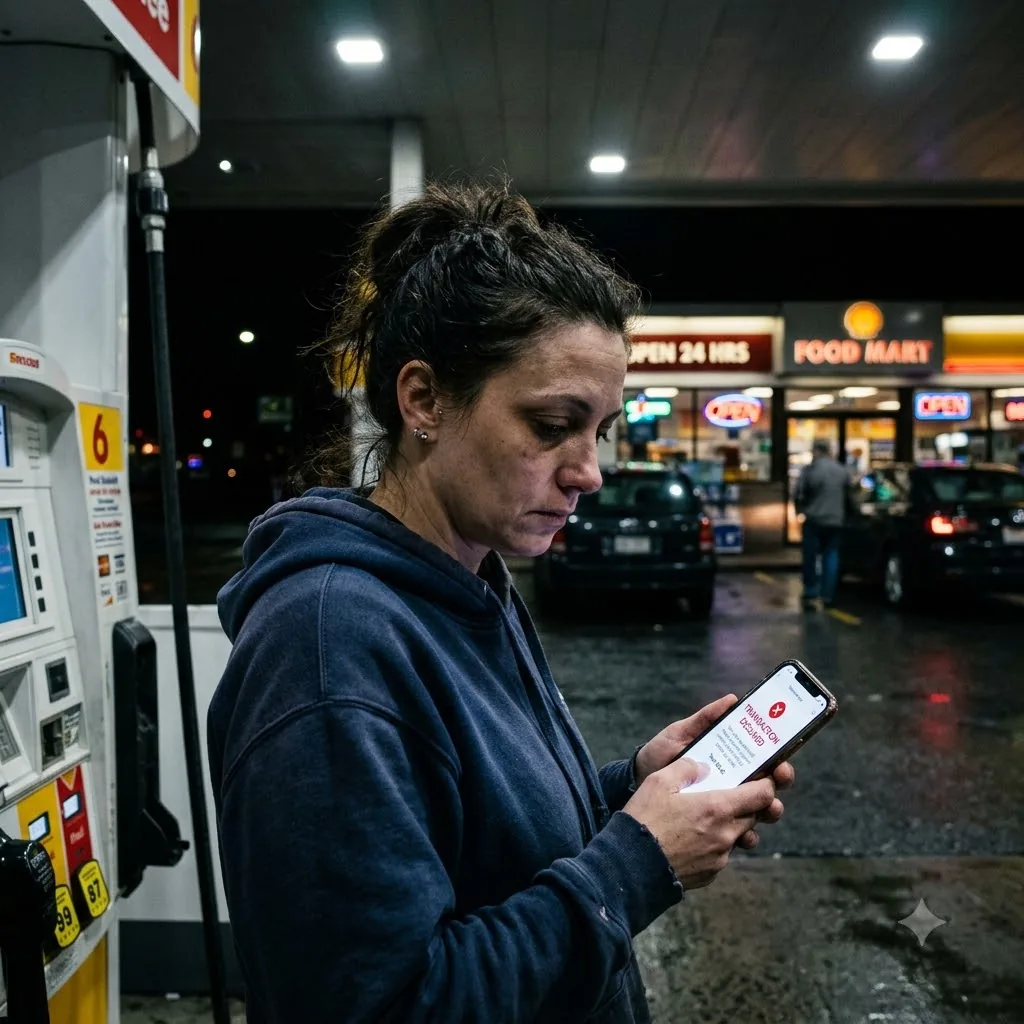
The hollow clicking of the ignition faded into the relentless drumming of rain against the windshield. Maya dropped the keys into her lap, her breath pluming in the freezing air of the car’s interior. She uncurled her stiff fingers from the steering wheel and grabbed her phone. The battery icon glowed a menacing red at eleven percent.
She stared at the single sheet of paper the bank manager had given her. Apex Asset Recovery LLC. A PO Box in Delaware and a ten-digit fax number. There was no way a federal clearinghouse released funds to a company that existed only as a fax machine. She opened her mobile browser, her thumbs clumsy with the cold, and typed the company name into the search bar. The first page of results yielded nothing but algorithmic data scrapers and desperate complaints on consumer forums from other people whose accounts had been abruptly drained.
Maya navigated to the Delaware state corporate registry database. She typed the LLC name into the entity search. A single page loaded, listing a registered agent in Wilmington. Beneath the agent’s boilerplate address, there was a tiny hyperlink labeled ‘Secondary Contact.’ She tapped it, bringing up a plain text directory that included an actual toll-free phone number.
She dialed it immediately, putting the phone on speaker and resting it on the dashboard. The call connected without a single ring.
“Apex Asset Recovery,” a male voice answered. It wasn’t a recording. It was a live human being, his voice gravelly and thick with exhaustion, underpinned by the muted hum of a busy call center.
“My name is Maya,” she said, her voice shaking as she leaned closer to the phone’s microphone. “Your company initiated a federal garnishment on my checking account at three o’clock this morning. You wiped out every cent I have, and my bank manager told me it was a formatting error. You have the wrong person.”
The man on the other end exhaled, a slow, heavy sound. “I need the reference number on the levy notice, ma’am.”
“I don’t have a levy notice. I just woke up to a zero balance. I can give you my name and my social security number.”
She rattled off her information, demanding he look up the file. She listened to the aggressive clacking of a heavy mechanical keyboard over the tinny speaker.
“Alright, I see the execution order,” the representative said, his tone entirely detached. “Federal student loan default. Originated in two thousand and fourteen. The algorithm flagged your checking account for a sweep yesterday evening, and the levy executed overnight.”
“I never took out a federal student loan,” Maya said, her voice rising above the sound of the rain. “I went to a community college. I paid cash. The bank representative on the phone told me the social security number on the debt doesn’t match mine. Your company merged my banking data with someone else’s profile.”
More typing. The keyboard clattered for ten agonizing seconds.
“The social security number on the original debt file ends in four-nine-two-one,” the man admitted, his voice flat.
“Mine ends in eight-eight-three-four!” Maya practically screamed at the dashboard. “You can see it! You can literally see that I am not the debtor. Cancel the garnishment. Reverse the wire back to my bank.”
“Ma’am, the automated skip-tracing software merges profiles when there is an eighty-five percent confidence threshold. You have the exact same first and last name, and you live in the same geographic region as the original debtor. The software linked your current banking information to the active file and authorized the sweep.”
“Then unlink it,” Maya demanded. Her chest heaved, her heart hammering against her ribs. “You are looking right at the numbers. You are a human being. You can see the machine made a mistake. Press the button to reverse it.”
“I don’t have a button for that,” the man said, his voice dropping into a defensive monotone. “Once the software executes a levy and the funds clear the holding account, the system categorizes it as recovered revenue. It locks the file.”
“Then go to the original paperwork!” Maya grabbed the phone off the dashboard, gripping it so hard her knuckles turned white. “Pull the original loan agreement. Look at the promissory note. Look at the driver’s license of the girl who actually signed that document in two thousand and fourteen. Open the PDF, look at her face, and look at her real social security number. You will have proof that it isn’t me, and you can give that to your manager.”
The frantic typing on the other end of the line abruptly stopped.
A heavy, suffocating silence stretched over the speaker, broken only by the ambient static of the connection and the distant murmur of other call center employees.
“Open the file,” Maya pleaded, her voice cracking. “Just look at her signature.”
“I can’t do that, ma’am,” he said quietly.
“You have to have the clearance. Get a supervisor.”
“It’s not about clearance,” the man replied, the corporate detachment finally fracturing, leaving behind a grim, hollow admission. “There is no paperwork for me to look at.”
Maya stared at the phone. “What do you mean? It’s a federal loan. You have to have the original documents.”
“Apex bought a portfolio of eighty thousand defaulted accounts in a bulk data transfer from a secondary servicer. We didn’t buy filing cabinets. We didn’t even buy image files. We bought a CSV file. It’s just columns on a spreadsheet. Name, debt amount, and last known state.”
“Where is the signature?” Maya asked, the cold air in the car suddenly feeling absolute.
“The algorithm doesn’t import original documents,” the man confessed, his voice dropping to a near whisper. “It strips everything down to alphanumeric data points to save server space and processing speed. I literally do not have a screen that displays original paperwork. The system doesn’t even allow me to view it. It doesn’t exist on our end.”
Maya sat frozen, staring at the dying screen of her phone. The man was looking at a dashboard of pure, contextless data. There was no signature. There was no face. There was only an automated system that had hunted her down, matched a name, and drained her survival funds based on a ghost of a spreadsheet, and the human beings supposedly in charge were completely locked out of their own machine.
“Ma’am?” the servicer asked, the line crackling. “Are you still there?”