Story code: ST-000802
Part 4: The Procurer
Vance closed the thick, leather-bound portfolio with a soft, dismissive thud that sounded unnaturally loud in the soundproofed office. He didn’t offer Julian another word of explanation. The flat, unblinking stare was an eviction notice. The conversation was over, and with it, the final remnants of Julian’s seven-year career as a law enforcement officer.
Julian turned and pushed through the heavy glass door, stepping out of the freezing, sterile air-conditioning and back into the suffocating reality of the facility. The noise hit him like a physical wall-a deafening, mechanical roar of sorting conveyors, industrial washers, and hydraulic presses. He gripped the painted yellow railing of the catwalk, looking down at the sprawling factory floor.
His hand instinctively brushed against the federal badge pinned to his tactical vest. For years, that piece of metal had been his anchor. It was the absolute authority of the United States government. It was the guarantee of his pension, the shield that protected his mortgage in Marietta, and the lifeline that paid for his mother’s expensive dialysis treatments. He had believed in the rules. He had followed the bureaucracy because the bureaucracy separated right from wrong, legal from illegal.
Looking down at the sea of yellow hard hats and heavy rubber aprons, the illusion shattered entirely. He wasn’t enforcing federal law. There was no law here, only a municipal contract and a corporate quota. Julian gripped the railing tighter, the vibrations of the machinery shivering up his arms. He was an armed procurer. He was the tip of a spear designed entirely to harvest human beings for a corporate supply chain.
Julian walked slowly down the metal-grated stairs. The air smelled of chlorine bleach and the rotting, sweet stench of bruised peaches. He navigated the narrow walkways between the massive stainless-steel sorting belts. At the end of every row stood one of Miller’s private-sector transfers, hands resting casually on their duty belts, watching the line with bored indifference.
Midway down the second sorting belt, Julian stopped. Standing shoulder-to-shoulder with a dozen other men, waist-deep in a steel bin of wet fruit, was the young worker from the orchard.
An older man next to him on the line bumped his shoulder, muttering over the roar of the water jets. “Trabaja, Mateo. Trabaja.”
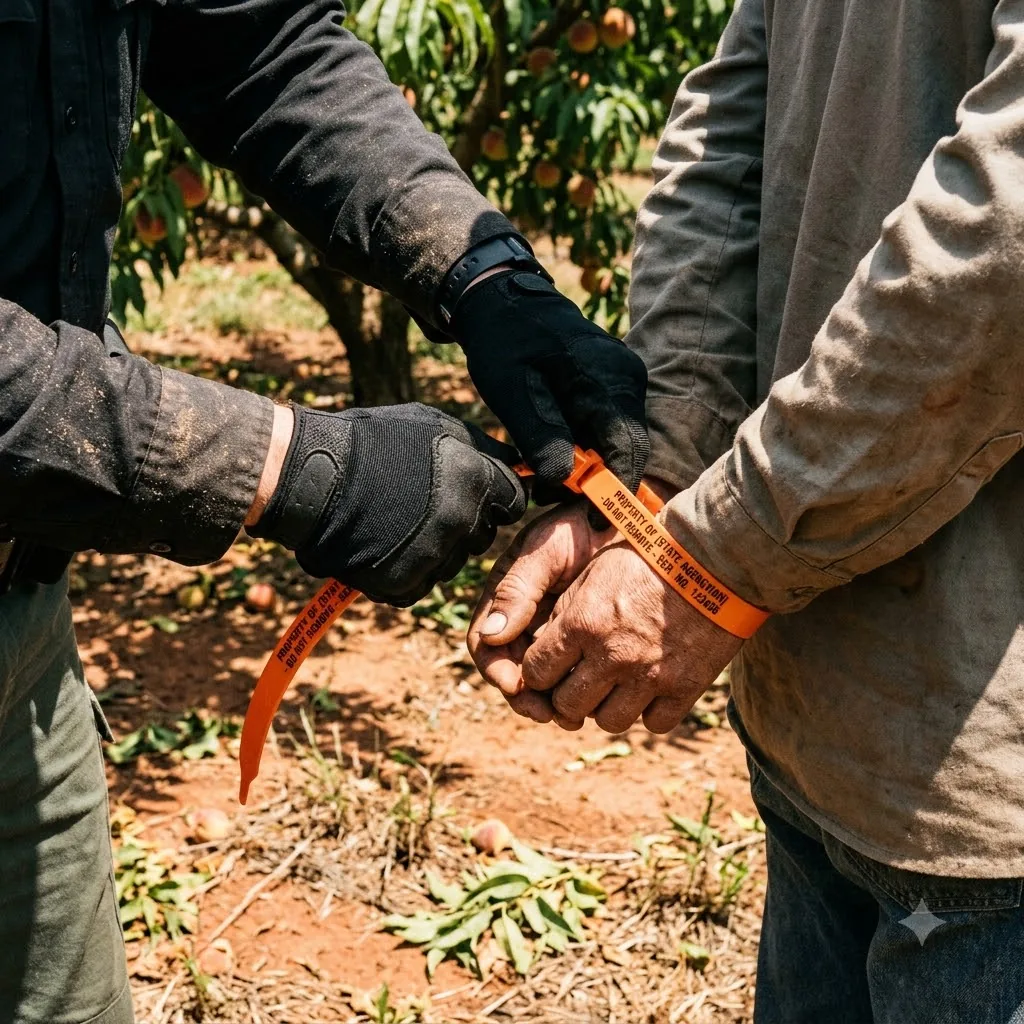
Mateo. Julian watched the young man’s bruised, shaking hands reach into the cold water, pulling out defective peaches and tossing them into a secondary chute. Just two hours ago, Mateo had been in the dirt, begging to be deported. He had pleaded for the familiar, devastating federal process of being shipped back across the border. He had screamed that he preferred jail to being sold.
Now, Mateo was silent.
Julian stood just ten feet away, watching the profound, horrifying shift take place in the young man’s posture. Mateo missed a bruised peach. One of the line guards stepped forward, casually unholstering his yellow taser and tapping the heavy plastic casing against the metal edge of the sorting bin. A sharp, sparking crack echoed over the water jets.
Mateo flinched violently. He didn’t look at the guard. He didn’t look for an exit. Slowly, he turned his head and met Julian’s eyes across the factory floor.
There was no pleading left in the young man’s dark pupils. The frantic, desperate terror of the orchard was gone, hollowed out and replaced by a crushing, absolute void. Mateo looked down at the heavy rubber bracelet that had replaced the zip-ties on his wrist. The sharp, geometric corporate logo was embossed clearly in the center of the band, right next to a scannable barcode. There was no release date. There was no judge. There was only the ninety-five percent occupancy mandate, a quota that meant Mateo would stand at this belt until his body gave out.
Mateo broke eye contact with Julian. He turned back to the sorting bin. His shoulders slumped, the fight completely drained from his thin frame. His bruised hands plunged back into the cold water, finding the rhythm of the machinery, matching the brutal, endless pace of the conveyor belt. He had accepted the reality of the abyss. He was no longer a man waiting for deportation. He was an asset, functioning exactly as designed.
Julian stood paralyzed in the damp, bleach-scented air. The weight of his own compliance settled into his chest, heavy and permanent. If he keyed his radio, if he drew his weapon, he would lose everything. The corporation would crush him, the municipality would bury him, and his mother would lose her medical care by the end of the month.
He was trapped, just as securely as the men on the line, tethered to the facility by his own desperate needs.
Julian turned away from the sorting belt. He didn’t look back at Mateo. He kept his eyes fixed firmly on the slick concrete floor as he walked past the guards, past the endless rows of captive labor, and out into the sweltering heat of the loading dock. Miller was already leaning against the transport van, smoking a cigarette, waiting to head back out to the fields to fill the next order.