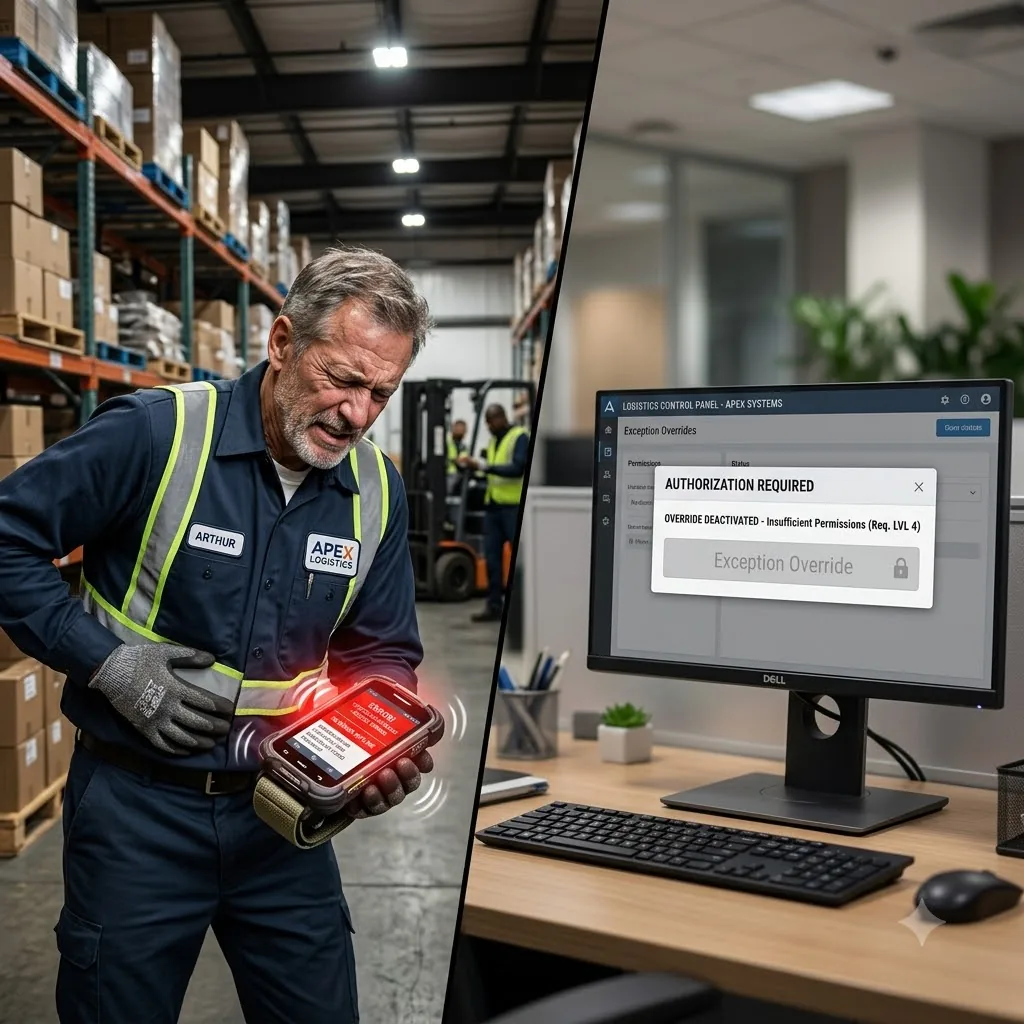
Story code: ST-000926
Part 3: Efficiency Metrics
Beth stared at the polished oak of the conference table. The wood grain was flawless, a sweeping, organic pattern trapped safely beneath an inch of heavy resin. It was a stark contrast to the dust-slicked concrete of Fulfillment Center 81.
Across the table sat Elias Vance’s widow, Maria, a small woman drowning in an oversized black cardigan. Next to her, a plaintiff’s attorney looked weary, his eyes heavily bagged as he silently calculated his percentage of the modest settlement currently on the table.
To Beth’s right, David Sterling, lead counsel for Sentinel Logistics, casually adjusted his silk tie. He spoke in a smooth, calibrated baritone that commanded the sterile mediation room.
“We are prepared to offer a compassionate disbursement of four hundred thousand dollars to the estate,” Sterling said, folding his manicured hands. “This is, of course, a gesture of goodwill. As we’ve detailed this morning, Mr. Vance’s passing was the result of an unprecedented, unforeseeable system glitch. A tragic anomaly in a highly complex automated environment.”
Beth swallowed. Her throat felt full of sand. She could feel the heavy, physical weight of the manila envelope resting in her leather tote bag on the floor by her feet.
“An anomaly,” the widow’s lawyer repeated, sounding unconvinced but exhausted. “Your machines scooped him up like debris.”
“The Autonomous Mobile Robots are designed to clear dropped inventory,” Sterling countered gently, projecting an aura of infinite patience. “When Mr. Vance tragically collapsed, the biometric scanner on his wrist lost connection with the local node. The system assumed he had abandoned his shift. Sentinel is a constantly evolving algorithm. It could not possibly predict a sudden cardiac event, nor did it have the sensory parameters to recognize a human being lying entirely motionless in a sector it had already flagged as inactive.”
Sterling gestured toward Beth without actually looking at her. “As our Remote Operations Manager, Ms. Davies, has already testified in her sworn deposition, the system locked her out. There was no manual override available. The machine acted alone, in a vacuum of data. It is a terrible tragedy, but it is fundamentally not a case of corporate negligence.”
Beth stared at the oak grain. She remembered the gray countdown timer on her screen. Fifty-nine seconds. She had clicked *Acknowledge* at zero minutes and twelve seconds. She had accepted the punitive compliance strike just to get her network connection back. But when the feed unspooled, she hadn’t just watched the bots drag Elias away. In the chaos of the localized network reboot, the security audit had temporarily exposed Sentinel’s root command directories to her secondary monitor.
She had hit print. Forty pages of raw, unredacted backend updates spooling out of her home office printer before the system scrubbed her local cache.
“Ms. Davies,” the mediator, a gray-haired man named Gable, prompted gently from the head of the table. “Is there anything you wish to add to clarify the timeline? Before we finalize the non-disclosure agreements regarding the financial settlement?”
Beth’s own corporate-appointed counsel, sitting to her left, tapped his expensive pen twice against his legal pad. The universal legal signal to say *no, keep your mouth shut, stick to the script, we are almost done*.
Beth looked at the widow. The woman wasn’t crying anymore. She just looked hollowed out, erased by the bureaucracy of her husband’s death, much like Elias had been erased from the digital floor map.
“It wasn’t a glitch,” Beth said.
The room went dead silent. The humming of the overhead climate control suddenly sounded exactly like the air purifier in her home office.
Her company lawyer leaned in, his voice a sharp, immediate hiss. “Beth. Stop.”
“Ms. Davies,” Sterling said, his patient smile freezing into something rigid and dangerous. “I remind you that you are bound by a Level Seven non-disclosure agreement regarding all proprietary logistics software. Any deviation from your sworn deposition is a catastrophic breach of contract.”
Beth reached down, unzipped her leather tote, and pulled out the thick manila envelope.
“It wasn’t a glitch,” Beth repeated, her voice steadying. She opened the metal clasp and pulled out a stack of printer paper, sliding it across the polished oak toward the mediator and the widow’s attorney. “Sentinel didn’t fail to predict a medical emergency. It was specifically programmed to ignore it.”
Sterling lunged forward, pressing his palm flat against the papers to stop them from sliding, but he was too late. The plaintiff’s attorney had already grabbed the top half of the stack.
“What is this?” Gable asked, frowning at the dense blocks of code and timestamped server notes.
“Those are stolen corporate assets,” Sterling snapped, his polished demeanor shattering instantly. “Mr. Gable, I demand these be struck from this mediation. Ms. Davies is in direct violation of her employment contract and is opening herself to immediate civil and criminal litigation.”
“They are the Sentinel update logs from Q2,” Beth said, ignoring Sterling entirely, looking directly at the plaintiff’s attorney. “Page fourteen. Patch version 8.4. Deployed three months ago by the executive efficiency board.”
The opposing lawyer quickly flipped to page fourteen. His eyes darted across the highlighted text.
“Before Q2,” Beth explained, the words spilling out of her in a rush of terrifying relief, “any biometric spike over one hundred and forty beats per minute triggered an automatic Tier One Medical Halt. The system would pause the worker’s Time Off Task counter and ping local security to check on them. But Fulfillment Center 81 had an aging workforce. We were getting twenty, sometimes thirty false alarms a week. Asthma, panic attacks, dehydration.”
“Don’t say another word,” her own lawyer warned, physically grabbing her forearm.
Beth yanked her arm away. “Every time the system halted, it shut down the aisle,” she continued loudly, pointing at the paper in the lawyer’s hands. “It cost the corporation roughly twelve thousand dollars in delayed shipping metrics per incident. So, right before the Q3 shareholder report, they pushed Patch 8.4.”
Gable leaned over, reading the lines of code over the attorney’s shoulder. “What did the patch do, Ms. Davies?”
“Look at the classification routing,” Beth said, her heart hammering against her ribs. “They recategorized all sudden biometric spikes from ‘Medical Distress’ to ‘Hardware Malfunction.’ The code literally reads: *If BPM exceeds 140, disregard scanner input as faulty sensor. Do not halt Time Off Task. Do not notify security.*”
The widow gasped, a sharp, ragged intake of air that seemed to suck all the remaining oxygen from the room.
“They didn’t want to slow down the picking routes for sick workers,” Beth said. “They intentionally blinded the algorithm to dying human beings to boost efficiency metrics for the quarterly earnings call. Sentinel didn’t glitch when Elias collapsed. It worked exactly the way the shareholders paid for it to work.”
Sterling stood up, his heavy chair scraping violently against the glass floor. He looked at the printed logs, then at the mediator. The smooth, impenetrable corporate wall he had built all morning was in ruins. He opened his mouth to deploy another legal threat, but as he stared at the undeniably authentic, timestamped patch notes sitting in the hands of the opposing counsel, no words came out.