Story code: ST-000926
Part 4: System Parameters
The fluorescent lights of the Stop-N-Go hummed, a cheap, buzzing frequency that burrowed directly into the base of Beth’s skull. It was a jagged, relentless sound, entirely unlike the soothing, rhythmic purr of the high-end air purifier she had left behind in her home office.
Beth shifted her weight on the anti-fatigue mat behind the cash register. It was a thin, useless piece of foam that did nothing to stop the cold ache radiating up from the cracked linoleum floor into her shins and lower back. She wore a blue polyester polo shirt, a size too large, with a plastic nametag pinned crookedly over her chest.
A customer tossed a bag of salt-and-vinegar chips onto the laminate counter. Beth picked up the wired barcode scanner. She pressed the trigger. A red laser line painted across the crinkled plastic, followed by a sharp, electronic beep.
“Two forty-nine,” Beth said. Her voice was flat, stripped of the authoritative corporate cadence she used to command mediation rooms and warehouse supervisors.
The customer handed her a crumpled five-dollar bill. Beth tapped the amount into the point-of-sale terminal, a dusty relic running on a localized operating system that hadn’t seen a software update in a decade. It was the only kind of technology she was legally cleared to touch anymore.
When the store emptied out, Beth pulled her smartphone from her pocket. She opened her email, staring at the message she had read three times since her shift began. It was from Gable, the mediator, sent as a final, depressing courtesy.
The lawsuit against Sentinel Logistics had officially closed. The printed server logs Beth provided had been undeniable. The jury, horrified by the cold calculus of Patch 8.4, had awarded the Vance estate a staggering twelve million dollars in punitive and compensatory damages. It was heralded by the press as a landmark victory for worker’s rights. The logistics corporation’s stock had dipped for exactly eight days before a favorable quarterly earnings report smoothed the curve back into the green.
Gable’s email detailed the final disbursement of the funds. It was a sterile ledger of human ruin.
Because the Sentinel algorithm had formally terminated Elias Vance for job abandonment at exactly 2:14 PM on the day of his heart attack, his corporate health insurance had been instantly severed. When the autonomous robots had scooped him up and the paramedics finally arrived at 2:18 PM, Elias was technically an uninsured civilian trespassing on private property. The subsequent physical trauma, combined with the delayed emergency response, had left him on a mechanical ventilator in a specialized cardiac intensive care unit for nineteen days before his brain function finally ceased.
Billed at the hospital’s aggressively maximized uninsured rates, the emergency medevac, the surgical interventions, the ECMO machine, and the weeks of intensive life support had totaled an astronomical figure. The corporate healthcare provider placed a primary lien on the settlement. After the plaintiff’s attorneys took their forty percent contingency fee, the hospital seized every remaining penny to settle the estate’s massive medical debt. The math finalized with brutal, unquestionable precision.
Maria Vance received exactly zero dollars.
The historic, twelve-million-dollar victory had simply moved money from the logistics conglomerate to the healthcare conglomerate, bypassing the widow entirely. Maria had lost her husband, and because the property taxes and mortgage were heavily in arrears from the lost income, she was still going to lose her house.
Beth locked her phone screen. She felt a hollow, sinking pressure in her chest. She had burned her entire life to the ground to expose the truth, and the corporate machine had simply absorbed the blow, rerouted the financial damage, and continued operating at peak efficiency.
She slipped the phone back into her pocket and looked around the empty convenience store, her new, permanent reality.
Her own career was a smoking crater. The moment she had breached the Level Seven non-disclosure agreement, her name had been added to the shared tech industry blacklist. Every major tech firm, logistics company, and corporate software developer used the same automated background-checking algorithms to screen candidates. The moment Beth’s social security number hit their servers, the systems auto-rejected her application. She wasn’t just fired; she was digitally exiled. After a hundred instant rejections, she realized she couldn’t even get an interview for an entry-level IT helpdesk role at a local startup.
The irony was suffocating. She had spent five years managing automated systems that determined the worth of human labor, and now she had been permanently discarded by one.
The bell above the glass door chimed. A man in heavy, cement-dusted work boots walked in. He looked exhausted, the deep lines around his eyes caked with grime. He bypassed the aisles and walked straight to the cooler, pulling out a large, brightly colored energy drink.
He carried it to the counter, setting it down with a heavy thud.
Beth picked up the wired scanner. She squeezed the trigger. The red laser swept across the aluminum can, reading the black bars without hesitation.
*Beep.*
The screen on her register flashed green, demanding the payment.
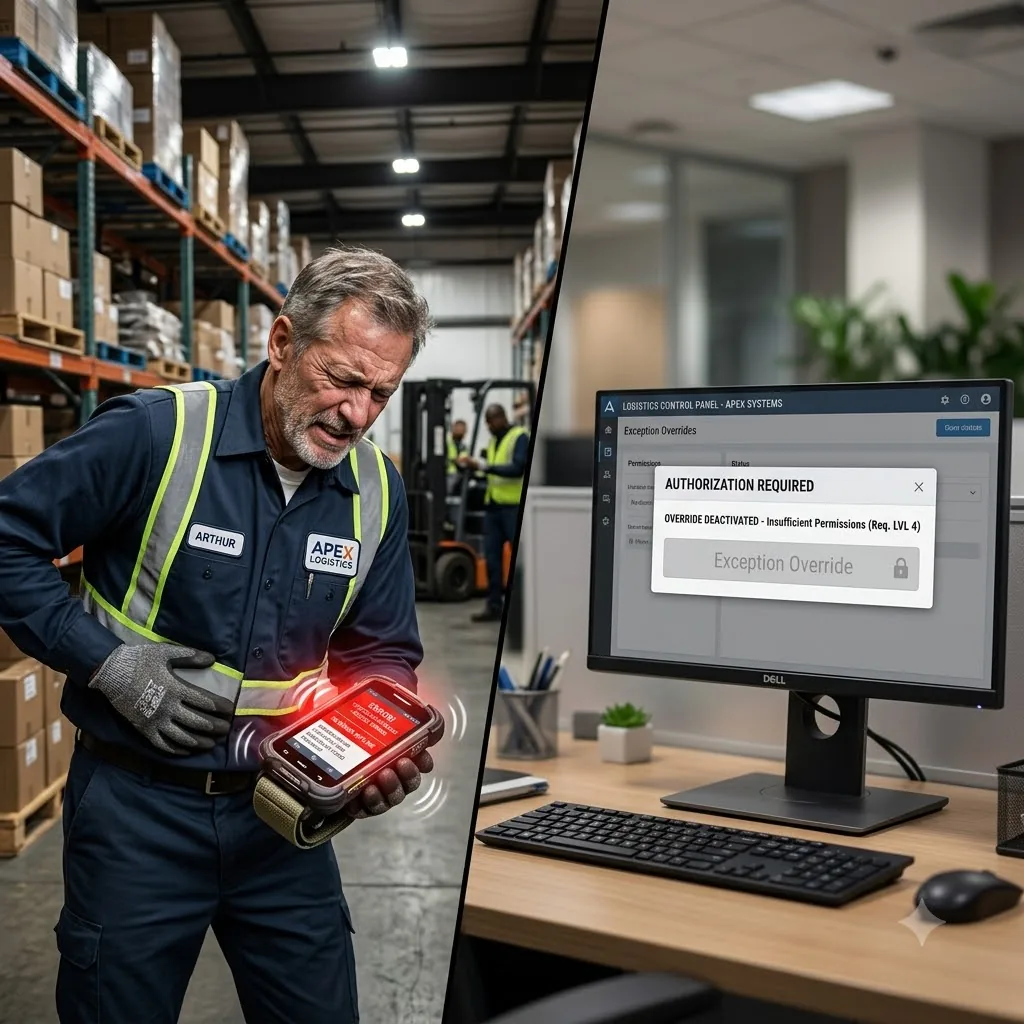
Beth stared at the red light fading from the tip of the scanner. She thought about the strobing amber light on Elias’s wrist, and the silent, efficient laser of the autonomous robot painting over his motionless chest. The machines were still tracking, still logging, still moving perfectly through their designed routines.
“Three dollars,” Beth said, her voice barely a whisper in the cold, bright store.
She took the cash, closed the drawer, and waited for the next person to step into her queue.