Story code: ST-001089
Part 1: The Digital Wall
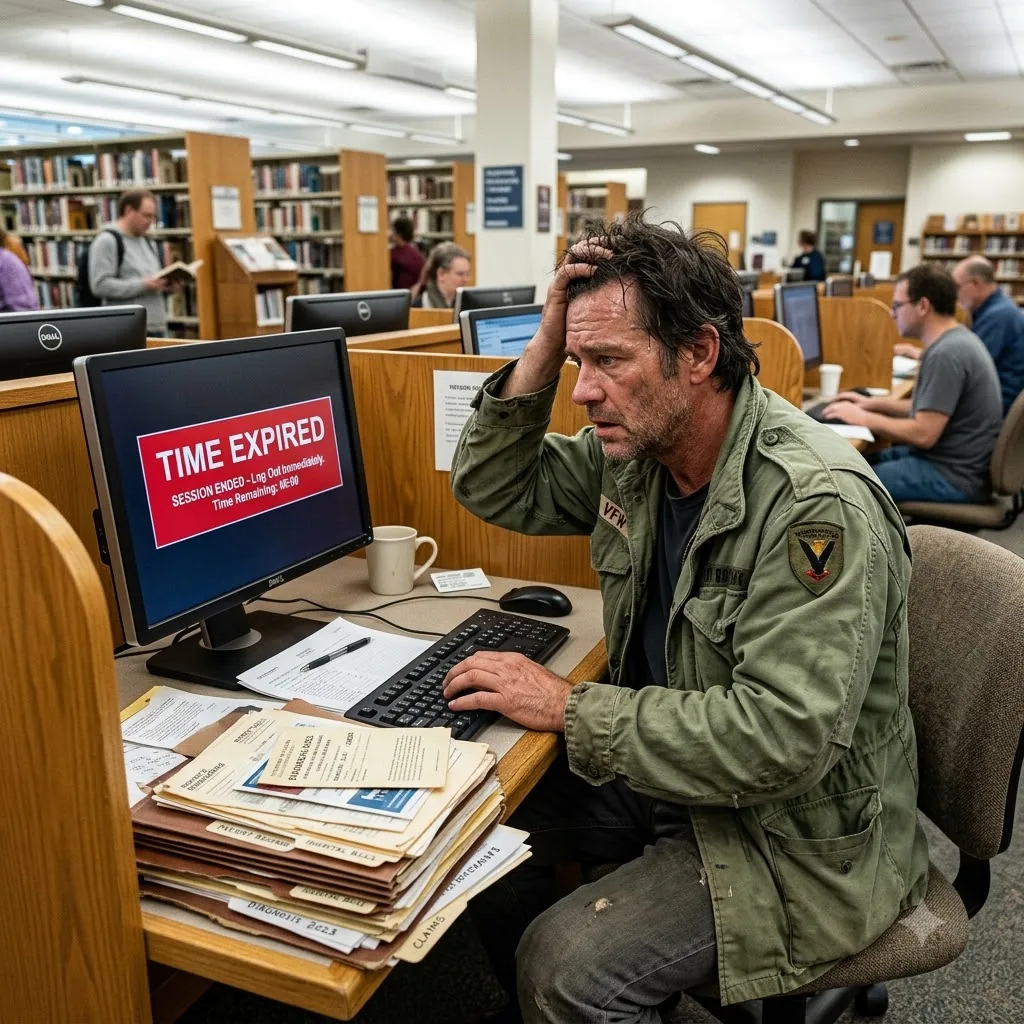
The red digital timer in the corner of the library monitor flashed to one minute remaining just as Marcus shoved page forty-eight of his medical addendum onto the flatbed scanner. The scanner bar whined, dragging a harsh white light across the former combat medic’s service records, the glass warm against his calloused fingertips. He hit the upload icon on the portal, watching the green progress bar crawl across the screen with agonizing slowness. Page forty-nine went onto the glass. The timer hit ten seconds. He slammed the lid and clicked scan, his heart hammering against his ribs in the quiet reading room. The screen froze, pixelated, and then snapped to a generic Windows login screen with a harsh beep.
His fifteen minutes were up. The local library system had wiped the session, locking him out of the digital upload portal completely.
Marcus gathered the sprawling pile of loose papers, his jaw set tight, and stuffed them into his faded canvas rucksack. He walked past the rows of other timed computers and out into the biting morning air, heading straight for the far corner of the parking lot. His silver Toyota Corolla sat under the dull light of a streetlamp, the rear windows obscured by thick condensation and a neatly folded moving blanket. It had been his permanent address for six months. He unlocked the door, tossing the rucksack onto the passenger seat next to a crumpled VA decision letter dated three weeks prior.
The bold text at the top of that page was burned into his memory. His previous claim had been denied not for lack of evidence, but for a technical violation stating the font size on his personal statement fell below the mandated twelve-point requirement.
He turned the key in the ignition, listening to the engine rattle before settling into a low hum. The digital wall had beaten him again, leaving him with an incomplete file and no way to appeal before the deadline hit at noon. He pulled the gearshift into drive. He was done fighting with timed web portals and automated rejections. The regional VA office was twelve miles away, and he was going to hand the fifty-page addendum directly to the adjuster who had stamped the font-size denial.
The regional office was a sprawling brutalist structure of concrete and tinted glass. Marcus parked the Corolla in the visitor garage, grabbed his rucksack, and marched through the automatic doors. The main waiting room was a sea of beige vinyl chairs, most of them occupied by older men staring blankly at a muted television screen. A digital counter above the reception desk displayed ticket number seventy-two.
Marcus bypassed the ticket dispenser. He walked straight to the thick plexiglass window of the front desk, pulling the crumpled rejection letter from his pocket and sliding it under the metal slot.
The clerk behind the glass did not look up from her monitor. She tapped a thick fingernail against her keyboard.
Marcus tapped the glass. He told her he needed to see the person who signed the document, Adjuster Miller in Room 314.
The clerk slid the paper back through the slot. She stated that Adjuster Miller was currently conducting closed-door file reviews and that the system was currently locked for maintenance, meaning no walk-in appointments could be accommodated. She pointed a finger toward the ticket machine, instructing him to take a number and wait for a general intake specialist.
Marcus did not turn toward the ticket machine. He looked past the clerk, through the reinforced glass window, to a heavy wooden door marked with an ‘Authorized Personnel Only’ sign. An employee balancing a cardboard tray of coffees bumped the door open with her hip, letting it swing wide. The locking mechanism caught momentarily on a frayed piece of the floor runner.
Marcus left the window. He moved with the quiet, deliberate pace he had learned on patrols a decade ago, slipping behind the reception stanchions just as the clerk turned her attention to a ringing phone. He stepped through the heavy wooden door before it could swing shut and click into the frame.
The noise of the waiting room vanished, replaced by the sterile hum of central air conditioning and the faint flicker of overhead fluorescent tubes. The hallway stretched out in a long corridor of identical, closed office doors. The carpet dampened his heavy boots as he walked, his eyes scanning the silver placards screwed into the dark wood. Room 310. Room 312.
He stopped in front of Room 314. The placard read ‘T. Miller – Senior Claims Adjuster’.
There was no sound of typing coming from the other side of the door. There was no muffled voice conducting a phone interview or dictating case notes. Instead, a rhythmic, mechanical clicking echoed through the thin wood, followed by a heavy metallic scrape that vibrated into the floorboards. It was a dense, industrial noise that did not belong in a paperwork processing center.
Marcus gripped the brass door handle. It was unlocked. He pushed the lever down and shoved the door inward, bracing himself to hand over the medical file. The heavy door swung open, hitting the rubber wall stop with a loud thud as Marcus stared into the center of the office.
The red digital timer in the corner of the library monitor flashed to one minute remaining just as Marcus shoved page forty-eight of his medical addendum onto the flatbed scanner. The scanner bar whined, dragging a harsh white light across the former combat medic’s service records, the glass warm against his calloused fingertips. He hit the upload icon on the portal, watching the green progress bar crawl across the screen with agonizing slowness. Page forty-nine went onto the glass. The timer hit ten seconds. He slammed the lid and clicked scan, his heart hammering against his ribs in the quiet reading room. The screen froze, pixelated, and then snapped to a generic Windows login screen with a harsh beep.
His fifteen minutes were up. The local library system had wiped the session, locking him out of the digital upload portal completely.
Marcus gathered the sprawling pile of loose papers, his jaw set tight, and stuffed them into his faded canvas rucksack. He walked past the rows of other timed computers and out into the biting morning air, heading straight for the far corner of the parking lot. His silver Toyota Corolla sat under the dull light of a streetlamp, the rear windows obscured by thick condensation and a neatly folded moving blanket. It had been his permanent address for six months. He unlocked the door, tossing the rucksack onto the passenger seat next to a crumpled VA decision letter dated three weeks prior.
The bold text at the top of that page was burned into his memory. His previous claim had been denied not for lack of evidence, but for a technical violation stating the font size on his personal statement fell below the mandated twelve-point requirement.
He turned the key in the ignition, listening to the engine rattle before settling into a low hum. The digital wall had beaten him again, leaving him with an incomplete file and no way to appeal before the deadline hit at noon. He pulled the gearshift into drive. He was done fighting with timed web portals and automated rejections. The regional VA office was twelve miles away, and he was going to hand the fifty-page addendum directly to the adjuster who had stamped the font-size denial.
The regional office was a sprawling brutalist structure of concrete and tinted glass. Marcus parked the Corolla in the visitor garage, grabbed his rucksack, and marched through the automatic doors. The main waiting room was a sea of beige vinyl chairs, most of them occupied by older men staring blankly at a muted television screen. A digital counter above the reception desk displayed ticket number seventy-two.
Marcus bypassed the ticket dispenser. He walked straight to the thick plexiglass window of the front desk, pulling the crumpled rejection letter from his pocket and sliding it under the metal slot.
The clerk behind the glass did not look up from her monitor. She tapped a thick fingernail against her keyboard.
Marcus tapped the glass. He told her he needed to see the person who signed the document, Adjuster Miller in Room 314.
The clerk slid the paper back through the slot. She stated that Adjuster Miller was currently conducting closed-door file reviews and that the system was currently locked for maintenance, meaning no walk-in appointments could be accommodated. She pointed a finger toward the ticket machine, instructing him to take a number and wait for a general intake specialist.
Marcus did not turn toward the ticket machine. He looked past the clerk, through the reinforced glass window, to a heavy wooden door marked with an ‘Authorized Personnel Only’ sign. An employee balancing a cardboard tray of coffees bumped the door open with her hip, letting it swing wide. The locking mechanism caught momentarily on a frayed piece of the floor runner.
Marcus left the window. He moved with the quiet, deliberate pace he had learned on patrols a decade ago, slipping behind the reception stanchions just as the clerk turned her attention to a ringing phone. He stepped through the heavy wooden door before it could swing shut and click into the frame.
The noise of the waiting room vanished, replaced by the sterile hum of central air conditioning and the faint flicker of overhead fluorescent tubes. The hallway stretched out in a long corridor of identical, closed office doors. The carpet dampened his heavy boots as he walked, his eyes scanning the silver placards screwed into the dark wood. Room 310. Room 312.
He stopped in front of Room 314. The placard read ‘T. Miller – Senior Claims Adjuster’.
There was no sound of typing coming from the other side of the door. There was no muffled voice conducting a phone interview or dictating case notes. Instead, a rhythmic, mechanical clicking echoed through the thin wood, followed by a heavy metallic scrape that vibrated into the floorboards. It was a dense, industrial noise that did not belong in a paperwork processing center.
Marcus gripped the brass door handle. It was unlocked. He pushed the lever down and shoved the door inward, bracing himself to hand over the medical file. The heavy door swung open, hitting the rubber wall stop with a loud thud as Marcus stared into the center of the office.