Story code: ST-001089
Part 2: The Optical Character
Marcus stepped into Room 314. The air was thick with the smell of hot dust, ozone, and shredded paper. This was not the quiet, administrative office of a senior claims adjuster. The standard-issue mahogany desk had been shoved into the far corner, buried under an avalanche of collapsed cardboard boxes. Taking up the center of the room was a massive, industrial paper guillotine bolted to a steel table, adjacent to a commercial-grade optical scanner the size of a chest freezer.
The heavy metallic scrape came from the guillotine. A thin, balding man in a sweat-stained dress shirt-Adjuster Miller, presumably-heaved the long steel blade downward. It sheared through the thick spine of a massive medical file with a violent crunch, severing the pages from their binding in one brutal stroke. Miller scooped up the loose stack of papers and dropped them into the scanner’s intake tray. The machine grabbed the pages, pulling them through its rollers with the rapid, mechanical clicking Marcus had heard from the hallway.
Marcus stood frozen just inside the doorway. He watched as Miller ignored the spinning scanner and picked up another file from a towering stack on his left. The adjuster didn’t open the cover to read the contents. Instead, he pulled a rigid, transparent plastic template from his breast pocket and slapped it over the first page. The template was covered in a tight grid of red and black lines. Miller squinted through the plastic overlay, let out a short, exasperated sigh, and tossed the entire unread file into a grey plastic bin on the floor.
A red label slapped on the side of the bin read: INTAKE REJECT – NON-STANDARD FORMAT.
“What are you doing?” Marcus asked, his voice rough and low over the noise of the machine.
Miller jumped, dropping the plastic template onto the carpet. He spun around, his eyes wide behind wire-rimmed glasses, and slammed his hand against the scanner’s red pause button. The mechanical clicking immediately wound down to a high-pitched whine.
“You can’t be in here,” Miller said, his gaze darting to the heavy wooden door behind Marcus, then to the faded canvas rucksack tightly gripped in his hand. “This is a secured processing sector. How did you get past the front intake desk?”
“The system is locked for maintenance,” Marcus said, taking a slow, deliberate step deeper into the room. He let the door swing shut behind him. The brass latch clicked into the frame, sealing out the faint hum of the waiting room and locking them inside the stifling office. “They told me to take a number.”
“Then you take a number and wait in the lobby,” Miller stammered, backing up until his hips hit the edge of the steel table. “You don’t just walk into a closed-door review. You’re violating federal privacy protocols just by looking at this room.”
Marcus looked down at the grey bin on the floor. He could clearly see a military notary seal on the top page of the discarded file, followed by a handwritten statement detailing combat deployments in Afghanistan. “You’re not reviewing anything. You’re cutting the spines off and throwing them in the trash.”
“It’s the new optical character recognition mandate,” Miller said, his voice rising in defensive panic. He pointed a shaking finger at the massive scanner. “The new system digitizes the entire regional backlog. If the physical file doesn’t fit the intake tray perfectly, I have to cut it down. If the font size on the personal statements doesn’t match the OCR template grid, the machine kicks back an alignment error. I can’t manually override a machine error. If the scanner can’t read it, it goes in the reject bin and generates an automated denial letter.”
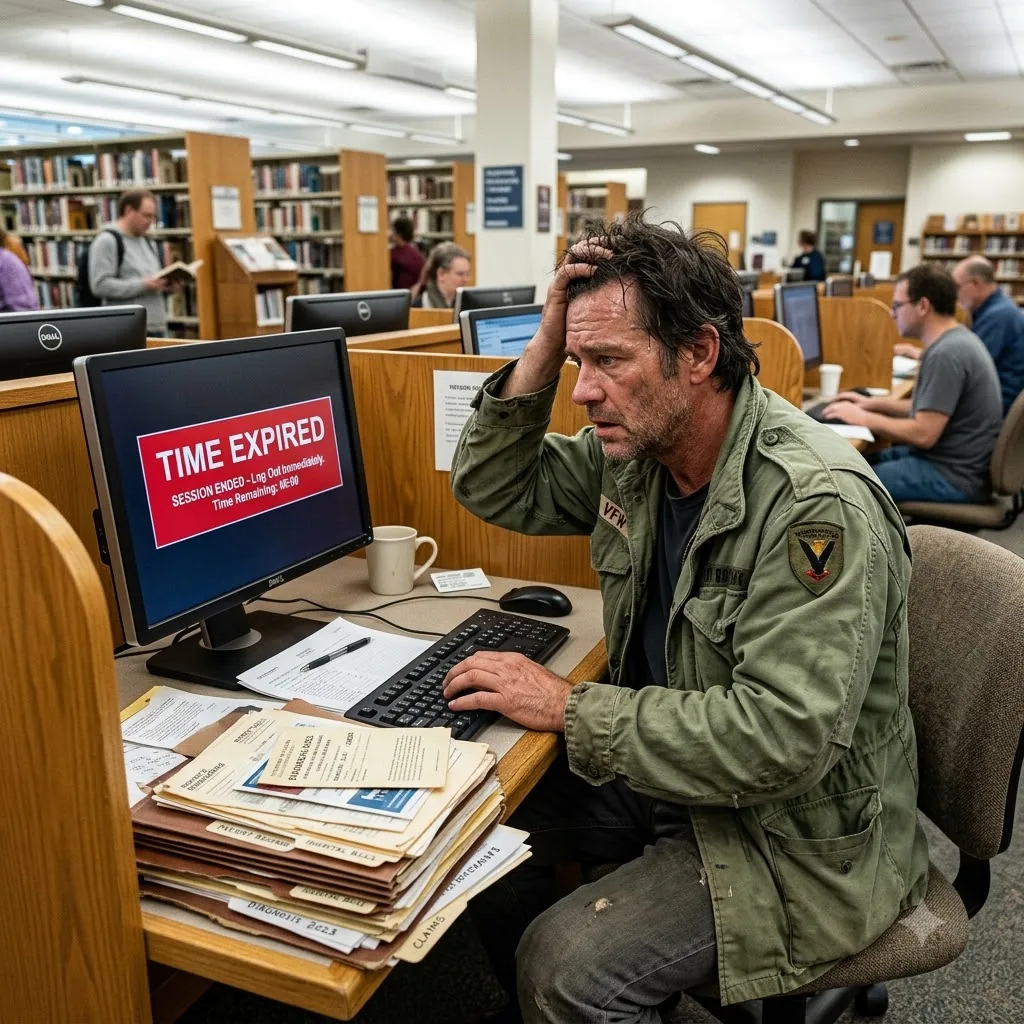
Marcus felt a cold, immense pressure building in his chest. Six months of sleeping under a moving blanket in the back of his Corolla. Six months of rationing cheap canned soup and timing his library computer sessions down to the final agonizing second. He had poured every raw, bleeding detail of his service, his night terrors, and his physical deterioration into those statements. He had formatted them on a sticky, cracked library keyboard, racing against a digital countdown.
And a man in a sweat-stained shirt had denied his life-saving claim simply by holding a piece of plastic over the paper.
Marcus unzipped his canvas rucksack. He pulled out his fifty-page addendum, the edges slightly curled from the dampness of his car, and held it out. “Read it.”
Miller stared at the stack of papers as if Marcus had just handed him a live grenade. “I am an intake adjuster. I don’t read them. The software reads them. I just facilitate the physical upload. You need to submit that through the digital portal like everyone else.”
“The portal is down,” Marcus said, his voice dropping to a dangerous, flat register. He closed the distance between them, stopping two feet from the steel table. “And I don’t have time to wait in a plastic chair for it to come back up. My appeal deadline hits at noon today. You are going to take this file, you are going to put it in your machine, and you are going to make it accept the upload.”
“I can’t!” Miller yelled, pressing himself backward against the heavy machinery. “It’s not standard! Look at the margins! Look at the uneven printing! The OCR will reject it instantly! It’ll flag my terminal for an audit and wipe my daily quota!”
“Then read it with your own eyes and stamp it approved,” Marcus said. He slammed the fifty pages down onto the steel table, right next to the heavy guillotine blade. “I am not leaving this room until this file is marked received.”
Miller’s eyes darted frantically around the room, landing on a beige telephone mounted on the wall near the door. Marcus followed his gaze and casually shifted his weight, fully blocking the path to the receiver.
“Please,” Miller said, his breathing shallow and rapid. He reached behind his back, his hand fumbling blindly along the edge of the buried mahogany desk. “You don’t understand what happens if I force a manual system override. The server locks out the entire regional queue.”
“Do it,” Marcus demanded.
Miller’s hand stopped moving. He swallowed hard, his Adam’s apple bobbing in his throat. “I’m sorry. I have strict protocols.”
He pressed a panic button hidden beneath the lip of the desk.
Instantly, a harsh, two-tone electronic alarm began blaring from the hallway outside. The sound pierced the heavy wooden door, echoing violently off the concrete walls of the corridor. A caged strobe light on the ceiling of Room 314 flared to life, washing the chaotic, dusty office in blinding, rhythmic pulses of crimson.
Marcus turned his head toward the door. Heavy boots were already thudding down the hallway, moving fast, accompanied by the sharp crackle of a two-way radio. The building’s armed security team had been triggered, and they were converging on Room 314.
Marcus looked back at Miller. The adjuster was gripping the edge of the steel table, terrified but resolute, bathed in the flashing red light. Marcus’s fifty pages sat on the metal surface between them, unread, unrecorded, and only seconds away from being permanently confiscated.