Story code: ST-001089
Part 3: The Administrative Override
The red strobe light mounted on the ceiling of Room 314 flared to life, washing the chaotic, dusty office in violent, rhythmic pulses of crimson. Outside in the corridor, the thud of heavy boots grew louder, vibrating through the thin commercial carpet, joined by the sharp, static burst of a police two-way radio. Marcus knew the sound of a coordinated breaching team. He had seconds before the heavy wooden door swung open.
He didn’t look at Adjuster Miller, who was currently cowering against the massive industrial scanner, his hands raised defensively. Instead, Marcus turned his attention to the heavy mahogany desk shoved into the far corner of the room. It was buried under an avalanche of collapsed cardboard boxes and loose intake forms. Marcus moved with the practiced, immediate efficiency of a medic under fire. He planted his boots into the floorboards, gripped the thick edge of the wooden desk, and drove his legs forward.
The desk groaned against the carpet. Boxes cascaded onto the floor, spilling hundreds of blank VA claim forms in a disorganized tidal wave. Marcus shoved the massive piece of furniture across the room, the wood scraping harshly against the floor. It slammed into the heavy door just as a heavy shoulder hit it from the other side.
“Federal Protective Service! Open the door!” a muffled, aggressive voice roared from the hallway. The brass handle violently twisted back and forth, but the desk held firm, wedging the door tightly into its steel frame.
As a heavy fist began pounding on the wood, the beige wall phone mounted next to the doorframe suddenly rang. It wasn’t the standard electronic trill; it was a high-pitched, continuous beep indicating a priority internal override from the front desk. Miller flinched, his eyes darting nervously toward the receiver.
Marcus stepped in front of the phone, blocking Miller’s path. He reached out and punched the flashing red speaker button.
The two-tone security alarm blaring in the hallway was slightly muted by the barricaded door, but the voice that crackled through the speaker was crystal clear. It belonged to the front desk clerk Marcus had bypassed in the lobby.
“Todd? Are you secure in there? The police are right outside your door, just stay back and let them handle the hostile.” She didn’t wait for a response, her voice immediately dropping its faux-concern for a hurried, annoyed cadence. “Listen, while they cut through the lock, the Regional Director just called down from the fourth floor. He’s furious. He wants to confirm you processed the walk-in file for Alderman Hayes’s son.”
Miller’s face went completely pale in the pulsing red light. He opened his mouth, but only a dry rasp came out.
“Todd, acknowledge,” the clerk snapped over the speaker, her impatience bleeding through the static. “The Director said the file is full of handwritten letters and non-standard medical notes. Do not run it through the optical scanner. I repeat, do not put it in the intake tray. Just punch in the administrative override code and push it straight to the approved queue. We are not risking an automated format rejection on a VIP claim. Acknowledge!”
Marcus reached out and hit the speaker button again. The line went dead with a sharp click. The only sounds left in the stifling room were the rhythmic pounding of the police against the door, the mechanical whine of the idling optical scanner, and Miller’s ragged, shallow breathing.
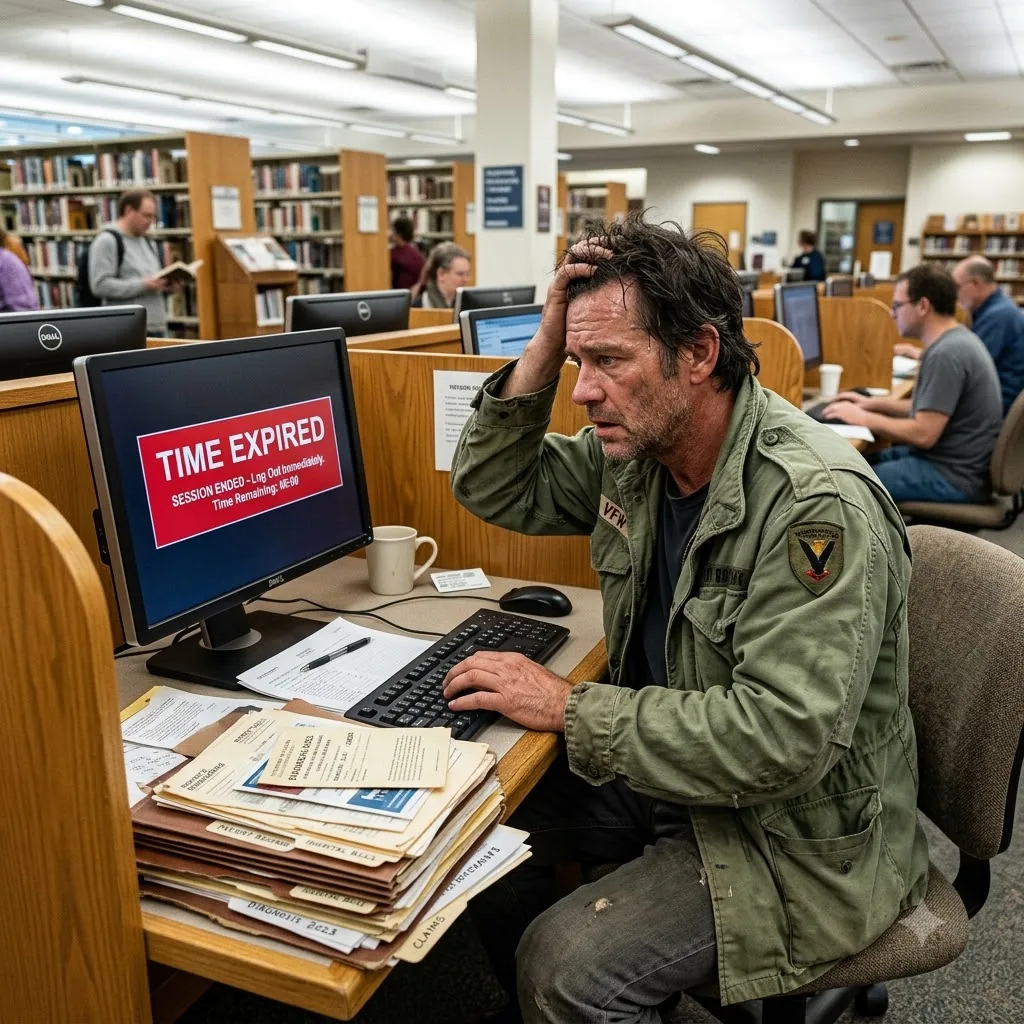
Marcus turned slowly. He walked over to the steel table and picked up his fifty-page addendum. The edges of the paper were curled and warped from the damp, freezing condensation of his Corolla. The ink was slightly faded, printed from a cheap library machine while a digital timer counted down his fifteen-minute window. He carried the heavy stack of medical records over to where Miller stood trembling.
Marcus stepped directly into Miller’s personal space, towering over the adjuster. He slammed the thick stack of papers down onto the glass flatbed of the scanner, the sound cracking like a gunshot over the noise of the breaching team.
“An administrative override code?” Marcus asked. His voice wasn’t a yell. It was a low, dangerous rumble that cut right through the chaos of the blaring alarm.
“That’s…” Miller pressed his back so hard against the scanner that the grey metal casing visibly flexed. He swallowed hard, sweat beading on his receding hairline. “That’s a separate processing queue. It’s strictly for executive authorization.”
“You told me it was impossible,” Marcus said, tapping a calloused finger violently against the top page of his service records. “You stood there two minutes ago and told me you couldn’t manually override a machine error. You swore the software controlled everything, that you were just a helpless victim of the intake mandate.”
“It does! For standard applicants, it does!” Miller pleaded, his hands shaking in front of his chest.
“Alderman Hayes’s son gets a stack of handwritten statements pushed through with a typed password,” Marcus said, the heat rising in his chest. Six months of rationing cheap canned soup. Six months of waking up shivering under a moving blanket. Six months of believing he had failed to follow the rules. He pointed a rigid finger at the grey plastic reject bin overflowing with chopped, discarded spines. “But a combat medic who actually deployed to a warzone gets his records thrown in the garbage because his font size doesn’t match your little piece of plastic?”
“They… the executives make the rules,” Miller stammered, his eyes darting frantically to the door as another heavy, concussive thud shook the hinges. Dust fell from the ceiling tiles. “I just follow the intake mandate! If I use that code for you, it logs my credentials in the mainframe. They’ll know I bypassed the optical character recognition for an unauthorized walk-in!”
“So the machine isn’t the problem,” Marcus said, leaning in closer, forcing the terrified adjuster to look him directly in the eye. “The machine is just a wall you built to keep the desperate people out. You lock veterans out of the portal on a twelve-point font technicality, you chop up their trauma with a guillotine, but you leave a digital back door wide open for the politicians’ kids?”
“Please,” Miller whispered, his voice cracking. The strobing crimson light caught the tears of panic forming behind his wire-rimmed glasses. “The police are right there. You’re going to go to federal prison. Don’t make me do this.”
“Enter the code,” Marcus commanded, sliding the fifty pages across the scanner glass until they touched Miller’s shaking fingertips.
“Open this door right now! Step away from the barricade!” the police shouted from the hallway. A sharp, metallic ping echoed through the room-they were sliding a heavy pry bar between the door and the frame. The mahogany desk shifted a fraction of an inch backward, the cardboard boxes groaning under the immense, applied pressure.
“You lied to me,” Marcus said, his unblinking gaze locked on the adjuster, completely ignoring the splintering wood of the door behind him. “You looked me in the face and told me a machine was denying my claim. Now you’re going to type the administrative code, and you’re going to watch my file go through.”
Miller stared at the crumpled stack of papers, his hands trembling violently over the scanner’s keyboard. The bureaucratic lie was entirely exposed, stripped of its protective camouflage, leaving him trapped in the flashing red light with absolutely nowhere left to hide.