Story code: ST-001578
Part 1: When the Screen Went White
The district archive vanished in the middle of a sentence.
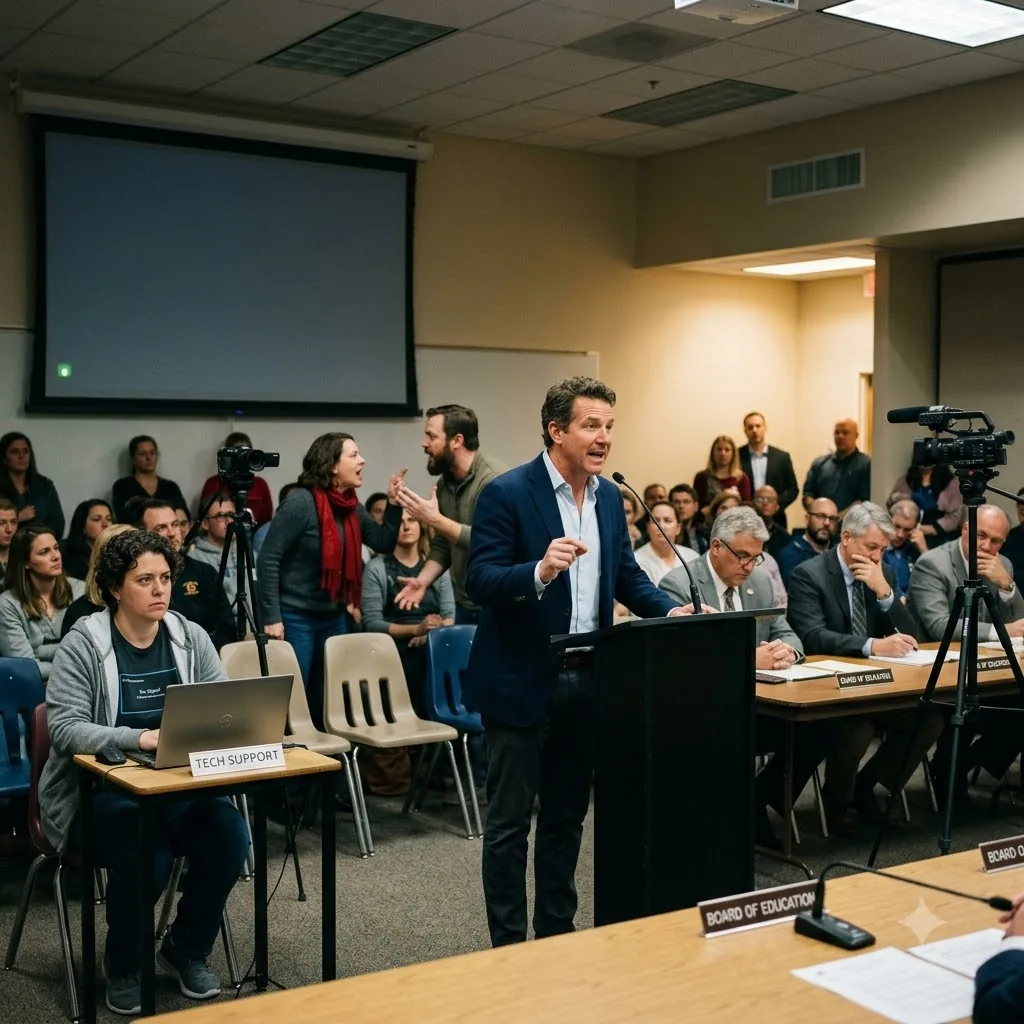
One second the projector showed a scanned list of challenged titles in black type, and the next it went blank so hard it looked intentional, a clean white field glowing over the school board dais while a parent at the microphone kept reading from a paper copy in a voice gone sharp with adrenaline. Mara Quintero was already reaching for her keyboard before the first shout came from the back row.
At the folding tech table along the gym wall, she hit refresh on the LanternPath admin console and got nothing but a spinning icon and the reflected glare of the projector in her own glasses. Beside the laptop sat a district-issued hotspot, two power strips, and the yellow legal pad where she had written the order of the night in neat block letters. Public comment. Archive demo. Curriculum search. None of it mattered now. Parents had risen halfway out of their chairs. A camera on a local TV tripod swung toward the board members. Someone near the entrance said, loudly enough to carry, that this was exactly how they did it.
Mara forced herself to stay on the page in front of her. Check local connection first. The hotspot still showed signal. Her machine was online. The board clerk’s monitor had frozen on the LanternPath logo, the little lantern mark pulsing in place as if it were thinking very deeply and refusing to answer.
The teacher on the livestream monitor in the corner, an older man in a sport coat who had just been named from the floor, lifted both hands in a helpless gesture toward someone offscreen. That movement got picked up by two phones at once. A woman in the second row stood and pointed at him as if he were in the room. The superintendent leaned toward the board president. The room’s sound system squealed, recovered, and then flattened under a new voice.
Beck Raines was on his feet.
He had been sitting one chair down from Mara in the visitor section, jacket off, sleeves rolled with the kind of care that looked accidental only from far away. Now he moved into the center aisle as if the opening had been reserved for him. He did not hurry. He raised one hand toward the board, the other toward the crowd, and by the time Mara looked up from the console he already had every camera turned in his direction.
“Folks, stay with us,” he said, not into a microphone at first, just with the practiced carry of someone who knew how to place his voice. “Do not let a technical disruption become a substitute for the facts.”
The board president reached for the mic too late. Beck had it first.
Mara opened a terminal window, ran a ping against the primary endpoint, then the backup. Both timed out. She tried the internal status page from memory. Nothing. Her pulse thudded in her throat, not dramatic, just hard enough to blur the edge of the screen. This was supposed to be a simple public archive pull during a routine stop on a district training tour west of Indianapolis, an hour from the office if traffic behaved. She had tested the room. She had tested the handoff. She had tested the presentation account on the projector fifteen minutes before the meeting started.
Beck’s voice rolled over the crowd behind her.
“When communities ask to see what their children are being taught, they deserve transparency, not panic.”
A few people clapped. A few booed. The parent at the microphone turned, paper still in hand, unsure whether she had lost the floor or been handed a larger one. The veteran teacher on the monitor looked smaller now that the blank projector dominated the front wall.
Mara sent a message into the staff channel. Outage at Franklin Ridge board meeting. Archive inaccessible. Need status now. She watched the message sit with no response indicator. Then she texted DevOps directly, then the on-call engineer, then the backup contact whose number she used only when something had gone truly crooked. Around her, every voice in the gym seemed to rise by a notch.
Beck had moved from calming language into righteous language so smoothly it made Mara miss half a line of the error log. He was talking about civic trust, about the danger of letting controversy erase context, about standing firm when people wanted teachers humiliated in clipped videos and stripped quotes. He pointed once, not at the parent or the board or the screen, but generally upward, as if the failure itself were an adversary hovering in the rafters.
Mara finally got a status response, but not from the channel she was watching.
A notification slid across the top right corner of her laptop, small and gray, easy to miss under the projector glare. Shared folder update. She almost dismissed it on reflex. Then she saw the sender line.
Not IT. Not ops.
Her fingers stopped above the keyboard.
The folder name was partly cut off by the notification width. Board_Materials followed by a dash and two words she could not read before the banner shifted. Under it sat a row of names with colored circles, collaborators she recognized from the company directory and one she did not expect to see grouped with them. The banner had landed on her screen by mistake or because someone had added the wrong Mara or because a setting had carried over from an old thread. Whatever the reason, it did not belong in the middle of her outage work, and the fact of it hit with the cold, clean feel of stepping off a curb that was not there.
She clicked the notification.
Nothing opened. The admin console jumped in front again, still stalled. She clicked away, reached for the browser corner to pull up recent notifications, and heard her own name across the gym.
“Mara,” Beck said into the microphone, warm and public. “Can you confirm for everyone that the system is under attack, not under review.”
Heads turned. The camera nearest the dais swung toward the tech table. On the projector, the white screen twitched and flashed a dark sidebar for less than a second, just long enough for Mara to see a folder icon, a date stamp, and the first letters of a title before the image vanished again.
She pushed back her chair so fast the legs scraped the floor. “Do not touch that screen,” she said, already moving toward the board clerk’s station, but the clerk had reached for the mouse and Beck was stepping down from the aisle, still holding the mic, saying her name again as the sidebar opened wider and someone in the front row gasped.
The district archive vanished in the middle of a sentence.
One second the projector showed a scanned list of challenged titles in black type, and the next it went blank so hard it looked intentional, a clean white field glowing over the school board dais while a parent at the microphone kept reading from a paper copy in a voice gone sharp with adrenaline. Mara Quintero was already reaching for her keyboard before the first shout came from the back row.
At the folding tech table along the gym wall, she hit refresh on the LanternPath admin console and got nothing but a spinning icon and the reflected glare of the projector in her own glasses. Beside the laptop sat a district-issued hotspot, two power strips, and the yellow legal pad where she had written the order of the night in neat block letters. Public comment. Archive demo. Curriculum search. None of it mattered now. Parents had risen halfway out of their chairs. A camera on a local TV tripod swung toward the board members. Someone near the entrance said, loudly enough to carry, that this was exactly how they did it.
Mara forced herself to stay on the page in front of her. Check local connection first. The hotspot still showed signal. Her machine was online. The board clerk’s monitor had frozen on the LanternPath logo, the little lantern mark pulsing in place as if it were thinking very deeply and refusing to answer.
The teacher on the livestream monitor in the corner, an older man in a sport coat who had just been named from the floor, lifted both hands in a helpless gesture toward someone offscreen. That movement got picked up by two phones at once. A woman in the second row stood and pointed at him as if he were in the room. The superintendent leaned toward the board president. The room’s sound system squealed, recovered, and then flattened under a new voice.
Beck Raines was on his feet.
He had been sitting one chair down from Mara in the visitor section, jacket off, sleeves rolled with the kind of care that looked accidental only from far away. Now he moved into the center aisle as if the opening had been reserved for him. He did not hurry. He raised one hand toward the board, the other toward the crowd, and by the time Mara looked up from the console he already had every camera turned in his direction.
“Folks, stay with us,” he said, not into a microphone at first, just with the practiced carry of someone who knew how to place his voice. “Do not let a technical disruption become a substitute for the facts.”
The board president reached for the mic too late. Beck had it first.
Mara opened a terminal window, ran a ping against the primary endpoint, then the backup. Both timed out. She tried the internal status page from memory. Nothing. Her pulse thudded in her throat, not dramatic, just hard enough to blur the edge of the screen. This was supposed to be a simple public archive pull during a routine stop on a district training tour west of Indianapolis, an hour from the office if traffic behaved. She had tested the room. She had tested the handoff. She had tested the presentation account on the projector fifteen minutes before the meeting started.
Beck’s voice rolled over the crowd behind her.
“When communities ask to see what their children are being taught, they deserve transparency, not panic.”
A few people clapped. A few booed. The parent at the microphone turned, paper still in hand, unsure whether she had lost the floor or been handed a larger one. The veteran teacher on the monitor looked smaller now that the blank projector dominated the front wall.
Mara sent a message into the staff channel. Outage at Franklin Ridge board meeting. Archive inaccessible. Need status now. She watched the message sit with no response indicator. Then she texted DevOps directly, then the on-call engineer, then the backup contact whose number she used only when something had gone truly crooked. Around her, every voice in the gym seemed to rise by a notch.
Beck had moved from calming language into righteous language so smoothly it made Mara miss half a line of the error log. He was talking about civic trust, about the danger of letting controversy erase context, about standing firm when people wanted teachers humiliated in clipped videos and stripped quotes. He pointed once, not at the parent or the board or the screen, but generally upward, as if the failure itself were an adversary hovering in the rafters.
Mara finally got a status response, but not from the channel she was watching.
A notification slid across the top right corner of her laptop, small and gray, easy to miss under the projector glare. Shared folder update. She almost dismissed it on reflex. Then she saw the sender line.
Not IT. Not ops.
Her fingers stopped above the keyboard.
The folder name was partly cut off by the notification width. Board_Materials followed by a dash and two words she could not read before the banner shifted. Under it sat a row of names with colored circles, collaborators she recognized from the company directory and one she did not expect to see grouped with them. The banner had landed on her screen by mistake or because someone had added the wrong Mara or because a setting had carried over from an old thread. Whatever the reason, it did not belong in the middle of her outage work, and the fact of it hit with the cold, clean feel of stepping off a curb that was not there.
She clicked the notification.
Nothing opened. The admin console jumped in front again, still stalled. She clicked away, reached for the browser corner to pull up recent notifications, and heard her own name across the gym.
“Mara,” Beck said into the microphone, warm and public. “Can you confirm for everyone that the system is under attack, not under review.”
Heads turned. The camera nearest the dais swung toward the tech table. On the projector, the white screen twitched and flashed a dark sidebar for less than a second, just long enough for Mara to see a folder icon, a date stamp, and the first letters of a title before the image vanished again.
She pushed back her chair so fast the legs scraped the floor. “Do not touch that screen,” she said, already moving toward the board clerk’s station, but the clerk had reached for the mouse and Beck was stepping down from the aisle, still holding the mic, saying her name again as the sidebar opened wider and someone in the front row gasped.