Story code: ST-001584
Part 1: The Hallway Outside the Door
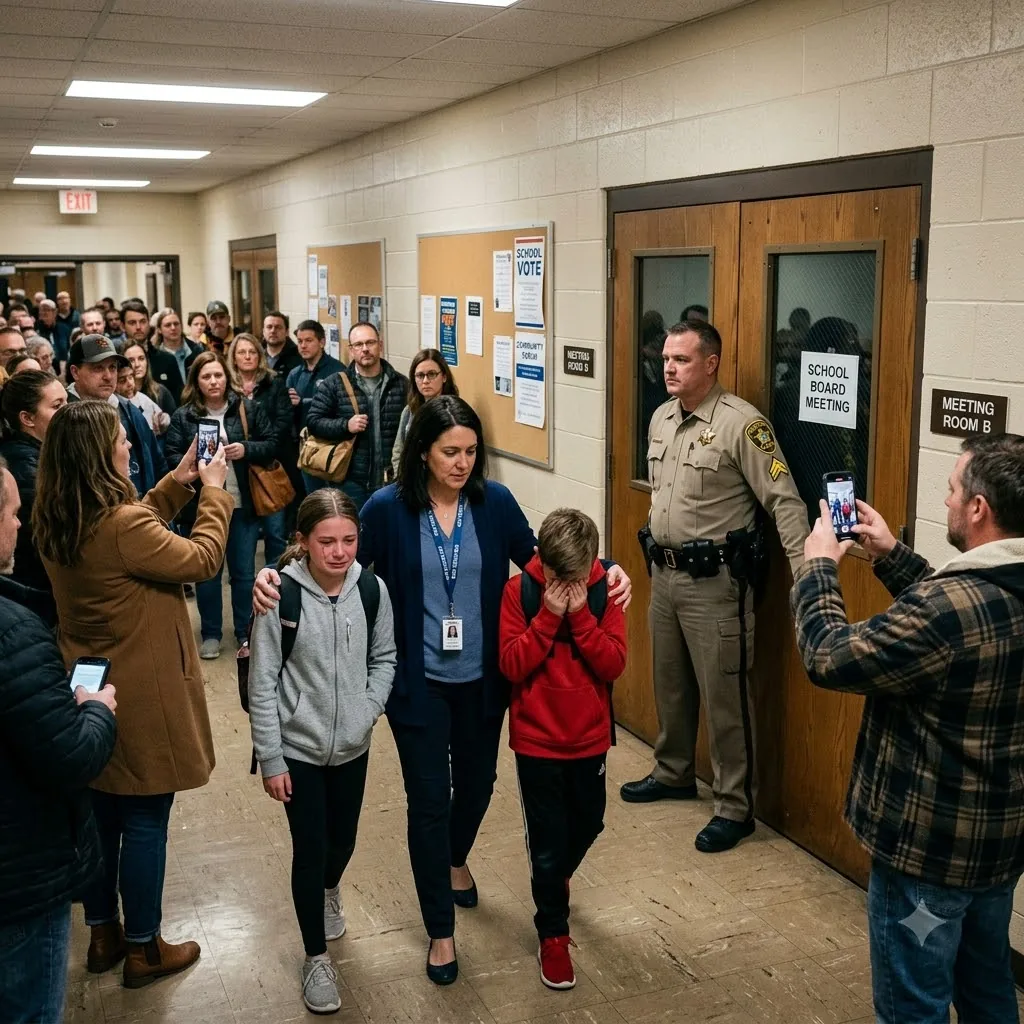
Elena Ruiz had one sixth grader clinging to her left arm and another crying hard into the front of her cardigan when the applause inside the board room stopped so fast it felt like somebody had pulled a plug.
A second earlier, the hallway outside the civic center meeting room had been all noise and shove and phone screens held overhead. Now the silence coming through the cracked door was flat and wrong. It pressed against the walls. Even the parents recording went still for a beat, their cameras pointed at the gap as if something might come through it.
“Breathe,” Elena told the smaller girl, guiding both kids sideways until their backs touched the cinderblock wall. “Look at me. Not in there. At me.”
The boy kept rubbing his sleeve over his eyes, embarrassed by tears he could not stop. The girl had her hands over her ears even though nobody was yelling now. Elena knew both of them from lunch duty and from the after-school tutoring room, knew their faces in ordinary light, at ordinary volume. It made this worse. Children were not supposed to be wedged in a government hallway while grown people filmed each other falling apart.
The deputy stationed at the meeting-room entrance shifted his weight and spread one arm across the doorway. He was a local man Elena recognized by sight, broad through the shoulders, polite at football games, the kind who usually called teachers ma’am. At the moment his jaw was set so tight it looked painful. He did not go inside. He did not fully close the door either.
From somewhere beyond him came a man’s voice, not loud now, roughened down into a strained insistence.
“… not asking for permission anymore.”
A woman near Elena whispered, “Oh my God, he’s still going,” while making sure her camera stayed level.
Elena turned her body to shield the kids from the nearest phones. “Can one of you take them to the lobby,” she said to the cluster of adults against the opposite wall.
Nobody moved at first. They were all listening.
Another fragment broke through the opening. Wade Mercer had a voice built to carry, the same voice Elena had heard at Veterans Day assemblies and booster fundraisers and one unforgettable spring carnival where the generator failed and he somehow made announcements over two hundred people without a microphone. Now that voice had lost its clean edges.
“You clap because it sounds tough,” he said from inside. “You clap because it lets you pretend this is simple.”
A chair scraped. Someone murmured for him to sit down. Someone else said, “Wade.” Not sharp enough to stop anything.
The deputy put his free hand near the radio on his shoulder. Elena saw that and felt the two children lean harder into her, as if they could sense a change before they understood it. She bent toward them again.
“We are just walking to the front lobby,” she said. “You can help me by standing up straight. That’s your job right now.”
The boy nodded without conviction. The girl did not uncover her ears.
Past the deputy’s arm, through the thin wedge of the doorway, Elena caught pieces of the room in flashes. The edge of the board table. A stack of handouts spread crooked across the floor. A woman from the superintendent’s office standing halfway out of her chair. Three rows of faces all turned toward the same point, not with outrage exactly, not anymore. The applause had burned off. What remained looked closer to recoil.
Then she saw Mr. Larkin from the middle school faculty near the back wall. He was usually impossible to miss because he carried himself like a man waiting for a team photo, shoulders back, chin high. Right now he was staring downward, fixed on some spot below eye level, and he did not look up even when another parent hissed his name.
Elena looked away before she could make sense of what he was looking at. The children came first. That was the rule she could hold onto.
A father with a district visitor badge finally stepped over. “I can take them,” he said, already glancing back toward the door.
“Take them all the way to the front desk,” Elena said. “Stay with them. Don’t leave them alone.”
He reached for the boy, then the girl. The girl refused to let go of Elena’s sleeve until Elena crouched enough to pry her fingers loose one by one. “Go with him,” Elena said softly. “I will be right behind you.”
That was not a promise she knew she could keep, but it moved the girl.
As they started down the hall, the room inside found its noise again all at once. Not applause this time. Several voices collided. One rose high with panic. Another barked for space. The deputy stepped fully into the doorway and blocked it with his body.
“Sir,” he said.
Elena could not see Wade yet, only the reaction to him. People along the wall drew back in that automatic ripple a crowd makes around sudden movement. A phone dropped and clattered on the tile near the threshold. The person who owned it did not pick it up.
“Sir, stop right there.”
Elena took one step toward the door before she checked herself. The children were halfway to the lobby. She watched to make sure the badge-wearing father kept moving with them, then she turned back because everybody else in the hallway had turned back, and because the silence inside had come apart into something she could no longer sort from outside.
Wade Mercer came into view in a broken sequence through moving bodies and the deputy’s shoulder. Big man. Pressed shirt gone untucked on one side. Face red in patches instead of all over. One hand up, palm open, not striking, not surrendering either. In the other he seemed to be gripping a sheaf of papers that had bent and split, pages hanging at different angles like they had been crushed and straightened again. He was not looking at the cameras in the hall. He was looking past the board table at somebody Elena could not see.
“I said sit down,” a board member snapped.
“No,” Wade said.
There was no speechmaker polish left in him. Whatever had started as a public argument had tipped into something rawer, something the room had not expected to be asked to hold. Elena saw one mother lower her phone slowly, the way people do in church or at a roadside wreck when recording suddenly feels obscene.
The deputy planted both feet. “Mr. Mercer.”
Wade took another step anyway. From the hall Elena heard his breath catch before the words came, torn out harder than the last ones.
“If one of you had listened when I told you what was happening to-”
The deputy lunged, and somebody inside screamed.
Elena Ruiz had one sixth grader clinging to her left arm and another crying hard into the front of her cardigan when the applause inside the board room stopped so fast it felt like somebody had pulled a plug.
A second earlier, the hallway outside the civic center meeting room had been all noise and shove and phone screens held overhead. Now the silence coming through the cracked door was flat and wrong. It pressed against the walls. Even the parents recording went still for a beat, their cameras pointed at the gap as if something might come through it.
“Breathe,” Elena told the smaller girl, guiding both kids sideways until their backs touched the cinderblock wall. “Look at me. Not in there. At me.”
The boy kept rubbing his sleeve over his eyes, embarrassed by tears he could not stop. The girl had her hands over her ears even though nobody was yelling now. Elena knew both of them from lunch duty and from the after-school tutoring room, knew their faces in ordinary light, at ordinary volume. It made this worse. Children were not supposed to be wedged in a government hallway while grown people filmed each other falling apart.
The deputy stationed at the meeting-room entrance shifted his weight and spread one arm across the doorway. He was a local man Elena recognized by sight, broad through the shoulders, polite at football games, the kind who usually called teachers ma’am. At the moment his jaw was set so tight it looked painful. He did not go inside. He did not fully close the door either.
From somewhere beyond him came a man’s voice, not loud now, roughened down into a strained insistence.
“… not asking for permission anymore.”
A woman near Elena whispered, “Oh my God, he’s still going,” while making sure her camera stayed level.
Elena turned her body to shield the kids from the nearest phones. “Can one of you take them to the lobby,” she said to the cluster of adults against the opposite wall.
Nobody moved at first. They were all listening.
Another fragment broke through the opening. Wade Mercer had a voice built to carry, the same voice Elena had heard at Veterans Day assemblies and booster fundraisers and one unforgettable spring carnival where the generator failed and he somehow made announcements over two hundred people without a microphone. Now that voice had lost its clean edges.
“You clap because it sounds tough,” he said from inside. “You clap because it lets you pretend this is simple.”
A chair scraped. Someone murmured for him to sit down. Someone else said, “Wade.” Not sharp enough to stop anything.
The deputy put his free hand near the radio on his shoulder. Elena saw that and felt the two children lean harder into her, as if they could sense a change before they understood it. She bent toward them again.
“We are just walking to the front lobby,” she said. “You can help me by standing up straight. That’s your job right now.”
The boy nodded without conviction. The girl did not uncover her ears.
Past the deputy’s arm, through the thin wedge of the doorway, Elena caught pieces of the room in flashes. The edge of the board table. A stack of handouts spread crooked across the floor. A woman from the superintendent’s office standing halfway out of her chair. Three rows of faces all turned toward the same point, not with outrage exactly, not anymore. The applause had burned off. What remained looked closer to recoil.
Then she saw Mr. Larkin from the middle school faculty near the back wall. He was usually impossible to miss because he carried himself like a man waiting for a team photo, shoulders back, chin high. Right now he was staring downward, fixed on some spot below eye level, and he did not look up even when another parent hissed his name.
Elena looked away before she could make sense of what he was looking at. The children came first. That was the rule she could hold onto.
A father with a district visitor badge finally stepped over. “I can take them,” he said, already glancing back toward the door.
“Take them all the way to the front desk,” Elena said. “Stay with them. Don’t leave them alone.”
He reached for the boy, then the girl. The girl refused to let go of Elena’s sleeve until Elena crouched enough to pry her fingers loose one by one. “Go with him,” Elena said softly. “I will be right behind you.”
That was not a promise she knew she could keep, but it moved the girl.
As they started down the hall, the room inside found its noise again all at once. Not applause this time. Several voices collided. One rose high with panic. Another barked for space. The deputy stepped fully into the doorway and blocked it with his body.
“Sir,” he said.
Elena could not see Wade yet, only the reaction to him. People along the wall drew back in that automatic ripple a crowd makes around sudden movement. A phone dropped and clattered on the tile near the threshold. The person who owned it did not pick it up.
“Sir, stop right there.”
Elena took one step toward the door before she checked herself. The children were halfway to the lobby. She watched to make sure the badge-wearing father kept moving with them, then she turned back because everybody else in the hallway had turned back, and because the silence inside had come apart into something she could no longer sort from outside.
Wade Mercer came into view in a broken sequence through moving bodies and the deputy’s shoulder. Big man. Pressed shirt gone untucked on one side. Face red in patches instead of all over. One hand up, palm open, not striking, not surrendering either. In the other he seemed to be gripping a sheaf of papers that had bent and split, pages hanging at different angles like they had been crushed and straightened again. He was not looking at the cameras in the hall. He was looking past the board table at somebody Elena could not see.
“I said sit down,” a board member snapped.
“No,” Wade said.
There was no speechmaker polish left in him. Whatever had started as a public argument had tipped into something rawer, something the room had not expected to be asked to hold. Elena saw one mother lower her phone slowly, the way people do in church or at a roadside wreck when recording suddenly feels obscene.
The deputy planted both feet. “Mr. Mercer.”
Wade took another step anyway. From the hall Elena heard his breath catch before the words came, torn out harder than the last ones.
“If one of you had listened when I told you what was happening to-”
The deputy lunged, and somebody inside screamed.