Story code: ST-001588
Part 2: The Perpetual Clause
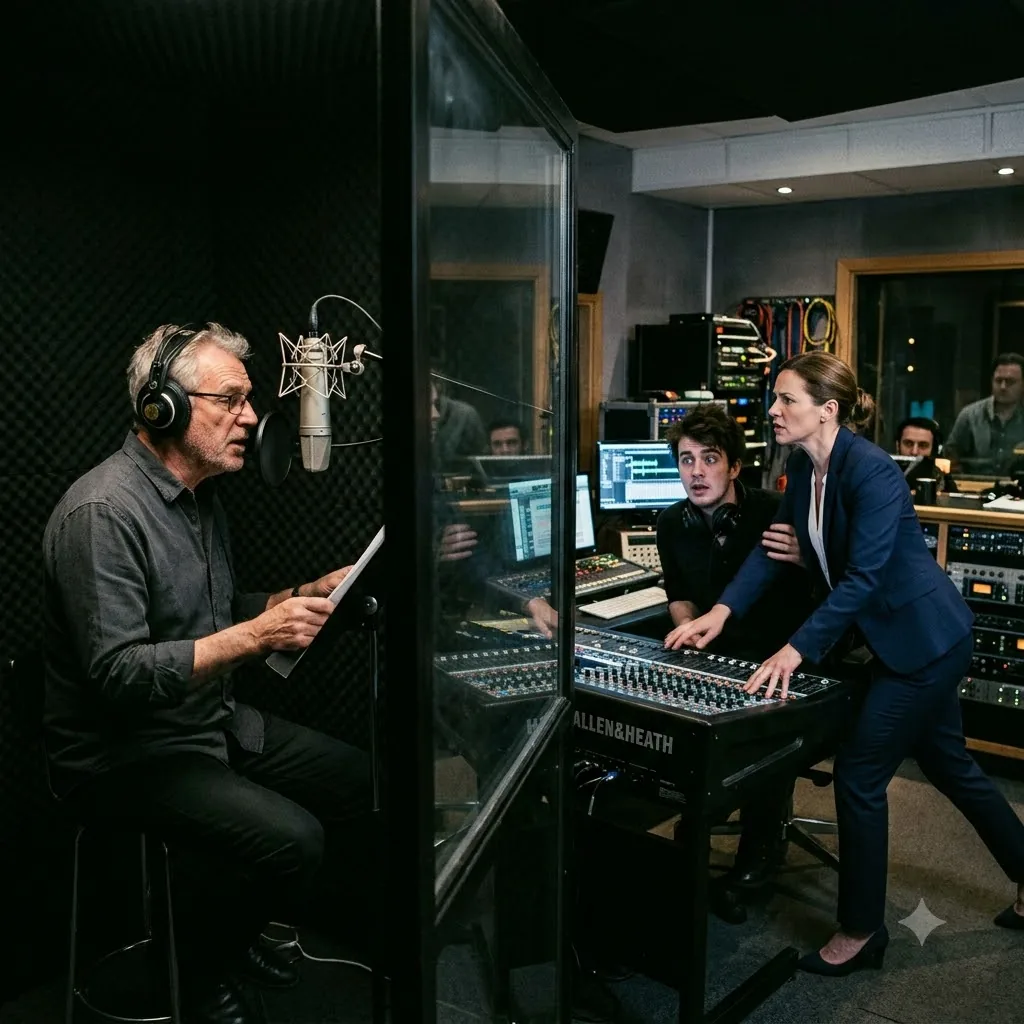
Arthur stared at the heavy silver pen. Chelsea’s manicured finger remained planted firmly beside the signature line, the perfectly polished nail a sharp contrast against the stark white paper of the contract. He did not reach for the pen. Instead, he drew a long, measured breath, expanding his diaphragm precisely as he would before launching into a three-page chapter of dense historical exposition. The air in the control room felt incredibly thin, recycled through the industrial vents overhead.
He pulled his reading glasses from the breast pocket of his flannel shirt, unfolding the wire frames with deliberate, agonizing slowness. Chelsea sighed, shifting her weight in her expensive leather heels. She muttered a sharp complaint about his lack of team spirit and the pressing constraints of her morning schedule. Arthur ignored her. Thirty years of reading dry corporate histories and complex legal thrillers had given him an excellent eye for nested clauses and hidden caveats. He leaned over the mixing console and began to scan past the dense boilerplate on the first page.
He found the trap buried in Section 4, Paragraph B, cleverly disguised under a subheading about digital archiving.
The text was a death warrant for his career. The addendum didn’t just grant the studio retroactive permission to use his past recordings for quality control. It granted them a perpetual, irrevocable license to utilize his vocal likeness for synthetic, digital, or algorithmic reproduction across all current and future media formats. If he signed his name on that line, he was legally signing away his digital ghost. They could narrate a thousand splatter-thrillers, romance novels, and commercial advertisements using his cloned vocal cords, and he would never see a single dime in secondary royalties.
More importantly, they wouldn’t need to renew his physical contract. If they owned his voice outright, his actual physical presence became an unnecessary overhead expense. They could terminate his exclusive contract at the end of the fiscal quarter. The platinum-tier insurance plan would vanish with it, long before Elaine finished her scheduled rounds of oncology infusions.
Arthur tapped the page with his index finger, keeping his tone locked in a steady, resonant baseline. He stated clearly that he could not sign a perpetual synthetic licensing agreement without having his personal attorney review the specific phrasing regarding derivative works.
Chelsea snatched the heavy manila folder off the console, her corporate mask of impatience instantly hardening into open hostility. She did not blink. She informed him in a lethal, quiet whisper that his attorney was entirely irrelevant because this was not a negotiation. She framed the document as a mandatory compliance update required for all contracted talent participating in the studio’s new proprietary software testing.
Then she leaned closer, the scent of her sharp, floral perfume invading his space. She reminded him that playing unauthorized, proprietary audio files-which Marcus had just done, and which Arthur had willfully listened to-was a severe breach of his non-disclosure agreement. It constituted industrial espionage under studio guidelines. She told him that she could terminate his contract for cause, right here, right now. A termination for cause would immediately sever his benefits and void his eligibility for federal COBRA insurance continuation. Elaine’s weekly treatments cost five thousand dollars out of pocket. Without the insurance, they would lose the house by Christmas, and Elaine would lose her life shortly after.
Arthur’s chest tightened, a cold spike of genuine panic threatening to break his practiced vocal control. He looked past Chelsea to Marcus. The young engineer was staring intently at the scuffed linoleum floor, absolutely petrified, completely unwilling to intervene. Arthur was entirely isolated.
Swallowing the dry ache in his throat, Arthur asked for a copy of the addendum and twenty minutes in the breakroom to read it in full before signing. Chelsea checked her gold smartwatch. Her mouth formed a thin, satisfied line. She agreed to give him exactly until eleven-fifteen. She dropped the folder back onto the console, scooped up her silver pen, and marched toward the heavy soundproof door. Before stepping into the hallway, she warned him that if the signed document wasn’t on her desk on the executive floor by 11:15 AM, she was calling human resources to process his immediate termination.
The heavy door clicked shut, sealing the room.
Arthur instantly turned his attention to Marcus. He didn’t ask; he commanded. Dropping his voice into the authoritative, booming register he usually reserved for narrating military generals, Arthur demanded a copy of the audio file Marcus had just played. Without physical proof that the studio was already generating unsanctioned commercial material using his cloned voice prior to him signing the release, Arthur had absolutely zero leverage. He needed that file to prove they were already in breach of his existing contract.
Marcus backed away, his hands shaking violently as he babbled about the corporate firewall and the draconian IT monitoring software. Arthur closed the distance, stepping smoothly between the engineer and the exit. He reminded the terrified young man that when human resources came down to process the termination, they would fire Marcus anyway for accessing the restricted directory in the first place.
Marcus broke. Sobbing quietly, he dropped into the rolling mesh chair and logged back into the digital audio workstation. He admitted it wasn’t a random demo track. It was a massive, fifty-book exclusive contract with a major thriller publisher. The studio had secretly used Arthur’s entire thirty-year backlog to train a highly localized neural network.
But as Marcus’s trembling fingers navigated the complex file directory to export the audio track, a red error prompt flashed across the dual monitors. Marcus frantically typed a string of terminal commands, sweat beading on his forehead.
The files were gone. The server showed an empty, zero-byte directory. Chelsea hadn’t just come down to the basement to force a signature; she had used her tablet to remotely wipe the local cache while she was standing in the room.
Marcus pulled up a restricted system log, his face draining of whatever color it had left. He pointed a shaky finger at the screen. The master audio files and the neural net training data were securely locked on the primary development server, located on the fifth floor. The server room was physically air-gapped from the basement network and accessible only via an executive admin keycard.
Arthur looked at the glowing digital clock on the mixing console. It flipped to 10:42 AM. The realization settled over him like a suffocating blanket. To save his wife’s insurance and his own livelihood, he had exactly thirty-three minutes to bypass the building’s corporate security grid, infiltrate the executive floor, and steal the master drive before Chelsea terminated his career forever.