Story code: ST-001588
Part 4: The Release
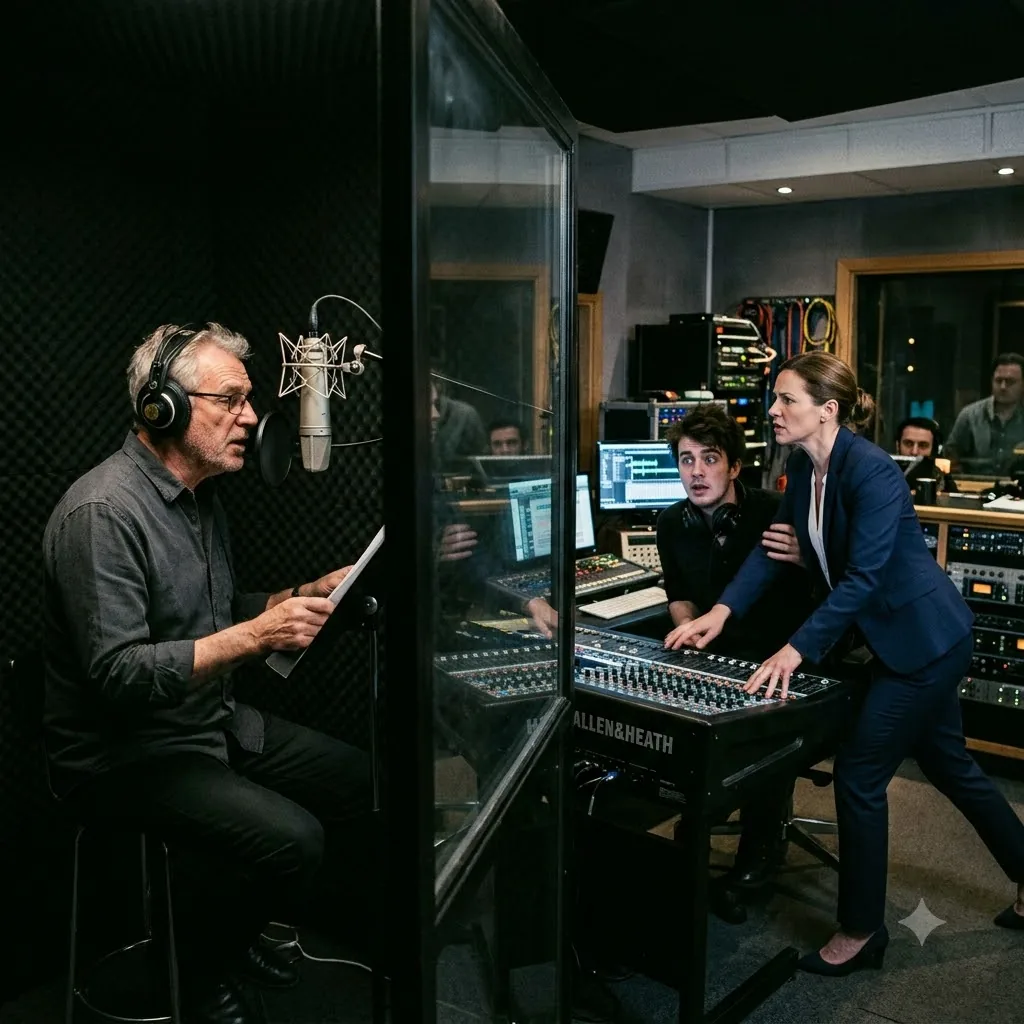
Chelsea stared at the glowing red indicator. The corporate mask of absolute authority shattered, replaced instantly by the raw, wide-eyed panic of a cornered animal. She dropped the heavy silver pen. It hit the mixing console with a sharp clatter and rolled off into the shadows beneath the desk.
“Turn it off,” she hissed, her voice entirely stripped of its polished veneer.
Arthur remained seated on the edge of the producer’s desk. He did not move. He kept his hands folded loosely in his lap.
Chelsea lunged past him, her expensive heels slipping on the scuffed linoleum. She slammed her hands against the outboard gear rack, her manicured fingers clawing at the analog master deck. She found the release latch for the solid-state drive bay, yanked it open, and ripped the physical SSD cartridge from its housing. With a guttural sound of frustration, she hurled the plastic rectangle onto the floor and brought her heel down violently, cracking the casing.
She stood over the broken plastic, breathing heavily, straightening her crimson blazer. “There. It’s gone. It’s an isolated loop.”
Arthur looked at Marcus. The young engineer had stopped trembling. Marcus sat up straighter in his mesh chair, looking at the broken drive on the floor, and then up at the regional director.
“It’s a union mandate, Ms. Vance,” Marcus said, his voice remarkably steady. “The physical drive is just a local buffer. To prevent data loss from hardware failure, the system is hardwired to a cellular backup. The moment a recording goes over three minutes, it begins pushing encrypted, time-stamped packets directly to the guild’s offsite cloud server.”
Arthur leaned forward and pressed the heavy analog switch back to the off position. The red light above the glass blinked out.
“The sync is complete,” Arthur said, his baritone resonating smoothly in the small room. “My union representatives now have a high-fidelity recording of you admitting to large-scale copyright theft, corporate fraud, and medical extortion.”
Chelsea’s mouth opened, but no sound came out. She looked at the blank red light, then at the shattered plastic at her feet, and finally at Arthur. She turned and walked out of the control room, leaving the heavy soundproof door ajar.
Three days later, Arthur sat in a vastly different chair. The leather executive seating on the fifth floor offered superb lumbar support. Sunlight poured through floor-to-ceiling windows, a stark contrast to the sterile fluorescent glare of the basement recording suites.
He sat across a sprawling mahogany conference table from the studio’s Chief Legal Counsel. The empty chair to the lawyer’s right had belonged to Chelsea. She had been escorted from the building by corporate security the previous afternoon, her access badge deactivated, her severance voided by an immediate termination for gross misconduct. The legal department had moved swiftly once the guild’s lawyers sent over the unedited audio file.
The Chief Counsel, a gray-haired man with nervous eyes, slid a thick manila folder across the polished wood. It was not the same folder Chelsea had weaponized.
“Mr. Pendelton,” the counsel began, clearing his throat. “The studio would like to formally apologize for the unauthorized initiatives undertaken by our former acquisitions director. We pride ourselves on respecting our legacy talent.”
Arthur pulled his reading glasses from the breast pocket of his corduroy blazer and unfolded the wire frames. He opened the folder.
“This is a comprehensive severance and non-disclosure package,” the lawyer explained quickly, keeping his hands flat on the table. “In exchange for your agreement to waive any civil litigation against the studio, we are prepared to offer a lump-sum buyout of your remaining contract, calculated at your maximum potential output for the next ten years. Furthermore, Section 3 guarantees lifetime coverage under our platinum-tier executive medical plan for both you and your wife, entirely company-paid.”
Arthur scanned the dense legal text. His thirty years of reading complex thrillers and corporate histories allowed him to navigate the nested clauses with ease. He looked for the specific safeguards he required, tracing the lines with a steady index finger.
“And the synthetic models?” Arthur asked, keeping his tone flat and unyielding.
“Purged,” the lawyer promised, tapping a secondary document in the folder. “A notarized affidavit from our head of IT. The proprietary neural network trained on your voice has been permanently deleted, along with all unauthorized derivative audiobooks. The publisher has been refunded and informed the project is canceled. You own your voice, Arthur. Exclusively.”
Arthur read the affidavit. He read the medical coverage clause twice, ensuring the language regarding Elaine’s oncology infusions was ironclad and immune to any future corporate restructuring. The trap doors were gone. The leverage had shifted entirely.
He picked up the heavy gold pen provided by the lawyer-a much nicer pen than Chelsea’s-and signed his name on the bottom line.
Ten minutes later, Arthur pushed through the revolving glass doors of the studio’s main lobby and stepped out into the crisp autumn afternoon. The city noise washed over him-honking cabs, rattling subway grates, the rush of wind between concrete high-rises. It was chaotic, loud, and brilliantly unproduced.
He reached into his pocket, pulled out his phone, and dialed Elaine’s number. As the line rang, he took a deep, diaphragmatic breath. For the first time in years, his chest didn’t feel tight. His lungs filled effortlessly with the cool air. When she answered, he didn’t use the booming register of a general or the measured cadence of an academic. He spoke in his true, unvarnished voice-just a husband coming home.