Story code: ST-001588
Part 1: The Ghost in the Booth
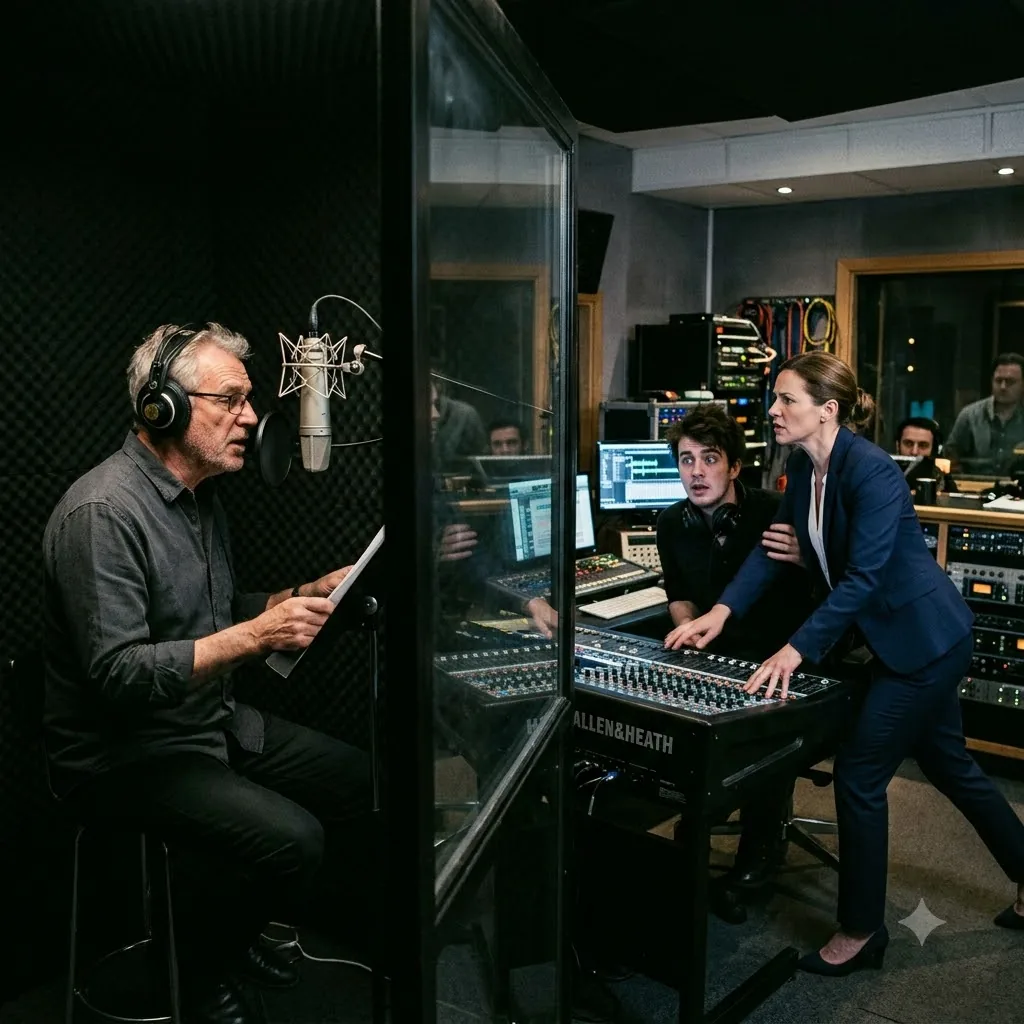
Arthur sat perfectly still in the padded isolation booth, the heavy acoustic foam walls pressing inward as his own voice poured through the high-fidelity headphones, describing a visceral, bone-crunching murder he had no memory of recording. The audio reproduction was flawless. Every measured breath, every gravelly dip at the end of a sentence, belonged entirely to him. It was the exact cadence he had cultivated over thirty years of narrating audiobooks, a signature tone that had paid off his mortgage and kept his wife’s critical medical treatments funded. He stared through the double-paned glass at Marcus, the junior sound engineer. The young man’s face had drained of all color under the harsh fluorescent lights.
The voice in Arthur’s ears continued its graphic description of an assassin wielding a heavy power tool. Arthur had built his career on dry historical biographies and gentle maritime mysteries. He never worked in the splatter-thriller genre. He watched Marcus’s hands hover over the massive mixing console. The young engineer was physically trembling. Suddenly, Marcus scrambled forward and yanked the master fader down with enough force to crack the plastic knob. The brutal audio cut out instantly, leaving a suffocating, heavy silence in the small recording suite.
Arthur pressed the talkback button on his desk console. He stated in a low, even tone that he had never seen that manuscript in his life.
On the other side of the glass, Marcus fumbled with his headset, pointedly refusing to make eye contact. The engineer stammered a frantic excuse about a wrong file path, a network glitch, or a random demo track loaded by mistake from the corporate server. Arthur released the talkback button and let the dead silence return to the booth. He knew his own extensive catalog. He had absolutely never sat in a booth and spoken those horrific words. Yet the recording possessed his unique vocal fry, the slight wheeze on his plosives that had developed over the last five years as his lungs aged.
He pulled the heavy headphones off and set them carefully on the metal music stand. His joints ached with a dull throb as he stood up from the wooden stool. He pushed the soundproofed door open and stepped out into the dimly lit control room. The ambient hum of the industrial air conditioning felt incredibly loud after the absolute dead space of the isolation booth.
Marcus backed away from the glowing dual monitors, frantically clicking the mouse to close down the digital audio workstation windows. He was desperately trying to bury the file before Arthur could get a better look at the screen. Arthur stepped closer, projecting the quiet, commanding authority he usually reserved for narrating generals and elder statesmen. He reached past the young engineer and placed his hand firmly over Marcus’s trembling fingers on the plastic mouse.
Arthur demanded to see the audio file properties.
Marcus shook his head violently, his wide eyes darting toward the studio entrance. He muttered a breathless apology, claiming the network directories were locked above his pay grade and that he could face immediate termination just for being in the room while that specific file played.
Arthur tightened his grip on the young man’s hand. He needed to know exactly how the studio had generated such a flawless replication of his voice. The terrifying implications settled heavily in his chest. His current exclusive studio contract provided the platinum-tier health insurance his wife, Elaine, relied on for her weekly oncology infusions. That coverage was the only reason he still worked fifty-hour weeks in windowless basement rooms, fighting chronic vocal fatigue. If the studio no longer needed his physical presence to produce audiobooks, they could terminate his contract at the end of the quarter. The resulting medical debt would bankrupt his family in under a month.
Before Arthur could force Marcus to reopen the hidden audio directory, the heavy studio door swung open and slammed hard against the rubber wall stopper.
Chelsea marched into the control room. She wore a tailored crimson blazer and carried a thick manila folder pressed tight against her chest. As the regional director of acquisitions, she rarely lowered herself to visit the basement recording suites. She ignored Marcus entirely, treating the terrified engineer like a piece of furniture. She locked her sharp eyes with Arthur, her expression a practiced mask of corporate impatience.
She stepped right up to the mixing console, slapped the folder down over the computer keyboard, and produced a heavy silver pen from her blazer pocket. She flipped the folder open to reveal a dense legal document, pointing a manicured finger at a signature line at the bottom of the third page.
Chelsea instructed Arthur to sign the retroactive licensing addendum immediately. She spoke in a clipped, hurried tone, framing the massive document as an insignificant administrative cleanup required by the legal department. She pointedly mentioned that human resources needed the paperwork finalized by noon to authorize the release of next month’s vendor benefits, which explicitly included his family medical plan. She tapped the silver pen twice against the signature line, her eyes cold and unyielding as she waited for him to take the bait.
Arthur sat perfectly still in the padded isolation booth, the heavy acoustic foam walls pressing inward as his own voice poured through the high-fidelity headphones, describing a visceral, bone-crunching murder he had no memory of recording. The audio reproduction was flawless. Every measured breath, every gravelly dip at the end of a sentence, belonged entirely to him. It was the exact cadence he had cultivated over thirty years of narrating audiobooks, a signature tone that had paid off his mortgage and kept his wife’s critical medical treatments funded. He stared through the double-paned glass at Marcus, the junior sound engineer. The young man’s face had drained of all color under the harsh fluorescent lights.
The voice in Arthur’s ears continued its graphic description of an assassin wielding a heavy power tool. Arthur had built his career on dry historical biographies and gentle maritime mysteries. He never worked in the splatter-thriller genre. He watched Marcus’s hands hover over the massive mixing console. The young engineer was physically trembling. Suddenly, Marcus scrambled forward and yanked the master fader down with enough force to crack the plastic knob. The brutal audio cut out instantly, leaving a suffocating, heavy silence in the small recording suite.
Arthur pressed the talkback button on his desk console. He stated in a low, even tone that he had never seen that manuscript in his life.
On the other side of the glass, Marcus fumbled with his headset, pointedly refusing to make eye contact. The engineer stammered a frantic excuse about a wrong file path, a network glitch, or a random demo track loaded by mistake from the corporate server. Arthur released the talkback button and let the dead silence return to the booth. He knew his own extensive catalog. He had absolutely never sat in a booth and spoken those horrific words. Yet the recording possessed his unique vocal fry, the slight wheeze on his plosives that had developed over the last five years as his lungs aged.
He pulled the heavy headphones off and set them carefully on the metal music stand. His joints ached with a dull throb as he stood up from the wooden stool. He pushed the soundproofed door open and stepped out into the dimly lit control room. The ambient hum of the industrial air conditioning felt incredibly loud after the absolute dead space of the isolation booth.
Marcus backed away from the glowing dual monitors, frantically clicking the mouse to close down the digital audio workstation windows. He was desperately trying to bury the file before Arthur could get a better look at the screen. Arthur stepped closer, projecting the quiet, commanding authority he usually reserved for narrating generals and elder statesmen. He reached past the young engineer and placed his hand firmly over Marcus’s trembling fingers on the plastic mouse.
Arthur demanded to see the audio file properties.
Marcus shook his head violently, his wide eyes darting toward the studio entrance. He muttered a breathless apology, claiming the network directories were locked above his pay grade and that he could face immediate termination just for being in the room while that specific file played.
Arthur tightened his grip on the young man’s hand. He needed to know exactly how the studio had generated such a flawless replication of his voice. The terrifying implications settled heavily in his chest. His current exclusive studio contract provided the platinum-tier health insurance his wife, Elaine, relied on for her weekly oncology infusions. That coverage was the only reason he still worked fifty-hour weeks in windowless basement rooms, fighting chronic vocal fatigue. If the studio no longer needed his physical presence to produce audiobooks, they could terminate his contract at the end of the quarter. The resulting medical debt would bankrupt his family in under a month.
Before Arthur could force Marcus to reopen the hidden audio directory, the heavy studio door swung open and slammed hard against the rubber wall stopper.
Chelsea marched into the control room. She wore a tailored crimson blazer and carried a thick manila folder pressed tight against her chest. As the regional director of acquisitions, she rarely lowered herself to visit the basement recording suites. She ignored Marcus entirely, treating the terrified engineer like a piece of furniture. She locked her sharp eyes with Arthur, her expression a practiced mask of corporate impatience.
She stepped right up to the mixing console, slapped the folder down over the computer keyboard, and produced a heavy silver pen from her blazer pocket. She flipped the folder open to reveal a dense legal document, pointing a manicured finger at a signature line at the bottom of the third page.
Chelsea instructed Arthur to sign the retroactive licensing addendum immediately. She spoke in a clipped, hurried tone, framing the massive document as an insignificant administrative cleanup required by the legal department. She pointedly mentioned that human resources needed the paperwork finalized by noon to authorize the release of next month’s vendor benefits, which explicitly included his family medical plan. She tapped the silver pen twice against the signature line, her eyes cold and unyielding as she waited for him to take the bait.