Story code: ST-001822
Part 1: The Notice to Quit
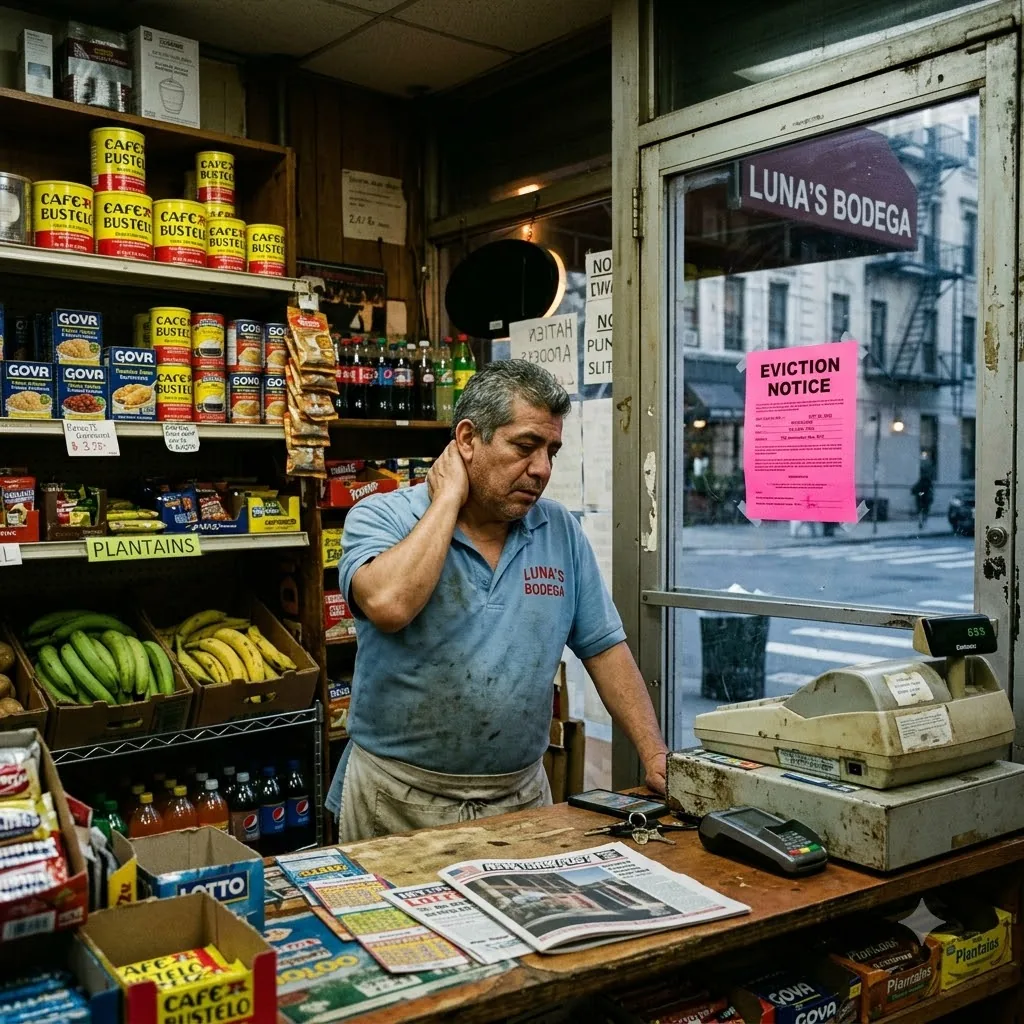
The scent of roasting Cafe Bustelo and fresh lemon Fabuloso had belonged to the corner of 14th and Oak for sixty years, a familiar morning vapor that usually brought Mateo profound peace. Today, that peace died against the sterile, neon-pink sheet of paper taped to the inside of the front glass. Notice to Quit, the bold black letters read, a clinical title for the demolition of his family’s entire existence. Mateo scraped his thumbnail over the heavy packaging tape, peeling the notice down before the early morning commuters could see the death sentence handed to the neighborhood’s oldest bodega. A four-hundred percent rent increase was not a negotiation or an invitation to parley. It was a forced eviction wearing a tailored suit.
He crumpled the stiff pink paper and shoved it deep into the trash bin beneath the main register. The brass bell above the door chimed, signaling the start of the six o’clock rush. For the next two hours, Mateo fell into the rhythmic muscle memory that his grandfather had taught him, then his father after that. He handed Mrs. Gable her daily copy of the Times and a dark roast coffee. He bagged three heavy egg-and-cheese sandwiches for the construction crew working on the luxury high-rise two blocks over. He moved with swift precision, speaking in the quiet shorthand of a man who knew the blood and pulse of his block better than he knew his own heartbeat.
Yet, every time the brass bell chimed, a cold spike of dread hit his chest. The new corporate landlord had bought the entire avenue in a single, sweeping cash transaction three weeks ago. Since then, the changes had been swift, silent, and brutal. The family dry cleaner next door had packed up their presses on Monday. The shoe repair shop on the corner was currently being gutted by men in hazmat suits, tossing fifty years of leather dust and memories into industrial dumpsters. Only Mateo remained, anchoring the block with stubborn roots that the new ownership firm fully intended to rip out of the concrete before the end of the month.
The heavy morning rush faded into the quiet mid-morning lull around nine. Mateo was wiping down the heavy deli slicer when the door chimed again. The man who walked in did not belong to the neighborhood. He wore a quarter-zip cashmere sweater the color of wet slate and pristine white sneakers that had clearly never touched city sludge. He bypassed the hot coffee station and the refrigerated sandwich cases, making a deliberate, slow path toward the imported beverage cooler in the back corner.
Mateo kept his damp rag moving over the stainless steel blade. He watched the man pull a cold bottle of Topo Chico from the brightly lit shelf. The stranger walked up to the counter, setting the sweating glass bottle next to a display basket of plantain chips.
“Four dollars,” Mateo said, ringing it up on the digital point-of-sale screen.
The man handed over a crisp, brand-new twenty-dollar bill. “Keep it. Consider it a small tip for dealing with the neighborhood transition.”
Mateo left the twenty on the scratched laminate counter. “Transition is a gentle word for it.”
The man smiled, extending a manicured hand that Mateo did not take. “I am Pierce. I represent the ownership group. I see you got the formal notice taped to your door this morning.”
Mateo stared at the outstretched hand until Pierce slowly lowered it back to his side.
“You gave us a four-hundred percent hike overnight,” Mateo said, keeping his voice carefully level. “You know a corner store selling loose rolls and dollar coffees cannot make that math work.”
“The math is not supposed to work for you,” Pierce said, popping the metal cap off his Topo Chico with a silver tool attached to his luxury car key fob. He took a long drink, looking around the cramped, colorful aisles with open, mocking amusement. “The math is designed to make you leave. The neighborhood is changing, Mateo. The firm is bringing in a boutique fitness studio, an artisanal bakery, perhaps a natural wine bar. A bodega selling stale chips and scratch-off lottery tickets simply does not fit the new portfolio.”
The absolute casualness of the cruelty tightened the muscles in Mateo’s jaw. Pierce leaned back against the counter, completely unbothered by the lives he was actively erasing.
“I am authorized to offer you a clean, quiet exit,” Pierce continued, setting the glass bottle down on the counter. “Ten thousand dollars for your immediate trouble. You hand over the keys by Friday, waive your right to a thirty-day legal dispute, and walk away. Otherwise, the new rent hits on the first of the month. You default, we take you to housing court, we seize your entire inventory to cover the mounting debt, and you leave with absolutely nothing but a massive bankruptcy attached to your family name.”
Mateo looked down at the worn grooves in the hardwood floor behind the counter. His grandfather had stood on these exact floorboards when they were new. His father had bled on them defending the register during the blackout in the late nineties. Pierce thought he was dealing with a desperate, uneducated tenant holding a worthless lease. He did not realize he was standing in a fortress built on decades of survival.
“This store has survived blackouts, riots, and two massive recessions,” Mateo said softly.
“And now it is facing corporate progress,” Pierce replied, tapping a finger against the glass countertop. “Which is entirely undefeated. Take the ten thousand. Leave with a little dignity.”
Pierce reached inside his cashmere sweater and produced a thick, cream-colored envelope, sliding it across the counter toward the register. It was a buyout contract, already stamped by a notary and tabbed with bright yellow sticky arrows indicating where Mateo needed to surrender his legacy.
Mateo did not look at the envelope. He did not look at the twenty-dollar bill. He looked at the smug, relaxed posture of a man who believed his money had already won the war. The crumpled pink notice in the trash can felt like a burning coal against Mateo’s mind. The ownership group thought they had done their exhaustive due diligence. They thought they had inspected every commercial lease, every property deed, and every legal loophole on the entire block.
Mateo’s right hand dropped below the edge of the counter, slipping past the silent alarm panic button and the stack of plastic shopping bags. His fingers brushed the cold, heavy steel of the locked drop-drawer hidden near the floorboards, finding the small brass key that had not been turned in over four decades. He gripped the iron handle.
The scent of roasting Cafe Bustelo and fresh lemon Fabuloso had belonged to the corner of 14th and Oak for sixty years, a familiar morning vapor that usually brought Mateo profound peace. Today, that peace died against the sterile, neon-pink sheet of paper taped to the inside of the front glass. Notice to Quit, the bold black letters read, a clinical title for the demolition of his family’s entire existence. Mateo scraped his thumbnail over the heavy packaging tape, peeling the notice down before the early morning commuters could see the death sentence handed to the neighborhood’s oldest bodega. A four-hundred percent rent increase was not a negotiation or an invitation to parley. It was a forced eviction wearing a tailored suit.
He crumpled the stiff pink paper and shoved it deep into the trash bin beneath the main register. The brass bell above the door chimed, signaling the start of the six o’clock rush. For the next two hours, Mateo fell into the rhythmic muscle memory that his grandfather had taught him, then his father after that. He handed Mrs. Gable her daily copy of the Times and a dark roast coffee. He bagged three heavy egg-and-cheese sandwiches for the construction crew working on the luxury high-rise two blocks over. He moved with swift precision, speaking in the quiet shorthand of a man who knew the blood and pulse of his block better than he knew his own heartbeat.
Yet, every time the brass bell chimed, a cold spike of dread hit his chest. The new corporate landlord had bought the entire avenue in a single, sweeping cash transaction three weeks ago. Since then, the changes had been swift, silent, and brutal. The family dry cleaner next door had packed up their presses on Monday. The shoe repair shop on the corner was currently being gutted by men in hazmat suits, tossing fifty years of leather dust and memories into industrial dumpsters. Only Mateo remained, anchoring the block with stubborn roots that the new ownership firm fully intended to rip out of the concrete before the end of the month.
The heavy morning rush faded into the quiet mid-morning lull around nine. Mateo was wiping down the heavy deli slicer when the door chimed again. The man who walked in did not belong to the neighborhood. He wore a quarter-zip cashmere sweater the color of wet slate and pristine white sneakers that had clearly never touched city sludge. He bypassed the hot coffee station and the refrigerated sandwich cases, making a deliberate, slow path toward the imported beverage cooler in the back corner.
Mateo kept his damp rag moving over the stainless steel blade. He watched the man pull a cold bottle of Topo Chico from the brightly lit shelf. The stranger walked up to the counter, setting the sweating glass bottle next to a display basket of plantain chips.
“Four dollars,” Mateo said, ringing it up on the digital point-of-sale screen.
The man handed over a crisp, brand-new twenty-dollar bill. “Keep it. Consider it a small tip for dealing with the neighborhood transition.”
Mateo left the twenty on the scratched laminate counter. “Transition is a gentle word for it.”
The man smiled, extending a manicured hand that Mateo did not take. “I am Pierce. I represent the ownership group. I see you got the formal notice taped to your door this morning.”
Mateo stared at the outstretched hand until Pierce slowly lowered it back to his side.
“You gave us a four-hundred percent hike overnight,” Mateo said, keeping his voice carefully level. “You know a corner store selling loose rolls and dollar coffees cannot make that math work.”
“The math is not supposed to work for you,” Pierce said, popping the metal cap off his Topo Chico with a silver tool attached to his luxury car key fob. He took a long drink, looking around the cramped, colorful aisles with open, mocking amusement. “The math is designed to make you leave. The neighborhood is changing, Mateo. The firm is bringing in a boutique fitness studio, an artisanal bakery, perhaps a natural wine bar. A bodega selling stale chips and scratch-off lottery tickets simply does not fit the new portfolio.”
The absolute casualness of the cruelty tightened the muscles in Mateo’s jaw. Pierce leaned back against the counter, completely unbothered by the lives he was actively erasing.
“I am authorized to offer you a clean, quiet exit,” Pierce continued, setting the glass bottle down on the counter. “Ten thousand dollars for your immediate trouble. You hand over the keys by Friday, waive your right to a thirty-day legal dispute, and walk away. Otherwise, the new rent hits on the first of the month. You default, we take you to housing court, we seize your entire inventory to cover the mounting debt, and you leave with absolutely nothing but a massive bankruptcy attached to your family name.”
Mateo looked down at the worn grooves in the hardwood floor behind the counter. His grandfather had stood on these exact floorboards when they were new. His father had bled on them defending the register during the blackout in the late nineties. Pierce thought he was dealing with a desperate, uneducated tenant holding a worthless lease. He did not realize he was standing in a fortress built on decades of survival.
“This store has survived blackouts, riots, and two massive recessions,” Mateo said softly.
“And now it is facing corporate progress,” Pierce replied, tapping a finger against the glass countertop. “Which is entirely undefeated. Take the ten thousand. Leave with a little dignity.”
Pierce reached inside his cashmere sweater and produced a thick, cream-colored envelope, sliding it across the counter toward the register. It was a buyout contract, already stamped by a notary and tabbed with bright yellow sticky arrows indicating where Mateo needed to surrender his legacy.
Mateo did not look at the envelope. He did not look at the twenty-dollar bill. He looked at the smug, relaxed posture of a man who believed his money had already won the war. The crumpled pink notice in the trash can felt like a burning coal against Mateo’s mind. The ownership group thought they had done their exhaustive due diligence. They thought they had inspected every commercial lease, every property deed, and every legal loophole on the entire block.
Mateo’s right hand dropped below the edge of the counter, slipping past the silent alarm panic button and the stack of plastic shopping bags. His fingers brushed the cold, heavy steel of the locked drop-drawer hidden near the floorboards, finding the small brass key that had not been turned in over four decades. He gripped the iron handle.