Story code: ST-001211
Part 1: The Empty Lot
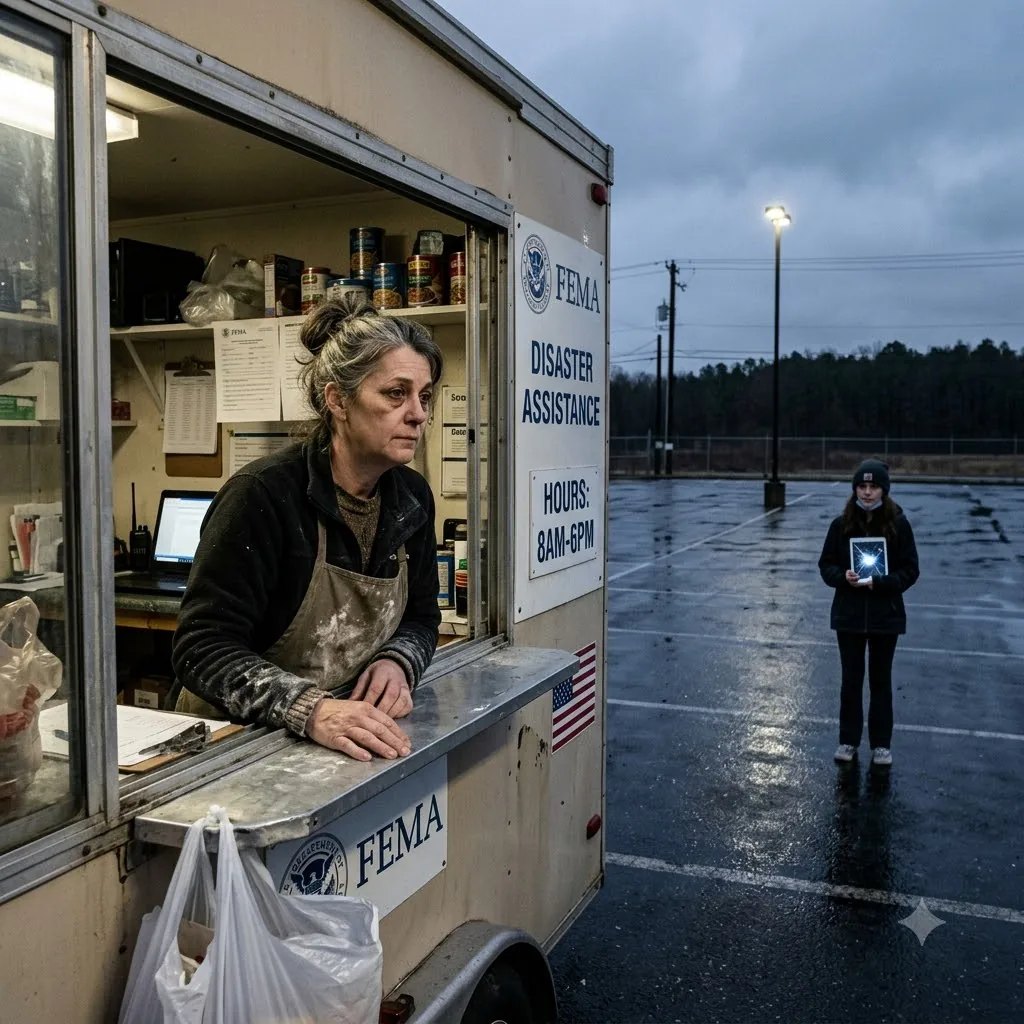
The heat inside the tin walls of the FEMA trailer pressed against Clara’s lungs like a physical weight, thick with the scent of caramelized sugar and the crushing finality of the crumpled insurance denial letter in her apron pocket. She wiped a line of sweat from her forehead with the back of her flour-dusted wrist, sliding the last tray of cinnamon rolls out of the countertop convection oven. This temporary unit was never meant to be a commercial bakery. The ceiling was so low her hair brushed the vent, and every time she pivoted from the tiny stainless-steel sink to the folding prep table, her hip bumped the sharp edge of the counter. She already had a fresh constellation of yellowing bruises along her side, but she ignored the ache. The paper folded in her pocket carried a much deeper sting.
The insurance company had called it a “proximate cause exception.” The wildfire had taken the entire west side of town, consuming her bakery, the apartment above it, and fifteen years of her life in a single afternoon. But because the fire had knocked down a power pole, which then sparked the specific flame that ignited her roof, the adjusters categorized it as electrical damage outside her policy coverage. The technicality left her with absolute zero.
Clara arranged the iced rolls inside the small glass display case she had salvaged from the rubble. The glass still had a faint, smoky smudge in the bottom corner that no amount of vinegar would remove. She stared at the smudge, grounding herself in the rhythm of the work. Four months of fighting adjusters, sitting in community center folding chairs, and sleeping on a cot had all led to this morning. The pop-up service window was her last play. She had emptied her drained savings account-exactly two hundred and forty dollars-on bulk flour, butter, yeast, and a rented propane tank. The math of her survival was brutally simple. If the town showed up today to buy her pastries, she could afford next week’s supplies and a month of generator fuel. If they did not, she would be living in her salvaged sedan by Tuesday.
She smoothed down the front of her apron, the stiff fabric offering a tiny shred of armor. The digital clock blinking red on the microwave shifted to eight in the morning. Opening time. Clara took a deep, shuddering breath, tasting the sweet cinnamon air, and let herself imagine the line of people outside. Her regulars from the old Main Street shop would be out there. Mrs. Gable with her exact change and her fussy dog, the mechanics from the garage across town demanding extra napkins, the high school teachers grabbing dark roast coffee before first period. They had all promised to support her when the news of the total loss first hit the local papers. The town was small, tight-knit, and fiercely loyal to its own. She relied entirely on that communal safety net to catch her today.
She reached for the aluminum latches on the makeshift service window. The metal was already hot from the morning sun beating down on the trailer’s stark white exterior. Clara threw the latches, pushed the heavy awning up with both hands, and locked the struts into place. She pasted on her most resilient, grateful smile and stepped forward to greet the rush.
The greeting died in her throat.
There was no line. There was no hum of idling engines waiting for parking spots, no chatter of neighbors catching up in the morning chill, no scrape of boots on the gravel. The silence hitting her was absolute and unnatural, heavy enough to ring in her ears.
Clara gripped the edge of the service counter, leaning out to check the far edges of the lot. The sprawling dirt clearing, provided by the county for disaster relief staging, was completely devoid of vehicles. No cars. No trucks. No supportive neighbors waving from across the street. The yellow caution tape snapping in the wind along the perimeter fence was the only movement. She stared at the empty space where her entire future was supposed to be standing, a cold numbness spreading from her chest down to her fingertips. The fresh cinnamon rolls suddenly smelled sickeningly sweet in the stagnant air.
Then, she saw him.
Standing thirty feet away, perfectly centered in the dirt lot, was a single teenager. He wore a dark hoodie pulled up against the morning glare, his posture rigid and expectant. He was not looking at the bright chalkboard menu she had painted. He was not walking toward the window to order. He stood planted in the gravel, holding a smartphone up, the camera lens pointed directly at her face.
Clara’s fingers tightened on the aluminum sill until her knuckles turned white. She recognized him vaguely-a kid who used to skateboard near her old brick-and-mortar bakery on Tuesday afternoons. But there was nothing casual about his stance today. His phone was held steady with both hands, a red recording light pulsing clearly on the screen.
He lowered the phone just an inch, meeting her eyes over the top of the device with a cold, calculated stare. Without breaking eye contact, he reached into his hoodie pocket, pulled out a thick stack of folded, brightly colored flyers, and began walking deliberately toward her service window.
The heat inside the tin walls of the FEMA trailer pressed against Clara’s lungs like a physical weight, thick with the scent of caramelized sugar and the crushing finality of the crumpled insurance denial letter in her apron pocket. She wiped a line of sweat from her forehead with the back of her flour-dusted wrist, sliding the last tray of cinnamon rolls out of the countertop convection oven. This temporary unit was never meant to be a commercial bakery. The ceiling was so low her hair brushed the vent, and every time she pivoted from the tiny stainless-steel sink to the folding prep table, her hip bumped the sharp edge of the counter. She already had a fresh constellation of yellowing bruises along her side, but she ignored the ache. The paper folded in her pocket carried a much deeper sting.
The insurance company had called it a “proximate cause exception.” The wildfire had taken the entire west side of town, consuming her bakery, the apartment above it, and fifteen years of her life in a single afternoon. But because the fire had knocked down a power pole, which then sparked the specific flame that ignited her roof, the adjusters categorized it as electrical damage outside her policy coverage. The technicality left her with absolute zero.
Clara arranged the iced rolls inside the small glass display case she had salvaged from the rubble. The glass still had a faint, smoky smudge in the bottom corner that no amount of vinegar would remove. She stared at the smudge, grounding herself in the rhythm of the work. Four months of fighting adjusters, sitting in community center folding chairs, and sleeping on a cot had all led to this morning. The pop-up service window was her last play. She had emptied her drained savings account-exactly two hundred and forty dollars-on bulk flour, butter, yeast, and a rented propane tank. The math of her survival was brutally simple. If the town showed up today to buy her pastries, she could afford next week’s supplies and a month of generator fuel. If they did not, she would be living in her salvaged sedan by Tuesday.
She smoothed down the front of her apron, the stiff fabric offering a tiny shred of armor. The digital clock blinking red on the microwave shifted to eight in the morning. Opening time. Clara took a deep, shuddering breath, tasting the sweet cinnamon air, and let herself imagine the line of people outside. Her regulars from the old Main Street shop would be out there. Mrs. Gable with her exact change and her fussy dog, the mechanics from the garage across town demanding extra napkins, the high school teachers grabbing dark roast coffee before first period. They had all promised to support her when the news of the total loss first hit the local papers. The town was small, tight-knit, and fiercely loyal to its own. She relied entirely on that communal safety net to catch her today.
She reached for the aluminum latches on the makeshift service window. The metal was already hot from the morning sun beating down on the trailer’s stark white exterior. Clara threw the latches, pushed the heavy awning up with both hands, and locked the struts into place. She pasted on her most resilient, grateful smile and stepped forward to greet the rush.
The greeting died in her throat.
There was no line. There was no hum of idling engines waiting for parking spots, no chatter of neighbors catching up in the morning chill, no scrape of boots on the gravel. The silence hitting her was absolute and unnatural, heavy enough to ring in her ears.
Clara gripped the edge of the service counter, leaning out to check the far edges of the lot. The sprawling dirt clearing, provided by the county for disaster relief staging, was completely devoid of vehicles. No cars. No trucks. No supportive neighbors waving from across the street. The yellow caution tape snapping in the wind along the perimeter fence was the only movement. She stared at the empty space where her entire future was supposed to be standing, a cold numbness spreading from her chest down to her fingertips. The fresh cinnamon rolls suddenly smelled sickeningly sweet in the stagnant air.
Then, she saw him.
Standing thirty feet away, perfectly centered in the dirt lot, was a single teenager. He wore a dark hoodie pulled up against the morning glare, his posture rigid and expectant. He was not looking at the bright chalkboard menu she had painted. He was not walking toward the window to order. He stood planted in the gravel, holding a smartphone up, the camera lens pointed directly at her face.
Clara’s fingers tightened on the aluminum sill until her knuckles turned white. She recognized him vaguely-a kid who used to skateboard near her old brick-and-mortar bakery on Tuesday afternoons. But there was nothing casual about his stance today. His phone was held steady with both hands, a red recording light pulsing clearly on the screen.
He lowered the phone just an inch, meeting her eyes over the top of the device with a cold, calculated stare. Without breaking eye contact, he reached into his hoodie pocket, pulled out a thick stack of folded, brightly colored flyers, and began walking deliberately toward her service window.