Story code: ST-001211
Part 3: Proximate Cause
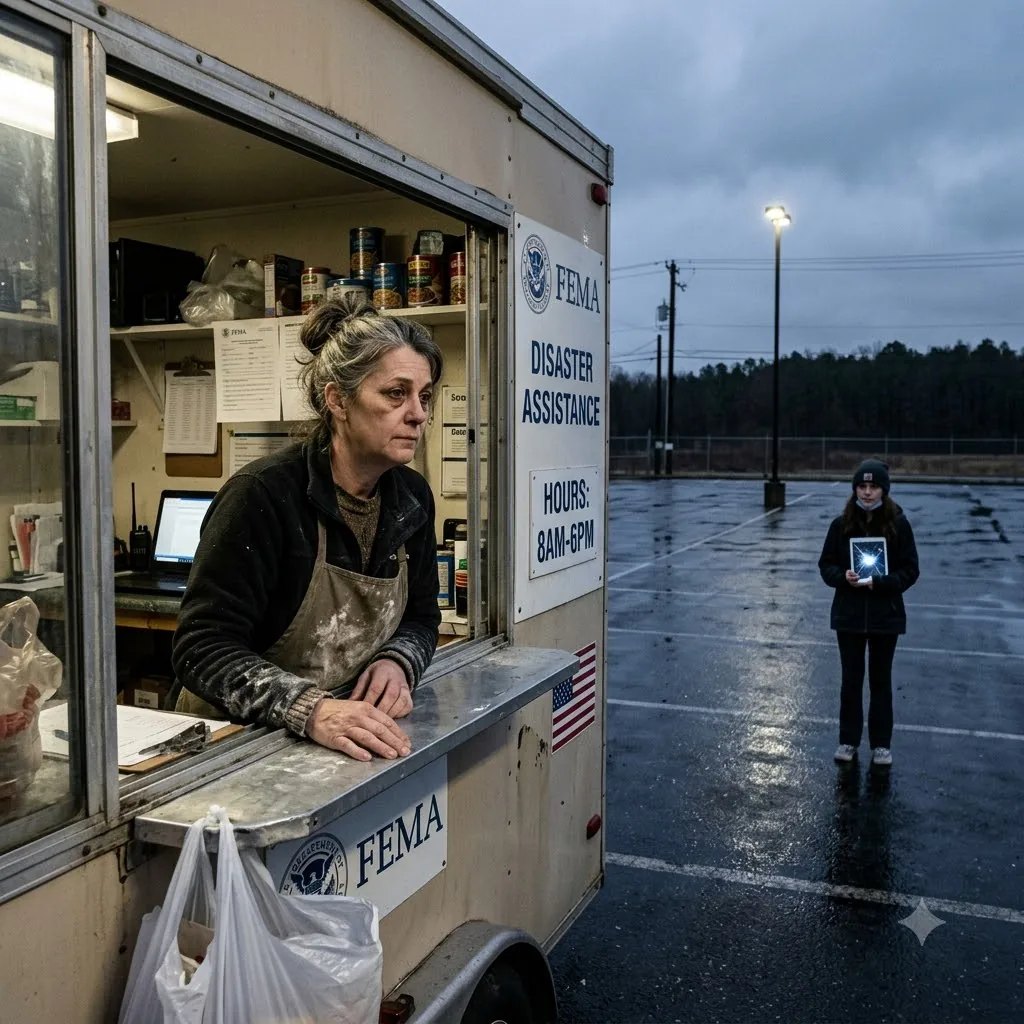
The buzzing of the generator outside the FEMA trailer faded into a pathetic sputter before Clara reached out and killed the motor. The sudden silence in the sweltering metal box was deafening. She stood alone in the suffocating heat, surrounded by fifty dozen perfectly iced cinnamon rolls that were already beginning to weep in the rising temperature. Sunset. She had until sunset to erase herself from county property and the town’s memory.
She looked down at the violently bright neon green flyer still resting on her prep table. *Good riddance,* her twenty-two-year-old self had typed.
A strange, icy calm washed over her, freezing the blind panic that had been rattling her ribs all morning. She was not going to quietly tow her ruined life into the woods and disappear so this town could feel righteous. If they wanted to make her the villain of their tragedy, they were going to have to look her in the eye while they did it.
Clara grabbed her battered metal lockbox from beneath the sink. She popped the latch and pulled out the only things she had left in the world: the county eviction notice Mr. Henderson had just handed her, her latest bank statement, and the charred, soot-stained folder containing her insurance documents.
She didn’t bother taking off her apron. It was stiff with dried cinnamon, bulk flour, and the sweat of a fruitless morning. It was the uniform of her ruin, and she wore it out the door like armor.
Clara drove her dented sedan across town to the east side, the half of Oakhaven that the fire had miraculously spared. The local community app had proudly announced an emergency meeting of the ‘Oakhaven Watch’ at the civic center, framed as a town hall on disaster resilience and protecting local interests.
The parking lot was packed. Clara recognized the vehicles immediately. There was Mrs. Gable’s pristine silver Buick. There were the heavy-duty trucks from the west side mechanics’ garage. The entire community safety net she had banked her survival on was parked neatly in rows, air-conditioning condensation dripping onto the hot asphalt.
Clara pushed through the heavy glass doors of the civic center. The blast of refrigerated air hit her face, crisp and sterile, a stark contrast to the oppressive heat of the dirt lot she had just been exiled from.
She followed the sound of a microphone feeding back slightly, leading her to the multipurpose room. The double doors were propped wide open. Inside, rows of folding chairs were filled with nearly a hundred familiar faces. At the front of the room, sitting behind a long plastic folding table, was the teenager in the dark hoodie. Next to him stood a woman with severely cut gray hair-his aunt, presumably-speaking passionately into a microphone.
“-because true community resilience means rejecting those who seek to profit off our shared pain,” the woman was saying, her voice echoing off the linoleum. “We cannot allow disaster tourists or greedy opportunists to set up shop in our town, treating our tragedy like a clearance sale.”
A murmur of solemn agreement rippled through the crowd.
Clara stepped into the center aisle. Her flour-dusted work boots hit the linoleum with a heavy, deliberate thud.
A woman in the back row turned around to shush the noise, but the sound died in her throat. She gasped, shrinking back into her folding chair. The ripple effect was instantaneous. One by one, heads pivoted. The murmurs of self-congratulatory agreement evaporated, replaced by a tense, electric silence.
Clara didn’t look left or right. She kept her eyes locked on the front table, marching down the center aisle.
The gray-haired woman at the microphone faltered. “Excuse me,” she stammered, her voice projecting loudly through the speakers. “You… you have no right to be here. This is a private community initiative.”
Clara ignored her. She reached the front of the room, stopping just inches from the plastic folding table. The teenager immediately pushed his chair back, his hand darting to his hoodie pocket to retrieve his phone.
“Put the camera down,” Clara commanded, her voice raw, lacking any of the customer-service sweetness she had tried to force that morning. It wasn’t a request; it was a threat.
The boy hesitated, his fingers gripping the black plastic case, but he didn’t raise it.
Clara slammed the charred insurance folder onto the table. A small cloud of black soot puffed into the sterile air, dusting the pristine white tablecloth.
“You want to talk about greedy opportunists?” Clara asked, her voice carrying easily to the back of the silent room. “Let’s talk about them.”
She flipped the folder open. She pulled out the thick, multi-page denial letter from Apex Mutual and shoved it directly in front of the gray-haired woman.
“Read the highlighted section,” Clara ordered.
The woman blinked, leaning back as if the paper were diseased. “I don’t need to read your-”
“Read it!” Clara shouted, slamming her hand flat against the table. The sharp crack made half the front row flinch.
The woman’s eyes darted down to the page.
“It’s called a proximate cause exception,” Clara said, her voice shaking with adrenaline. She turned to face the crowd, sweeping her gaze over the faces of her former regulars. “The wildfire burned my bakery and my apartment to ash. But because the fire burned a power pole first, and the sparks from that pole ignited my roof, the insurance adjusters classified it as an electrical fire. Which means my commercial disaster policy covers exactly zero dollars.”
A heavy, suffocating quiet settled over the room. The teenager stared at the document, his bravado visibly fracturing.
Clara pulled out her bank statement and slapped it down next to the denial letter. “Twelve dollars and forty cents. That is my net worth as of this morning. I spent the last two hundred dollars I had on flour, yeast, and propane so I could bake cinnamon rolls for a town I loved, hoping you would help me afford gasoline so I wouldn’t freeze in my sedan tonight.”
She pulled out the final piece of paper-the neon green flyer the boy had thrown at her-and dropped the county eviction notice right on top of it.
“Instead, you all decided to play vigilante over a drunk joke I made when I was twenty-two,” Clara said, her voice dropping into a lethal, quiet register. She leaned over the table, directly entering the teenager’s space. “You didn’t hold a corporate exploiter accountable today. You did their dirty work. Apex Mutual just saved a half-million dollars on a loophole, and you all patted yourselves on the back for starving out the woman they stole it from.”
The gray-haired woman looked up from the documents. All the color had drained from her face. Her mouth opened, but only a dry, clicking sound came out.
The teenager looked from the bank statement to the soot-stained folder, his hand trembling slightly as it fell away from his pocket. The unblinking red light of his recording app was dark.
Clara stood tall, the flour on her apron catching the harsh fluorescent light of the civic center, and waited in the deafening silence for an answer none of them had.