Story code: ST-000823
Part 1: Red Alerts at the Iron Gate
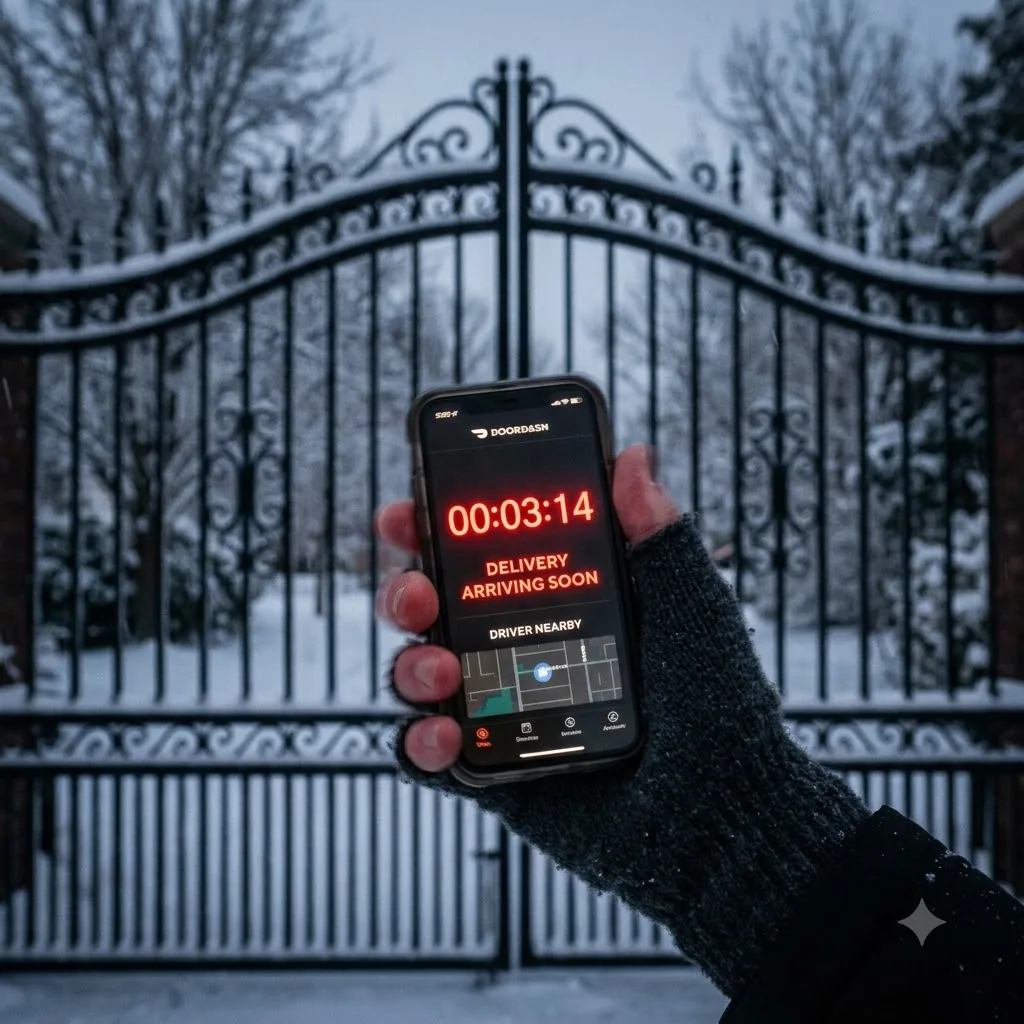
The smartphone vibrating against Leo’s palm displayed a dual emergency. On the upper half of the cracked screen, the delivery platform warned him of imminent route cancellation and account suspension due to loitering, while the bottom half flashed a relentless red from his continuous glucose monitor. He leaned his forehead against the freezing wrought iron of the ten-foot estate gate. His vision blurred at the edges, a familiar tunneling effect that signaled his blood sugar was plummeting into the dangerous thirties. Six canvas bags of luxury groceries sat at his boots. The order included four gallons of alkaline water, three glass jars of imported truffles, and a dozen thick-cut prime ribeyes. The total weight exceeded seventy pounds. He had carried it all up the steep, winding driveway because his twenty-year-old sedan could not make it past the initial incline. The cold air stung his lungs, but a slick layer of sweat coated the back of his neck. His hands trembled violently. He dug his right hand into his heavy jacket pocket, his numb fingers brushing against the single glass vial of insulin he carried. The liquid inside was cloudy, a cheap formulation he had stretched three days past its expiration date. He did not need insulin right now. He needed sugar. There was an organic artisanal honey jar in the third canvas bag. Opening it meant a damaged item report, a docked fee, and immediate deactivation from the platform. He kept his hand in his pocket. The gate’s intercom system remained dead. He pressed the brass call button for the fifth time, leaving a smear of sweat on the metal. The delivery app timer counted down from forty-five seconds. If the customer did not accept the hand-to-hand delivery, he had to return the items to the store. Returning the items meant climbing back down the icy driveway, driving four miles back to the organic market, and forfeiting the twenty-two dollar payout. He needed twenty dollars to afford a box of glucose tabs and a sandwich. His knees buckled slightly, the joints turning to loose rubber. He caught himself by gripping a thick iron spear of the gate, the cold metal biting into his palm. The glucose monitor vibrated again, a long, sustained pulse that meant his liver had stopped compensating. A dense fog began to roll in from the treeline, wrapping the massive stone pillars of the estate in a gray wash. The silence of the neighborhood was absolute, a sterile void common to zip codes where houses sat on multi-acre lots. Leo focused on his breathing. Inhale for four seconds. Exhale for four seconds. The trembling moved from his hands up into his shoulders and jaw. His teeth clicked together in a rapid, involuntary rhythm. The screen of his phone dimmed to save battery. He tapped it alive again. Thirty seconds left on the delivery timer. The red line on the glucose graph pointed straight down. He calculated the distance to his car. It was perhaps four hundred yards downhill. In his current state, it might as well have been four hundred miles. His legs felt entirely detached from his nervous system, existing only as dead weight anchoring him to the frosted concrete. He looked at the six bags of groceries. The alkaline water bottles shifted, clinking together. He imagined the crisp, cold liquid, but it would do nothing for his plummeting blood sugar. He stared at the brass intercom plate. It was a blank, unyielding face. He imagined the interior of the mansion, a vast expanse of heated floors and vaulted ceilings. Someone was in there. The app confirmed the homeowner was tracking the order. They were watching him stand outside. The thought lacked any emotional weight. He simply observed the fact with the same clinical necessity he applied to his insulin dosing. The homeowner was a node in a transaction. Leo was another. The gate was a physical firewall between them. He checked his phone once more. Ten seconds. The glucose monitor ceased its warning pulses, transitioning to a solid, unbroken red screen. Critical Low. Seek Medical Attention Immediately. He let go of the iron bar and slid down the heavy stonework of the pillar. The rough stone tore at the nylon of his jacket. He hit the ground hard, his hip bone bruising against the frozen pavement. His head fell back. The sky above was a flat, featureless sheet of slate gray. He closed his eyes. The mechanical hum of a heavy motor broke the silence. A loud metallic clank echoed through the driveway. The ten-foot iron gate shuddered and began to swing inward on massive hinges. The opening revealed a long expanse of heated brick pathway, utterly free of ice. Footsteps, sharp and deliberate, approached from the inner courtyard. A shadow fell over the canvas grocery bags. Leo forced his eyes open, finding a pair of pristine leather loafers stopping inches from his boots. A hand wrapped in a cashmere glove reached down toward the groceries.
The smartphone vibrating against Leo’s palm displayed a dual emergency. On the upper half of the cracked screen, the delivery platform warned him of imminent route cancellation and account suspension due to loitering, while the bottom half flashed a relentless red from his continuous glucose monitor. He leaned his forehead against the freezing wrought iron of the ten-foot estate gate. His vision blurred at the edges, a familiar tunneling effect that signaled his blood sugar was plummeting into the dangerous thirties. Six canvas bags of luxury groceries sat at his boots. The order included four gallons of alkaline water, three glass jars of imported truffles, and a dozen thick-cut prime ribeyes. The total weight exceeded seventy pounds. He had carried it all up the steep, winding driveway because his twenty-year-old sedan could not make it past the initial incline. The cold air stung his lungs, but a slick layer of sweat coated the back of his neck. His hands trembled violently. He dug his right hand into his heavy jacket pocket, his numb fingers brushing against the single glass vial of insulin he carried. The liquid inside was cloudy, a cheap formulation he had stretched three days past its expiration date. He did not need insulin right now. He needed sugar. There was an organic artisanal honey jar in the third canvas bag. Opening it meant a damaged item report, a docked fee, and immediate deactivation from the platform. He kept his hand in his pocket. The gate’s intercom system remained dead. He pressed the brass call button for the fifth time, leaving a smear of sweat on the metal. The delivery app timer counted down from forty-five seconds. If the customer did not accept the hand-to-hand delivery, he had to return the items to the store. Returning the items meant climbing back down the icy driveway, driving four miles back to the organic market, and forfeiting the twenty-two dollar payout. He needed twenty dollars to afford a box of glucose tabs and a sandwich. His knees buckled slightly, the joints turning to loose rubber. He caught himself by gripping a thick iron spear of the gate, the cold metal biting into his palm. The glucose monitor vibrated again, a long, sustained pulse that meant his liver had stopped compensating. A dense fog began to roll in from the treeline, wrapping the massive stone pillars of the estate in a gray wash. The silence of the neighborhood was absolute, a sterile void common to zip codes where houses sat on multi-acre lots. Leo focused on his breathing. Inhale for four seconds. Exhale for four seconds. The trembling moved from his hands up into his shoulders and jaw. His teeth clicked together in a rapid, involuntary rhythm. The screen of his phone dimmed to save battery. He tapped it alive again. Thirty seconds left on the delivery timer. The red line on the glucose graph pointed straight down. He calculated the distance to his car. It was perhaps four hundred yards downhill. In his current state, it might as well have been four hundred miles. His legs felt entirely detached from his nervous system, existing only as dead weight anchoring him to the frosted concrete. He looked at the six bags of groceries. The alkaline water bottles shifted, clinking together. He imagined the crisp, cold liquid, but it would do nothing for his plummeting blood sugar. He stared at the brass intercom plate. It was a blank, unyielding face. He imagined the interior of the mansion, a vast expanse of heated floors and vaulted ceilings. Someone was in there. The app confirmed the homeowner was tracking the order. They were watching him stand outside. The thought lacked any emotional weight. He simply observed the fact with the same clinical necessity he applied to his insulin dosing. The homeowner was a node in a transaction. Leo was another. The gate was a physical firewall between them. He checked his phone once more. Ten seconds. The glucose monitor ceased its warning pulses, transitioning to a solid, unbroken red screen. Critical Low. Seek Medical Attention Immediately. He let go of the iron bar and slid down the heavy stonework of the pillar. The rough stone tore at the nylon of his jacket. He hit the ground hard, his hip bone bruising against the frozen pavement. His head fell back. The sky above was a flat, featureless sheet of slate gray. He closed his eyes. The mechanical hum of a heavy motor broke the silence. A loud metallic clank echoed through the driveway. The ten-foot iron gate shuddered and began to swing inward on massive hinges. The opening revealed a long expanse of heated brick pathway, utterly free of ice. Footsteps, sharp and deliberate, approached from the inner courtyard. A shadow fell over the canvas grocery bags. Leo forced his eyes open, finding a pair of pristine leather loafers stopping inches from his boots. A hand wrapped in a cashmere glove reached down toward the groceries.