Story code: ST-000774
Part 1: He Said We Owed Him
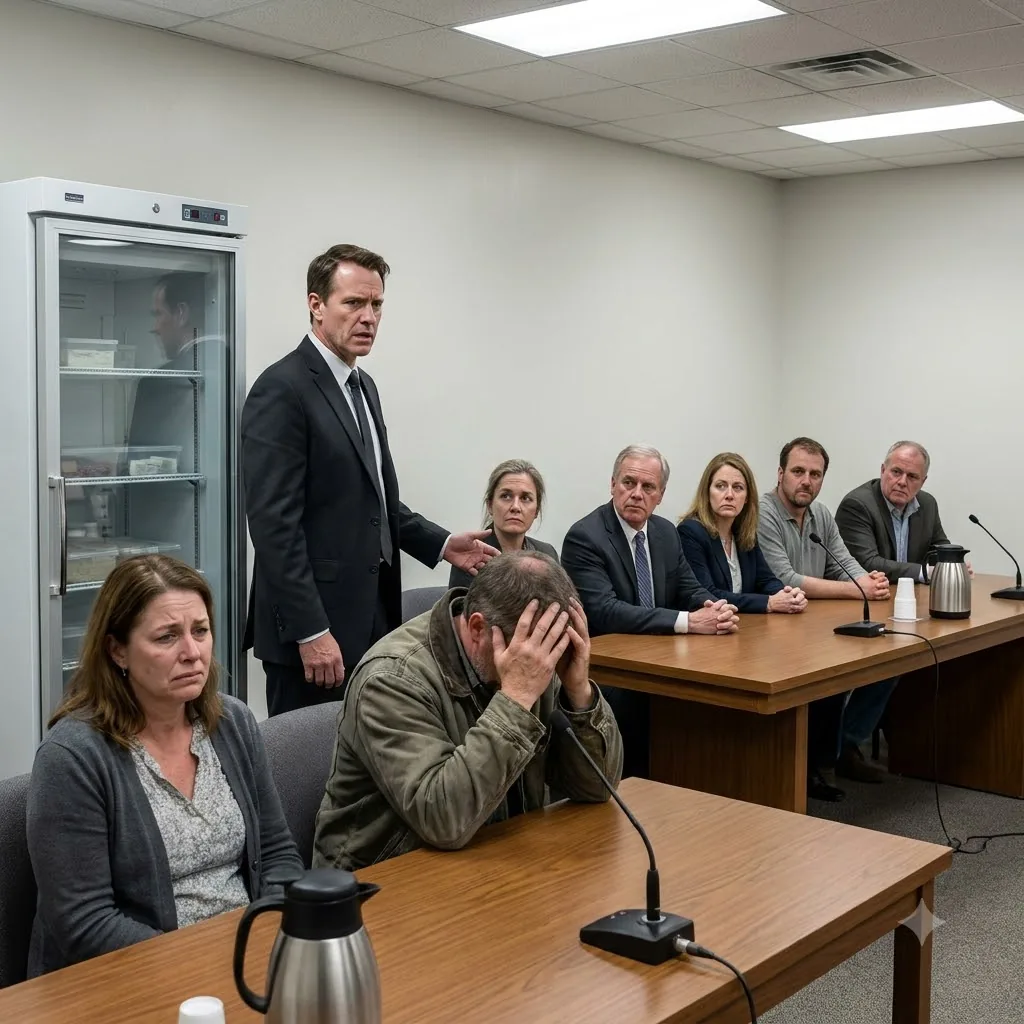
Martin Vale stood beside the glass-front sample freezer in the bioethics hearing room and told a row of strangers that my family owed him obedience because he had already sacrificed enough for my brother. He said it in the same calm voice people use to explain parking rules, while a clerk sorted paper name cards and the freezer compressor clicked under the table-length silence. I had walked in expecting a discussion about family consent, and instead I was watching a man use Evan’s cloned sample like a church donation box with our last name taped to it.
Dr. Priya Nandakumar looked up from the hearing packet and said, “Mr. Vale, keep your remarks tied to the issue before the panel.”
Martin put one hand flat on the back of his chair but did not sit. “The issue is obligation,” he said. “I stepped in when this family would have lost every viable option. I carried the burden, the cost, the criticism. The least Nora can do is stop undermining the process in public.”
He said my name without looking at me at first. Then he turned and gave me the same pained little half smile he had used for months whenever he wanted an audience to think I was being difficult.
I kept my hands in my lap and looked past him to the freezer. It was smaller than the ones in labs on TV, stainless at the edges, white in the center, with a digital display glowing blue and a red sticker that said RESTRICTED MATERIAL. One sealed case sat inside on the upper shelf behind the glass. Nobody had to explain what everyone in the room was looking at.
“Ms. Hale,” Dr. Nandakumar said, “you may respond to the statement about obligation if you want to.”
I said, “I came here to discuss consent and custody, not gratitude.”
Martin gave a short breath through his nose. “That is exactly what I mean. Every time. She talks like this was all imposed on her. It was done to preserve her brother’s future.”
My brother Evan sat two seats down from me, elbows on his knees, hands locked together. He had not spoken since we came in. He kept staring at the floor tiles until Martin said preserve, and then he looked up at the freezer so fast it made the motion louder than it should have been.
Dr. Nandakumar wrote something down. “Mr. Vale, do not speak for Ms. Hale or Mr. Hale.”
Martin nodded like he was accepting a prize. “Fine. Then let me speak for myself. I am tired of being treated like some manipulator when I am the one who took the reputational hit. I am the one who made sure there was a sample at all. I am the one who kept this family from losing a once-in-a-generation chance, and now I am being repaid with suspicion.”
There it was. Not care. Debt.
He did not say, We should make sure Evan has a voice. He did not say, We should discuss limits. He said he had done so much that we owed him a cleaner performance.
I said, “Nobody asked you to turn this into a loyalty test.”
The clerk at the side table stopped sorting and looked back down immediately. Somebody in the public seats shifted hard enough to make the metal chair legs scrape.
Martin spread his hands. “Loyalty? Nora, come on. I am asking for basic respect. I gave years to this. I put my own name behind a program nobody else would touch. I absorbed the attacks. I protected your brother from people who wanted this shut down.”
“Then why is my agreement always the price of your help?” I asked.
That landed in the room and stayed there.
Martin’s jaw moved once before he answered. “Because public sabotage has consequences. If the family attached to the sample starts acting unstable, every review body tightens access. Every handoff gets delayed. Every protection weakens. You may not like hearing that, but it is true.”
He said access like a threat hidden inside a policy word.
Evan lifted his head. “Are you saying she has to agree with you so you don’t make this harder?”
Martin looked at him then, finally, and softened his voice so much it almost disappeared. “I am saying none of us can afford ingratitude right now.”
Dr. Nandakumar cut in before I could answer. “No one in this room is required to express gratitude as a condition of participation. Be precise, Mr. Vale.”
Martin sat down at last, smoothing his tie with two fingers. “Of course. Then I will be precise. If Nora continues attacking the framework that preserved Evan’s options, she should at least admit she is willing to jeopardize those options.”
He kept saying preserved, as if he had placed Evan in amber and we should all clap because the glass had not cracked yet.
I looked at the freezer again. The display flickered by one degree and corrected itself. A machine humming in the corner had more honest language than the man in front of it.
I had come prepared to argue about boundaries. I had not come prepared to hear my brother’s sample described like a favor we were renting from Martin’s ego. And the worst part was that he kept talking as if he wanted release from the burden he claimed to carry, but every sentence pointed the other way.
When Dr. Nandakumar asked him the next direct question, he did not answer it. He only leaned back, glanced at the freezer, and said, “If my role is so offensive to everyone, I can step back after the family states clearly that they understand what they are giving up.”
That was the first moment I heard the contradiction clearly enough to name it: a man begging to be recognized as a martyr should have been eager to put the burden down.
Martin wasn’t eager at all.
Martin Vale stood beside the glass-front sample freezer in the bioethics hearing room and told a row of strangers that my family owed him obedience because he had already sacrificed enough for my brother. He said it in the same calm voice people use to explain parking rules, while a clerk sorted paper name cards and the freezer compressor clicked under the table-length silence. I had walked in expecting a discussion about family consent, and instead I was watching a man use Evan’s cloned sample like a church donation box with our last name taped to it.
Dr. Priya Nandakumar looked up from the hearing packet and said, “Mr. Vale, keep your remarks tied to the issue before the panel.”
Martin put one hand flat on the back of his chair but did not sit. “The issue is obligation,” he said. “I stepped in when this family would have lost every viable option. I carried the burden, the cost, the criticism. The least Nora can do is stop undermining the process in public.”
He said my name without looking at me at first. Then he turned and gave me the same pained little half smile he had used for months whenever he wanted an audience to think I was being difficult.
I kept my hands in my lap and looked past him to the freezer. It was smaller than the ones in labs on TV, stainless at the edges, white in the center, with a digital display glowing blue and a red sticker that said RESTRICTED MATERIAL. One sealed case sat inside on the upper shelf behind the glass. Nobody had to explain what everyone in the room was looking at.
“Ms. Hale,” Dr. Nandakumar said, “you may respond to the statement about obligation if you want to.”
I said, “I came here to discuss consent and custody, not gratitude.”
Martin gave a short breath through his nose. “That is exactly what I mean. Every time. She talks like this was all imposed on her. It was done to preserve her brother’s future.”
My brother Evan sat two seats down from me, elbows on his knees, hands locked together. He had not spoken since we came in. He kept staring at the floor tiles until Martin said preserve, and then he looked up at the freezer so fast it made the motion louder than it should have been.
Dr. Nandakumar wrote something down. “Mr. Vale, do not speak for Ms. Hale or Mr. Hale.”
Martin nodded like he was accepting a prize. “Fine. Then let me speak for myself. I am tired of being treated like some manipulator when I am the one who took the reputational hit. I am the one who made sure there was a sample at all. I am the one who kept this family from losing a once-in-a-generation chance, and now I am being repaid with suspicion.”
There it was. Not care. Debt.
He did not say, We should make sure Evan has a voice. He did not say, We should discuss limits. He said he had done so much that we owed him a cleaner performance.
I said, “Nobody asked you to turn this into a loyalty test.”
The clerk at the side table stopped sorting and looked back down immediately. Somebody in the public seats shifted hard enough to make the metal chair legs scrape.
Martin spread his hands. “Loyalty? Nora, come on. I am asking for basic respect. I gave years to this. I put my own name behind a program nobody else would touch. I absorbed the attacks. I protected your brother from people who wanted this shut down.”
“Then why is my agreement always the price of your help?” I asked.
That landed in the room and stayed there.
Martin’s jaw moved once before he answered. “Because public sabotage has consequences. If the family attached to the sample starts acting unstable, every review body tightens access. Every handoff gets delayed. Every protection weakens. You may not like hearing that, but it is true.”
He said access like a threat hidden inside a policy word.
Evan lifted his head. “Are you saying she has to agree with you so you don’t make this harder?”
Martin looked at him then, finally, and softened his voice so much it almost disappeared. “I am saying none of us can afford ingratitude right now.”
Dr. Nandakumar cut in before I could answer. “No one in this room is required to express gratitude as a condition of participation. Be precise, Mr. Vale.”
Martin sat down at last, smoothing his tie with two fingers. “Of course. Then I will be precise. If Nora continues attacking the framework that preserved Evan’s options, she should at least admit she is willing to jeopardize those options.”
He kept saying preserved, as if he had placed Evan in amber and we should all clap because the glass had not cracked yet.
I looked at the freezer again. The display flickered by one degree and corrected itself. A machine humming in the corner had more honest language than the man in front of it.
I had come prepared to argue about boundaries. I had not come prepared to hear my brother’s sample described like a favor we were renting from Martin’s ego. And the worst part was that he kept talking as if he wanted release from the burden he claimed to carry, but every sentence pointed the other way.
When Dr. Nandakumar asked him the next direct question, he did not answer it. He only leaned back, glanced at the freezer, and said, “If my role is so offensive to everyone, I can step back after the family states clearly that they understand what they are giving up.”
That was the first moment I heard the contradiction clearly enough to name it: a man begging to be recognized as a martyr should have been eager to put the burden down.
Martin wasn’t eager at all.