Story code: ST-000143
Part 1: The Word He Shouldn’t Have Known
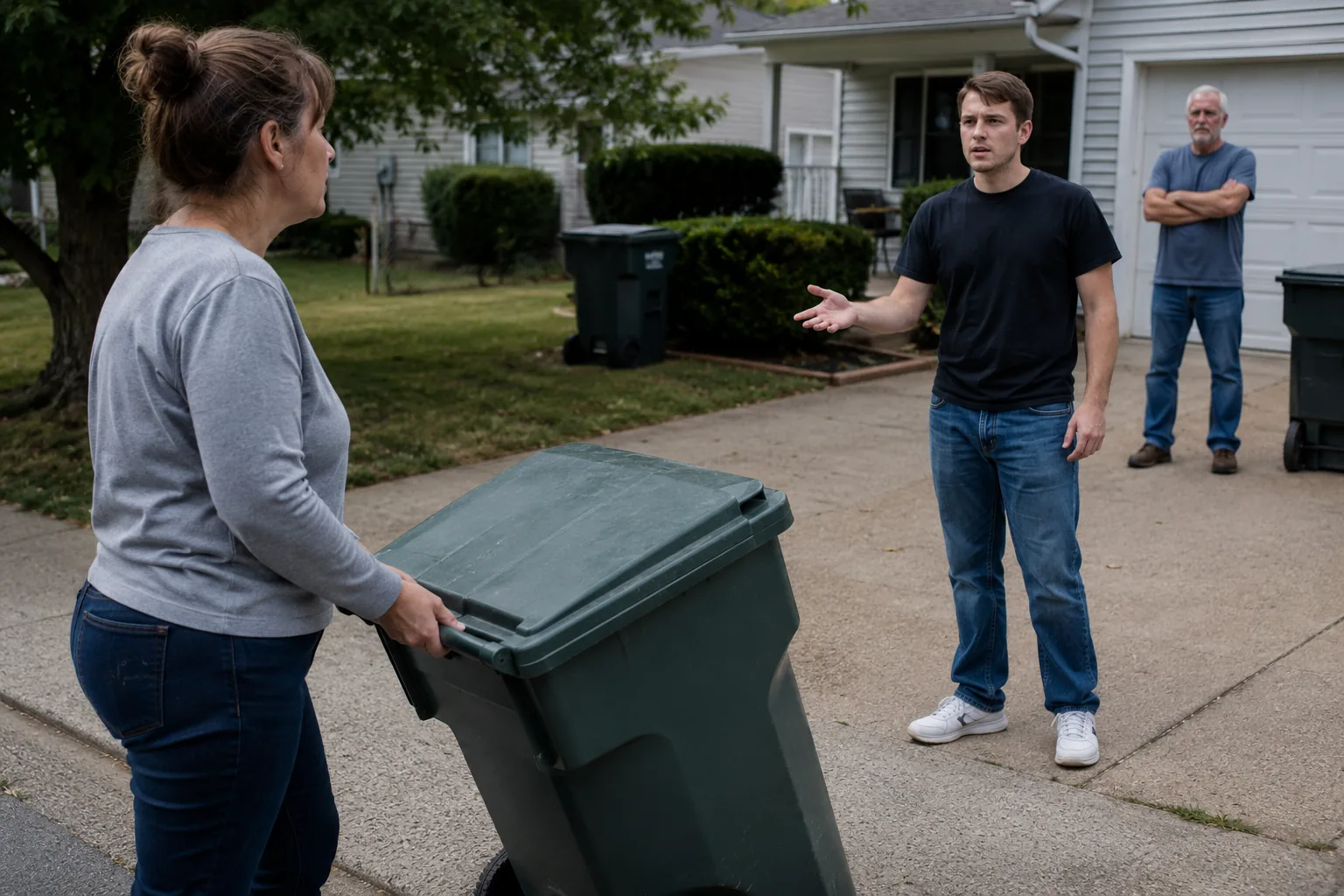
I was halfway down our shared driveway with my trash bin tilted back on its wheels when my neighbor’s son stepped in front of me and delivered a line like he was reading it off a card. Before I could answer, another adult standing near the curb repeated the same accusation and acted like I was the one causing trouble. The problem was, one word in that neat little speech did not belong anywhere in our actual driveway routine.
It was trash night, the ordinary kind where everybody in our row of houses drifted outside in pieces. Kids were bouncing a ball near the sidewalk, somebody had a trunk open, and bins were already lined along the curb in the usual staggered way. The Bennett and Holloway houses share a wide apron before the drive narrows, so every bin move has a rhythm to it. You learn where to angle around each other. You learn who rolls out first. It is not elegant, but it is normal.
I had just eased my green bin past the cracked edge in the concrete when Evan Holloway came down from his side, stopped about three feet in front of me, and said, very clearly, “You can’t obstruct the easement with your cans anymore.”
He did not sound like a kid fussing about trash. He sounded like somebody repeating a sentence exactly as it had been given to him.
I kept one hand on the bin handle and said, “What?”
He blinked once, then said it again, slower this time. “You can’t obstruct the easement with your cans anymore.”
Before I could even decide whether to answer him or look past him toward the Holloway house, Tina Alvarez turned from where she was standing by her SUV and jumped in like she had been waiting for a gap. “He’s right,” she said. “You really shouldn’t obstruct the easement. People need to get through there.”
That was the first hit. Not the boy. Tina.
Because Tina does not share our driveway. She lives two houses down. She had no reason to speak like she had been tracking our trash can placement, and yet she used the same odd phrase, down to the same word, like she’d copied it from the same page.
I looked at her, then back at Evan. “Show me what I’m obstructing.”
Evan shifted his grip on the smaller recycling bin beside him and looked over his shoulder toward his front steps. Denise Holloway was not outside. Her storm door was closed. The front blinds were tilted, but from where I stood I could only see bright glare on the glass.
Tina gave a short laugh that had no real shape to it. “The easement. Right there in the middle.”
I said, “This is a shared driveway apron. These bins go to the curb every Tuesday exactly like this.”
Evan opened his mouth, then landed back on the sentence he had started with. “You can’t obstruct the easement with your cans anymore.”
That word snagged on me again. Easement.
Nobody on this driveway says easement. Not in normal life. We say side, middle, your half, my half, pull in close, leave room, watch the mirror, don’t block the turn. Even when people are annoyed, they use driveway words. Real ones. Easement sounded imported, polished, and disconnected from the scene in front of us: two plastic bins, a wheel path worn into the gravel edge, and a kid blocking a woman from rolling trash ten more feet.
I asked Evan, “What does that mean?”
He frowned. “What?”
“Easement. What does that mean?”
His fingers tightened on the bin lid. He looked back toward the house again, quick and automatic, then said, “It means you can’t do it.”
Tina folded her arms. “Mara, come on. He’s telling you nicely.”
“Telling me what, exactly?” I asked. “Where do you want the bin?”
Tina pointed vaguely toward the curb, which made no sense because that was where I was already taking it. Evan stayed planted in front of me. A couple of the kids had gone quiet by then. One of them dragged a scooter in a slow circle while watching us.
I moved my bin six inches to the left, enough to show there was still room for a car to clear the apron and enough to make my point without bumping him. “Like this?”
Evan did not answer. He just repeated, with less confidence this time, “You’re obstructing the easement.”
That was when Denise finally opened her front door. She did not come all the way down. She stood at the top step with one hand on the frame and called, “There shouldn’t be anything in the center path.”
Center path. Not easement.
I looked straight at her. Evan had said easement three times. Tina had echoed it once. Denise, the person whose driveway this supposedly mattered to, chose different words the moment she spoke for herself.
I rolled my bin the rest of the way to the curb and left it in the same staging spot we had used for months, just off the wheel line, exactly where it had never stopped anyone from passing. Nobody could explain what was wrong with it. Nobody could point to an actual blocked route. All they had was that polished little phrase.
And the more I replayed it while I walked back up the drive, the stranger it got, because if Evan had only been passing along a normal complaint from his mother, why did he know the word “easement” when the person he was supposedly speaking for didn’t even use it?
I was halfway down our shared driveway with my trash bin tilted back on its wheels when my neighbor’s son stepped in front of me and delivered a line like he was reading it off a card. Before I could answer, another adult standing near the curb repeated the same accusation and acted like I was the one causing trouble. The problem was, one word in that neat little speech did not belong anywhere in our actual driveway routine.
It was trash night, the ordinary kind where everybody in our row of houses drifted outside in pieces. Kids were bouncing a ball near the sidewalk, somebody had a trunk open, and bins were already lined along the curb in the usual staggered way. The Bennett and Holloway houses share a wide apron before the drive narrows, so every bin move has a rhythm to it. You learn where to angle around each other. You learn who rolls out first. It is not elegant, but it is normal.
I had just eased my green bin past the cracked edge in the concrete when Evan Holloway came down from his side, stopped about three feet in front of me, and said, very clearly, “You can’t obstruct the easement with your cans anymore.”
He did not sound like a kid fussing about trash. He sounded like somebody repeating a sentence exactly as it had been given to him.
I kept one hand on the bin handle and said, “What?”
He blinked once, then said it again, slower this time. “You can’t obstruct the easement with your cans anymore.”
Before I could even decide whether to answer him or look past him toward the Holloway house, Tina Alvarez turned from where she was standing by her SUV and jumped in like she had been waiting for a gap. “He’s right,” she said. “You really shouldn’t obstruct the easement. People need to get through there.”
That was the first hit. Not the boy. Tina.
Because Tina does not share our driveway. She lives two houses down. She had no reason to speak like she had been tracking our trash can placement, and yet she used the same odd phrase, down to the same word, like she’d copied it from the same page.
I looked at her, then back at Evan. “Show me what I’m obstructing.”
Evan shifted his grip on the smaller recycling bin beside him and looked over his shoulder toward his front steps. Denise Holloway was not outside. Her storm door was closed. The front blinds were tilted, but from where I stood I could only see bright glare on the glass.
Tina gave a short laugh that had no real shape to it. “The easement. Right there in the middle.”
I said, “This is a shared driveway apron. These bins go to the curb every Tuesday exactly like this.”
Evan opened his mouth, then landed back on the sentence he had started with. “You can’t obstruct the easement with your cans anymore.”
That word snagged on me again. Easement.
Nobody on this driveway says easement. Not in normal life. We say side, middle, your half, my half, pull in close, leave room, watch the mirror, don’t block the turn. Even when people are annoyed, they use driveway words. Real ones. Easement sounded imported, polished, and disconnected from the scene in front of us: two plastic bins, a wheel path worn into the gravel edge, and a kid blocking a woman from rolling trash ten more feet.
I asked Evan, “What does that mean?”
He frowned. “What?”
“Easement. What does that mean?”
His fingers tightened on the bin lid. He looked back toward the house again, quick and automatic, then said, “It means you can’t do it.”
Tina folded her arms. “Mara, come on. He’s telling you nicely.”
“Telling me what, exactly?” I asked. “Where do you want the bin?”
Tina pointed vaguely toward the curb, which made no sense because that was where I was already taking it. Evan stayed planted in front of me. A couple of the kids had gone quiet by then. One of them dragged a scooter in a slow circle while watching us.
I moved my bin six inches to the left, enough to show there was still room for a car to clear the apron and enough to make my point without bumping him. “Like this?”
Evan did not answer. He just repeated, with less confidence this time, “You’re obstructing the easement.”
That was when Denise finally opened her front door. She did not come all the way down. She stood at the top step with one hand on the frame and called, “There shouldn’t be anything in the center path.”
Center path. Not easement.
I looked straight at her. Evan had said easement three times. Tina had echoed it once. Denise, the person whose driveway this supposedly mattered to, chose different words the moment she spoke for herself.
I rolled my bin the rest of the way to the curb and left it in the same staging spot we had used for months, just off the wheel line, exactly where it had never stopped anyone from passing. Nobody could explain what was wrong with it. Nobody could point to an actual blocked route. All they had was that polished little phrase.
And the more I replayed it while I walked back up the drive, the stranger it got, because if Evan had only been passing along a normal complaint from his mother, why did he know the word “easement” when the person he was supposedly speaking for didn’t even use it?