Story code: ST-000693
Part 1: The Hazard of Existence
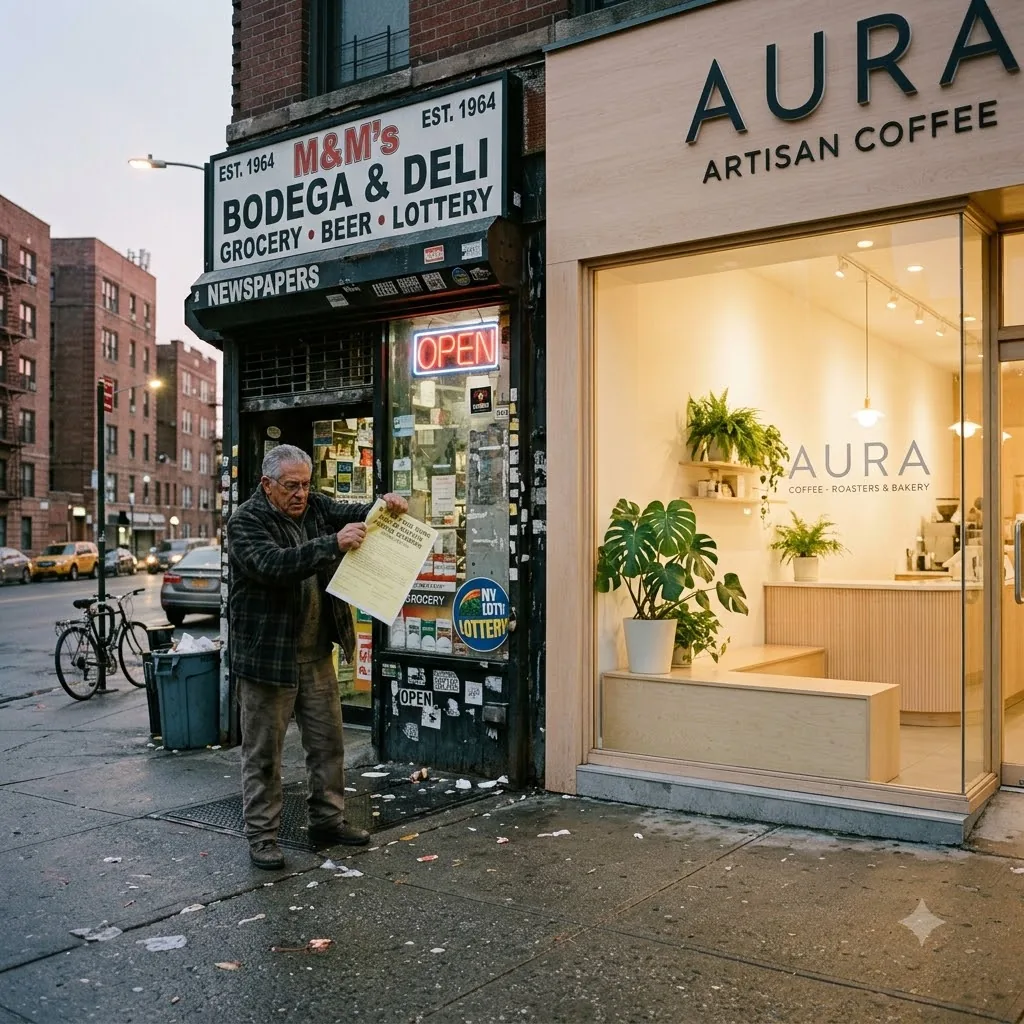
The heavy packing tape stripped a fleck of gold paint off the bodega’s sixty-year-old window lettering when Mateo ripped the laminated flyer down. He stared at the pastel pink paper, his thumb crushing the heading that read Community Wellness Concern. Beneath the soft-toned floral border, neat typography cited the folding table where Tio Hector and Mr. Suarez played afternoon dominoes as a navigational hazard and exclusionary micro-environment. Mateo crumpled the heavy cardstock in his fist. The bell on the door of the newly renovated storefront next door let out a soft, curated chime. Julian stepped onto the sidewalk. He wore a raw linen apron over a crisp white t-shirt, carrying a bamboo clipboard under one arm and a small, ribbed cup of steaming dark liquid in the other hand.
“Morning, neighbor.” Julian offered the cup with a practiced, tranquil smile. “Single-origin pour-over. I noticed you seemed a little stressed yesterday.”
Mateo did not take the coffee. He held up the crushed pink flyer.
“Ah,” Julian sighed, letting his arm drop. “I know it feels abrupt. We just have to make sure the pedestrian corridor remains an inclusive space for everyone. A lot of our patrons feel intimidated by the shouting and the gambling right on the thoroughfare.”
“They are two eighty-year-old men slamming plastic tiles,” Mateo said. “They have been sitting in that exact spot since before you were born.”
“It is about flow,” Julian said smoothly, tapping his pen against his clipboard. “And community wellness. We are trying to activate this block. I am sure you understand.”
Julian turned and went back into his shop, a bright minimalist box that used to be a neighborhood dry cleaner. Mateo stared at the artisan roaster’s window, where a stenciled sign promised Ethical Connections.
Inside the bodega, the air smelled familiarly of floor wax, ripe plantains, and the old wood of the shelving. Mateo’s grandfather, Abuelo Tomas, stood behind the counter sorting a delivery of canned beans. Tomas hummed along to the low static of the Spanish radio station, completely unaware of the sterile war being waged against their front door.
Mateo walked behind the counter and set the crumpled pink paper next to the mail stack. Sitting on top of the pile was the lease renewal letter from the building management company. The numbers printed on that stark white page had been burning a hole in Mateo’s mind for three weeks. A four hundred percent rent increase. They had exactly ninety days before the new rate kicked in, an astronomical figure designed to force them out. They needed every single dollar, every regular customer, and every passing foot traffic sale just to build a legal defense fund to fight the hike.
Julian’s pastel notices were not just annoying. They were a calculated suffocation.
Over the past two weeks, Julian had weaponized the language of care to methodically strangle the bodega’s foot traffic. First came the Air Quality Concern flyers taped to the local streetlamps, heavily implying the exhaust from the bodega’s small hot-food grill was toxic, which led to a sudden drop in morning egg sandwich sales. Then came the Noise Sensitivity campaign. Julian had his baristas hand out earplugs to customers leaving the coffee shop, pointing apologetically toward the bodega whenever Tomas played his radio. The new demographic of residents, dressed in expensive athleisure and walking purebred dogs, now crossed the street entirely to avoid walking past the Ortiz family business.
Mateo watched through the front glass as a woman in a matching pastel workout set approached the bodega, paused, read a brand new pink flyer taped to the streetlamp, and hurriedly turned around to walk the other way.
Mateo shoved through the heavy glass door and marched up to the lamppost. This flyer was identical in design to the one he had just torn down, but the text was different. It warned of Unregulated Stray Animal Proximity. It was a direct attack on Barnaby, the neighborhood tabby cat that slept on top of the bodega’s ice machine.
A low murmur of voices drew Mateo’s attention back to the coffee shop. Julian was standing on the sidewalk again, but this time he was not alone. Five people stood in a tight semicircle around him, holding small cups of coffee and nodding seriously. Julian was pointing directly at the bodega.
Mateo crossed the pavement, his boots heavy on the concrete. He stopped just at the edge of the semicircle.
“We are taking a restorative approach,” Julian was telling the group, his voice pitching at that same calm, reasonable frequency. “It is not about punitive measures. It is about bringing the whole block up to code so we can all thrive in a safe, hazard-free environment.”
“You are handing out fake citations to scare away my customers,” Mateo interrupted, his voice tight with suppressed anger.
The group turned to look at him. Several of them visibly recoiled, stepping closer to Julian as if Mateo were a physical threat. Julian held his hands up, palms open, the absolute picture of a de-escalator handling an aggressive interloper.
“Mateo, we are just having a neighborhood alignment meeting,” Julian said gently. “Your grandfather’s business practices are simply not conducive to the new wellness standards of the block. We are actually discussing ways to help you transition.”
“Transition out,” Mateo said. “You know about the rent hike. You are trying to dry up our register so we cannot fight it.”
Julian gave a sad, patronizing shake of his head. He looked past Mateo, his eyes lighting up with genuine satisfaction as a white sedan pulled up to the curb. The vehicle had the official seal of the City Department of Health and Mental Hygiene printed on the door.
“I think transition is no longer a matter of opinion,” Julian said softly.
A man in a crisp uniform stepped out of the sedan, holding a thick red clipboard and looking directly at the bodega’s front door.
The heavy packing tape stripped a fleck of gold paint off the bodega’s sixty-year-old window lettering when Mateo ripped the laminated flyer down. He stared at the pastel pink paper, his thumb crushing the heading that read Community Wellness Concern. Beneath the soft-toned floral border, neat typography cited the folding table where Tio Hector and Mr. Suarez played afternoon dominoes as a navigational hazard and exclusionary micro-environment. Mateo crumpled the heavy cardstock in his fist. The bell on the door of the newly renovated storefront next door let out a soft, curated chime. Julian stepped onto the sidewalk. He wore a raw linen apron over a crisp white t-shirt, carrying a bamboo clipboard under one arm and a small, ribbed cup of steaming dark liquid in the other hand.
“Morning, neighbor.” Julian offered the cup with a practiced, tranquil smile. “Single-origin pour-over. I noticed you seemed a little stressed yesterday.”
Mateo did not take the coffee. He held up the crushed pink flyer.
“Ah,” Julian sighed, letting his arm drop. “I know it feels abrupt. We just have to make sure the pedestrian corridor remains an inclusive space for everyone. A lot of our patrons feel intimidated by the shouting and the gambling right on the thoroughfare.”
“They are two eighty-year-old men slamming plastic tiles,” Mateo said. “They have been sitting in that exact spot since before you were born.”
“It is about flow,” Julian said smoothly, tapping his pen against his clipboard. “And community wellness. We are trying to activate this block. I am sure you understand.”
Julian turned and went back into his shop, a bright minimalist box that used to be a neighborhood dry cleaner. Mateo stared at the artisan roaster’s window, where a stenciled sign promised Ethical Connections.
Inside the bodega, the air smelled familiarly of floor wax, ripe plantains, and the old wood of the shelving. Mateo’s grandfather, Abuelo Tomas, stood behind the counter sorting a delivery of canned beans. Tomas hummed along to the low static of the Spanish radio station, completely unaware of the sterile war being waged against their front door.
Mateo walked behind the counter and set the crumpled pink paper next to the mail stack. Sitting on top of the pile was the lease renewal letter from the building management company. The numbers printed on that stark white page had been burning a hole in Mateo’s mind for three weeks. A four hundred percent rent increase. They had exactly ninety days before the new rate kicked in, an astronomical figure designed to force them out. They needed every single dollar, every regular customer, and every passing foot traffic sale just to build a legal defense fund to fight the hike.
Julian’s pastel notices were not just annoying. They were a calculated suffocation.
Over the past two weeks, Julian had weaponized the language of care to methodically strangle the bodega’s foot traffic. First came the Air Quality Concern flyers taped to the local streetlamps, heavily implying the exhaust from the bodega’s small hot-food grill was toxic, which led to a sudden drop in morning egg sandwich sales. Then came the Noise Sensitivity campaign. Julian had his baristas hand out earplugs to customers leaving the coffee shop, pointing apologetically toward the bodega whenever Tomas played his radio. The new demographic of residents, dressed in expensive athleisure and walking purebred dogs, now crossed the street entirely to avoid walking past the Ortiz family business.
Mateo watched through the front glass as a woman in a matching pastel workout set approached the bodega, paused, read a brand new pink flyer taped to the streetlamp, and hurriedly turned around to walk the other way.
Mateo shoved through the heavy glass door and marched up to the lamppost. This flyer was identical in design to the one he had just torn down, but the text was different. It warned of Unregulated Stray Animal Proximity. It was a direct attack on Barnaby, the neighborhood tabby cat that slept on top of the bodega’s ice machine.
A low murmur of voices drew Mateo’s attention back to the coffee shop. Julian was standing on the sidewalk again, but this time he was not alone. Five people stood in a tight semicircle around him, holding small cups of coffee and nodding seriously. Julian was pointing directly at the bodega.
Mateo crossed the pavement, his boots heavy on the concrete. He stopped just at the edge of the semicircle.
“We are taking a restorative approach,” Julian was telling the group, his voice pitching at that same calm, reasonable frequency. “It is not about punitive measures. It is about bringing the whole block up to code so we can all thrive in a safe, hazard-free environment.”
“You are handing out fake citations to scare away my customers,” Mateo interrupted, his voice tight with suppressed anger.
The group turned to look at him. Several of them visibly recoiled, stepping closer to Julian as if Mateo were a physical threat. Julian held his hands up, palms open, the absolute picture of a de-escalator handling an aggressive interloper.
“Mateo, we are just having a neighborhood alignment meeting,” Julian said gently. “Your grandfather’s business practices are simply not conducive to the new wellness standards of the block. We are actually discussing ways to help you transition.”
“Transition out,” Mateo said. “You know about the rent hike. You are trying to dry up our register so we cannot fight it.”
Julian gave a sad, patronizing shake of his head. He looked past Mateo, his eyes lighting up with genuine satisfaction as a white sedan pulled up to the curb. The vehicle had the official seal of the City Department of Health and Mental Hygiene printed on the door.
“I think transition is no longer a matter of opinion,” Julian said softly.
A man in a crisp uniform stepped out of the sedan, holding a thick red clipboard and looking directly at the bodega’s front door.