Story code: ST-000675
Part 1: She Wanted It Moved Right Now
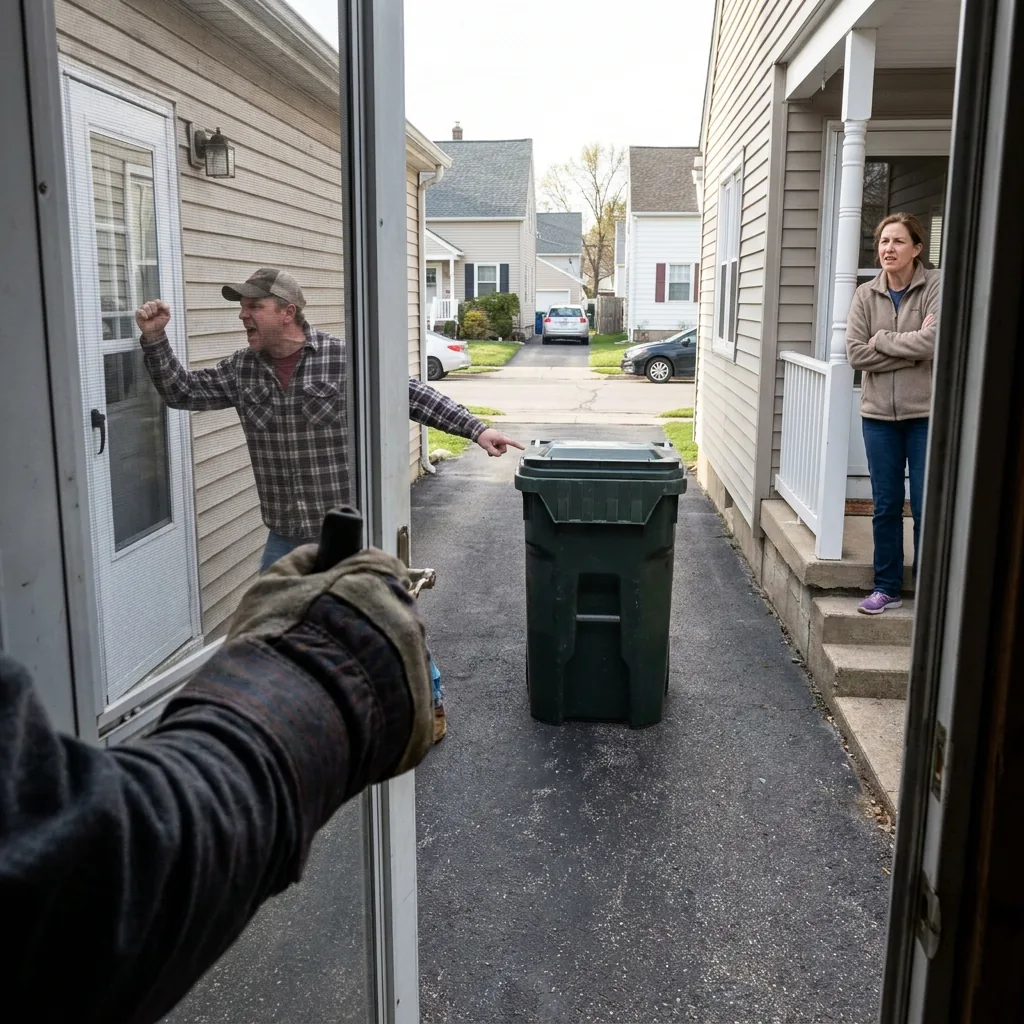
My next-door neighbor started pounding on the side door while I was still wearing work gloves, yelling that our trash bin was blocking an emergency in the shared driveway and had to be moved right that second. She did not ask. She pointed at the bin like it was a burning car, talked over me, and kept saying there was no time to argue even though the driveway mouth was wide open to the street and nothing with lights or sirens was anywhere near it.
I had been inside Marisol Trent’s garage sorting paint cans into a contractor bag and stacking two cracked planters by the wall. The side door was open because I was carrying things in and out. Dana Pike came up fast from her side of the shared driveway, sandals slapping the concrete, one hand up, the other stabbing toward the trash bin parked near the line where the two driveways narrowed together.
“Move that now,” she said. “Now. You are blocking emergency access.”
I stepped out just enough to see the layout without dropping what I had in my hands. The bin was angled a little badly, but it was still tucked beside Marisol’s half, not dead center. A sedan could not pull through that exact gap without correcting, but the mouth of the driveway from the street was open, and there was no ambulance, no fire truck, no person on a stretcher, no one running, no one waving from a car.
I said, “What emergency?”
She answered too fast. “It doesn’t matter. Move it first. Questions later.”
That was the first thing that made me stop instead of automatically dragging it aside. When there is an actual emergency, people usually point to the person, the vehicle, the direction. Dana kept pointing only at the bin.
Marisol came out behind me with a box of old tile samples against her hip. She set it down and looked from Dana to the driveway opening.
“What’s going on?” she asked.
Dana swung toward her. “Your trash bin is blocking access. I already told him. If someone needs to get through, this can’t be here.”
Marisol looked straight at the bin. “It gets picked up in the morning. It has been there since six.”
“I don’t care when pickup is,” Dana snapped. “I said emergency.”
She kept using that word like it should do the work by itself. I pulled off one glove and asked again, calmer this time, “Who needs access right now?”
Dana took two quick steps forward, close enough that I could smell her mint gum. “Do not stand there interrogating me. Just move the bin. If something happens because you wanted to play lawyer, that’s on you.”
The volume alone could have pushed a lot of people into moving it just to end the scene. That was the pressure of it. Same driveway. Street right there. Anybody passing could hear her making it sound like we were blocking rescue crews with our own hands.
Marisol did not raise her voice. “If there’s an emergency, call 911.”
Dana shot back, “I am trying to prevent one.”
That answer did not clear anything up. It only widened it. I set the glove on the workbench by the door and walked to the edge of the driveway for a better line of sight. The bin had one wheel turned sideways. That was all. I could move it in three seconds if this was real.
But Dana was acting like the three seconds were already gone.
A white SUV slowed at the curb, then kept going. Dana watched it, then turned back to us before it was even past the mailbox.
“See?” she said.
I said, “See what?”
Her jaw tightened. She changed direction without answering. “Fine. If neither of you is going to be responsible, I’ll call for help and let them deal with it.”
Marisol folded her arms. “Go ahead.”
Dana pulled out her phone so sharply it almost slipped. She jabbed at the screen and started pacing in a tight strip beside her flower bed, talking in a loud clipped voice that sounded meant to carry. I could only catch pieces from where I stood: shared driveway, blocked access, unsafe, immediate problem. She kept looking up to make sure we were hearing her.
I stayed near the garage opening. Marisol stayed by the bin. Neither of us touched it. At that point, moving it would have erased the only clear thing in front of us, which was exactly where it had been when she started calling it an emergency.
Dana ended the call and lifted her chin. “There. Since you two want to make this difficult, someone official can tell you what happens when people block emergency access.”
I said, “Good.”
That was when her whole rhythm changed. She took one quick step toward me, lowered her voice for the first time, and said, “No, not like that. Just move it before they get here.”
A minute earlier she had wanted outside help. Now she was trying to stop the exact help she had just demanded, and she was still standing there insisting the emergency was real.
My next-door neighbor started pounding on the side door while I was still wearing work gloves, yelling that our trash bin was blocking an emergency in the shared driveway and had to be moved right that second. She did not ask. She pointed at the bin like it was a burning car, talked over me, and kept saying there was no time to argue even though the driveway mouth was wide open to the street and nothing with lights or sirens was anywhere near it.
I had been inside Marisol Trent’s garage sorting paint cans into a contractor bag and stacking two cracked planters by the wall. The side door was open because I was carrying things in and out. Dana Pike came up fast from her side of the shared driveway, sandals slapping the concrete, one hand up, the other stabbing toward the trash bin parked near the line where the two driveways narrowed together.
“Move that now,” she said. “Now. You are blocking emergency access.”
I stepped out just enough to see the layout without dropping what I had in my hands. The bin was angled a little badly, but it was still tucked beside Marisol’s half, not dead center. A sedan could not pull through that exact gap without correcting, but the mouth of the driveway from the street was open, and there was no ambulance, no fire truck, no person on a stretcher, no one running, no one waving from a car.
I said, “What emergency?”
She answered too fast. “It doesn’t matter. Move it first. Questions later.”
That was the first thing that made me stop instead of automatically dragging it aside. When there is an actual emergency, people usually point to the person, the vehicle, the direction. Dana kept pointing only at the bin.
Marisol came out behind me with a box of old tile samples against her hip. She set it down and looked from Dana to the driveway opening.
“What’s going on?” she asked.
Dana swung toward her. “Your trash bin is blocking access. I already told him. If someone needs to get through, this can’t be here.”
Marisol looked straight at the bin. “It gets picked up in the morning. It has been there since six.”
“I don’t care when pickup is,” Dana snapped. “I said emergency.”
She kept using that word like it should do the work by itself. I pulled off one glove and asked again, calmer this time, “Who needs access right now?”
Dana took two quick steps forward, close enough that I could smell her mint gum. “Do not stand there interrogating me. Just move the bin. If something happens because you wanted to play lawyer, that’s on you.”
The volume alone could have pushed a lot of people into moving it just to end the scene. That was the pressure of it. Same driveway. Street right there. Anybody passing could hear her making it sound like we were blocking rescue crews with our own hands.
Marisol did not raise her voice. “If there’s an emergency, call 911.”
Dana shot back, “I am trying to prevent one.”
That answer did not clear anything up. It only widened it. I set the glove on the workbench by the door and walked to the edge of the driveway for a better line of sight. The bin had one wheel turned sideways. That was all. I could move it in three seconds if this was real.
But Dana was acting like the three seconds were already gone.
A white SUV slowed at the curb, then kept going. Dana watched it, then turned back to us before it was even past the mailbox.
“See?” she said.
I said, “See what?”
Her jaw tightened. She changed direction without answering. “Fine. If neither of you is going to be responsible, I’ll call for help and let them deal with it.”
Marisol folded her arms. “Go ahead.”
Dana pulled out her phone so sharply it almost slipped. She jabbed at the screen and started pacing in a tight strip beside her flower bed, talking in a loud clipped voice that sounded meant to carry. I could only catch pieces from where I stood: shared driveway, blocked access, unsafe, immediate problem. She kept looking up to make sure we were hearing her.
I stayed near the garage opening. Marisol stayed by the bin. Neither of us touched it. At that point, moving it would have erased the only clear thing in front of us, which was exactly where it had been when she started calling it an emergency.
Dana ended the call and lifted her chin. “There. Since you two want to make this difficult, someone official can tell you what happens when people block emergency access.”
I said, “Good.”
That was when her whole rhythm changed. She took one quick step toward me, lowered her voice for the first time, and said, “No, not like that. Just move it before they get here.”
A minute earlier she had wanted outside help. Now she was trying to stop the exact help she had just demanded, and she was still standing there insisting the emergency was real.