Story code: ST-000955
Part 1: The Squeeze
The red and blue lights of the two patrol cars washed over the overturned plastic folding tables, painting the half-eaten hot dogs and scattered power tools in alternating neon pulses. Marcus stood rigid by his rusted grill, a freshly opened envelope trembling in his grip as the cruisers finally rolled out of his driveway and vanished down the storm-battered street. The police had cited a noise complaint and an unpermitted gathering, delivering a swift and humiliating end to the family barbecue meant to kick off the rebuilding of his hurricane-damaged home.
His sister-in-law was already herding her kids into their minivan, their eyes downcast, the festive mood completely shattered. Marcus did not wave as they backed out into the street. He could not bring himself to look at them. He just stared at the crisp white paper in his hand. The insurance denial letter cited a clause buried deep on page forty-two. Wind-driven rain versus rising surface water. A microscopic distinction that meant his sagging roof and water-logged living room would remain a mold-spotted ruin with zero financial help from the company he had paid into for a decade.
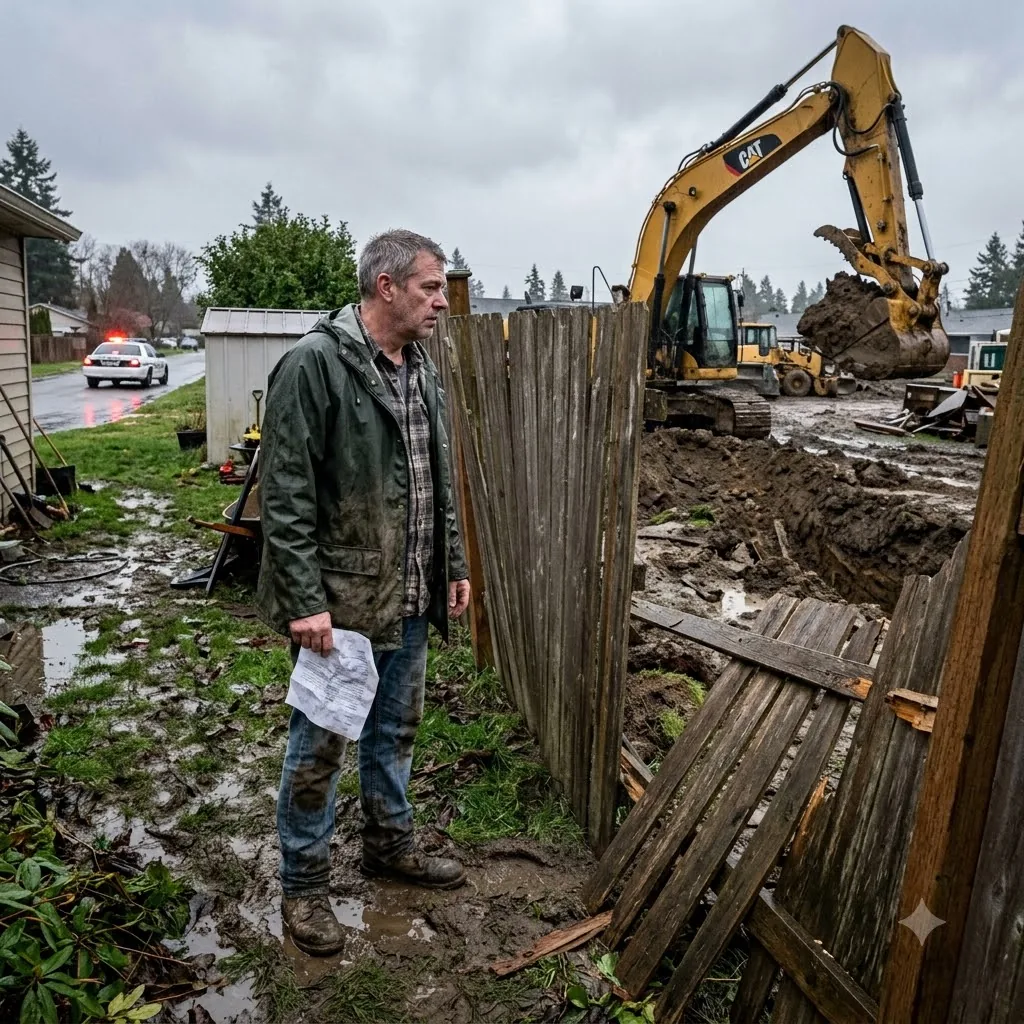
A deafening roar vibrated up through the mud, rattling the loose aluminum siding on Marcus’s house. He looked up from the catastrophic corporate boilerplate. Less than thirty feet away, a massive yellow diesel excavator pivoted on its steel treads, its heavy metal teeth biting into the earth directly on the property line.
The man next door stood on the high ground of his intact, elevated concrete patio. He wore pristine khaki pants and a crisp polo shirt, holding a tablet as he casually directed the heavy machinery operator to widen the trench. Every scoop of wet earth chipped away at the narrow buffer between Marcus’s ruined home and the neighbor’s sprawling new development project. The neighbor had bought the lot right before the storm, bulldozing the existing structure to build a massive modern fortress, entirely unaffected by the weather that had devastated the rest of the block.
Marcus folded the heavy paper, the creases cutting sharp lines across the insurance company logo. He walked past the spilled charcoal, the shattered cooler, and the caution tape the storm responders had left behind weeks ago. The air smelled of heavy diesel exhaust, stagnant water, and the faint, bitter scent of burned meat.
The neighbor pointed directly at the old oak stump marking the traditional boundary of Marcus’s lot. The excavator swung its arm, obliterating the stump in one violent scrape. Thick roots snapped with the sound of cracking bone, sending clumps of dark mud flying across the invisible property line and splattering against Marcus’s boots.
Marcus stepped forward, his boots sinking deep into the muck. He raised a hand to signal the operator. The neighbor noticed him, tapped the screen of his tablet, and gave a slow, dismissive wave before turning his back to inspect a stack of concrete foundation forms.
This was a calculated squeeze. Starve him out with the insurance company, rattle him out with the heavy machinery, embarrass him in front of his family with the police. The property developers had been swarming the neighborhood since the water receded, knocking on doors and offering pennies on the dollar for prime coastal dirt. The new neighbor was clearly running the exact same playbook, using the construction chaos to make Marcus’s life unlivable.
Marcus walked closer to the edge of the newly carved trench. The freshly overturned soil revealed the buried municipal utility markers. He stared at the colored plastic ribbons tangled in the torn roots. The neighbor’s machine was digging deep, preparing to lay foundation walls well beyond the standard municipal setback line. The sheer scale of the excavation seemed designed to undermine the stability of Marcus’s remaining yard.
Marcus wiped the sweat from his forehead with the back of the hand still clutching the denial letter. The corporate rejection and the neighbor’s aggressive land grab were two jaws of the same trap. He stood perfectly still on his side of the jagged earth, tracking the aggressive path of the machinery.
The excavator operator abruptly killed the engine for a shift break, dropping a sudden, ringing silence over the yard. The heavy diesel fumes settled low in the humid air. The neighbor walked down from his elevated patio, stepping carefully along a line of wooden planks to keep the mud off his expensive boots. He approached the edge of the new trench, holding his tablet up to compare the digital blueprints with the massive hole in the ground.
Marcus looked down into the freshly dug pit, taking careful note of the yellow gas line markers and the blue water line flags that the metal bucket had just exposed. The placement was entirely wrong for a standard residential footprint.
The neighbor stopped at the boundary edge, looking across the trench at Marcus with a flat, expectant expression, as if waiting for Marcus to finally give up and pack his bags.
Marcus looked from the exposed municipal pipes in the mud to the glowing tablet in the man’s hand. A sudden clarity settled over him, cutting through the chaotic hum of the afternoon. He shoved the crumpled denial letter into his back pocket and stepped right up to the crumbling edge of the drop-off.
The neighbor opened his mouth to speak, but a loud, metallic snapping sound echoed from the bottom of the trench, sending a violent rush of pressurized air shooting up through the mud right between their feet.
The red and blue lights of the two patrol cars washed over the overturned plastic folding tables, painting the half-eaten hot dogs and scattered power tools in alternating neon pulses. Marcus stood rigid by his rusted grill, a freshly opened envelope trembling in his grip as the cruisers finally rolled out of his driveway and vanished down the storm-battered street. The police had cited a noise complaint and an unpermitted gathering, delivering a swift and humiliating end to the family barbecue meant to kick off the rebuilding of his hurricane-damaged home.
His sister-in-law was already herding her kids into their minivan, their eyes downcast, the festive mood completely shattered. Marcus did not wave as they backed out into the street. He could not bring himself to look at them. He just stared at the crisp white paper in his hand. The insurance denial letter cited a clause buried deep on page forty-two. Wind-driven rain versus rising surface water. A microscopic distinction that meant his sagging roof and water-logged living room would remain a mold-spotted ruin with zero financial help from the company he had paid into for a decade.
A deafening roar vibrated up through the mud, rattling the loose aluminum siding on Marcus’s house. He looked up from the catastrophic corporate boilerplate. Less than thirty feet away, a massive yellow diesel excavator pivoted on its steel treads, its heavy metal teeth biting into the earth directly on the property line.
The man next door stood on the high ground of his intact, elevated concrete patio. He wore pristine khaki pants and a crisp polo shirt, holding a tablet as he casually directed the heavy machinery operator to widen the trench. Every scoop of wet earth chipped away at the narrow buffer between Marcus’s ruined home and the neighbor’s sprawling new development project. The neighbor had bought the lot right before the storm, bulldozing the existing structure to build a massive modern fortress, entirely unaffected by the weather that had devastated the rest of the block.
Marcus folded the heavy paper, the creases cutting sharp lines across the insurance company logo. He walked past the spilled charcoal, the shattered cooler, and the caution tape the storm responders had left behind weeks ago. The air smelled of heavy diesel exhaust, stagnant water, and the faint, bitter scent of burned meat.
The neighbor pointed directly at the old oak stump marking the traditional boundary of Marcus’s lot. The excavator swung its arm, obliterating the stump in one violent scrape. Thick roots snapped with the sound of cracking bone, sending clumps of dark mud flying across the invisible property line and splattering against Marcus’s boots.
Marcus stepped forward, his boots sinking deep into the muck. He raised a hand to signal the operator. The neighbor noticed him, tapped the screen of his tablet, and gave a slow, dismissive wave before turning his back to inspect a stack of concrete foundation forms.
This was a calculated squeeze. Starve him out with the insurance company, rattle him out with the heavy machinery, embarrass him in front of his family with the police. The property developers had been swarming the neighborhood since the water receded, knocking on doors and offering pennies on the dollar for prime coastal dirt. The new neighbor was clearly running the exact same playbook, using the construction chaos to make Marcus’s life unlivable.
Marcus walked closer to the edge of the newly carved trench. The freshly overturned soil revealed the buried municipal utility markers. He stared at the colored plastic ribbons tangled in the torn roots. The neighbor’s machine was digging deep, preparing to lay foundation walls well beyond the standard municipal setback line. The sheer scale of the excavation seemed designed to undermine the stability of Marcus’s remaining yard.
Marcus wiped the sweat from his forehead with the back of the hand still clutching the denial letter. The corporate rejection and the neighbor’s aggressive land grab were two jaws of the same trap. He stood perfectly still on his side of the jagged earth, tracking the aggressive path of the machinery.
The excavator operator abruptly killed the engine for a shift break, dropping a sudden, ringing silence over the yard. The heavy diesel fumes settled low in the humid air. The neighbor walked down from his elevated patio, stepping carefully along a line of wooden planks to keep the mud off his expensive boots. He approached the edge of the new trench, holding his tablet up to compare the digital blueprints with the massive hole in the ground.
Marcus looked down into the freshly dug pit, taking careful note of the yellow gas line markers and the blue water line flags that the metal bucket had just exposed. The placement was entirely wrong for a standard residential footprint.
The neighbor stopped at the boundary edge, looking across the trench at Marcus with a flat, expectant expression, as if waiting for Marcus to finally give up and pack his bags.
Marcus looked from the exposed municipal pipes in the mud to the glowing tablet in the man’s hand. A sudden clarity settled over him, cutting through the chaotic hum of the afternoon. He shoved the crumpled denial letter into his back pocket and stepped right up to the crumbling edge of the drop-off.
The neighbor opened his mouth to speak, but a loud, metallic snapping sound echoed from the bottom of the trench, sending a violent rush of pressurized air shooting up through the mud right between their feet.