Story code: ST-001207
Part 1: The Glass Barrier
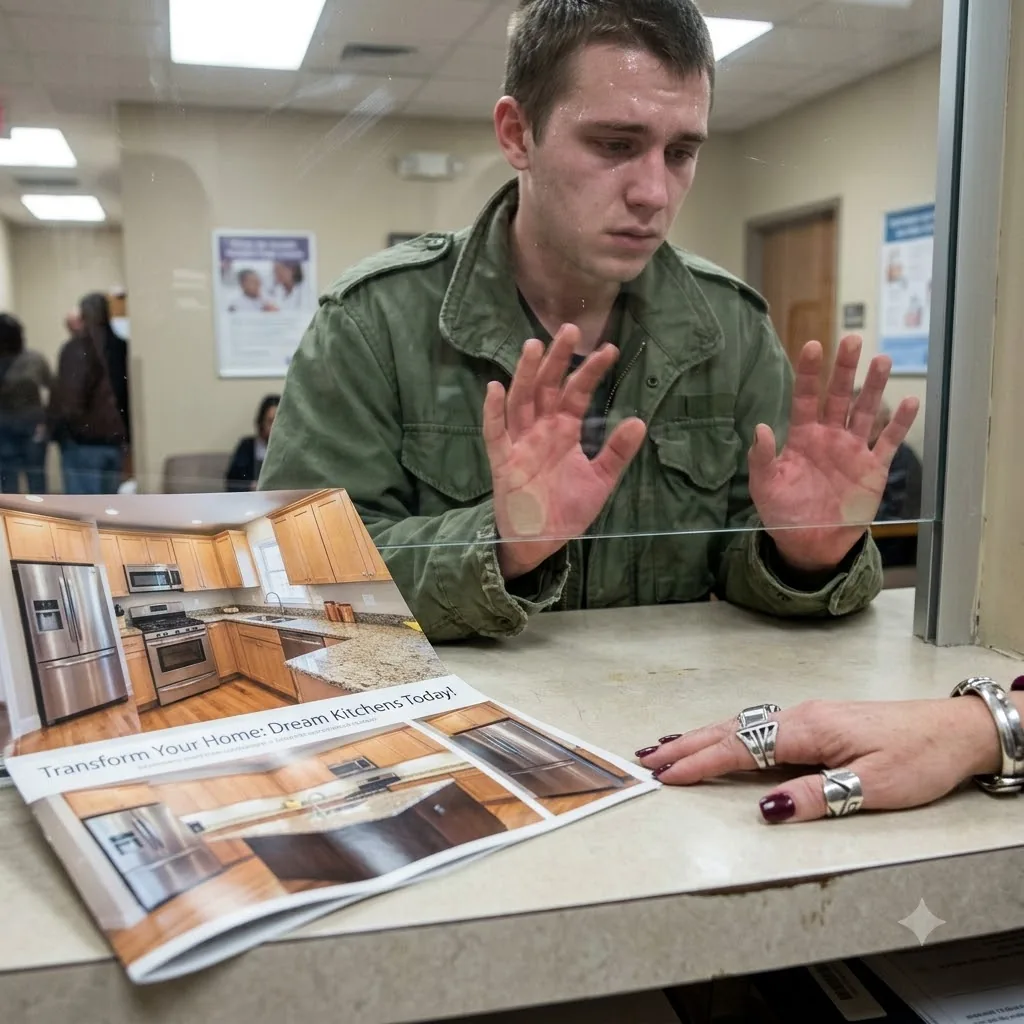
The glossy brochure page displayed a pristine, sunlit kitchen featuring a massive porcelain farmhouse sink. A hand weighed down by three thick gold rings and a prominent diamond cluster rested lazily beside the open magazine, the manicured crimson nails tapping a rhythmic, unhurried beat against the laminate desk. A voice floated through the circular speaker holes drilled into the thick bulletproof plexiglass barrier. The woman complained into a headset about the absolute audacity of contractors charging fifty dollars a square foot for Carrara marble installation.
Elias tried to keep his eyes anchored to the picture of the farmhouse sink. He desperately needed to lock his vision onto something stationary. His own hands vibrated so violently they rattled the plastic clipboard resting on the narrow metal ledge on his side of the glass. He locked his elbows, pressing his forearms into the counter to stabilize himself, but the tremors only traveled upward. His knuckles strained stark white against the gray surface. The involuntary shaking had started deep in his left forearm forty-eight hours ago, right after he swallowed the final broken half of his last pill. Now, the neurological misfires had crept all the way up into his jaw muscles.
Behind the glass, the intake coordinator adjusted her headset. Her gold nametag caught the harsh fluorescent light, spelling out BRENDA in block letters. She sighed heavily into her microphone, flipped another page in her remodeling catalog, and did not bother to look up at the man swaying slightly on the other side of her station.
Elias forced his right hand to release the counter. He dragged his palm over the clipboard, sliding the intake form toward the half-inch gap at the bottom of the window. His fingers jerked sideways in a sudden spasm. The edge of the paper caught on the metal track. He had to trap the document with his forearm and use his body weight to shove it through the slot. The paper crinkled loudly under the erratic, unpredictable movements of his hands.
Brenda held a manicured finger up in the air, a universal gesture demanding silence, while she finished her thought about grout colors. She finally muted her headset. She slid Elias’s paper toward her keyboard. Her crimson nail tapped twice against a specific section of the form.
“You left the residential address line blank.”
Elias clenched his teeth to stop his chin from quivering. The muscles in his neck pulled taut like piano wires. He forced the words out through a tight, restricted airway. “I wrote down the shelter overlay. I put the zip code.”
Brenda pushed the paper back through the slot. It bumped against Elias’s white knuckles. “System rejects shelter overlays for Class IV controlled emergency scripts. You need a verified residential street address. We need to know exactly where the medication is being housed.”
Elias stared at the paper. The black ink of his own jagged, barely legible handwriting blurred at the edges. He took a shallow breath, trying to override the escalating panic in his chest. The withdrawal was making his blood feel like it was carbonated. Every nerve ending screamed in high-definition static. His heart hammered a frantic, irregular rhythm against his ribs. The ambient noise of the clinic waiting room-the coughing, the shuffling of plastic chairs, the drone of a daytime talk show on the wall-mounted television-all melted into a continuous, oppressive roar.
“I sleep in my truck,” Elias said, keeping his voice as steady as his failing body allowed. “I park in the industrial lot on 4th Street. That is where the medication will be housed.”
Brenda did not look at his face. She looked at his shaking hands, then back to her kitchen brochure. “I cannot put a Ford F-150 into the residential database. It will flag the system. Go fill it out with a valid residence and bring it back when you have one. Put down a family member or a friend.”
“I have no family. I have no friends in this state.”
Brenda sighed, her patience clearly exhausted by the inconvenience of his reality. “Then I cannot hit process. Next in line, please.”
“I do not have an address.” Elias gripped the edge of the plexiglass cutout again. “The discharge doctor explicitly said not to stop this medication abruptly. He wrote it in all caps on my chart. Look at the screen. I just need the three-day emergency bridge.”
“I look at the forms.” Brenda unmuted her headset. “Yes, I am still here. No, the slate gray is too dark for the backsplash.” She waved her free hand at Elias, a dismissive flick of the wrist. “Sir, you need to step away from the window so I can help the next patient.”
Elias did not move. His heavy work boots felt cemented to the faded blue linoleum. A cold sweat broke out across his collarbones, soaking into the worn fabric of his thermal shirt. He could feel the heavy, familiar weight of a total psychological break dropping like a concrete block onto his chest. If he walked away from this window, he would not survive the weekend. The dark, jagged edges of his mind were already starting to curl inward, showing him flashes of the exact horrors the medication was designed to suppress.
“Process the bridge script,” Elias said, his voice dropping to a low, ragged gravel.
Brenda glared at him through the smudged plastic. “Security will remove you if you block the line. I told you the policy.”
Elias hooked his fingers under the heavy metal lip of the transaction slot. The vibration in his arms intensified, radiating through the metal track and rattling the entire glass divider. He planted his boots wider apart, anchoring his center of gravity against the floor.
Brenda reached for the red button mounted under her keyboard.
The glossy brochure page displayed a pristine, sunlit kitchen featuring a massive porcelain farmhouse sink. A hand weighed down by three thick gold rings and a prominent diamond cluster rested lazily beside the open magazine, the manicured crimson nails tapping a rhythmic, unhurried beat against the laminate desk. A voice floated through the circular speaker holes drilled into the thick bulletproof plexiglass barrier. The woman complained into a headset about the absolute audacity of contractors charging fifty dollars a square foot for Carrara marble installation.
Elias tried to keep his eyes anchored to the picture of the farmhouse sink. He desperately needed to lock his vision onto something stationary. His own hands vibrated so violently they rattled the plastic clipboard resting on the narrow metal ledge on his side of the glass. He locked his elbows, pressing his forearms into the counter to stabilize himself, but the tremors only traveled upward. His knuckles strained stark white against the gray surface. The involuntary shaking had started deep in his left forearm forty-eight hours ago, right after he swallowed the final broken half of his last pill. Now, the neurological misfires had crept all the way up into his jaw muscles.
Behind the glass, the intake coordinator adjusted her headset. Her gold nametag caught the harsh fluorescent light, spelling out BRENDA in block letters. She sighed heavily into her microphone, flipped another page in her remodeling catalog, and did not bother to look up at the man swaying slightly on the other side of her station.
Elias forced his right hand to release the counter. He dragged his palm over the clipboard, sliding the intake form toward the half-inch gap at the bottom of the window. His fingers jerked sideways in a sudden spasm. The edge of the paper caught on the metal track. He had to trap the document with his forearm and use his body weight to shove it through the slot. The paper crinkled loudly under the erratic, unpredictable movements of his hands.
Brenda held a manicured finger up in the air, a universal gesture demanding silence, while she finished her thought about grout colors. She finally muted her headset. She slid Elias’s paper toward her keyboard. Her crimson nail tapped twice against a specific section of the form.
“You left the residential address line blank.”
Elias clenched his teeth to stop his chin from quivering. The muscles in his neck pulled taut like piano wires. He forced the words out through a tight, restricted airway. “I wrote down the shelter overlay. I put the zip code.”
Brenda pushed the paper back through the slot. It bumped against Elias’s white knuckles. “System rejects shelter overlays for Class IV controlled emergency scripts. You need a verified residential street address. We need to know exactly where the medication is being housed.”
Elias stared at the paper. The black ink of his own jagged, barely legible handwriting blurred at the edges. He took a shallow breath, trying to override the escalating panic in his chest. The withdrawal was making his blood feel like it was carbonated. Every nerve ending screamed in high-definition static. His heart hammered a frantic, irregular rhythm against his ribs. The ambient noise of the clinic waiting room-the coughing, the shuffling of plastic chairs, the drone of a daytime talk show on the wall-mounted television-all melted into a continuous, oppressive roar.
“I sleep in my truck,” Elias said, keeping his voice as steady as his failing body allowed. “I park in the industrial lot on 4th Street. That is where the medication will be housed.”
Brenda did not look at his face. She looked at his shaking hands, then back to her kitchen brochure. “I cannot put a Ford F-150 into the residential database. It will flag the system. Go fill it out with a valid residence and bring it back when you have one. Put down a family member or a friend.”
“I have no family. I have no friends in this state.”
Brenda sighed, her patience clearly exhausted by the inconvenience of his reality. “Then I cannot hit process. Next in line, please.”
“I do not have an address.” Elias gripped the edge of the plexiglass cutout again. “The discharge doctor explicitly said not to stop this medication abruptly. He wrote it in all caps on my chart. Look at the screen. I just need the three-day emergency bridge.”
“I look at the forms.” Brenda unmuted her headset. “Yes, I am still here. No, the slate gray is too dark for the backsplash.” She waved her free hand at Elias, a dismissive flick of the wrist. “Sir, you need to step away from the window so I can help the next patient.”
Elias did not move. His heavy work boots felt cemented to the faded blue linoleum. A cold sweat broke out across his collarbones, soaking into the worn fabric of his thermal shirt. He could feel the heavy, familiar weight of a total psychological break dropping like a concrete block onto his chest. If he walked away from this window, he would not survive the weekend. The dark, jagged edges of his mind were already starting to curl inward, showing him flashes of the exact horrors the medication was designed to suppress.
“Process the bridge script,” Elias said, his voice dropping to a low, ragged gravel.
Brenda glared at him through the smudged plastic. “Security will remove you if you block the line. I told you the policy.”
Elias hooked his fingers under the heavy metal lip of the transaction slot. The vibration in his arms intensified, radiating through the metal track and rattling the entire glass divider. He planted his boots wider apart, anchoring his center of gravity against the floor.
Brenda reached for the red button mounted under her keyboard.