Story code: ST-000575
Part 1: The Violation
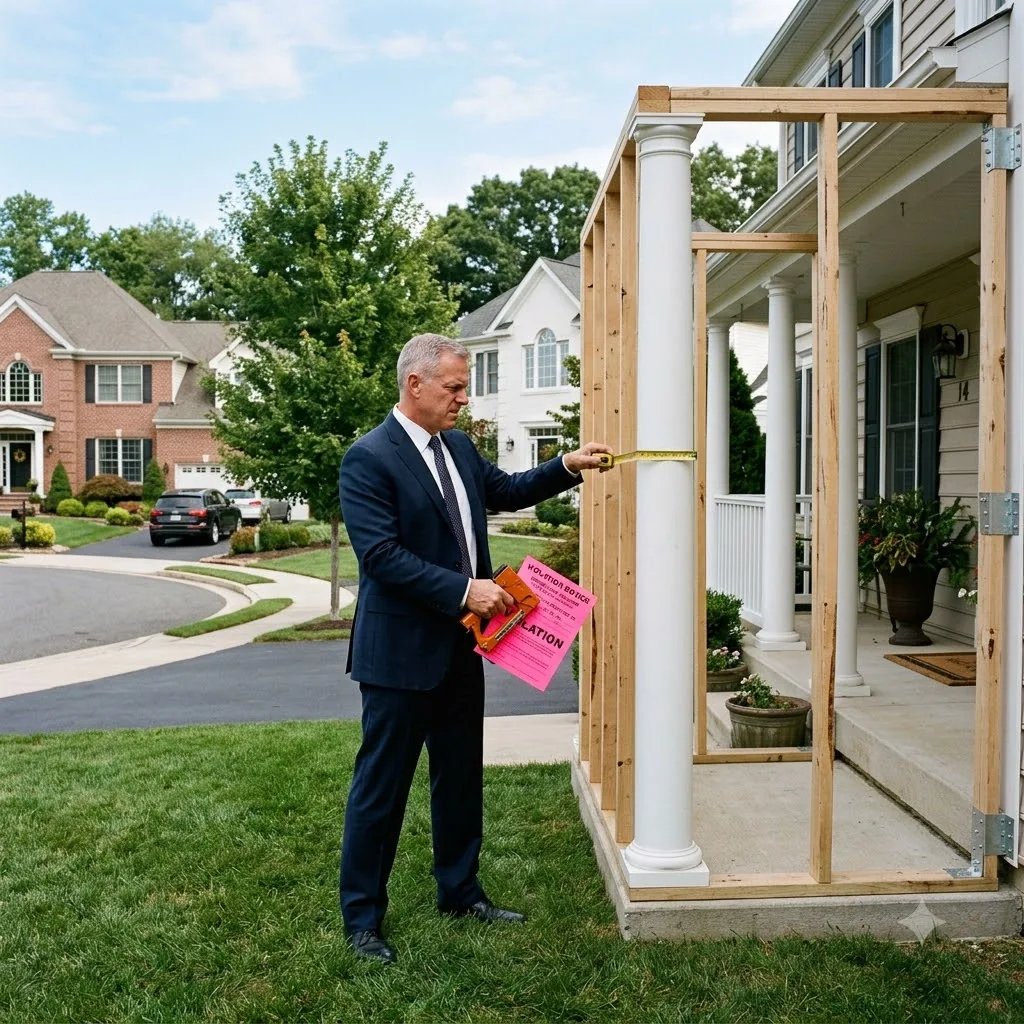
Arthur pressed the metal hook of his tape measure against the concrete edge of the sidewalk, pulling the bright yellow ribbon tight until it snapped against the raw, splintering pine of the illegal timber egress. Thirty-four inches. A full fourteen inches past the setback allowance mandated by the Oakridge Estates Homeowner’s Charter. He let the tape retract with a sharp metallic snap, standing up to survey the absolute disaster sprawling across number forty-two’s front yard.
The structure was a massive, unapproved wooden eyesore. It zigzagged across the previously pristine Bermuda grass, a crude series of sloped platforms and switchbacks built entirely from untreated, unpainted lumber. It looked like a commercial loading dock designed for an industrial warehouse, entirely out of place among the manicured hedges and elegant brick facades of the neighborhood. Arthur straightened his posture, adjusting the heavy manila envelope tucked tightly under his left arm. Inside rested the culmination of his relentless documentation over the past fourteen days.
He stepped closer to the grotesque construction, tapping his polished leather loafer against the bottom edge. It lacked proper decorative stairs. Instead, it was a sheer, continuous incline, bordered by utilitarian guardrails that looked like they belonged in a state park rather than a luxury subdivision. Arthur unspooled the tape measure again, stretching it across the width of the wooden path. Forty-eight inches wide. Excessive. Unnecessary. The bylaws clearly stated that secondary walkways must not exceed thirty-six inches in width, and this sloped monstrosity was sprawling over the lawn like a highway.
He jotted another note on his clipboard, his pen digging fiercely into the paper. The homeowner had not submitted a single blueprint to the architectural committee. No paint swatches, no material samples, nothing. A rogue resident deciding to build whatever monstrous carpentry project they pleased was exactly how property values plummeted for everyone. It always started with an unpainted timber construction, and next came rusted vehicles permanently parked on the lawn. Not on Arthur’s watch. He was the designated enforcer of the rules, the last line of defense against neighborhood decay.
He opened his leather-bound clipboard to double-check his final calculations. The seven thousand dollars was not just an arbitrary number. It was a carefully tabulated ledger of defiance. Five hundred dollars for initiating construction without a permit. Two hundred dollars per day for fourteen days of visual blight. Fifty dollars per day for each foot the structure encroached past the setback line. Arthur had spent three hours the previous evening auditing the math, ensuring there was no loophole, no clerical error the homeowner could exploit. The stack of citations in his envelope was thick, heavy, and completely indisputable.
Arthur walked up the incline, his shoes thudding loudly against the cheap pine boards. The sheer audacity of the homeowner to build this sweeping, elevated abomination over a perfectly good front pathway infuriated him. The surface of the wood was covered in some sort of high-friction, black grip tape, further destroying any pretense of elegance. Arthur dragged the toe of his shoe across the abrasive material, wincing at the harsh scratching sound. It was an insult to the very concept of a refined suburban entrance.
The slope forced him to take awkward, shuffling steps until he reached the large landing built directly over the home’s original slate porch. He paused at the top, looking back down at the street to witness the full scope of the visual damage. From up here, the raw wood stood out brilliantly against the lush green lawns of the surrounding properties. It was a brazen middle finger to neighborhood decency, a wooden scar on an otherwise perfect street.
Turning back to the front door, Arthur slipped the thick stack of fines out of the manila envelope. He moved the heavy paper to the top of his clipboard and withdrew a heavy-duty, industrial staple gun from his jacket pocket. The Oakridge Estates bylaws explicitly required that notices of extreme violation be physically affixed to the primary entrance of the offending property to ensure absolute receipt. He selected a bright neon orange violation sticker to act as the cover sheet for the seven-thousand-dollar penalty.
He stepped squarely in front of the elegant mahogany door, annoyed that the intrusive wooden landing brought him awkwardly close to the brass peephole. He positioned the thick stack of papers flat against the pristine wood. This would serve as a permanent lesson to anyone in the subdivision who thought they could bypass the architectural review committee. Arthur aligned the top edge of the orange notice with the center panel of the door, gripping the staple gun tightly in his right hand. He raised the heavy tool, pressing the steel nose flush against the paper and the mahogany, bracing his palm to slam the trigger right as the heavy brass handle clicked and the door jerked backward.
Arthur pressed the metal hook of his tape measure against the concrete edge of the sidewalk, pulling the bright yellow ribbon tight until it snapped against the raw, splintering pine of the illegal timber egress. Thirty-four inches. A full fourteen inches past the setback allowance mandated by the Oakridge Estates Homeowner’s Charter. He let the tape retract with a sharp metallic snap, standing up to survey the absolute disaster sprawling across number forty-two’s front yard.
The structure was a massive, unapproved wooden eyesore. It zigzagged across the previously pristine Bermuda grass, a crude series of sloped platforms and switchbacks built entirely from untreated, unpainted lumber. It looked like a commercial loading dock designed for an industrial warehouse, entirely out of place among the manicured hedges and elegant brick facades of the neighborhood. Arthur straightened his posture, adjusting the heavy manila envelope tucked tightly under his left arm. Inside rested the culmination of his relentless documentation over the past fourteen days.
He stepped closer to the grotesque construction, tapping his polished leather loafer against the bottom edge. It lacked proper decorative stairs. Instead, it was a sheer, continuous incline, bordered by utilitarian guardrails that looked like they belonged in a state park rather than a luxury subdivision. Arthur unspooled the tape measure again, stretching it across the width of the wooden path. Forty-eight inches wide. Excessive. Unnecessary. The bylaws clearly stated that secondary walkways must not exceed thirty-six inches in width, and this sloped monstrosity was sprawling over the lawn like a highway.
He jotted another note on his clipboard, his pen digging fiercely into the paper. The homeowner had not submitted a single blueprint to the architectural committee. No paint swatches, no material samples, nothing. A rogue resident deciding to build whatever monstrous carpentry project they pleased was exactly how property values plummeted for everyone. It always started with an unpainted timber construction, and next came rusted vehicles permanently parked on the lawn. Not on Arthur’s watch. He was the designated enforcer of the rules, the last line of defense against neighborhood decay.
He opened his leather-bound clipboard to double-check his final calculations. The seven thousand dollars was not just an arbitrary number. It was a carefully tabulated ledger of defiance. Five hundred dollars for initiating construction without a permit. Two hundred dollars per day for fourteen days of visual blight. Fifty dollars per day for each foot the structure encroached past the setback line. Arthur had spent three hours the previous evening auditing the math, ensuring there was no loophole, no clerical error the homeowner could exploit. The stack of citations in his envelope was thick, heavy, and completely indisputable.
Arthur walked up the incline, his shoes thudding loudly against the cheap pine boards. The sheer audacity of the homeowner to build this sweeping, elevated abomination over a perfectly good front pathway infuriated him. The surface of the wood was covered in some sort of high-friction, black grip tape, further destroying any pretense of elegance. Arthur dragged the toe of his shoe across the abrasive material, wincing at the harsh scratching sound. It was an insult to the very concept of a refined suburban entrance.
The slope forced him to take awkward, shuffling steps until he reached the large landing built directly over the home’s original slate porch. He paused at the top, looking back down at the street to witness the full scope of the visual damage. From up here, the raw wood stood out brilliantly against the lush green lawns of the surrounding properties. It was a brazen middle finger to neighborhood decency, a wooden scar on an otherwise perfect street.
Turning back to the front door, Arthur slipped the thick stack of fines out of the manila envelope. He moved the heavy paper to the top of his clipboard and withdrew a heavy-duty, industrial staple gun from his jacket pocket. The Oakridge Estates bylaws explicitly required that notices of extreme violation be physically affixed to the primary entrance of the offending property to ensure absolute receipt. He selected a bright neon orange violation sticker to act as the cover sheet for the seven-thousand-dollar penalty.
He stepped squarely in front of the elegant mahogany door, annoyed that the intrusive wooden landing brought him awkwardly close to the brass peephole. He positioned the thick stack of papers flat against the pristine wood. This would serve as a permanent lesson to anyone in the subdivision who thought they could bypass the architectural review committee. Arthur aligned the top edge of the orange notice with the center panel of the door, gripping the staple gun tightly in his right hand. He raised the heavy tool, pressing the steel nose flush against the paper and the mahogany, bracing his palm to slam the trigger right as the heavy brass handle clicked and the door jerked backward.