Story code: ST-000690
Part 2: The Appeals Committee
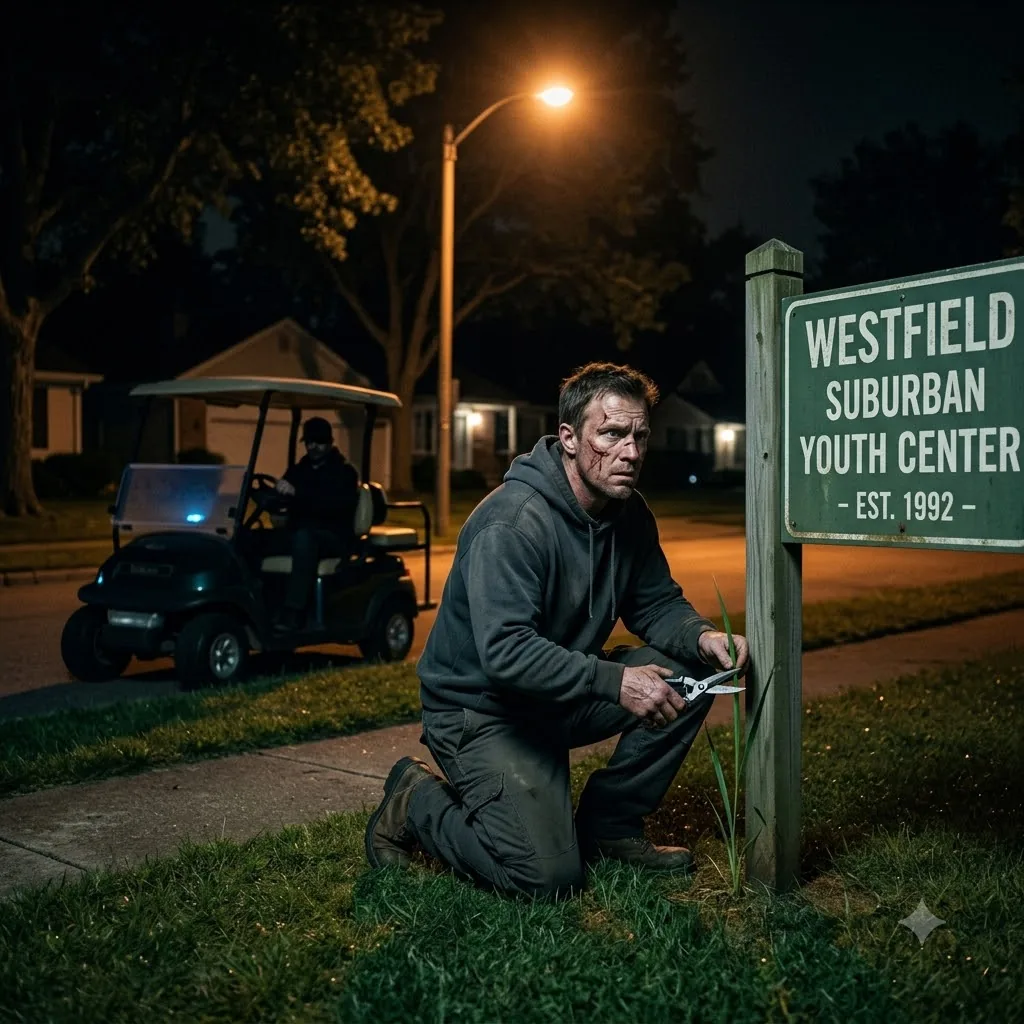
Mateo stood on the frost-hardened grass long after the electric whine of Hector’s golf cart faded into the pre-dawn silence. The yellow slip in his hand felt infinitely heavier than the steel garden shears at his feet. Three thousand dollars. He uncrumpled the paper, the harsh amber streetlamp casting long shadows over the neat, ruthless handwriting.
He walked around the side of the clapboard house to the central air conditioning unit, crouching beside the gray metal box. The fan blades spun with a dull, rhythmic thrum. It was a standard, aging unit. He placed his bare, scarred hand against the cold metal casing, feeling the faint vibration. It barely registered over the distant hum of the interstate highway. A noise violation was mathematically impossible, but Hector had the caliper. Hector had the laser measure. In this neighborhood, the board’s instruments were absolute law, and physical reality was entirely irrelevant.
Mateo unlocked the back door and stepped into the cramped kitchen of the youth center. The linoleum floor was scarred from years of heavy boots, but spotless. He walked down the narrow hallway, pausing at the cracked door of the converted dining room. Six cots lined the walls. A teenager named Julian, whose bruised ribs were finally healing after a bad run-in with a local crew, snored softly under a donated wool blanket. If the center defaulted on these fines, the bank would foreclose before the end of the month. Julian, and twenty-nine others like him, would be back on the concrete. The streets would swallow them whole.
By noon, Mateo had exhausted every conceivable option. He sat in his cramped office, the plastic phone receiver slick with sweat in his massive grip. The local police precinct had dismissed him immediately, stating in bored tones that homeowners association disputes were purely civil matters. The free legal aid clinic told him they were backed up for six months and advised him to simply pay the fine to avoid compounding daily interest. Even his old contacts-the men from his violent past who moved in the city’s darker currents-refused to touch the issue. A former associate had whispered frantically over the phone, warning Mateo that nobody crossed the Oak Creek Homeowners Association. The associate claimed they weren’t just enforcing grass lengths; they were an organized syndicate using deed restrictions to launder land, and anyone who fought back simply vanished.
Mateo hung up the phone. He looked at the yellow citation, then at the address for the nine o’clock appeal. He opened the bottom drawer of his desk. He pushed aside stacks of coloring books and overdue utility bills, his thick fingers brushing against a heavy canvas tool roll. He hadn’t unrolled it in five years. He had built this center to stop the bleeding, not to invite it back into his life. He left the canvas roll in the drawer, sliding it shut with a firm click. He would play by their absurd rules. He would attend the appeal, present the decibel logs he had just recorded on his phone, and fight them on paper.
At eight-forty, Mateo steered his rusted Ford pickup out of the manicured, tree-lined streets of the Oak Creek subdivision. The pristine sidewalks and uniform mailboxes gave way to cracked asphalt and dying streetlights. The industrial sector lay two miles north, a sprawling graveyard of bankrupt factories and abandoned shipping yards. The GPS on his phone flickered and lost signal completely as he turned down a dead-end access road bordered by chain-link fences topped with rusted razor wire.
He pulled up to the exact coordinates written on the yellow slip. It was a massive, corrugated steel warehouse. The roof was partially caved in, and the upper-story windows were entirely shattered. There were no cars in the gravel lot. No golf carts. Just the hollow echo of the wind rattling the loose metal siding. Mateo parked near a crumbling loading dock, keeping the engine running for a moment. He checked his phone again. No service. He killed the engine, the silence immediately pressing in on him, heavy and thick.
Mateo stepped out of the truck, his boots crunching loudly on the broken gravel. He walked up the concrete ramp to a heavy steel door propped open by a cinderblock. He stepped inside the cavernous, freezing space. The air smelled of old motor oil and damp decay. A single, high-intensity halogen work light illuminated a small clearing in the dead center of the warehouse floor.
Beneath the glaring light sat a pristine folding plastic table. Behind the table sat three people. They were dressed in immaculate, pastel-colored suburban resort wear. A woman in a peach tennis skirt, an older man in a navy blue sweater vest, and Hector, wearing a fresh, charcoal-gray tracksuit. They looked entirely absurd in the ruined industrial setting, yet perfectly, terrifyingly at ease. Hector was organizing a stack of yellow carbon-copy slips, aligning the edges with geometric precision.
Mateo walked into the ring of light, stopping exactly ten feet from the table. He kept his hands visible, loose at his sides. He stated calmly that he was there for the appeal regarding the noise citation.
Hector did not look up from his paperwork. The woman in the tennis skirt smiled, a tight, artificial stretching of her lips. She informed Mateo that the board had already reviewed his appeal in absentia and found his evidence lacking. The fine stood, and due to his late arrival-which she clocked at exactly forty-two seconds past the hour-a mandatory late-appearance penalty of five thousand dollars had been automatically added to the ledger.
Mateo stepped forward, his massive chest rising, his voice dropping to a dangerous rumble. He told them he knew exactly what this was-a coordinated, fraudulent push to seize the property and throw vulnerable kids onto the street.
Hector finally looked up, his flat, dead eyes reflecting the harsh halogen light. He placed his hands flat on the table. Beside his neat stack of citations rested the heavy, matte-black metallic object from the golf cart. It was not a firearm. It was a commercial-grade, pneumatic bolt stunner-the kind used to instantly drop cattle in slaughterhouses. Hector slid a crisp, printed deed of transfer across the plastic table toward Mateo. He explained in a polite, even tone that the center’s debts would be entirely forgiven if Mateo signed the property over by midnight. If he refused, the collections committee would be forced to visit the sleeping children before dawn.