Story code: ST-001094
Part 1: The Blanket of Civility
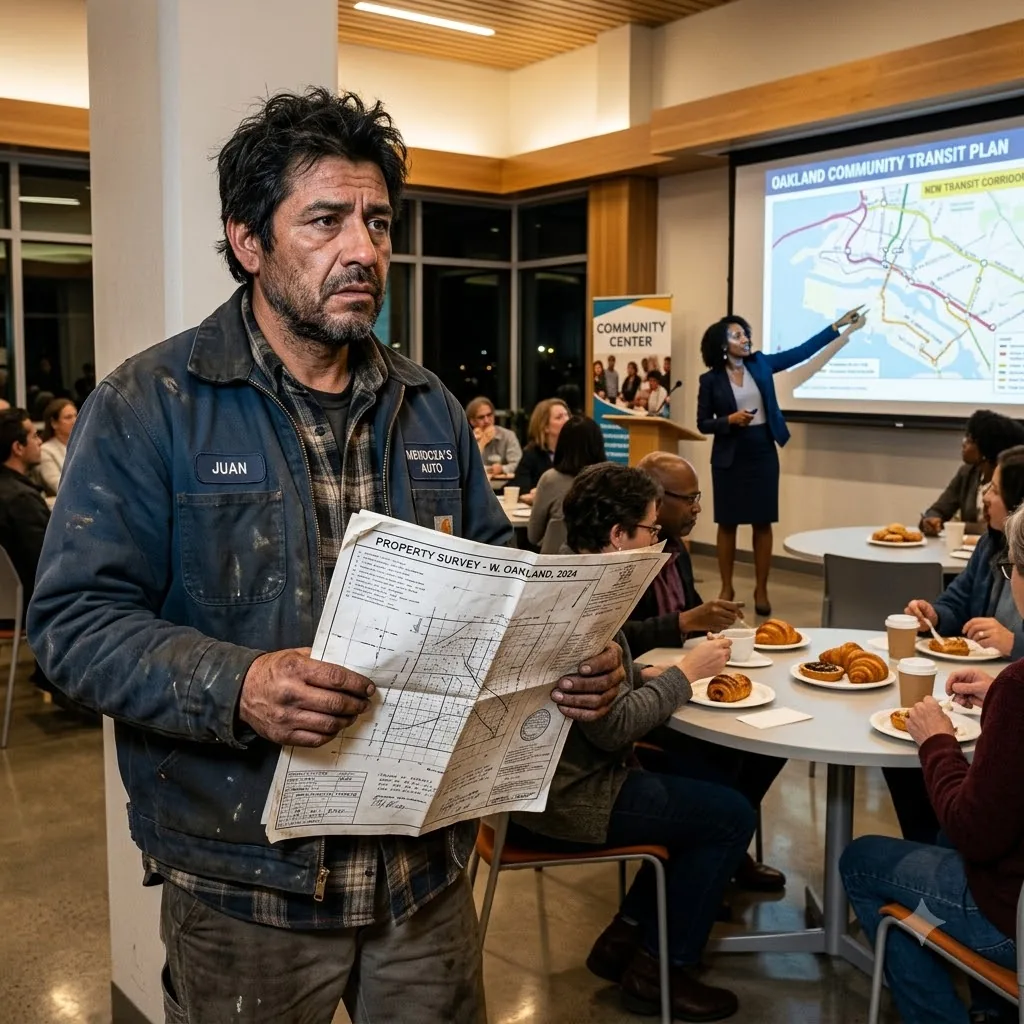
The scent of locally sourced lavender and honey muffins clashed with the sharp, acidic reality of the sixty-day demolition notice crushed in Mateo’s right hand. At the front of the warmly lit community center gymnasium, city planner Claire nodded with practiced, slow-motion empathy at a resident praising the proposed greenery. Mateo stood flat against the back wall, his steel-toed boots heavy on the polished hardwood, watching his grandfather’s auto shop being erased by a pastel-colored PowerPoint slide.
The crowd of fifty-odd neighbors murmured in gentle, unified approval. They held compostable coffee cups and wore hand-knit cardigans, leaning forward in their folding chairs as Claire advanced to a slide titled “Healing the Urban Fabric.” Claire wore a smart, asymmetrical linen blazer that draped perfectly over her shoulders. She held a sleek green laser pointer in one hand and moved with the serene confidence of someone who had never needed to rebuild a transmission or scrub engine grease from her cuticles. Her voice flowed over the room in soft, modulated tones, washing away concrete realities with a relentless tide of progressive terminology. She spoke of environmental equity, breathable corridors, and holistic neighborhood integration. She pointed the bright green dot at a digitized map of Mateo’s block, outlining a sweeping, elegant curve of artificial trees that neatly paved over three generations of sweat, solvent, and paid-off mortgages. The new highway expansion was not called a highway expansion on the slide. It was designated as an “eco-integrated transit artery.”
Mateo looked down at the paper cutting sharply into his palm. The thick, rigid legal stock was covered in severe, black-and-white print straight from the municipal eminent domain office. It did not use words like equity or fabric or integration. It used words like mandated seizure, non-negotiable compensation schedule, and immediate vacate order. The stark contrast made a tight, painful knot form in the center of his chest, restricting his breathing. This meeting was a meticulously constructed social trap, perfectly engineered to smother dissent in a blanket of civility. If he raised his voice, if he threw the paper, if he let a single fraction of his actual terror and rage show, he would instantly become the angry, backward man standing in the way of vital civic progress. He would be the hostile element in a room full of deeply reasonable people. Security would escort him out with firm politeness, and the gentle applause for the new transit artery would resume before the door even closed behind him.
A man in the third row raised a hand adorned with silver rings. Claire called on him with a welcoming, open-palmed gesture. The man expressed a mild concern about the placement of the communal birdbaths in the new pedestrian zone, worrying they might disrupt the flow of foot traffic to the artisanal bakery. Claire validated his concern entirely, assuring him that the migratory patterns of local finches and the pedestrian flow metrics had been extensively factored into the phase-two environmental impact study. The crowd emitted a soft, collective sigh of absolute relief. Mateo felt the muscles in his jaw lock so hard his teeth ground together. The air in the room felt thick, like trying to breathe through a wet wool blanket. He shifted his weight, the worn leather of his boots creaking against the floorboards. A few heads turned in his direction. Mild, faintly reproving glances swept over his stained Dickies work shirt and grease-darkened jeans. He did not belong in this soft, pastel rendering of the future.
The presentation moved seamlessly to the final phase. Claire clicked the remote, bringing up a complex, multi-layered topographical map showing the designated demolition zone. The aggressive red boundary lines swallowed Mateo’s exact address whole. She described the necessary and unfortunate clearing of blighted, non-conforming industrial parcels to make way for the new green spaces. Blighted. That was him. That was the specific service bay where his father had taught him to bleed brakes on a Chevy truck. That was the tiny, cinderblock office where his grandfather had kept the meticulously handwritten ledgers in Spanish. All of it reduced to a blighted parcel on a screen. Mateo smoothed out the crumpled notice against his thigh, feeling the heavy creases in the paper. The polite bureaucracy was an impenetrable wall of cotton, absorbing every blow, leaving no hard surface to strike against. He could not fight it with their words. Their words were designed to make his destruction sound like a favor to the community.
He pushed off the back wall. The movement was slow, deliberate, and entirely out of rhythm with the gentle flow of the meeting. He walked straight down the center aisle between the rows of folding chairs. The soft murmurs died away immediately, replaced by a tense, vibrating silence. Claire paused mid-sentence, her professional, empathetic smile faltering for a fraction of a second before locking rigidly back into place. She adjusted her glasses, her posture shifting as she readied her practiced de-escalation tone. Mateo ignored her. He did not look at the faces in the crowd turning toward him. He kept his eyes locked solely on the sleek, silver projector sitting on the rolling AV cart in the middle of the room. The glowing glass lens threw the bright map of his impending destruction against the far wall. He closed the remaining distance, stepping decisively past the polite, invisible boundary of the presentation space, his rough hand extending directly toward the thick black display cable plugged into the side of the machine.
The scent of locally sourced lavender and honey muffins clashed with the sharp, acidic reality of the sixty-day demolition notice crushed in Mateo’s right hand. At the front of the warmly lit community center gymnasium, city planner Claire nodded with practiced, slow-motion empathy at a resident praising the proposed greenery. Mateo stood flat against the back wall, his steel-toed boots heavy on the polished hardwood, watching his grandfather’s auto shop being erased by a pastel-colored PowerPoint slide.
The crowd of fifty-odd neighbors murmured in gentle, unified approval. They held compostable coffee cups and wore hand-knit cardigans, leaning forward in their folding chairs as Claire advanced to a slide titled “Healing the Urban Fabric.” Claire wore a smart, asymmetrical linen blazer that draped perfectly over her shoulders. She held a sleek green laser pointer in one hand and moved with the serene confidence of someone who had never needed to rebuild a transmission or scrub engine grease from her cuticles. Her voice flowed over the room in soft, modulated tones, washing away concrete realities with a relentless tide of progressive terminology. She spoke of environmental equity, breathable corridors, and holistic neighborhood integration. She pointed the bright green dot at a digitized map of Mateo’s block, outlining a sweeping, elegant curve of artificial trees that neatly paved over three generations of sweat, solvent, and paid-off mortgages. The new highway expansion was not called a highway expansion on the slide. It was designated as an “eco-integrated transit artery.”
Mateo looked down at the paper cutting sharply into his palm. The thick, rigid legal stock was covered in severe, black-and-white print straight from the municipal eminent domain office. It did not use words like equity or fabric or integration. It used words like mandated seizure, non-negotiable compensation schedule, and immediate vacate order. The stark contrast made a tight, painful knot form in the center of his chest, restricting his breathing. This meeting was a meticulously constructed social trap, perfectly engineered to smother dissent in a blanket of civility. If he raised his voice, if he threw the paper, if he let a single fraction of his actual terror and rage show, he would instantly become the angry, backward man standing in the way of vital civic progress. He would be the hostile element in a room full of deeply reasonable people. Security would escort him out with firm politeness, and the gentle applause for the new transit artery would resume before the door even closed behind him.
A man in the third row raised a hand adorned with silver rings. Claire called on him with a welcoming, open-palmed gesture. The man expressed a mild concern about the placement of the communal birdbaths in the new pedestrian zone, worrying they might disrupt the flow of foot traffic to the artisanal bakery. Claire validated his concern entirely, assuring him that the migratory patterns of local finches and the pedestrian flow metrics had been extensively factored into the phase-two environmental impact study. The crowd emitted a soft, collective sigh of absolute relief. Mateo felt the muscles in his jaw lock so hard his teeth ground together. The air in the room felt thick, like trying to breathe through a wet wool blanket. He shifted his weight, the worn leather of his boots creaking against the floorboards. A few heads turned in his direction. Mild, faintly reproving glances swept over his stained Dickies work shirt and grease-darkened jeans. He did not belong in this soft, pastel rendering of the future.
The presentation moved seamlessly to the final phase. Claire clicked the remote, bringing up a complex, multi-layered topographical map showing the designated demolition zone. The aggressive red boundary lines swallowed Mateo’s exact address whole. She described the necessary and unfortunate clearing of blighted, non-conforming industrial parcels to make way for the new green spaces. Blighted. That was him. That was the specific service bay where his father had taught him to bleed brakes on a Chevy truck. That was the tiny, cinderblock office where his grandfather had kept the meticulously handwritten ledgers in Spanish. All of it reduced to a blighted parcel on a screen. Mateo smoothed out the crumpled notice against his thigh, feeling the heavy creases in the paper. The polite bureaucracy was an impenetrable wall of cotton, absorbing every blow, leaving no hard surface to strike against. He could not fight it with their words. Their words were designed to make his destruction sound like a favor to the community.
He pushed off the back wall. The movement was slow, deliberate, and entirely out of rhythm with the gentle flow of the meeting. He walked straight down the center aisle between the rows of folding chairs. The soft murmurs died away immediately, replaced by a tense, vibrating silence. Claire paused mid-sentence, her professional, empathetic smile faltering for a fraction of a second before locking rigidly back into place. She adjusted her glasses, her posture shifting as she readied her practiced de-escalation tone. Mateo ignored her. He did not look at the faces in the crowd turning toward him. He kept his eyes locked solely on the sleek, silver projector sitting on the rolling AV cart in the middle of the room. The glowing glass lens threw the bright map of his impending destruction against the far wall. He closed the remaining distance, stepping decisively past the polite, invisible boundary of the presentation space, his rough hand extending directly toward the thick black display cable plugged into the side of the machine.