Story code: ST-001094
Part 2: The Blue Screen
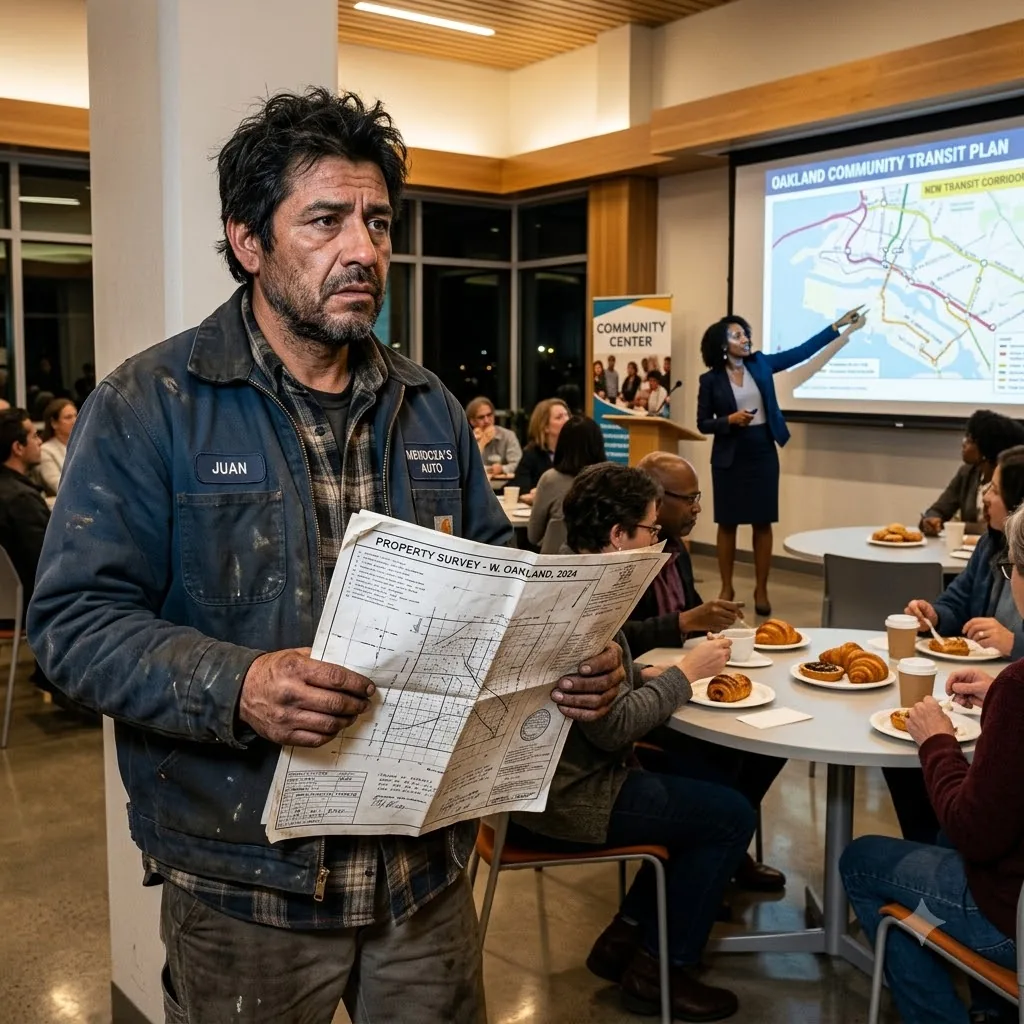
Mateo’s rough, grease-stained fingers closed around the thick black display cable. He didn’t hesitate. With a sharp, sudden jerk, he severed the connection between the sleek presentation laptop and the projector.
The sweeping, pastoral map on the far wall vanished instantly. In its place, the projector blasted a blinding, sterile blue square into the room, accompanied by the stark white words: *NO SIGNAL*. The sudden shift in light cast harsh, unnatural shadows across the community center gymnasium, illuminating the dust motes dancing in the stagnant air.
A collective, breathy gasp rippled through the rows of folding chairs. The comfortable scent of locally sourced lavender muffins was suddenly undercut by the sharp ozone hum of the projector’s overworked cooling fan.
Mateo turned his back to the blinding blue light, his silhouette thrown into sharp, looming relief. He held the crumpled legal stock out in front of him, his hand trembling slightly with a potent mix of adrenaline and raw, unfiltered panic.
“This,” Mateo started, his voice cracking against the silence. He swallowed hard, forcing the words out louder, his tone significantly rougher than the gentle, modulated murmurs that had filled the room all evening. “This is a sixty-day mandated seizure.”
Claire didn’t flinch. Her empathetic smile didn’t vanish; it merely shifted from visionary to deeply, professionally concerned. She took a deliberate step back, a calculated display of giving him space that made him feel entirely dangerous. “Sir,” she said, her voice amplified smoothly by her discreet lapel mic, filling the room with a suffocating calm. “I can see that you are very activated right now. We deeply value stakeholder passion, but this is a safe space for community dialogue.”
“My grandfather built that shop,” Mateo said, stepping toward her, the old floorboards groaning under the weight of his steel-toed boots. “You’re up here calling it a blighted, non-conforming parcel. You’re giving me exactly sixty days to vacate a property my family has owned and paid taxes on for eighty years.”
A man in the front row-the same man who had been so deeply concerned about the artisanal bakery’s foot traffic-stood up. He clutched his compostable coffee cup to his chest like a fragile shield. “Excuse me,” the man said, his tone dripping with patronizing, gentle-parenting energy. “You are triggering a lot of people in this room right now. There is an established administrative process for grievances.”
“The process is a trap,” Mateo snapped, whipping his head toward the man. “The process is this piece of paper telling me my livelihood is a non-negotiable casualty for your birdbaths!”
Around the room, the soft, yielding fabric of the community meeting began to harden into a wall of defense. People shifted uncomfortably in their seats. Hands reached discreetly into cardigan pockets and canvas tote bags. Mateo watched in mounting horror as the glassy, rectangular glints of half a dozen smartphones rose into the air, their dark camera lenses aimed squarely at his face. Little red dots appeared on the screens. They were recording him.
He felt a cold sweat prickle along his hairline, stinging his eyes. He was falling right into it. In the unforgiving digital lenses of their phones, he wasn’t a desperate man fighting for his family’s survival. He was an unhinged, dirty, imposing mechanic threatening a petite, well-spoken city planner. He was becoming exactly what the presentation required him to be: a hostile obstacle.
Claire sensed the shift in the room’s energy. She leaned into it perfectly. “Mateo, isn’t it?” she asked softly, reading his name off a mental roster of casualties. “I am closely familiar with your parcel. The city has authorized a very equitable buy-out package. We are offering fifteen percent above the current market rate. We are actively trying to make everyone whole here, but we need cooperation.”
Mateo stared at her, his jaw aching from how hard he was clenching his teeth. The blue light from the projector seared the edges of his vision. “Above market rate? The land is zoned industrial. The city suppressed the zoning value for five years before announcing this new artery. Your fifteen percent bump is a joke!”
He stepped closer, shaking the heavy legal stock at her. “The payout doesn’t even cover the remaining commercial mortgage my dad took out for the new hydraulic lifts! And you know exactly what page four says. Because it’s an auto shop, I am personally liable for the environmental soil remediation once your bulldozers tear up the concrete! If I take your equitable package, I go bankrupt.”
He thrust the paper toward her chest. “Read it! Read the penalty clause on page four!”
Claire held her hands up, palms facing outward, refusing to touch the document. “I’m not going to engage in a hostile debate with you, Mateo. If you cannot regulate yourself and respect the community’s emotional safety, I will have to ask you to leave.”
At the back of the gymnasium, the heavy double doors clicked open. Mateo looked past the sea of recording smartphones. Two uniformed municipal security guards stepped inside, their thumbs resting casually on their heavy duty belts. Claire didn’t even have to radio for them; the polite bureaucracy had a highly efficient, built-in immune system.
Mateo’s breathing went shallow, turning into a ragged pant. The walls of the community center felt like they were shrinking, closing in around him. He looked down at the severe black-and-white print on the paper in his hand. It mocked him with its absolute legality. He looked back at the crowd, at the glowing screens capturing his grease-stained fingernails and his wild, desperate eyes.
If he touched Claire, he would be arrested for assault. If he yelled, he would be dismissed as a violent lunatic, his valid points buried under his tone. If he let the security guards politely walk him out, the auto shop was dead, and the gentle, unified applause for the new eco-integrated transit artery would resume over his grandfather’s grave.
He was entirely, suffocatingly isolated. Their weaponized civility was an invisible net he didn’t know how to parry.
One of the guards approached down the side aisle, his boots squeaking deliberately against the polished hardwood. “Alright, buddy,” the guard said, projecting a voice that was low, firm, and thoroughly practiced. “Let’s take a walk outside. You’ve had your say for the evening.”
“I haven’t said anything yet,” Mateo whispered, his voice vibrating with a terrifying, absolute clarity. Only Claire was close enough to hear him.
He looked at the AV cart. The sleek presentation laptop was still humming, the screen open and unlocked, containing the entirety of Claire’s meticulously curated environmental equity presentation. He looked back at his demolition notice, the thick edge of the paper cutting a sharp line into his calloused thumb. He couldn’t fight their soft words with his rough voice. He had to use their own sterile machinery against them.
As the security guard’s heavy hand reached out to clamp down on his shoulder, Mateo pivoted hard, lunging directly toward the open laptop.