Story code: ST-000068
Part 1: Bleach and Brick
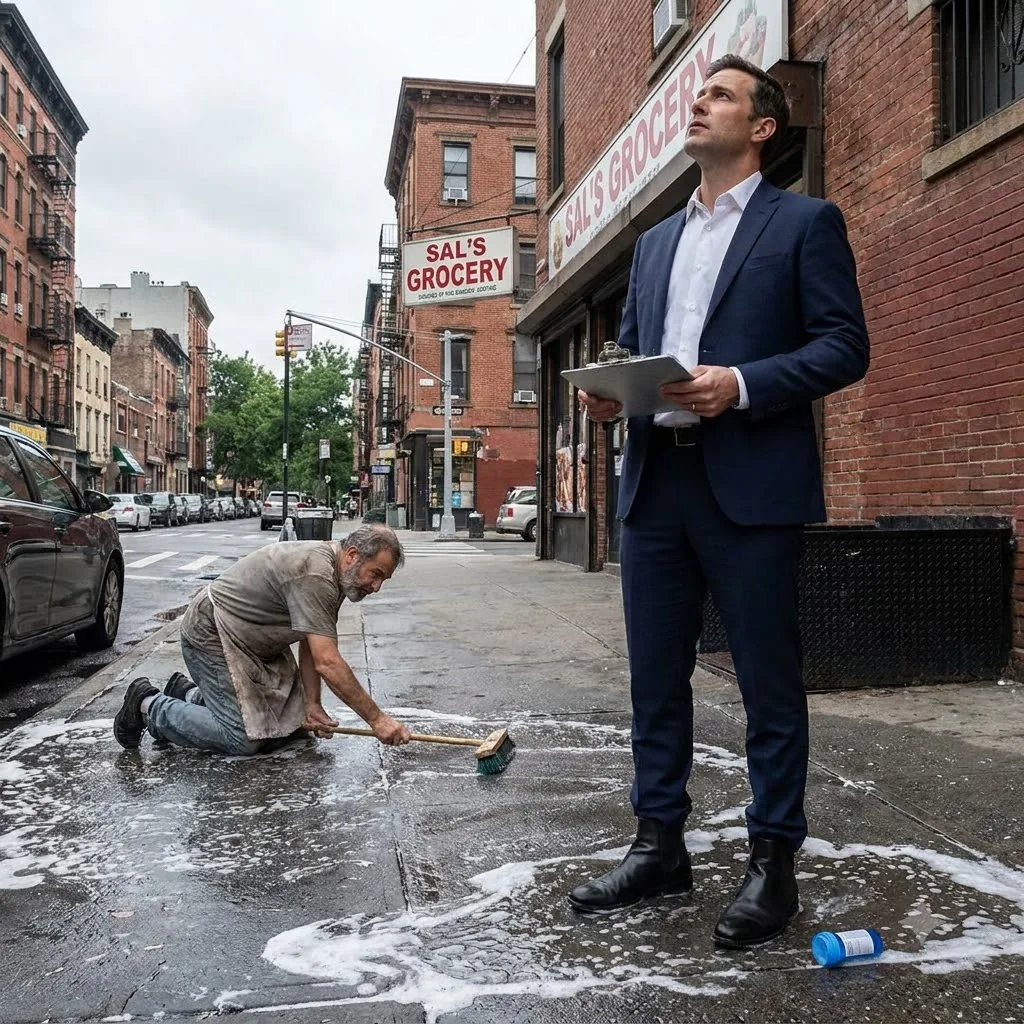
The heavy bleach water in my mop bucket turned a frothy, rusted pink the second the stiff bristles hit the concrete outside the bodega doors. I bore down on the wooden handle, trying to scrub away the dark stain left behind by the EMS boots before the morning rush of commuters needed their coffee and butter rolls. A shiny leather loafer stepped directly over a discarded orange Narcan cap, narrowly missing my mop head. A man in a tailored gray suit unspooled a yellow tape measure against the brick facade, the sharp metallic zip of the metal ribbon cutting through the heavy silence left in the ambulance’s wake.
He did not look down at the torn foil wrappers of alcohol swabs scattered across the uneven pavement. He did not flinch at the sharp, metallic smell of copper mixing with industrial ammonia that rose from the concrete. He just extended his metal tape from the edge of my scratched shop window to the corner of the brick alleyway, making a precise, tiny mark on a translucent clipboard. The paramedics had pulled away less than five minutes ago, their sirens screaming down the avenue to keep the neighborhood kid breathing. The flashing red lights were still reflecting off the wet asphalt, yet this stranger was already treating the crime scene like a blank canvas for a renovation.
I wrung out the mop, the dirty water splashing aggressively against the toes of my rubber boots. I had known the kid they just loaded onto the stretcher since he was tall enough to reach the penny candy counter inside. I had watched him grow up, get swallowed by the streets, and eventually end up shivering against my outdoor ice machine on the coldest nights. This morning, he had stumbled toward the glass door, clutching his chest, his eyes rolling back in his head before his knees violently hit the concrete. When he fell, his hand had slammed against the pavement, releasing a death grip on something he had been clutching tightly to his jacket. It slid across the rough ground, coming to a stop just shy of the rusted metal grate of the storm drain.
I pushed the heavy wet mop over the spot where his head had rested, keeping my eyes locked on that object near the grate. It was a heavy, tri-folded piece of parchment paper, thick and official-looking, its stiff edges now soaking in a dark puddle of spilled bodega coffee and worse. It looked completely alien on this block. The kid never carried anything but loose change, lighter fluid, and crumpled single dollar bills. Now there was this crisp, expensive document, bearing a raised gold-embossed seal in the corner that caught the harsh, buzzing glare of the streetlights overhead.
The man in the gray suit tapped a silver pen against his clipboard, utterly oblivious to my staring. He muttered to himself, tracing the architectural lines of the pre-war building, noting the exposed brick and the rusted fire escape landing above my awning. He spoke aloud into a wireless earpiece about maximizing raw industrial potential and capturing authentic neighborhood grit. He stepped backward to get a better view of the second-floor windows, his heel crushing the clear plastic casing of an oxygen mask the medics had frantically discarded. He merely kicked the medical waste into the gutter with the side of his expensive shoe, never once breaking his conversation about knocking down the interior walls for a boutique coffee bar.
My jaw tightened as I dragged the mop bucket a few feet closer to the storm drain. I reached down with a gloved hand and picked up the folded parchment the kid had dropped. The paper felt heavy, like the high-grade stock corporate lawyers used for closing documents. The front bore a printed crest, but the bottom half was stained red and brown from the pavement. As I unfolded the top flap, the wet fibers pulled apart slightly. I could read just a few lines of tight, mechanical typography. It was a formal order to vacate, stamped with a bold red date that was only days away.
A sleek black town car pulled silently up to the curb, its heavy tires crunching over the shattered glass of a broken beer bottle. The rear door swung open, and a second man stepped onto the sidewalk. He wore a heavy camel-hair overcoat, his hair slicked back flat against the chill of the morning wind. He carried a thick leather portfolio tucked under one arm and a stack of crisp, white envelopes gripped tightly in his bare hand. They matched the exact size, shape, and weight of the folded, stained paper I was currently holding.
The architect lowered his tape measure and gave a sharp, deferential nod to the new arrival. The man in the overcoat did not look at my bodega windows, nor did he look at the spreading puddle of pink bleach water creeping toward his shoes. He walked straight toward the main entrance of the residential apartment building connected to my shop, his polished leather shoes stepping squarely into the center of the dark stain the kid had left behind. He paused at the glass door, pulling one of the white envelopes from his stack and pressing it against the pane with a thick strip of blue painter’s tape.
I looked down at the heavy paper in my hands, matching the gold seal on the kid’s dropped document to the insignia now glaring at me from the front door of the building. The seal belonged to a newly formed property management group. The kid had not just been wandering the block looking for a handout this morning. He had been holding an identical notice. I took a step toward the man in the overcoat, the wet wooden mop handle still gripped tightly in my fist. He turned around, his cold eyes scanning past me, dropping instantly to the pavement where the kid had just been loaded away. The man in the overcoat stopped dead, his gaze tracing the smear on the concrete to the storm drain, and then slowly lifting to fixate entirely on the heavy, folded parchment dripping in my hand.
The heavy bleach water in my mop bucket turned a frothy, rusted pink the second the stiff bristles hit the concrete outside the bodega doors. I bore down on the wooden handle, trying to scrub away the dark stain left behind by the EMS boots before the morning rush of commuters needed their coffee and butter rolls. A shiny leather loafer stepped directly over a discarded orange Narcan cap, narrowly missing my mop head. A man in a tailored gray suit unspooled a yellow tape measure against the brick facade, the sharp metallic zip of the metal ribbon cutting through the heavy silence left in the ambulance’s wake.
He did not look down at the torn foil wrappers of alcohol swabs scattered across the uneven pavement. He did not flinch at the sharp, metallic smell of copper mixing with industrial ammonia that rose from the concrete. He just extended his metal tape from the edge of my scratched shop window to the corner of the brick alleyway, making a precise, tiny mark on a translucent clipboard. The paramedics had pulled away less than five minutes ago, their sirens screaming down the avenue to keep the neighborhood kid breathing. The flashing red lights were still reflecting off the wet asphalt, yet this stranger was already treating the crime scene like a blank canvas for a renovation.
I wrung out the mop, the dirty water splashing aggressively against the toes of my rubber boots. I had known the kid they just loaded onto the stretcher since he was tall enough to reach the penny candy counter inside. I had watched him grow up, get swallowed by the streets, and eventually end up shivering against my outdoor ice machine on the coldest nights. This morning, he had stumbled toward the glass door, clutching his chest, his eyes rolling back in his head before his knees violently hit the concrete. When he fell, his hand had slammed against the pavement, releasing a death grip on something he had been clutching tightly to his jacket. It slid across the rough ground, coming to a stop just shy of the rusted metal grate of the storm drain.
I pushed the heavy wet mop over the spot where his head had rested, keeping my eyes locked on that object near the grate. It was a heavy, tri-folded piece of parchment paper, thick and official-looking, its stiff edges now soaking in a dark puddle of spilled bodega coffee and worse. It looked completely alien on this block. The kid never carried anything but loose change, lighter fluid, and crumpled single dollar bills. Now there was this crisp, expensive document, bearing a raised gold-embossed seal in the corner that caught the harsh, buzzing glare of the streetlights overhead.
The man in the gray suit tapped a silver pen against his clipboard, utterly oblivious to my staring. He muttered to himself, tracing the architectural lines of the pre-war building, noting the exposed brick and the rusted fire escape landing above my awning. He spoke aloud into a wireless earpiece about maximizing raw industrial potential and capturing authentic neighborhood grit. He stepped backward to get a better view of the second-floor windows, his heel crushing the clear plastic casing of an oxygen mask the medics had frantically discarded. He merely kicked the medical waste into the gutter with the side of his expensive shoe, never once breaking his conversation about knocking down the interior walls for a boutique coffee bar.
My jaw tightened as I dragged the mop bucket a few feet closer to the storm drain. I reached down with a gloved hand and picked up the folded parchment the kid had dropped. The paper felt heavy, like the high-grade stock corporate lawyers used for closing documents. The front bore a printed crest, but the bottom half was stained red and brown from the pavement. As I unfolded the top flap, the wet fibers pulled apart slightly. I could read just a few lines of tight, mechanical typography. It was a formal order to vacate, stamped with a bold red date that was only days away.
A sleek black town car pulled silently up to the curb, its heavy tires crunching over the shattered glass of a broken beer bottle. The rear door swung open, and a second man stepped onto the sidewalk. He wore a heavy camel-hair overcoat, his hair slicked back flat against the chill of the morning wind. He carried a thick leather portfolio tucked under one arm and a stack of crisp, white envelopes gripped tightly in his bare hand. They matched the exact size, shape, and weight of the folded, stained paper I was currently holding.
The architect lowered his tape measure and gave a sharp, deferential nod to the new arrival. The man in the overcoat did not look at my bodega windows, nor did he look at the spreading puddle of pink bleach water creeping toward his shoes. He walked straight toward the main entrance of the residential apartment building connected to my shop, his polished leather shoes stepping squarely into the center of the dark stain the kid had left behind. He paused at the glass door, pulling one of the white envelopes from his stack and pressing it against the pane with a thick strip of blue painter’s tape.
I looked down at the heavy paper in my hands, matching the gold seal on the kid’s dropped document to the insignia now glaring at me from the front door of the building. The seal belonged to a newly formed property management group. The kid had not just been wandering the block looking for a handout this morning. He had been holding an identical notice. I took a step toward the man in the overcoat, the wet wooden mop handle still gripped tightly in my fist. He turned around, his cold eyes scanning past me, dropping instantly to the pavement where the kid had just been loaded away. The man in the overcoat stopped dead, his gaze tracing the smear on the concrete to the storm drain, and then slowly lifting to fixate entirely on the heavy, folded parchment dripping in my hand.