Story code: ST-000068
Part 4: Active Erasure
The silence that followed the shattering glass was heavier than the freezing morning air. The passing commuter with her earbuds pulled tight stared wide-eyed at Declan’s wax-covered shoe, then quickly lowered her head and hurried down the avenue, wanting absolutely no part of this. Declan stared down at his ruined leather loafer, his chest rising and falling in sharp, jagged breaths. The polished, corporate veneer of the neighborhood liaison was completely gone, replaced by the panicked embarrassment of a man who had just lost control in public.
He didn’t look at me again. He didn’t offer another fake smile or a condescending job pitch. He just turned sharply on his heel, muttering a string of sharp curses under his breath, and marched back toward the sleek black town car. The architect in the gray suit scrambled after him, his clipboard clutched tightly to his chest. The heavy car doors slammed shut, echoing against the pre-war brick, and the vehicle glided away from the curb, slipping seamlessly into the morning traffic.
I was left completely alone on the sidewalk.
The M15 bus roared past, kicking up a gust of dirty wind, but it didn’t drown out the sound of the glass crunching under my work boots. I looked down at the ruined memorial. The painted face of San Judas was fractured into jagged, dirty shards. The wax was already hardening against the freezing concrete, mixing with the rusted pink bleach water and the soot from the extinguished wicks.
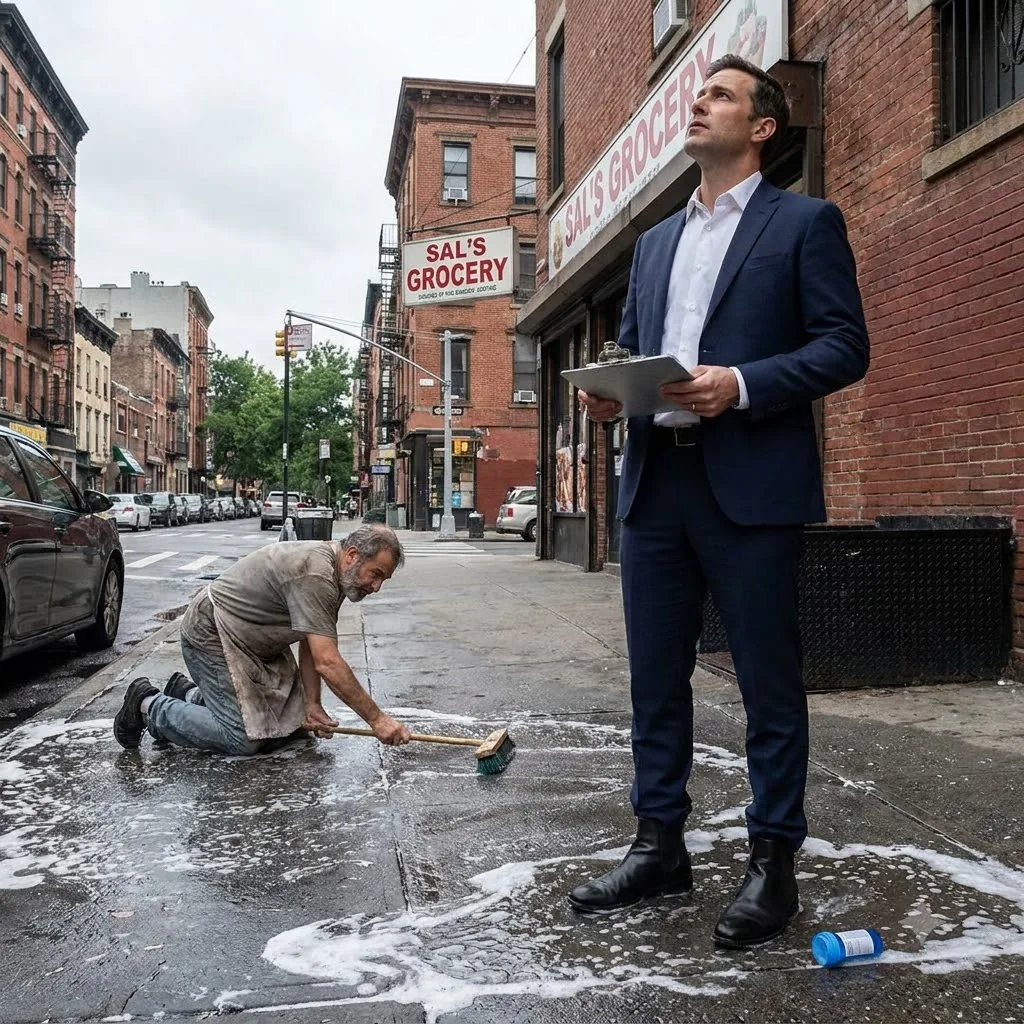
I walked back into the bodega, the familiar tinny chime of the door bell announcing my empty arrival. I grabbed my heavy push broom and a metal dustpan from the back utility closet. Returning to the cold sidewalk, I began to sweep. Every scrape of the stiff bristles against the pavement felt like sandpaper on an open wound. Sweeping up the shattered glass felt like sweeping up the very bones of the neighborhood. I scraped the hardened wax off the brick with the edge of the dustpan, my knuckles raw and aching against the cold metal. I dumped the ruined remnants into the corner trash can, watching the bright glass disappear beneath discarded coffee cups and losing lottery tickets.
When the pavement was finally clear, just a damp, stained patch of concrete remaining, I dragged my mop bucket back inside and locked the glass door behind me. I flipped the neon “OPEN” sign off. Just for a moment. Just to breathe.
The warmth of the clanking radiator washed over me. I stood in the center of the narrow aisle, surrounded by the smell of roasting espresso beans, ripening plantains, and old cedar shelving. For fifteen years, this space had been a sanctuary. I looked at the scuff marks worn deep into the linoleum floor, a map of a million footsteps from kids buying penny candy after school, from tired nurses grabbing energy drinks before the night shift, from mothers stretching out a line of credit until payday.
Declan’s words rang in my ears. *Adaptive reuse. Blight. Eyesore.*
I walked slowly behind the main register. The adrenaline of the standoff was finally receding, leaving behind a hollow, trembling exhaustion in my chest. Above the lottery ticket dispenser hung a small, grease-stained corkboard. It was pinned with vendor invoices and delivery schedules, but dead in the center was a faded Polaroid photograph.
I reached out and traced the white border of the photo with my thumb. It was my younger brother, Mateo. He was smiling wide, wearing a backward Yankees cap, holding up a winning five-dollar scratch-off ticket right in front of this very deli counter. That was twelve years ago. Two years before the street pills stopped his heart in a stairwell just three blocks from here.
I stared at Mateo’s frozen, happy face, and the truth of what was happening outside finally clicked into place. This wasn’t just business. It wasn’t just a real estate transaction or an inevitable shift in the city’s demographics. It was an active erasure.
They wanted the exposed brick and the rusted fire escapes because it looked authentic, but they despised the actual people who had weathered the storms to keep those bricks standing. They wanted to tear down my load-bearing walls and replace them with a boutique coffee bar where people like Declan could drink six-dollar lattes without ever having to look at the ghosts of this avenue. They wanted to wipe away Hector, Maya, the kid in the ambulance, and my brother. They wanted to sweep us into the gutter like medical waste.
The heavy thirty-day notice taped to the residential door outside wasn’t just a legal eviction. It was a giant eraser.
I pulled my hand away from the photograph. The trembling in my fingers stopped, replaced by a cold, heavy anchor settling deep in my stomach. I had lost the bloody piece of parchment to the landlord’s leather portfolio, but I still held the keys to the heavy metal security gates.
I reached under the main counter, pulling a fresh, tall glass *veladora* from the overstock box. I placed it squarely on the front counter, right where every single person who walked through my door would have to see it. I struck my cheap plastic lighter, shielding the flame with my cupped hand, and lit the wick.
I turned around, flipped the neon sign back to “OPEN,” and unlocked the front door. Thirty days was a long time. I was going to make them fight for every single inch of this block.