Story code: ST-001516
Part 3: The Warden’s Confession
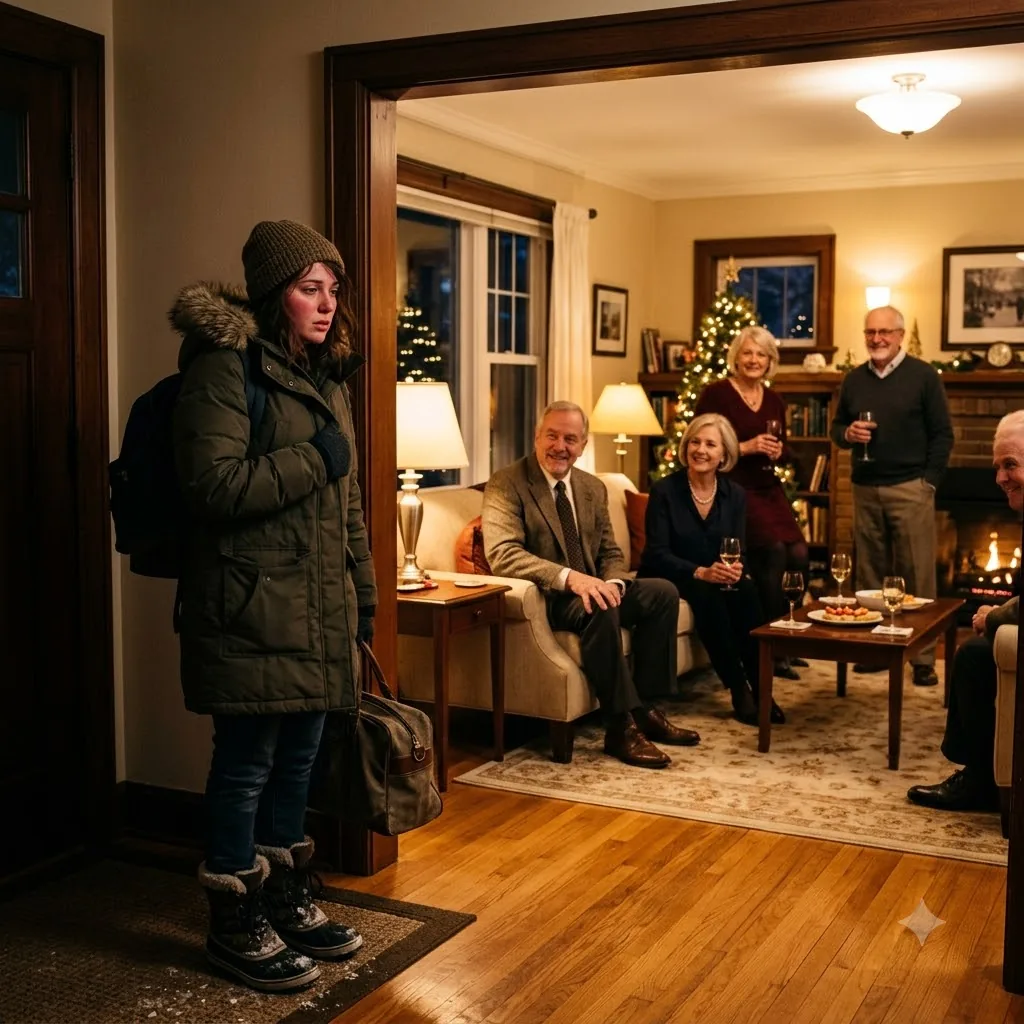
The outstretched hand hung in the air, a flesh-and-bone tollbooth. The twenty-nine members of the Trinity Fellowship held their collective breath. Leah stared at her father’s palm, the lifelines deep and unyielding. The buzz against her hip had stopped, leaving a heavy, ringing silence in its wake. Accept the match within twenty-four hours.
“The device, Leah,” her father repeated, the whisper shedding its velvet. “Now.”
For twenty-two years, that tone had been an invisible leash, snapping her head back into alignment. It was the tone that had vetoed out-of-state colleges, the tone that had forbidden a driver’s license, the tone that mandated six hours a day on a vibrating, exhaust-choked bus.
Leah looked up from his palm to his eyes. They were completely devoid of the pastoral warmth he sold to the zoning board. They were flat, hard, and entirely calculating.
She didn’t reach for her back pocket. Instead, she took a single step backward.
The movement was so slight, yet it sent a shockwave through the room. Mrs. Gable gasped, a sharp intake of air that sounded like tearing silk.
“I said, give it to me,” her father said, his voice rising, a tremor of genuine disbelief threading through the command.
“No,” Leah said. The word felt jagged in her dry throat, but it came out steady.
She turned her back on him. She walked the three paces to the floral armchair where her heavy winter coat lay draped like a discarded skin. She snatched it up by the collar. The thick wool felt like armor in her hands.
“Leah!” The boom of his Sunday pulpit voice rattled the china in the dining room hutch. “You do not turn your back on your father in this house! You do not disrespect this fellowship!”
Leah shoved her left arm into the sleeve, then her right. She pulled the zipper up to her chin, sealing herself inside the oppressive heat of the living room. “I’m going upstairs. I have studying to do. You said it yourself, I’m exhausted.”
“You are not going anywhere until you hand over that phone.” He closed the distance between them in two long strides, his polished dress shoes slamming against the hardwood. He grabbed the sleeve of her coat, his fingers digging into the padding, trying to yank her back toward the center of the room.
“Let go of me,” she said, planting her boots. She jerked her arm, using the slick nylon lining of the coat to twist out of his grip.
He stumbled forward a half-step, his hand grasping empty air. The congregation was dead silent now, the plastic cups of sparkling cider forgotten in their hands. They were witnessing a rebellion they couldn’t comprehend, a crack in the pristine stained glass of their leader’s family.
“You arrogant, ungrateful child,” he spat, his face flushing a deep, mottled crimson. The benevolent environmentalist vanished. “You think you can hide things under my roof? You think I don’t know what that alarm is? You think I don’t know what you’ve been plotting on that commute?”
Leah froze, her hand halfway to the doorknob of the hallway.
“You think you’re clever,” he sneered, pointing a trembling finger at her. “Looking at apartments. Looking at filth in the city. You think I didn’t see the browser history on the router? You think I didn’t know exactly which low-income complexes you were targeting?”
Mrs. Gable murmured something indistinct, a soft sound of distress.
Her father didn’t care. The audience no longer mattered; only his absolute authority did. “You wanted that building on 4th and Elm! The one by the new rail line! You thought you could just slide away, move into that den of sin, surround yourself with that unnatural filth!”
“The wetlands,” Leah said, her voice dropping to a harsh whisper. “You petitioned the city council about the wetlands. You held prayer vigils for the marshland ecosystem.”
“To hell with the marshland!” he roared.
The words detonated in the stifling room. Several members of the zoning committee physically recoiled. An elderly man in the back dropped his cup; it hit the rug with a dull thud, splashing cider over the baseboards.
Her father didn’t notice. He was panting now, his chest heaving under the Sunday suit, his face contorted in a mask of pure, ugly rage. “You think I spent two years in municipal court for a damn bird?! You think I care about the painted turtles? I care about keeping the rot out of my house! I care about keeping you exactly where you belong!”
Leah stared at him, the horrifying clarity of his confession washing over her. He hadn’t just blocked an affordable housing project. He had mobilized an entire church, weaponized environmental law, and spent thousands of hours and dollars in litigation, all to destroy the only building she could afford to move into. He had manipulated fifty people into a righteous crusade solely to ensure his daughter couldn’t catch a train away from him.
“It was never about the ecosystem,” Leah said, her voice carrying clearly through the stunned silence of the room. “It was a cage. You built a cage and called it a sanctuary.”
“It is a quarantine!” he screamed, spit flying from his lips, completely unmoored from his public persona. “The city is a disease, and I will not let you infect this family! I cut off the transit line so you couldn’t run! I killed the housing so you would have nowhere to sleep! You have nothing out there! Nothing!”
The silence that rushed back into the room was absolute, suffocating, and terrifying. The members of the Trinity Fellowship stared at their leader, their faces pale, the righteous triumph of the evening turning to ash in their mouths. The man who had led them in prayer to save God’s creatures was gone, replaced by a warden standing over his prisoner.
Leah backed away slowly, her hand finally closing around the brass doorknob of the hallway door. She didn’t look at the congregation. She kept her eyes locked on her father, watching the exact moment he realized what he had just confessed in front of everyone.