Story code: ST-001734
Part 1: The Setback Line
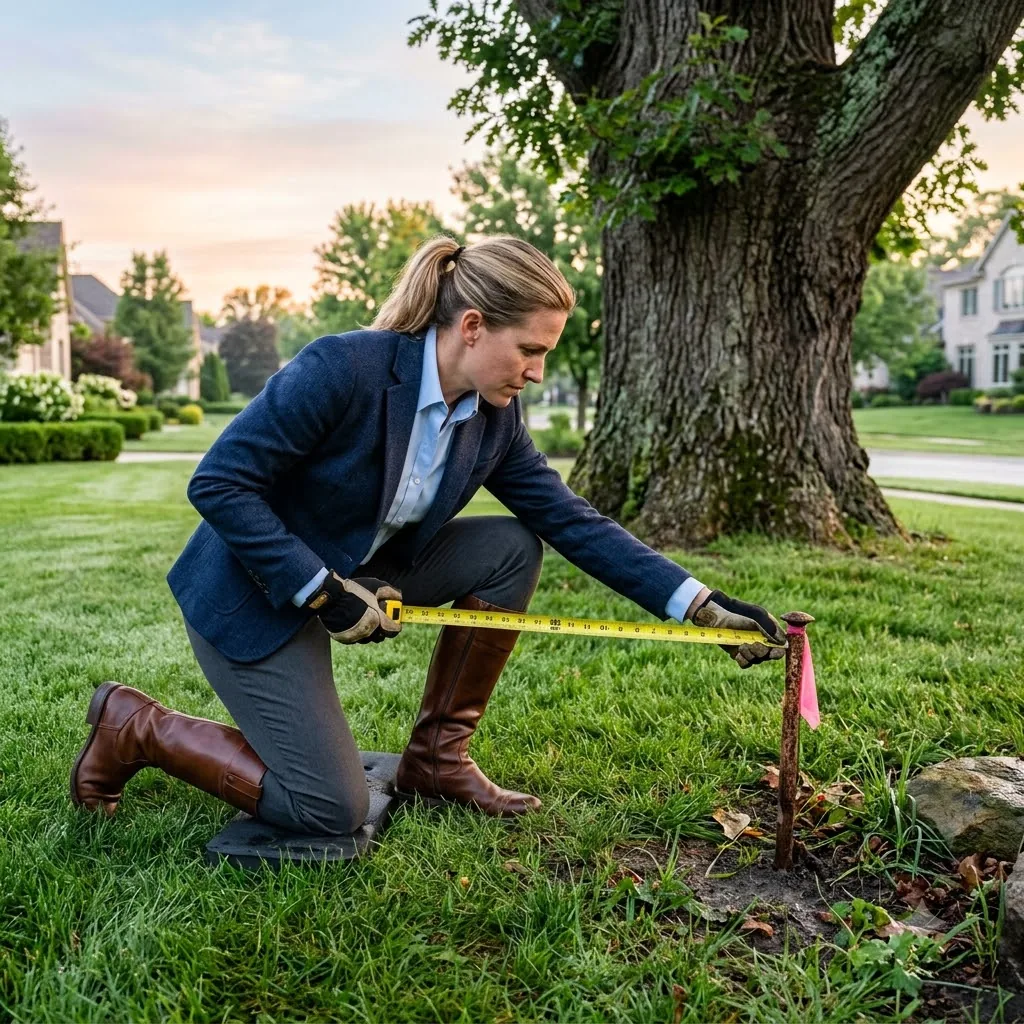
Eleanor drove the steel spike of the surveyor tape into the dew-soaked turf exactly fifty-two feet from her copper gutters. She pulled the yellow fiberglass line taut across the property boundary, ignoring the freezing mud soaking through the knees of her ethically sourced linen trousers. The sun had not yet breached the canopy of century-old oaks lining Elmwood Avenue, giving her the cover of gray twilight to do her work. She tightened the line until it hummed like a guitar string, ensuring her measurement was accurate to the millimeter.
She locked the tape measure in place and picked up the iPad resting on a nearby slate stepping stone. Her frozen fingers tapped the glass screen with rhythmic precision, composing a ruthless, localized environmental complaint. She highlighted a massive block of text from the municipal zoning ordinance, copying it into a draft email addressed directly to the director of the city planning commission. She titled the email with a severe warning regarding the catastrophic watershed impact of the proposed multi-family conversion next door at number forty-eight.
The neighboring property was a sprawling, single-family Victorian currently sitting in a state of mild, peeling disrepair. The new developers had recently filed permits to chop the grand structure into four separate units. Eleanor adjusted her tortoiseshell glasses and typed a devastating paragraph about the absolute necessity of preserving the historical neighborhood character. She cited the potential damage to the delicate root systems of the heritage oaks and the severe strain four distinct households would place on the antiquated local storm drains.
She stood up and brushed the wet grass from her knees, glancing back at her own perfectly manicured lawn. A tasteful, screen-printed yard sign declaring her commitment to global equity and neighborhood inclusivity stood proudly near her mailbox. She firmly believed in those principles in the abstract. She just believed equally firmly that high-density housing did not belong on a block zoned for single-family tranquility since nineteen-twelve. The strain on the local infrastructure would simply be too great, a tragedy she felt uniquely qualified to prevent.
She tapped over to a PDF of the developer’s site plan stored in her files. They had marked a proposed driveway expansion with orange wooden stakes, completely disregarding the natural slope of the land. Eleanor marched over to the nearest orange stake, holding her iPad like a clipboard. She noted the distance from the property line. It was a clear, undeniable violation of the side-yard setback requirements. The ordinance demanded a strict minimum of fifteen feet. The developers were trying to squeeze out fourteen feet and two inches to accommodate the necessary parking spaces for four new units.
Eleanor smiled, a thin, tight expression of triumph forming in the cold morning air. This minor discrepancy was the silver bullet she needed to halt construction indefinitely. She began typing furiously, structuring a meticulously cited legal argument that would force the zoning board to issue an immediate stop-work order. She detailed the exact measurements, attaching a photograph of the surveyor tape stretched across the frosted grass. She demanded a full environmental impact study, a shadow analysis to ensure the new roofline would not block the morning sun from her organic vegetable garden, and a rigorous review of the impervious surface limits.
She knew the municipal system far better than the developers did. She knew every bureaucratic lever to pull, every obscure bylaw to cite, and exactly which planning commission members were most terrified of neighborhood backlash. She was constructing an airtight legal barricade that would take the developers months, and tens of thousands of dollars in legal fees, to dismantle. By the time she finished with them, the project would be financially unviable. They would have to abandon the multi-family conversion and sell the Victorian to a nice, quiet family who understood the unwritten aesthetic rules of Elmwood Avenue.
She reviewed her email one final time, checking for typos and ensuring her tone remained purely objective and deeply concerned for the local ecosystem. Her thumbs hovered over the send button. The anonymous complaint was perfect. It was a masterpiece of civic weaponization, wrapped securely in the unimpeachable language of environmental stewardship and historical preservation. She took one last look at the offending orange stakes, satisfying herself that she was doing the right thing for the entire street.
Before she could press the blue arrow to dispatch the email, her iPad vibrated violently in her hands. A phone call took over the screen, replacing her carefully drafted zoning complaint with a glowing incoming call interface. The name flashing on the screen made her freeze in the damp grass. She stared at the caller ID, her thumb hovering a fraction of an inch above the glass. She took a sharp breath of freezing air and tapped the green button to accept the call.
Eleanor drove the steel spike of the surveyor tape into the dew-soaked turf exactly fifty-two feet from her copper gutters. She pulled the yellow fiberglass line taut across the property boundary, ignoring the freezing mud soaking through the knees of her ethically sourced linen trousers. The sun had not yet breached the canopy of century-old oaks lining Elmwood Avenue, giving her the cover of gray twilight to do her work. She tightened the line until it hummed like a guitar string, ensuring her measurement was accurate to the millimeter.
She locked the tape measure in place and picked up the iPad resting on a nearby slate stepping stone. Her frozen fingers tapped the glass screen with rhythmic precision, composing a ruthless, localized environmental complaint. She highlighted a massive block of text from the municipal zoning ordinance, copying it into a draft email addressed directly to the director of the city planning commission. She titled the email with a severe warning regarding the catastrophic watershed impact of the proposed multi-family conversion next door at number forty-eight.
The neighboring property was a sprawling, single-family Victorian currently sitting in a state of mild, peeling disrepair. The new developers had recently filed permits to chop the grand structure into four separate units. Eleanor adjusted her tortoiseshell glasses and typed a devastating paragraph about the absolute necessity of preserving the historical neighborhood character. She cited the potential damage to the delicate root systems of the heritage oaks and the severe strain four distinct households would place on the antiquated local storm drains.
She stood up and brushed the wet grass from her knees, glancing back at her own perfectly manicured lawn. A tasteful, screen-printed yard sign declaring her commitment to global equity and neighborhood inclusivity stood proudly near her mailbox. She firmly believed in those principles in the abstract. She just believed equally firmly that high-density housing did not belong on a block zoned for single-family tranquility since nineteen-twelve. The strain on the local infrastructure would simply be too great, a tragedy she felt uniquely qualified to prevent.
She tapped over to a PDF of the developer’s site plan stored in her files. They had marked a proposed driveway expansion with orange wooden stakes, completely disregarding the natural slope of the land. Eleanor marched over to the nearest orange stake, holding her iPad like a clipboard. She noted the distance from the property line. It was a clear, undeniable violation of the side-yard setback requirements. The ordinance demanded a strict minimum of fifteen feet. The developers were trying to squeeze out fourteen feet and two inches to accommodate the necessary parking spaces for four new units.
Eleanor smiled, a thin, tight expression of triumph forming in the cold morning air. This minor discrepancy was the silver bullet she needed to halt construction indefinitely. She began typing furiously, structuring a meticulously cited legal argument that would force the zoning board to issue an immediate stop-work order. She detailed the exact measurements, attaching a photograph of the surveyor tape stretched across the frosted grass. She demanded a full environmental impact study, a shadow analysis to ensure the new roofline would not block the morning sun from her organic vegetable garden, and a rigorous review of the impervious surface limits.
She knew the municipal system far better than the developers did. She knew every bureaucratic lever to pull, every obscure bylaw to cite, and exactly which planning commission members were most terrified of neighborhood backlash. She was constructing an airtight legal barricade that would take the developers months, and tens of thousands of dollars in legal fees, to dismantle. By the time she finished with them, the project would be financially unviable. They would have to abandon the multi-family conversion and sell the Victorian to a nice, quiet family who understood the unwritten aesthetic rules of Elmwood Avenue.
She reviewed her email one final time, checking for typos and ensuring her tone remained purely objective and deeply concerned for the local ecosystem. Her thumbs hovered over the send button. The anonymous complaint was perfect. It was a masterpiece of civic weaponization, wrapped securely in the unimpeachable language of environmental stewardship and historical preservation. She took one last look at the offending orange stakes, satisfying herself that she was doing the right thing for the entire street.
Before she could press the blue arrow to dispatch the email, her iPad vibrated violently in her hands. A phone call took over the screen, replacing her carefully drafted zoning complaint with a glowing incoming call interface. The name flashing on the screen made her freeze in the damp grass. She stared at the caller ID, her thumb hovering a fraction of an inch above the glass. She took a sharp breath of freezing air and tapped the green button to accept the call.