Story code: ST-001913
Part 1: The Red Light
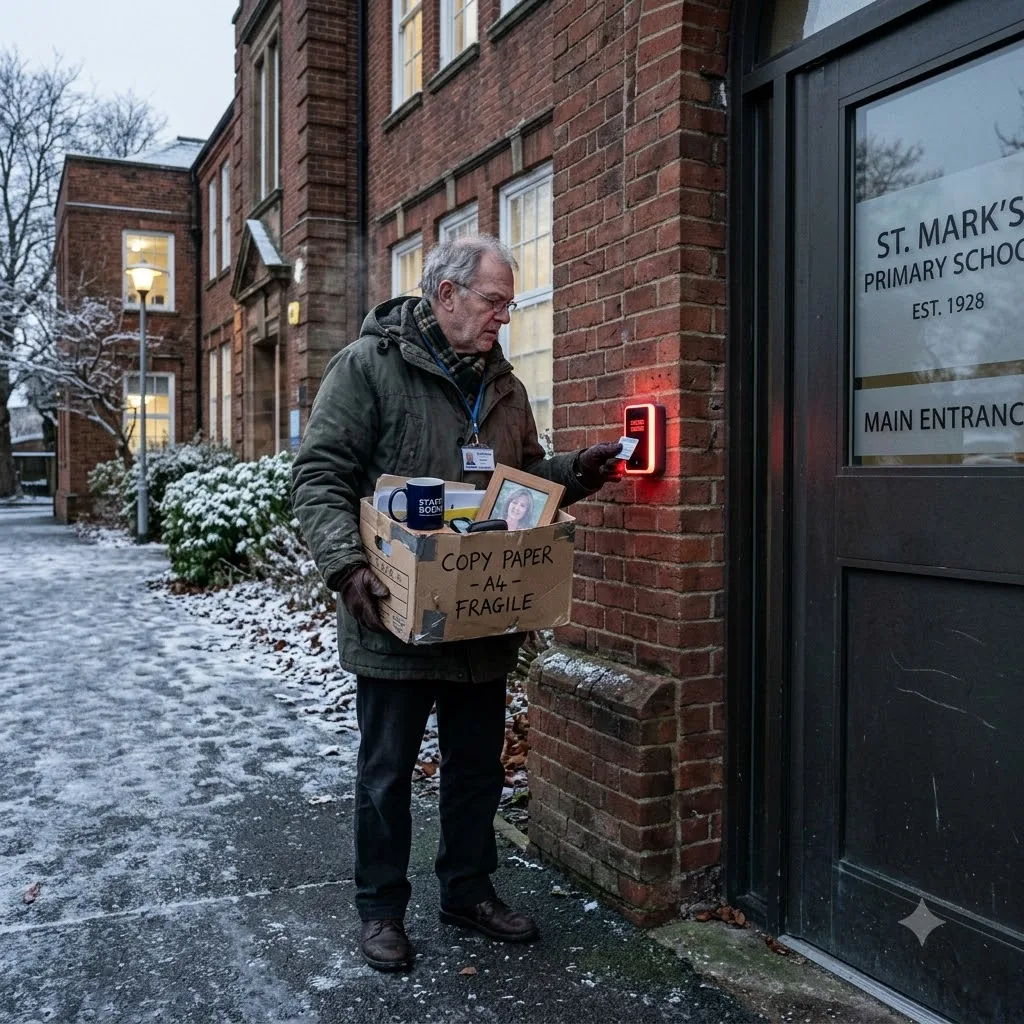
The plastic faculty badge tapped against the scanner plate, emitting a sharp beep before the LED indicator flashed a solid, unforgiving red. Arthur pressed his shoulder against the heavy metal door of Oakridge High, expecting the familiar give of the hinges, but it held firm against the cold Tuesday wind. He rubbed his thumb over the magnetic strip of the card, assuming a glitch in the aging system, and tapped it again. Red light. No mechanical click.
Before he could reach for his phone to text the front office, movement behind the reinforced glass caught his eye.
Principal Hayes was marching down the empty main corridor. Hayes usually spent this hour sequestered in his office, avoiding the early rush of students. Today, his stride was rigid, his shoulders pulled back in unnatural formality. Beside him walked Marcus Vance, a man plastering the town with campaign signs for the upcoming school board election. Vance wore a tailored overcoat and held a sleek leather folio against his ribs.
Hayes was carrying a medium-sized cardboard box. As they drew closer, Arthur recognized the frayed corner of his own green desk blotter protruding from the top. Beside it rested the brass apple paperweight his homeroom class had given him a decade ago.
The cold air bit through Arthur’s thin wool cardigan. The visual of his desk contents neatly packed in cardboard did not compute with the syllabus he had planned for first period. He stepped back as the heavy door finally clicked. Hayes pushed it open just enough to step into the threshold, physically blocking the entryway. Vance remained one pace behind, watching with the detached interest of an auditor.
“Morning, David,” Arthur began, leaning forward to step inside.
Hayes raised a flat palm, stopping Arthur’s momentum. He did not offer the usual morning greeting. Instead, he shoved the cardboard box forward.
Arthur took it by reflex, the sudden weight forcing his arms to drop. The brass apple clinked against a stack of graded essays belonging to his junior history class.
“Effective immediately, your employment at this district is suspended pending a full board review,” Hayes said. His voice was flat, stripped of the thirty years of camaraderie they had shared.
Arthur stared at the box, then at Hayes. The wind whipped around the brick facade, tearing at the loose papers near the top of the box. He shifted his grip, the cardboard edges digging into his bare fingers.
“I have first period in twenty minutes,” Arthur stated. “The juniors are presenting their primary source projects.”
“A substitute has already been assigned,” Hayes replied, his eyes darting briefly toward Vance. “You are not to enter the building. You are not to contact any students, faculty, or staff. You are prohibited from accessing the school network.”
The space where Arthur existed, where he had built his entire professional and social life, was abruptly sealed off.
Vance stepped forward, tapping a manicured finger against his leather folio. “The district takes the integrity of its curriculum seriously. The materials you chose to introduce yesterday afternoon left us with no alternative but to act swiftly.”
Arthur looked at Vance. The man was a candidate, not an elected official, yet he was dictating district policy. Arthur thought back to the final period of the previous day. He had pulled a folder from the lower drawer of his filing cabinet. He had placed a series of documents on the overhead projector. He had watched the faces of his students change as they read the text on the screen.
“It is part of the state archives,” Arthur said, his voice remaining level despite the tremor in his hands. “It is public record.”
“It is highly inappropriate for a classroom setting,” Vance countered smoothly. “The community will not tolerate that kind of disruption.”
Hayes cleared his throat. “The district legal counsel will be in touch regarding the formal hearing, Arthur. Until then, you need to leave the premises. Immediately.”
Arthur looked down at the box again. His framed photograph of his late wife was wedged awkwardly between a stapler and a mug full of red pens. Someone had gone through his desk in the dark hours of the early morning. They had packed his life away while he was sleeping. They had disabled his badge before the sun came up. The absolute efficiency of his erasure was terrifying. He had no family in town. The teachers in that building were his Friday night dinner companions, his holiday guests, his emergency contacts. Hayes had just ordered him to sever all ties.
“David,” Arthur said, trying to catch the principal’s eye. “You cannot simply lock me out without a conversation. You know me.”
Hayes finally met his gaze. There was no apology in the principal’s eyes, only a rigid, self-preserving fear. Hayes was looking at Arthur not as a colleague, but as a contagion that had to be contained before it spread.
“I know what you displayed on that projector,” Hayes said softly. “And I know I have to protect this school.”
Vance checked his wristwatch. “We have a press briefing at eight to address the parents. We need to secure the perimeter.”
Hayes nodded slowly. He took a half step backward, retreating into the warmth of the hallway.
Arthur opened his mouth to demand a copy of the formal complaint, to insist on his right to union representation, to at least retrieve his winter coat from the staff closet.
Hayes reached out and grabbed the heavy metal handle of the door.
The latch clicked with a sharp, metallic finality as the heavy panel swung shut, cutting off the fluorescent light of the hallway and leaving Arthur alone on the concrete steps.
The plastic faculty badge tapped against the scanner plate, emitting a sharp beep before the LED indicator flashed a solid, unforgiving red. Arthur pressed his shoulder against the heavy metal door of Oakridge High, expecting the familiar give of the hinges, but it held firm against the cold Tuesday wind. He rubbed his thumb over the magnetic strip of the card, assuming a glitch in the aging system, and tapped it again. Red light. No mechanical click.
Before he could reach for his phone to text the front office, movement behind the reinforced glass caught his eye.
Principal Hayes was marching down the empty main corridor. Hayes usually spent this hour sequestered in his office, avoiding the early rush of students. Today, his stride was rigid, his shoulders pulled back in unnatural formality. Beside him walked Marcus Vance, a man plastering the town with campaign signs for the upcoming school board election. Vance wore a tailored overcoat and held a sleek leather folio against his ribs.
Hayes was carrying a medium-sized cardboard box. As they drew closer, Arthur recognized the frayed corner of his own green desk blotter protruding from the top. Beside it rested the brass apple paperweight his homeroom class had given him a decade ago.
The cold air bit through Arthur’s thin wool cardigan. The visual of his desk contents neatly packed in cardboard did not compute with the syllabus he had planned for first period. He stepped back as the heavy door finally clicked. Hayes pushed it open just enough to step into the threshold, physically blocking the entryway. Vance remained one pace behind, watching with the detached interest of an auditor.
“Morning, David,” Arthur began, leaning forward to step inside.
Hayes raised a flat palm, stopping Arthur’s momentum. He did not offer the usual morning greeting. Instead, he shoved the cardboard box forward.
Arthur took it by reflex, the sudden weight forcing his arms to drop. The brass apple clinked against a stack of graded essays belonging to his junior history class.
“Effective immediately, your employment at this district is suspended pending a full board review,” Hayes said. His voice was flat, stripped of the thirty years of camaraderie they had shared.
Arthur stared at the box, then at Hayes. The wind whipped around the brick facade, tearing at the loose papers near the top of the box. He shifted his grip, the cardboard edges digging into his bare fingers.
“I have first period in twenty minutes,” Arthur stated. “The juniors are presenting their primary source projects.”
“A substitute has already been assigned,” Hayes replied, his eyes darting briefly toward Vance. “You are not to enter the building. You are not to contact any students, faculty, or staff. You are prohibited from accessing the school network.”
The space where Arthur existed, where he had built his entire professional and social life, was abruptly sealed off.
Vance stepped forward, tapping a manicured finger against his leather folio. “The district takes the integrity of its curriculum seriously. The materials you chose to introduce yesterday afternoon left us with no alternative but to act swiftly.”
Arthur looked at Vance. The man was a candidate, not an elected official, yet he was dictating district policy. Arthur thought back to the final period of the previous day. He had pulled a folder from the lower drawer of his filing cabinet. He had placed a series of documents on the overhead projector. He had watched the faces of his students change as they read the text on the screen.
“It is part of the state archives,” Arthur said, his voice remaining level despite the tremor in his hands. “It is public record.”
“It is highly inappropriate for a classroom setting,” Vance countered smoothly. “The community will not tolerate that kind of disruption.”
Hayes cleared his throat. “The district legal counsel will be in touch regarding the formal hearing, Arthur. Until then, you need to leave the premises. Immediately.”
Arthur looked down at the box again. His framed photograph of his late wife was wedged awkwardly between a stapler and a mug full of red pens. Someone had gone through his desk in the dark hours of the early morning. They had packed his life away while he was sleeping. They had disabled his badge before the sun came up. The absolute efficiency of his erasure was terrifying. He had no family in town. The teachers in that building were his Friday night dinner companions, his holiday guests, his emergency contacts. Hayes had just ordered him to sever all ties.
“David,” Arthur said, trying to catch the principal’s eye. “You cannot simply lock me out without a conversation. You know me.”
Hayes finally met his gaze. There was no apology in the principal’s eyes, only a rigid, self-preserving fear. Hayes was looking at Arthur not as a colleague, but as a contagion that had to be contained before it spread.
“I know what you displayed on that projector,” Hayes said softly. “And I know I have to protect this school.”
Vance checked his wristwatch. “We have a press briefing at eight to address the parents. We need to secure the perimeter.”
Hayes nodded slowly. He took a half step backward, retreating into the warmth of the hallway.
Arthur opened his mouth to demand a copy of the formal complaint, to insist on his right to union representation, to at least retrieve his winter coat from the staff closet.
Hayes reached out and grabbed the heavy metal handle of the door.
The latch clicked with a sharp, metallic finality as the heavy panel swung shut, cutting off the fluorescent light of the hallway and leaving Arthur alone on the concrete steps.