Story code: ST-001756
Part 3: The Artifacts of Terror
The silver flash drive felt impossibly heavy against David’s fingertips. It was just a small piece of plastic and metal, resting on the worn blotter of his desk, yet it held the power to destroy the last ten years of his life’s work.
Marcus stood near the closed office door, his jaw set in a hard, defiant line. He had wrapped himself in the armor of a seasoned organizer, standing tall and broad in his olive jacket. “I made the hard call, Dave,” Marcus said, his voice dropping into the familiar, authoritative cadence he used at community board meetings. “I didn’t let my emotions get the better of me. I stayed out of the sightline, and I got the evidence. That’s what matters. That’s how we hold them accountable without becoming casualties ourselves.”
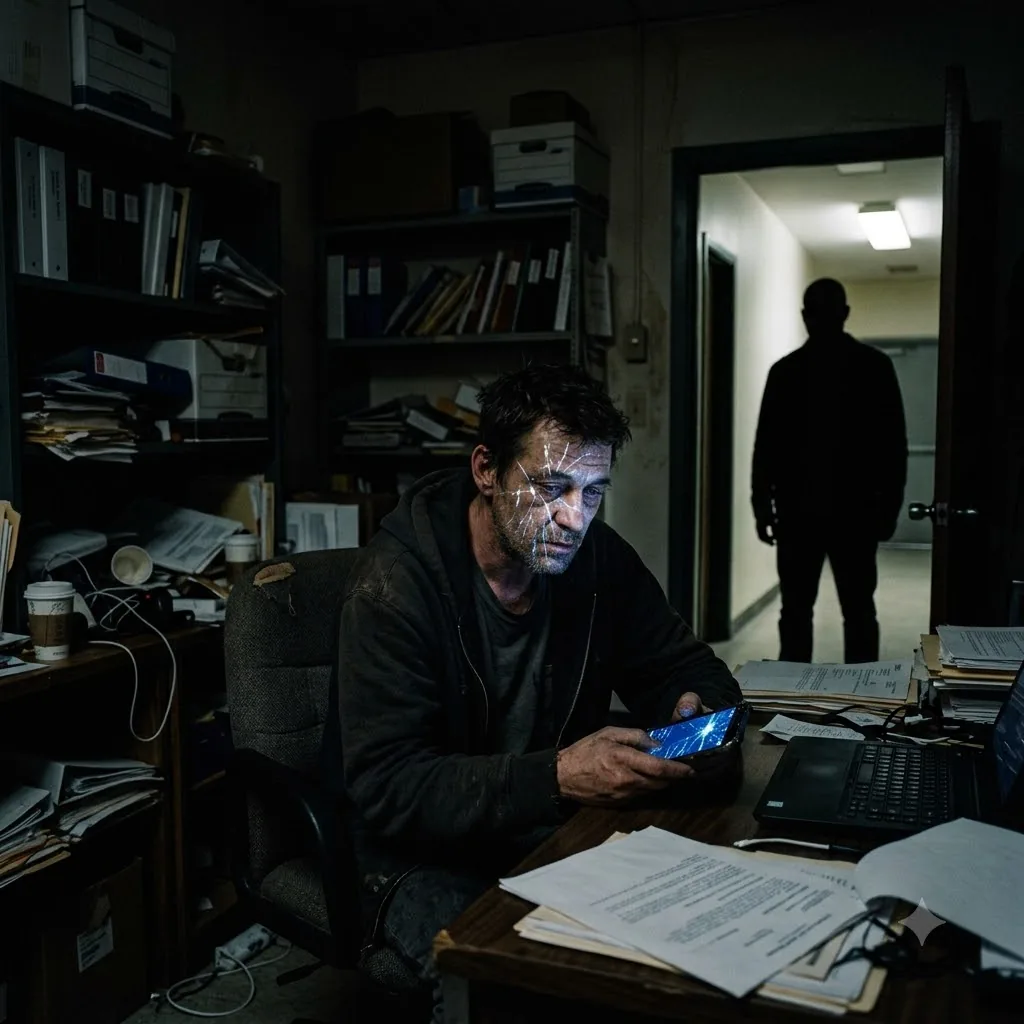
David didn’t answer. He picked up the drive. The text from the Mayor’s press liaison was still glowing on his phone screen, a digital countdown to the noon press conference. The Chief of Police wanted this exact drive. They wanted the uncompressed 4K file to run through their facial recognition and enhancement software.
“You made a tactical decision while an old man’s skull was fractured,” David said quietly, his voice raspy from exhaustion.
“I survived!” Marcus snapped back, stepping away from the door, his boots thudding heavily against the floorboards. “If I step out there, I am a dead man! A Black man standing over a bleeding Asian elder when the sirens arrive? They don’t ask questions, Dave! They shoot! You know the statistics. You wrote the damn pamphlets with me! So yeah, I was pragmatic. I documented it.”
David stared at his friend. Marcus’s political logic was flawless. It was the exact argument their coalition had been making for a decade. But something about the absolute certainty in Marcus’s eyes felt hollow, like a script rehearsed too many times in the dark.
Without a word, David slid the flash drive into the USB port on his desktop tower.
“What are you doing?” Marcus demanded, crossing his arms.
“Looking at the evidence,” David replied, his hand moving to the mouse. “Before I hand it over to a task force that’s going to use it to rip you apart, I want to see exactly what they’re going to see.”
David opened the file directory. The raw video file sat there, nearly four gigabytes of uncompressed data. He double-clicked it, and the default media player snapped open, filling the center of his monitor with a crystalline, high-definition image.
The viral version David had been studying for the past three days had been downloaded from a neighborhood watch page. It had been compressed by social media algorithms, the frame rate halved, the shadows crushed into murky black blocks. More importantly, it had been run through automatic digital stabilization-the software’s attempt to smooth out amateur phone footage. That was why the camera had seemed so chillingly, clinically still.
David hit play on the raw file.
The difference was instantaneous and jarring. The nighttime street wasn’t a murky blur; the harsh glare of the sodium streetlamps cut sharply through the damp air. And the frame was not still.
Without the social media stabilization algorithm smoothing the edges, the truth of the camera’s perspective was laid bare. The frame shook. It wasn’t the chaotic, sweeping motion of someone running or fighting. It was a rapid, high-frequency tremor. The entire street scene vibrated violently, the lens trembling in a relentless, involuntary shudder.
It was the physiological shake of a human body flooded with sheer, unadulterated terror.
David’s breath caught. He reached for the volume dial on his desktop speakers and twisted it clockwise.
On the compressed web video, David had isolated what sounded like the passive, heavy breathing of a detached bystander. But the raw, uncompressed audio track didn’t have the digital muffling of a low-bitrate upload. The sound that filled the small, cramped office was devastatingly clear.
It wasn’t passive breathing. It was the jagged, desperate sound of a man fighting for oxygen. Between the sickening impacts of the assault echoing in the alley, the raw audio captured a series of wet, choked gasps. It was the sound of stifled sobbing. The videographer wasn’t calmly watching from the shadows. He was weeping.
On the screen, the attacker delivered another brutal kick. The camera jerked wildly, not to capture a better angle, but because the person holding it had violently flinched. A sharp, muffled whimper bled through the speakers-a sound of absolute, paralyzing helplessness.
David stopped the video. The sudden silence in the office was deafening.
He turned in his chair, slowly looking up at Marcus.
Marcus’s arms were no longer crossed. They hung loosely by his sides. The defiant, authoritative posture of the pragmatic organizer had completely collapsed. His broad shoulders were slumped, and his eyes were fixed on the black screen of the monitor, wide and haunted. The color had drained from his face, leaving him looking hollowed out, entirely stripped of the political armor he had walked in with.
“You weren’t gathering evidence, Marc,” David said, his voice barely above a whisper. The anger that had fueled David for the last ten minutes completely dissolved, replaced by a crushing, suffocating sorrow.
Marcus swallowed hard, his throat working convulsively, but no words came out.
“You didn’t make a tactical decision,” David continued, his eyes locked on his friend’s trembling hands. “You didn’t stay in the shadows because you were thinking about the movement, or the statistics, or the broken system.”
Marcus closed his eyes. A single, ragged breath shuddered through his chest, sounding exactly like the agonizing gasps on the uncompressed audio track.
David finally understood the true horror of the trap. Marcus hadn’t chosen to stand there. He had been physically paralyzed by the agonizing certainty that to exist in that alley as a Black man was a death sentence. He was trapped between the violence happening in front of him and the state violence guaranteed to follow the sirens. He had stood there sobbing, watching an elder be brutally beaten, physically unable to move his feet because the world they lived in had conditioned his very nervous system to freeze in the face of inevitable destruction.
“You were terrified,” David said, the realization heavy and bitter in his mouth.
Marcus opened his eyes, shining with unshed tears in the harsh fluorescent light. He looked at the flash drive plugged into the computer, then down at his own trembling hands. He had no political rhetoric left to offer, no defensive anger to shield him. There was only the raw, undeniable truth of his trauma laid bare in the quiet room, leaving David sitting in the silence, his hand still resting on the mouse, the deadline for the press conference ticking mercilessly away on his phone.