Story code: ST-001799
Part 1: Time Off Task
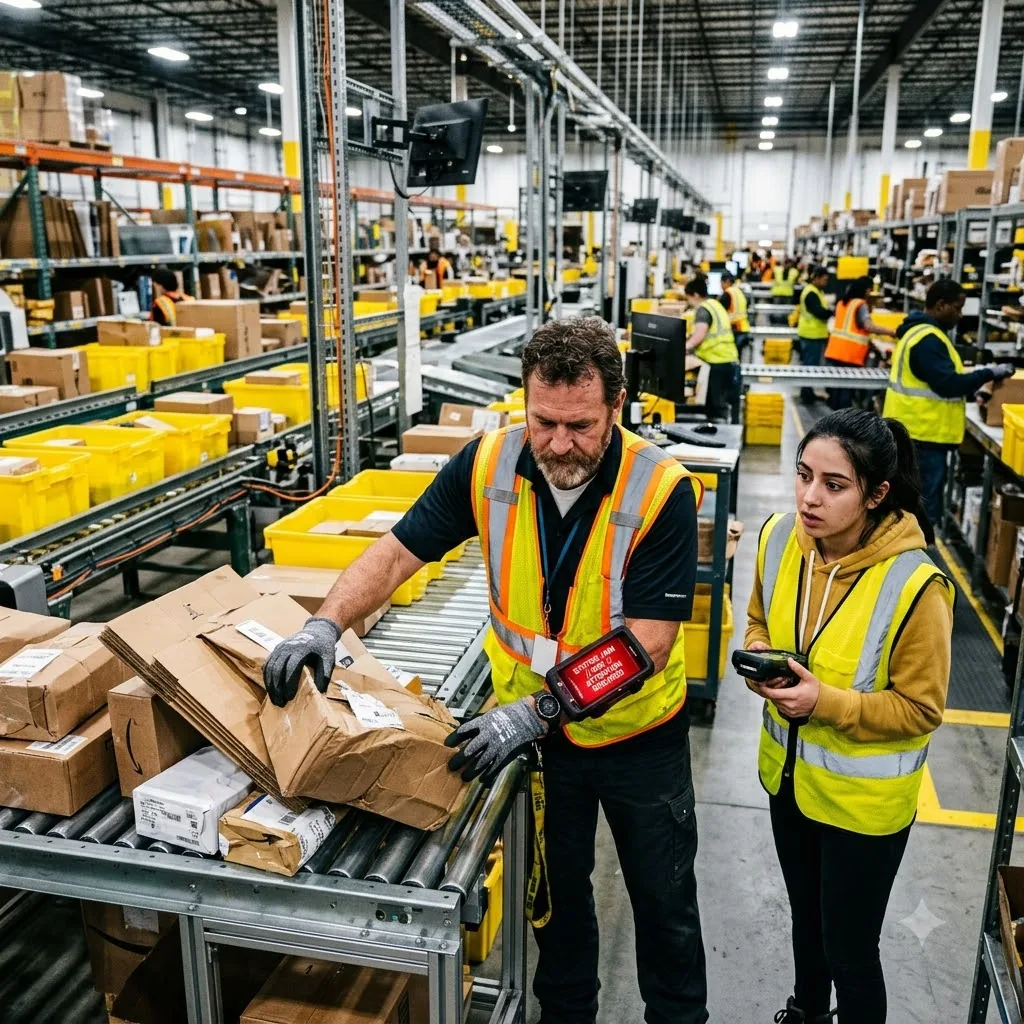
The industrial roar of Fulfillment Center Nine was a physical weight, a deafening tide of sirens and grinding belts that Elias used as cover while he deliberately stalled his own scan rate to yank a jammed cardboard box from the conveyor for Mark. The new guy was freezing up again, his hands shaking over the mangled cardboard, so Elias leaned into the noise, slid a crumpled union card into Mark’s apron pocket, and muttered the address for Sunday’s basement meeting. He barely pulled his hand back before the heavy plastic band on his left wrist vibrated violently, flashing a blinding crimson as its penalty alarm pierced the baseline factory din.
Elias winced at the high-pitched shriek of the device. The screen on his wrist read *Time Off Task: 47 seconds. Penalty Applied*. The red light reflected in Mark’s wide, panicked eyes. Mark stepped back, his own wrist-band still a safe, steady green. Elias gave him a quick nod, a silent signal to stay quiet and keep moving. He grabbed his scanner gun and hit the next barcode. The system demanded a pick rate of three hundred units per hour. Elias was now down to two-eighty, and the algorithm did not forgive.
The conveyor belt lurched forward again, carrying boxes the size of small cars down the endless line. Elias moved with the mechanical efficiency of a five-year veteran. He knew exactly how to pivot his hips to save a fraction of a second, how to bounce the scanner laser off the curved tape to register a barcode without turning the heavy items. It was a brutal dance of muscle memory and joint pain.
Mark fumbled everything. He dropped tape dispensers. He tripped over the yellow and black anti-fatigue mats. Elias watched the younger man struggle to lift a shipment of bulk canned goods, his posture all wrong, his grip slipping on the smooth plastic wrapping. The algorithm tracking their every micro-movement did not care about muscle mass or experience. It only cared about the line graph on the shift manager’s tablet.
Elias had spent three months carefully identifying the workers who were breaking under the strain. He looked for the ones with exhausted eyes and trembling hands. Mark fit the profile perfectly. He was desperate, constantly sweating, always on the verge of dropping below the termination threshold. Elias had risked his own metrics three times this week just to keep Mark’s numbers in the green. Every time Elias stopped to clear a jam or correct a mislabeled pallet for the new guy, his own rating took a hit. The red light on his wrist felt hotter against his skin with every passing hour.
A fresh wave of plastic totes arrived at their station, signaling a new batch of heavy priority orders. Mark reached for one, but his hand hesitated, hovering over the handle in a strange, calculating pause. It was a brief freeze, a sudden stillness entirely at odds with his usual frantic clumsiness. A second later, he knocked the tote sideways. Spilled dog food scattered across the concrete floor like gravel.
Mark dropped to his knees, frantically sweeping the kibble with his bare hands. Elias sighed, his chest aching from the repetitive motion of the shift, and abandoned his own station to help. The wrist-band buzzed again, harder this time. *Time Off Task: 90 seconds. Critical Warning*.
“I can not get the rhythm,” Mark whispered, keeping his head down as he scooped the mess into a pile.
Elias grabbed a dustpan from the endcap and shoved it toward the younger man. The overhead fluorescent lights flickered, casting long, shifting shadows down the endless aisle of steel storage racks. The automated floor-sweepers hummed two aisles over, completely ignoring their manual spill. Elias turned back to his screen to check the permanent damage to his daily quota.
The display had gone completely black.
Elias tapped the glass. A dead screen was a fireable offense, usually blamed on worker sabotage. A second later, the screen flickered back to life, but the interface was entirely wrong. It was not the standard green and black pick-rate graph. Lines of raw, scrolling text cascaded down the tiny screen. It rapidly listed his entire work history, his bathroom breaks down to the second, his exact location coordinates for the past thirty days, and the employee ID numbers of every worker he had stood next to for more than ten seconds. The text froze on a single command in heavy red font.
*Route to Bay 4*.
Bay 4 was the security exit, the place where badges were deactivated. Elias looked over his shoulder at Mark, expecting to see the usual terrified rookie face. Mark was standing perfectly still among the spilled dog food, his back straight, staring at Elias’s screen with an expression entirely devoid of fear. The warehouse sirens wailed as a pair of supervisors in reflective vests rounded the corner, marching directly toward their station.
The industrial roar of Fulfillment Center Nine was a physical weight, a deafening tide of sirens and grinding belts that Elias used as cover while he deliberately stalled his own scan rate to yank a jammed cardboard box from the conveyor for Mark. The new guy was freezing up again, his hands shaking over the mangled cardboard, so Elias leaned into the noise, slid a crumpled union card into Mark’s apron pocket, and muttered the address for Sunday’s basement meeting. He barely pulled his hand back before the heavy plastic band on his left wrist vibrated violently, flashing a blinding crimson as its penalty alarm pierced the baseline factory din.
Elias winced at the high-pitched shriek of the device. The screen on his wrist read *Time Off Task: 47 seconds. Penalty Applied*. The red light reflected in Mark’s wide, panicked eyes. Mark stepped back, his own wrist-band still a safe, steady green. Elias gave him a quick nod, a silent signal to stay quiet and keep moving. He grabbed his scanner gun and hit the next barcode. The system demanded a pick rate of three hundred units per hour. Elias was now down to two-eighty, and the algorithm did not forgive.
The conveyor belt lurched forward again, carrying boxes the size of small cars down the endless line. Elias moved with the mechanical efficiency of a five-year veteran. He knew exactly how to pivot his hips to save a fraction of a second, how to bounce the scanner laser off the curved tape to register a barcode without turning the heavy items. It was a brutal dance of muscle memory and joint pain.
Mark fumbled everything. He dropped tape dispensers. He tripped over the yellow and black anti-fatigue mats. Elias watched the younger man struggle to lift a shipment of bulk canned goods, his posture all wrong, his grip slipping on the smooth plastic wrapping. The algorithm tracking their every micro-movement did not care about muscle mass or experience. It only cared about the line graph on the shift manager’s tablet.
Elias had spent three months carefully identifying the workers who were breaking under the strain. He looked for the ones with exhausted eyes and trembling hands. Mark fit the profile perfectly. He was desperate, constantly sweating, always on the verge of dropping below the termination threshold. Elias had risked his own metrics three times this week just to keep Mark’s numbers in the green. Every time Elias stopped to clear a jam or correct a mislabeled pallet for the new guy, his own rating took a hit. The red light on his wrist felt hotter against his skin with every passing hour.
A fresh wave of plastic totes arrived at their station, signaling a new batch of heavy priority orders. Mark reached for one, but his hand hesitated, hovering over the handle in a strange, calculating pause. It was a brief freeze, a sudden stillness entirely at odds with his usual frantic clumsiness. A second later, he knocked the tote sideways. Spilled dog food scattered across the concrete floor like gravel.
Mark dropped to his knees, frantically sweeping the kibble with his bare hands. Elias sighed, his chest aching from the repetitive motion of the shift, and abandoned his own station to help. The wrist-band buzzed again, harder this time. *Time Off Task: 90 seconds. Critical Warning*.
“I can not get the rhythm,” Mark whispered, keeping his head down as he scooped the mess into a pile.
Elias grabbed a dustpan from the endcap and shoved it toward the younger man. The overhead fluorescent lights flickered, casting long, shifting shadows down the endless aisle of steel storage racks. The automated floor-sweepers hummed two aisles over, completely ignoring their manual spill. Elias turned back to his screen to check the permanent damage to his daily quota.
The display had gone completely black.
Elias tapped the glass. A dead screen was a fireable offense, usually blamed on worker sabotage. A second later, the screen flickered back to life, but the interface was entirely wrong. It was not the standard green and black pick-rate graph. Lines of raw, scrolling text cascaded down the tiny screen. It rapidly listed his entire work history, his bathroom breaks down to the second, his exact location coordinates for the past thirty days, and the employee ID numbers of every worker he had stood next to for more than ten seconds. The text froze on a single command in heavy red font.
*Route to Bay 4*.
Bay 4 was the security exit, the place where badges were deactivated. Elias looked over his shoulder at Mark, expecting to see the usual terrified rookie face. Mark was standing perfectly still among the spilled dog food, his back straight, staring at Elias’s screen with an expression entirely devoid of fear. The warehouse sirens wailed as a pair of supervisors in reflective vests rounded the corner, marching directly toward their station.